
When Does Postpartum Anxiety Start? Symptoms, Timeline, and When to Get Help

When Does Postpartum Anxiety Start Symptoms, Timeline, and When to Get Help

Bringing home a new baby comes with enormous changes. Sleepless nights, constant feedings, and learning how to care for a newborn can leave almost any parent feeling overwhelmed. Some worry is expected. You may check on your baby’s breathing several times a night, wonder if they’re eating enough, or feel nervous about every cry.

But sometimes those worries don’t settle with reassurance. Instead, they grow louder, more persistent, and harder to control.

If you’re wondering whether what you’re feeling is “just new mom anxiety” or something more, you’re not alone. Postpartum anxiety is a real mental health condition that affects many new mothers, yet it often receives less attention than postpartum depression.

At Midwest Recovery Center, we understand that women’s mental health needs are unique during pregnancy and after childbirth. Our Women’s Treatment Program provides compassionate, individualized care for women facing mental health and co-occurring substance use challenges throughout Toledo and Northwest Ohio.

You do not have to wait until your symptoms become overwhelming to seek support. Recognizing the signs early can make recovery easier and help you enjoy more of these important early months with your baby.

When Postpartum Anxiety Typically Starts

There is no single timeline that applies to every mother.

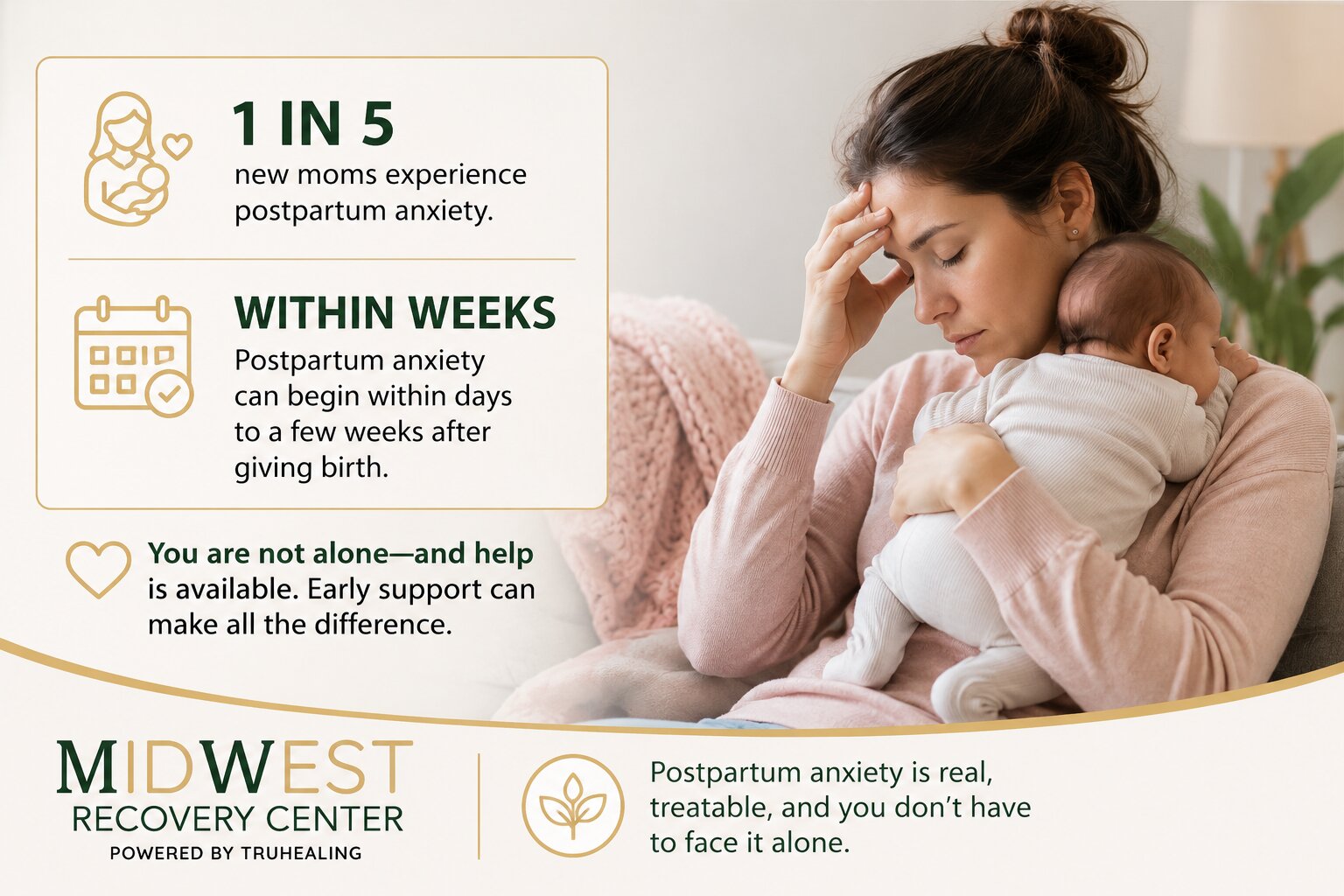
For many women, postpartum anxiety begins within the first few days to several weeks after giving birth. Others notice symptoms developing gradually over the first few months of their baby’s life.

The weeks following delivery involve dramatic changes in:

  • Hormone levels
  • Sleep patterns
  • Physical recovery
  • Daily routines
  • Emotional adjustment
  • Family responsibilities

These changes can make anyone feel vulnerable. For some women, however, anxiety becomes intense enough that it begins interfering with daily functioning.

Although the highest risk is during the first few months after childbirth, postpartum anxiety can develop at any point during the first year after delivery.

This is one reason it is important not to dismiss persistent symptoms simply because several months have passed since your baby was born.

What Is Normal Worry—and What Isn’t?

Nearly every new parent worries.

Normal concerns often include:

  • Wondering whether the baby is eating enough
  • Checking on the baby during sleep
  • Feeling nervous about parenting decisions
  • Wanting reassurance from family or healthcare providers

These worries usually come and go.

With postpartum anxiety, the worry becomes much harder to control. Instead of helping you protect your baby, it begins affecting your own well-being.

The anxiety may feel constant, overwhelming, or impossible to turn off—even when everything appears to be okay.

Common Symptoms

Every woman’s experience is different, but postpartum anxiety often includes a combination of emotional, cognitive, and physical symptoms.

Racing thoughts

Many mothers describe feeling as though their minds never slow down.

Their thoughts may constantly jump from one possible danger to another.

Examples include:

  • “What if something happens while she’s sleeping?”
  • “Did I feed him enough?”
  • “What if I accidentally hurt my baby?”
  • “What if I’m not a good mother?”

These thoughts can become exhausting because they continue throughout the day and often into the night.

Constant worry

The worry may extend far beyond typical parenting concerns.

Some women feel unable to relax because their brains continually search for new problems or worst-case scenarios.

Even after receiving reassurance from loved ones or healthcare providers, the relief may last only briefly before new fears emerge.

Hypervigilance

Many mothers become intensely alert to every sound, movement, or change involving their baby.

They may:

  • Repeatedly check breathing
  • Avoid sleeping while the baby sleeps
  • Constantly monitor feeding schedules
  • Feel unable to leave the baby with trusted caregivers

Although protecting a newborn is natural, hypervigilance can become physically and emotionally exhausting when it never eases.

Physical tension

Anxiety affects the body as well as the mind.

Symptoms may include:

  • Tight muscles
  • Headaches
  • Upset stomach
  • Rapid heartbeat
  • Sweating
  • Shaking
  • Shortness of breath
  • Feeling constantly “on edge”

Because new mothers are already recovering physically, these symptoms can sometimes be mistaken for normal postpartum changes.

Difficulty sleeping—even when the baby sleeps

One common sign of postpartum anxiety is being unable to sleep despite having the opportunity.

Instead of resting, your mind may stay active with worries about your baby’s safety or your ability to care for them.

Sleep deprivation then worsens anxiety, creating a cycle that becomes increasingly difficult to break.

Irritability and feeling overwhelmed

Persistent anxiety can leave mothers feeling emotionally exhausted.

Small problems may suddenly feel impossible to manage, leading to frustration, tearfulness, or difficulty coping with everyday responsibilities.
When Does Postpartum Anxiety Start Symptoms & Treatment

Postpartum Anxiety vs. Postpartum Depression

Although these conditions often occur together, they are not the same.

Postpartum anxiety

The primary feature is excessive fear or worry.

Women often describe:

  • Constant nervousness
  • Racing thoughts
  • Hypervigilance
  • Panic attacks
  • Difficulty relaxing
  • Persistent fear that something bad will happen

Postpartum depression

Postpartum depression more commonly involves:

  • Persistent sadness
  • Loss of interest in enjoyable activities
  • Feelings of hopelessness
  • Low energy
  • Difficulty bonding with the baby
  • Feelings of guilt or worthlessness

Many women experience symptoms of both anxiety and depression at the same time.

A mental health professional can help determine which symptoms are present and recommend the most appropriate treatment.

When to Know It Is Time to Get Help

Many mothers hesitate to seek help because they assume they should be able to handle everything on their own.

Others worry they will be judged or seen as “bad mothers.”

Neither is true.

It is time to reach out for professional support if anxiety:

  • Lasts more than two weeks without improving
  • Feels overwhelming most days
  • Interferes with sleep beyond normal newborn disruptions
  • Makes it difficult to care for yourself
  • Prevents you from enjoying time with your baby
  • Causes panic attacks
  • Makes it difficult to leave the house
  • Creates persistent fear that you cannot control

If anxiety begins interfering with your daily functioning, treatment can help.

When to seek emergency help

If you experience thoughts of harming yourself or your baby, hear or see things that others do not, become severely confused, or feel disconnected from reality, seek emergency medical care immediately or call emergency services. These symptoms may indicate a medical emergency, such as postpartum psychosis, which requires immediate treatment.

Effective Treatment Options

The encouraging news is that postpartum anxiety is highly treatable.

Treatment may include:

Individual therapy

Evidence-based therapies such as Cognitive Behavioral Therapy (CBT) help many women understand anxious thinking patterns and develop healthier coping strategies.

Medication

Some women benefit from anti-anxiety or antidepressant medications.

A healthcare provider can discuss options that consider breastfeeding status, medical history, and personal preferences.

Support groups

Connecting with other mothers experiencing similar challenges can reduce isolation and remind you that you are not alone.

Lifestyle support

Although lifestyle changes alone may not eliminate postpartum anxiety, they can support recovery.

Helpful strategies include:

  • Accepting help from trusted family and friends
  • Prioritizing rest whenever possible
  • Eating regular, nutritious meals
  • Gentle physical activity when medically appropriate
  • Practicing relaxation techniques
  • Maintaining follow-up appointments with healthcare providers

Treatment plans are individualized because every mother’s needs are different.

Women’s Support at Midwest Recovery Center

At Midwest Recovery Center, we recognize that women often face unique emotional, physical, and social challenges during the postpartum period.

Our Women’s Treatment Program provides compassionate care for women experiencing mental health concerns, including anxiety, depression, trauma, and co-occurring substance use disorders. We understand that many mothers delay seeking help because they fear judgment or worry about asking for support.

Our goal is to provide a safe, respectful environment where women throughout Toledo and Northwest Ohio can receive individualized care focused on healing both emotionally and physically.

You deserve support just as much as your baby deserves a healthy, supported parent.

You Don’t Have to Carry This Alone

The transition into motherhood can be beautiful, joyful, and incredibly difficult—all at the same time.

If your worries have become constant, exhausting, or impossible to control, know that what you’re experiencing is real. Postpartum anxiety is not a sign that you are failing as a mother or that you love your baby any less.

It is a treatable mental health condition, and seeking help is an act of strength—not weakness.

With compassionate care, evidence-based treatment, and the right support system, many mothers experience significant relief and regain confidence in themselves and their ability to enjoy life with their growing family. Call Midwest Recovery Center today at (833) 657-0858 to speak with a caring team member, or learn more about our treatment services and take the first step toward feeling like yourself again.

Frequently Asked Questions

When does postpartum anxiety start?

For many women, postpartum anxiety begins within the first few days to several weeks after childbirth. However, symptoms can develop gradually and may appear at any time during the first year after delivery.

How is postpartum anxiety different from postpartum depression?

Postpartum anxiety is primarily characterized by excessive worry, racing thoughts, hypervigilance, and physical symptoms of anxiety. Postpartum depression typically involves persistent sadness, hopelessness, low energy, and loss of interest in activities. Some women experience both conditions at the same time.

How long does postpartum anxiety last?

The duration varies from person to person. Some women experience symptoms for weeks, while others may struggle for several months if they do not receive treatment. Early evaluation and evidence-based care can help reduce symptoms and improve recovery.


*The stories shared in this blog are meant to illustrate personal experiences and offer hope. Unless otherwise stated, any first-person narratives are fictional or blended accounts of others’ personal experiences. Everyone’s journey is unique, and this post does not replace medical advice or guarantee outcomes. Please speak with a licensed provider for help.

Level Of Care

PHP (Partial Hospitalization Program)
Daytime treatment with structure, therapy, and support—return home each night.

IOP (Intensive Outpatient Program)
Flexible therapy a few days a week to balance life and recovery.

OP (Outpatient Program)
Ongoing therapy and support to maintain progress.

MAT (Medication-Assisted Treatment)
Evidence-based care using medication and counseling to reduce cravings.

Ready to Start?
Call (833) 657-0858: to learn which program fits your recovery goals.

Who are you seeking help for? *

We’re here to listen and help you find the right path forward. Please tell us who needs care so we can match you with the best program and support.

💬 Your responses are 100% confidential and never shared outside our admissions team.

Recovery Shouldn’t Have to Wait — Begin Treatment Today.

At Ohio Treatment Center in Toledo, Ohio, we make it simple to take that first step toward healing. Our streamlined admissions process can often lead to same-day placement in treatment for MAT, PHP, IOP and more..

Call today for a free, confidential consultation with our caring admissions team — we’ll walk you through every step with compassion and clarity.

Call (833) 657-0858
Why call us?

Check Your Insurance Coverage in Minutes

We’ll handle the insurance details — so you can focus on getting better.

At Ohio Treatment Center, we work with most major private insurance providers to make treatment affordable and accessible. Complete our quick, confidential form below, and we’ll let you know if your plan is in-network — without contacting your insurance company.

Commonly accepted providers include:
Blue Cross Blue Shield (BCBS) • Aetna • Cigna • UnitedHealthcare • Humana • Anthem • Tricare

What Happens Next

  • Fill out the short form below
  • Our team reviews your benefits
  • We’ll contact you with your coverage details

Getting help shouldn’t be stressful. Let’s find out what your insurance can cover today.

Level Of Care

Detox
Begin recovery safely with 24/7 medical support. Our detox program helps you manage withdrawal comfortably and prepares you for the next step.

Residential Treatment
Continue healing in a supportive, structured setting with daily therapy, wellness activities, and round-the-clock care.

Aftercare
Before you leave, we’ll help you create a plan for ongoing support and lasting recovery.

Ready to Start?
Call (833) 657-0858: to learn which program fits your recovery goals.

Who are you seeking help for? *

We’re here to listen and help you find the right path forward. Please tell us who needs care so we can match you with the best program and support.

💬 Your responses are 100% confidential and never shared outside our admissions team.

Recovery Shouldn’t Have to Wait — Begin Treatment Today.

At Midwest Detox Center in Maumee, Ohio, we make it simple to take that first step toward healing. Our streamlined admissions process can often lead to same-day placement in treatment for medically supervised detox and residential treatment programs.

Call today for a free, confidential consultation with our caring admissions team — we’ll walk you through every step with compassion and clarity.

Call (833) 657-0858
Why call us?

Check Your Insurance Coverage in Minutes

We’ll handle the insurance details — so you can focus on getting better.

At Midwest Detox, we work with most major private insurance providers to make treatment affordable and accessible. Complete our quick, confidential form below, and we’ll let you know if your plan is in-network — without contacting your insurance company.

Commonly accepted providers include:
Blue Cross Blue Shield (BCBS) • Aetna • Cigna • UnitedHealthcare • Humana • Anthem • Tricare

What Happens Next

  • Fill out the short form below
  • Our team reviews your benefits
  • We’ll contact you with your coverage details

Getting help shouldn’t be stressful. Let’s find out what your insurance can cover today.

Level Of Care

Medical Detox
24/7 medically supervised detox to help you safely withdraw from drugs or alcohol while managing symptoms and preventing complications.

Inpatient Treatment
A structured, residential setting that provides continuous medical care, counseling, and therapeutic support to build a foundation for long-term recovery.

Residential Program
Comfortable, home-like housing where you can focus fully on healing with daily therapy, peer support, and holistic recovery services.

Ready to Start?
Call (833) 657-0858: to learn which program fits your recovery goals.

Who are you seeking help for? *

We’re here to listen and help you find the right path forward. Please tell us who needs care so we can match you with the best program and support.

💬 Your responses are 100% confidential and never shared outside our admissions team.

Recovery Shouldn’t Have to Wait — Begin Detox Today

At Ohio Detox Center in Maumee, Ohio, we make it simple to take that first step toward healing. Our streamlined admissions process can often lead to same-day placement in detox or inpatient treatment for substance use and co-occurring mental health conditions.

Call today for a free, confidential consultation with our caring admissions team — we’ll walk you through every step with compassion and clarity.

Call (833) 657-0858
Why call us?

Check Your Insurance Coverage in Minutes

We’ll handle the insurance details — so you can focus on getting better.

We’ll take care of the details — so you can focus on getting better.
At Ohio Detox Center, we work with Ohio Medicaid and most major insurance providers to make treatment affordable and accessible.

Here’s how it works:

  1. Fill out the short form below
  2. Our team reviews your benefits
  3. We’ll contact you with your coverage details

Getting help shouldn’t be stressful. Let’s find out what your insurance can cover today.

Levels of Care

Detox
We understand that taking the first step can feel overwhelming. Our detox program offers a compassionate, medically supported environment where you can rest, heal, and begin recovery safely. You’ll never go through it alone — our team is with you every step of the way.

IOP (Intensive Outpatient Program)
A flexible treatment option that lets you maintain work, school, or family responsibilities while attending therapy several days a week. IOP focuses on relapse prevention, coping skills, and long-term recovery through group and individual sessions.

Residential
Residential care gives you the time and space to focus fully on healing. Surrounded by supportive staff and peers, you’ll work through underlying causes of addiction, rebuild healthy routines, and rediscover confidence in your recovery journey.

MAT (Medication-Assisted Treatment)
Combining FDA-approved medications with counseling and behavioral therapy, MAT helps reduce cravings and withdrawal symptoms related to opioid or alcohol use. Each treatment plan is closely monitored to ensure comfort, safety, and lasting recovery.

Ready to Start?
Call (833) 657-0858: to learn which program fits your recovery goals.

Who are you seeking help for? *

We’re here to listen and help you find the right path forward. Please tell us who needs care so we can match you with the best program and support.

Myself

A loved one or family member

💬 Your responses are 100% confidential and never shared outside our admissions team.

Check Your Insurance Coverage in Minutes

We’ll handle the insurance details — so you can focus on getting better.

At Midwest Centers at Youngstown, we work with most major private insurance providers to make treatment affordable and accessible. Complete our quick, confidential form below, and we’ll let you know if your plan is in-network — without contacting your insurance company.

Commonly accepted providers include:
Blue Cross Blue Shield (BCBS) • Aetna • Cigna • UnitedHealthcare • Humana • Anthem • Tricare

What Happens Next

  • Fill out the short form below
  • Our team reviews your benefits
  • We’ll contact you with your coverage details

Getting help shouldn’t be stressful. Let’s find out what your insurance can cover today.

Recovery Shouldn’t Have to Wait — Begin Treatment Today.

At Midwest Centers at Youngstown in Ohio, we make it simple to take that first step toward healing. Our streamlined admissions process can often lead to same-day placement in treatment for substance use or co-occurring mental health disorders.

Call today for a free, confidential consultation with our caring admissions team — we’ll walk you through every step with compassion and clarity.

Level Of Care

Partial Hospitalization Program (PHP)
Our PHP offers a highly structured, supportive environment where you can focus on recovery during the day and return home at night. It’s an ideal step between inpatient and outpatient care, providing daily therapy, accountability, and a strong recovery routine.

Intensive Outpatient Program (IOP)
Our IOP gives you the flexibility to continue work, school, or family life while receiving evidence-based treatment several days a week. You’ll participate in group and individual therapy focused on relapse prevention, coping skills, and long-term healing.

Outpatient Program (OP)
For those transitioning from a higher level of care or seeking ongoing support, our outpatient program offers continued therapy at a pace that fits your lifestyle. It’s a supportive bridge that helps you maintain recovery and stay connected to care.

Medication-Assisted Treatment (MAT)
MAT combines FDA-approved medications with therapy and counseling to reduce cravings and support long-term recovery from opioid or alcohol addiction. Our team monitors each plan closely to ensure safety, comfort, and effectiveness.

Ready to Start?
Call (833) 657-0858: to learn which program fits your recovery goals.

Who are you seeking help for? *

We’re here to listen and help you find the right path forward. Please tell us who needs care so we can match you with the best program and support.

Myself

A loved one or family member

💬 Your responses are 100% confidential and never shared outside our admissions team.

Recovery Shouldn’t Have to Wait — Begin Treatment Today.

At Midwest Recovery Center in Toledo, Ohio, we make it simple to take that first step toward healing. Our streamlined admissions process can often lead to same-day placement in treatment for substance use or co-occurring mental health disorders.

Call today for a free, confidential consultation with our caring admissions team — we’ll walk you through every step with compassion and clarity.

Check Your Insurance Coverage in Minutes

We’ll handle the insurance details — so you can focus on getting better.

At Midwest Recovery Center, we work with most major private insurance providers to make treatment affordable and accessible. Complete our quick, confidential form below, and we’ll let you know if your plan is in-network — without contacting your insurance company.

Commonly accepted providers include:
Blue Cross Blue Shield (BCBS) • Aetna • Cigna • UnitedHealthcare • Humana • Anthem • Tricare

What Happens Next

  • Fill out the short form below
  • Our team reviews your benefits
  • We’ll contact you with your coverage details

Getting help shouldn’t be stressful. Let’s find out what your insurance can cover today.