
Kratom withdrawal can feel confusing, especially if you started using kratom because it seemed natural, legal, or easier to control than other substances. You may have used it for energy, pain, anxiety, mood, or to help cut back on opioids. Over time, though, your body and brain can adjust to regular kratom use. When you lower your dose or stop suddenly, withdrawal symptoms can begin.
Kratom withdrawal may include physical discomfort, emotional distress, sleep problems, and strong cravings. Some people have mild symptoms that improve within several days. Others experience symptoms that make it very hard to stop without help.
Midwest Recovery Center offers compassionate medical detox, addiction treatment, and admissions support for people who are ready to stop using kratom, 7-hydroxymitragynine products, or other substances. Help is available, and you don’t have to figure this out alone.
Kratom use often begins as a supplement or recreational use, but can easily develop into substance abuse. We can help you break the cycle of kratom addiction.
Kratom withdrawal is the set of symptoms that can happen when someone dependent on kratom stops using it or reduces their dose. Withdrawal occurs because the body has adjusted to having kratom in the system.
Kratom comes from the leaves of the Mitragyna speciosa tree, which is native to Southeast Asia. In the United States, kratom is often sold as powders, capsules, extracts, teas, tablets, gummies, or drinks. Some people use kratom because they believe it helps with pain, energy, mood, anxiety, or opioid withdrawal. However, regular use can lead to tolerance, dependence, cravings, and withdrawal.
Physical dependence means your body has adapted to kratom. When you stop, your body reacts because it is trying to regain balance.
Psychological dependence means you feel like you need kratom to get through the day, manage emotions, sleep, work, socialize, or avoid feeling sick.
Tolerance can develop when the same amount of kratom no longer gives the same effect. As tolerance grows, you may take more kratom, take it more often, or switch to stronger products. This can increase the risk of kratom withdrawal symptoms when you try to stop.
Kratom withdrawal happens because kratom affects brain chemistry. It is not identical to heroin, fentanyl, or prescription opioids, but some of its active compounds interact with opioid receptors. This is one reason kratom withdrawal can feel similar to opioid withdrawal for some people.
The main active compound in kratom is mitragynine. Kratom also contains 7-hydroxymitragynine, often called 7-OH. These compounds can affect opioid receptors in the brain and body. Opioid receptors are involved in pain relief, mood, stress response, reward, and physical comfort.
With repeated use, the brain may begin to rely on kratom to maintain comfort or emotional balance. When kratom is removed, the brain and body may feel out of sync. This can lead to anxiety, body aches, sweating, chills, restlessness, cravings, and low mood.
7-hydroxymitragynine is a potent kratom alkaloid. It occurs naturally in very small amounts in the kratom plant, but some newer products may contain concentrated 7-OH. These products may be sold as enhanced kratom, 7-OH tablets, shots, gummies, or extracts.
Because 7-OH can strongly affect opioid receptors, it may carry a higher risk of dependence, cravings, and withdrawal. People using concentrated 7-OH products may have a different experience than people using traditional kratom leaf powder.
If you are using 7-OH products and feel unable to stop, professional support may be especially important. You can also learn more through Midwest Recovery Center’s 7-hydroxymitragynine page.
Dependence can develop when your brain and body start to expect kratom. This may happen faster if you use kratom daily, use high doses, use extracts, use 7-OH products, or combine kratom with other substances.
Dependence does not mean you failed. It means your body adapted. Recovery means helping your body and brain adjust again, while also addressing the reasons kratom became part of your life.
Kratom withdrawal symptoms vary from person to person. Symptoms may depend on your dose, length of use, product type, health history, and whether other substances are involved. This is one reason support during medical detox may help. Detox professionals can monitor symptoms and help you stay as comfortable and safe as possible.
Common physical kratom withdrawal symptoms may include nausea, vomiting, diarrhea, sweating, chills, runny nose, watery eyes, muscle aches, joint pain, headaches, fatigue, stomach cramps, tremors, restless legs, and changes in appetite.
These symptoms can feel similar to a flu or a mild to moderate opioid withdrawal. Even when symptoms are not life-threatening, they can still feel overwhelming.
Kratom withdrawal can also affect your mood and mental health. Psychological symptoms may include anxiety, depression, irritability, mood swings, panic symptoms, low motivation, trouble focusing, agitation, and emotional sensitivity.
Kratom withdrawal depression can be especially difficult. Some people feel hopeless, ashamed, or afraid that they will never feel normal again. These feelings can improve with time and support, but they should be taken seriously.
Sleep problems are also common during withdrawal. You may experience insomnia, restlessness at night, vivid dreams, night sweats, frequent waking, or exhaustion during the day. Poor sleep can make cravings, anxiety, and irritability worse.
Kratom cravings can be one of the hardest parts of withdrawal. A craving may feel like a strong physical urge, an anxious thought loop, or a belief that you need kratom to function.
Cravings often get stronger when you feel sick, tired, stressed, depressed, or unable to sleep. They can also be triggered by routines, people, places, or emotions connected to kratom use.
Cravings do not mean you truly need kratom. They mean your brain is asking for something familiar. Treatment can help you build new coping skills so cravings become less powerful over time.
7-hydroxymitragynine withdrawal may feel similar to kratom withdrawal, but it can be more intense for some people. This is especially true when someone has been using concentrated 7-OH products, taking high doses, or using them several times per day.
Possible 7-hydroxymitragynine withdrawal symptoms may include:
People using 7-OH products may also find that cravings come on quickly between doses. This can create a cycle where you use to avoid feeling sick, then need more to get through the next few hours.
If you are worried about 7-hydroxymitragynine withdrawal, it may be time to speak with a treatment professional. Midwest Recovery Center can help you understand your options, including detox support, treatment planning, and admissions.
The kratom withdrawal timeline can vary. Some people feel symptoms within hours. Others notice symptoms after a day or more. The timeline depends on the type of product used, dose, frequency, metabolism, overall health, and whether you stop suddenly or taper.
Early symptoms may begin during the first 24 hours after your last dose. You may feel anxious, restless, tired, sweaty, or uncomfortable. Cravings may also begin during this stage.
Some people notice mood changes first. Others notice physical symptoms, such as a runny nose, chills, muscle aches, or stomach discomfort.
Symptoms may become more noticeable during days 2 to 3. This can be one of the hardest parts of the kratom withdrawal timeline.
You may experience nausea, diarrhea, sweating, body aches, insomnia, irritability, anxiety, and cravings. If you have been using high doses, extracts, or 7-OH products, this period may feel more intense.
Professional medical detox can be helpful during this stage because symptoms and cravings may make relapse more likely.
For many people, acute symptoms begin to improve during days 4 to 7. Physical discomfort may start to ease, but sleep problems, mood swings, fatigue, and cravings may continue.
This stage can be frustrating because you may feel better in some ways but still emotionally unstable or exhausted. Support, hydration, nutrition, rest, and clinical guidance can help you stay on track.
During weeks 2 to 4, many physical symptoms continue to fade. However, emotional symptoms may still come and go. You may deal with low motivation, anxiety, depression, sleep issues, or cravings.
This is also when daily life stress can become a trigger. Without a plan, it can be easy to return to kratom when you feel overwhelmed.
After one month, many people feel clearer and more stable. Still, some may experience lingering symptoms. These can include low mood, poor sleep, cravings, anxiety, or trouble feeling pleasure.
This does not mean recovery is not working. It means your brain and body are still healing. Ongoing treatment, therapy, relapse prevention, and peer support can help you keep moving forward.
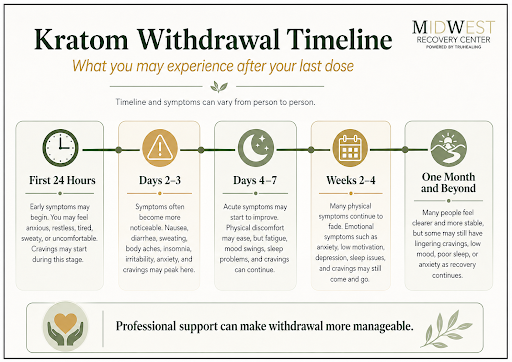
So, how long does kratom withdrawal last? For many people, acute withdrawal may last several days to a week. However, this is not a guarantee. Some symptoms may last longer, especially sleep problems, mood changes, fatigue, and cravings.
Your experience may depend on how much kratom you used, how long you used it, whether you used powder or extracts, whether you used 7-OH products, whether you used other substances, and your mental and physical health.
Withdrawal is personal. Some people feel better quickly. Others need more time and professional support. If symptoms feel unmanageable, medical detox may help you get through the hardest part with more safety and structure.
PAWS stands for post-acute withdrawal syndrome. PAWS after kratom refers to lingering symptoms that continue after the acute withdrawal stage has passed.
Acute withdrawal is the early stage when your body reacts to stopping kratom. PAWS is different. It involves longer-lasting changes in mood, sleep, stress response, and cravings as your brain continues to heal.
Not everyone experiences PAWS after kratom withdrawal. However, it can happen, especially after long-term use, heavy use, extract use, 7-OH use, or co-occurring substance use.
Common PAWS symptoms may include depression, anxiety, irritability, sleep problems, low energy, brain fog, mood swings, low motivation, stress sensitivity, kratom cravings, and trouble feeling pleasure.
PAWS can be discouraging because you may expect to feel completely better once the first week is over. But healing often takes time. Therapy and recovery support can help you manage PAWS without returning to kratom.
PAWS can last weeks or months for some people. Symptoms often come in waves. You may feel better for several days, then feel anxious, down, or restless again.
This pattern is normal in recovery, but it can be risky if you do not have support. A treatment plan can help you prepare for difficult days, understand triggers, and prevent relapse.
Kratom withdrawal is often compared to opioid withdrawal because kratom compounds interact with opioid receptors. Both can cause body aches, sweating, chills, nausea, diarrhea, anxiety, insomnia, cravings, and dependence.
Still, kratom and opioids are not the same. Kratom contains several plant compounds and may have stimulant-like or opioid-like effects depending on the dose and product. Heroin, fentanyl, and prescription painkillers have different potency levels, risks, and withdrawal patterns.
Kratom withdrawal can also vary by product. Traditional powder, concentrated extracts, and 7-OH products may lead to different levels of dependence and symptom severity. Some people experience milder symptoms than with opioids, while others, especially those using extracts or 7-OH, may have a similar experience. Professional support can help either way.
No two people experience kratom withdrawal the same way. Several factors can affect how intense symptoms become and how long they last.
Your withdrawal experience may not match someone else’s, and that is okay. A professional assessment can help you understand your risks and determine whether detox support may be the safest next step.
Kratom withdrawal is not always medically dangerous, but it can still create serious risks, especially when symptoms are severe or other substances are involved.
Possible concerns include:
Professional support may be the safest option if you feel unable to stop, stay hydrated, manage your symptoms, or remain safe.
Call 911 or go to the nearest emergency room right away if you or someone else experiences:
For an urgent mental health, substance use, or emotional crisis, call or text 988 to reach the 988 Suicide & Crisis Lifeline.
Some people try to detox from kratom at home. This may seem easier, more private, or less expensive. But home detox can be difficult, especially if symptoms become intense.
At home, you may not have medical monitoring, emotional support, relapse prevention help, or guidance for cravings. If symptoms get worse, you may feel trapped between using again or suffering through withdrawal alone.
Home detox can also be risky if you use multiple substances, have severe depression or anxiety, have a history of relapse, use 7-OH products, or have medical concerns.
A professional medical detox program can provide structure, monitoring, and support during the most difficult stage of withdrawal. Detox does not replace treatment, but it can help you begin recovery with a stronger foundation.
Medical detox provides supervised support as you stop using kratom and begin managing withdrawal symptoms. Care may include an assessment, monitoring, support for discomfort and cravings, hydration and nutrition, and mental health screening.
Detox is often the first step in recovery. Afterward, continued therapy, relapse prevention, and treatment for co-occurring mental health concerns can help you build a stronger foundation for long-term recovery.
At Midwest Recovery Center, your care plan is personalized to your needs and may include outpatient treatment, therapy, and ongoing support through our substance abuse treatment programs.
You should consider professional help for kratom withdrawal if you have tried to stop and returned to use, feel unable to function without kratom, use kratom or 7-OH daily, use kratom extracts, have strong cravings, feel depressed or anxious, use other substances with kratom, have a history of opioid use disorder, feel afraid of withdrawal, or need help quickly.
You do not have to wait until things get worse. If kratom withdrawal is affecting your health, relationships, work, school, or peace of mind, support is available.
Midwest Recovery Center offers behavioral health treatment to Ohio residents and can help you understand your treatment options. You can reach out through our admissions page or call (833) 657-0858 to speak with someone who can help you take the next step.
Early signs may include anxiety, restlessness, sweating, chills, muscle aches, insomnia, fatigue, and cravings.
Acute symptoms often last several days to about a week. Sleep problems, low mood, fatigue, and cravings may last longer.
It is not always medically dangerous, but dehydration, severe mental health symptoms, relapse, and polysubstance use can make withdrawal unsafe.
Some people do, but home detox can be difficult without support for cravings, sleep problems, anxiety, and relapse risk. Professional detox may be safer for high-dose, extract, 7-OH, or polysubstance use.
It can be. Both may involve body aches, nausea, sweating, anxiety, insomnia, diarrhea, and cravings because kratom compounds affect opioid receptors.
Structure, hydration, rest, therapy, trigger planning, peer support, and professional treatment can all help reduce cravings and lower relapse risk.
Yes. Concentrated 7-OH products can lead to dependence, cravings, anxiety, insomnia, stomach symptoms, and other withdrawal effects.
Kratom withdrawal can be uncomfortable, emotional, and difficult to manage on your own. But it is treatable. With the right support, you can get through withdrawal, understand your cravings, and begin rebuilding your life without kratom.
Midwest Recovery Center provides compassionate, personalized addiction treatment for people who are ready for change. Whether you’re trying to stop kratom, 7-OH products, opioids, or another substance, our team can help you find the right next step.
Contact us online or call (833) 657-0858 to speak with someone who can help you take the next step.
PHP (Partial Hospitalization Program)
Daytime treatment with structure, therapy, and support—return home each night.
IOP (Intensive Outpatient Program)
Flexible therapy a few days a week to balance life and recovery.
OP (Outpatient Program)
Ongoing therapy and support to maintain progress.
MAT (Medication-Assisted Treatment)
Evidence-based care using medication and counseling to reduce cravings.
Ready to Start?
Call (833) 657-0858: to learn which program fits your recovery goals.
We’re here to listen and help you find the right path forward. Please tell us who needs care so we can match you with the best program and support.
💬 Your responses are 100% confidential and never shared outside our admissions team.
At Ohio Treatment Center in Toledo, Ohio, we make it simple to take that first step toward healing. Our streamlined admissions process can often lead to same-day placement in treatment for MAT, PHP, IOP and more..
Call today for a free, confidential consultation with our caring admissions team — we’ll walk you through every step with compassion and clarity.
Call (833) 657-0858
Why call us?
We’ll handle the insurance details — so you can focus on getting better.
At Ohio Treatment Center, we work with most major private insurance providers to make treatment affordable and accessible. Complete our quick, confidential form below, and we’ll let you know if your plan is in-network — without contacting your insurance company.
Commonly accepted providers include:
Blue Cross Blue Shield (BCBS) • Aetna • Cigna • UnitedHealthcare • Humana • Anthem • Tricare
What Happens Next
Getting help shouldn’t be stressful. Let’s find out what your insurance can cover today.








Detox
Begin recovery safely with 24/7 medical support. Our detox program helps you manage withdrawal comfortably and prepares you for the next step.
Residential Treatment
Continue healing in a supportive, structured setting with daily therapy, wellness activities, and round-the-clock care.
Aftercare
Before you leave, we’ll help you create a plan for ongoing support and lasting recovery.
Ready to Start?
Call (833) 657-0858: to learn which program fits your recovery goals.
We’re here to listen and help you find the right path forward. Please tell us who needs care so we can match you with the best program and support.
💬 Your responses are 100% confidential and never shared outside our admissions team.
At Midwest Detox Center in Maumee, Ohio, we make it simple to take that first step toward healing. Our streamlined admissions process can often lead to same-day placement in treatment for medically supervised detox and residential treatment programs.
Call today for a free, confidential consultation with our caring admissions team — we’ll walk you through every step with compassion and clarity.
Call (833) 657-0858
Why call us?
We’ll handle the insurance details — so you can focus on getting better.
At Midwest Detox, we work with most major private insurance providers to make treatment affordable and accessible. Complete our quick, confidential form below, and we’ll let you know if your plan is in-network — without contacting your insurance company.
Commonly accepted providers include:
Blue Cross Blue Shield (BCBS) • Aetna • Cigna • UnitedHealthcare • Humana • Anthem • Tricare
What Happens Next
Getting help shouldn’t be stressful. Let’s find out what your insurance can cover today.
Medical Detox
24/7 medically supervised detox to help you safely withdraw from drugs or alcohol while managing symptoms and preventing complications.
Inpatient Treatment
A structured, residential setting that provides continuous medical care, counseling, and therapeutic support to build a foundation for long-term recovery.
Residential Program
Comfortable, home-like housing where you can focus fully on healing with daily therapy, peer support, and holistic recovery services.
Ready to Start?
Call (833) 657-0858: to learn which program fits your recovery goals.
We’re here to listen and help you find the right path forward. Please tell us who needs care so we can match you with the best program and support.
💬 Your responses are 100% confidential and never shared outside our admissions team.
At Ohio Detox Center in Maumee, Ohio, we make it simple to take that first step toward healing. Our streamlined admissions process can often lead to same-day placement in detox or inpatient treatment for substance use and co-occurring mental health conditions.
Call today for a free, confidential consultation with our caring admissions team — we’ll walk you through every step with compassion and clarity.
Call (833) 657-0858
Why call us?
We’ll handle the insurance details — so you can focus on getting better.
We’ll take care of the details — so you can focus on getting better.
At Ohio Detox Center, we work with Ohio Medicaid and most major insurance providers to make treatment affordable and accessible.
Here’s how it works:
Getting help shouldn’t be stressful. Let’s find out what your insurance can cover today.
Detox
We understand that taking the first step can feel overwhelming. Our detox program offers a compassionate, medically supported environment where you can rest, heal, and begin recovery safely. You’ll never go through it alone — our team is with you every step of the way.
IOP (Intensive Outpatient Program)
A flexible treatment option that lets you maintain work, school, or family responsibilities while attending therapy several days a week. IOP focuses on relapse prevention, coping skills, and long-term recovery through group and individual sessions.
Residential
Residential care gives you the time and space to focus fully on healing. Surrounded by supportive staff and peers, you’ll work through underlying causes of addiction, rebuild healthy routines, and rediscover confidence in your recovery journey.
MAT (Medication-Assisted Treatment)
Combining FDA-approved medications with counseling and behavioral therapy, MAT helps reduce cravings and withdrawal symptoms related to opioid or alcohol use. Each treatment plan is closely monitored to ensure comfort, safety, and lasting recovery.
Ready to Start?
Call (833) 657-0858: to learn which program fits your recovery goals.
We’re here to listen and help you find the right path forward. Please tell us who needs care so we can match you with the best program and support.
💬 Your responses are 100% confidential and never shared outside our admissions team.
We’ll handle the insurance details — so you can focus on getting better.
At Midwest Centers at Youngstown, we work with most major private insurance providers to make treatment affordable and accessible. Complete our quick, confidential form below, and we’ll let you know if your plan is in-network — without contacting your insurance company.
Commonly accepted providers include:
Blue Cross Blue Shield (BCBS) • Aetna • Cigna • UnitedHealthcare • Humana • Anthem • Tricare
What Happens Next
Getting help shouldn’t be stressful. Let’s find out what your insurance can cover today.










At Midwest Centers at Youngstown in Ohio, we make it simple to take that first step toward healing. Our streamlined admissions process can often lead to same-day placement in treatment for substance use or co-occurring mental health disorders.
Call today for a free, confidential consultation with our caring admissions team — we’ll walk you through every step with compassion and clarity.
Partial Hospitalization Program (PHP)
Our PHP offers a highly structured, supportive environment where you can focus on recovery during the day and return home at night. It’s an ideal step between inpatient and outpatient care, providing daily therapy, accountability, and a strong recovery routine.
Intensive Outpatient Program (IOP)
Our IOP gives you the flexibility to continue work, school, or family life while receiving evidence-based treatment several days a week. You’ll participate in group and individual therapy focused on relapse prevention, coping skills, and long-term healing.
Outpatient Program (OP)
For those transitioning from a higher level of care or seeking ongoing support, our outpatient program offers continued therapy at a pace that fits your lifestyle. It’s a supportive bridge that helps you maintain recovery and stay connected to care.
Medication-Assisted Treatment (MAT)
MAT combines FDA-approved medications with therapy and counseling to reduce cravings and support long-term recovery from opioid or alcohol addiction. Our team monitors each plan closely to ensure safety, comfort, and effectiveness.
Ready to Start?
Call (833) 657-0858: to learn which program fits your recovery goals.
We’re here to listen and help you find the right path forward. Please tell us who needs care so we can match you with the best program and support.
💬 Your responses are 100% confidential and never shared outside our admissions team.
At Midwest Recovery Center in Toledo, Ohio, we make it simple to take that first step toward healing. Our streamlined admissions process can often lead to same-day placement in treatment for substance use or co-occurring mental health disorders.
Call today for a free, confidential consultation with our caring admissions team — we’ll walk you through every step with compassion and clarity.
We’ll handle the insurance details — so you can focus on getting better.
At Midwest Recovery Center, we work with most major private insurance providers to make treatment affordable and accessible. Complete our quick, confidential form below, and we’ll let you know if your plan is in-network — without contacting your insurance company.
Commonly accepted providers include:
Blue Cross Blue Shield (BCBS) • Aetna • Cigna • UnitedHealthcare • Humana • Anthem • Tricare
What Happens Next
Getting help shouldn’t be stressful. Let’s find out what your insurance can cover today.