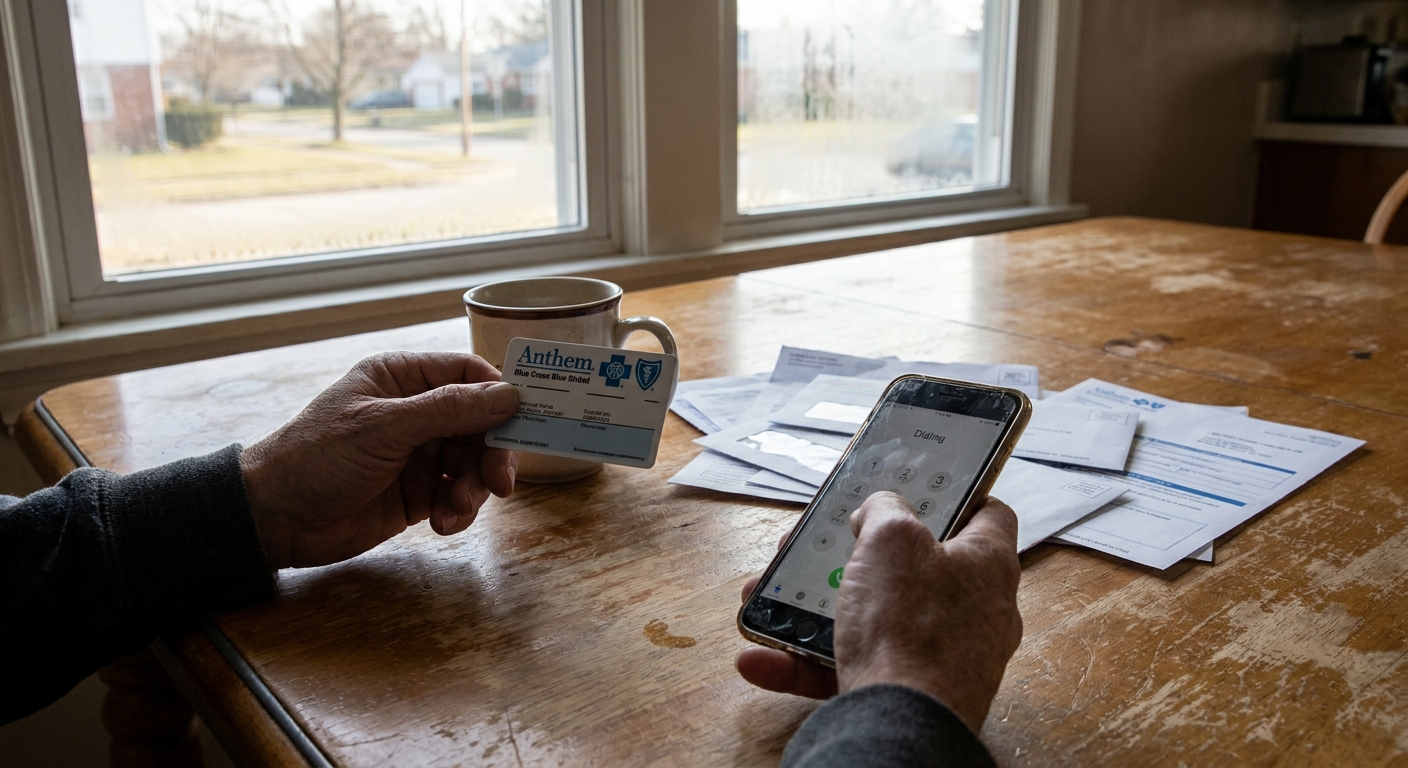

When someone you love needs to stop drinking or using, three questions usually arrive at once. How long will detox take? Will Anthem Blue Cross Blue Shield pay for it? Can they start today? These feel like separate problems, but each one depends on the others. The answer to “how many days is inpatient detox?” shapes how many days your plan has to approve. That answer is different for every person, because detox length depends on the substance, how long your loved one has been using, and what their body needs to stabilize safely.
You may be reading this late at night, worn down by weeks or years of worry. You may be afraid that one wrong call will waste the moment your loved one finally said yes. That fear is understandable, and you do not have to sort this out alone. This guide covers:
- Realistic detox timelines
- How Anthem decides how many days to cover
- What your share of the cost depends on
- What happens if withdrawal lasts longer than the first approval
- How Midwest Recovery Center helps families in Toledo, Maumee, and Lucas County get coverage answers before admission instead of after
How Many Days Is Inpatient Detox for Alcohol, Opioids, and Benzodiazepines?
Inpatient detox stays can range from about 3 to 10 days, and the substance your loved one has been using is one factor in that range. In our medical detox program, alcohol detox has taken about 5 to 7 days for some people and opioid detox about 5 to 10 days for others, but these are not typical results, and your loved one’s timeline will depend on their health, history, and other factors. Benzodiazepines can take longer because the dose has to come down slowly.
Alcohol withdrawal is one of the few withdrawals that can be life-threatening without medical care. Federal clinical guidance explains that alcohol withdrawal seizures most often occur within the first two days after the last drink. A smaller group of people develop delirium tremens, a severe state of confusion that needs immediate medical treatment. Because the most dangerous window can come early, the medical team watches closely during the first days and adjusts medications as symptoms change. That pattern is why some people in our medical detox program have completed alcohol detox in five to seven days, which reflects individual cases rather than a typical timeline, though individual experiences vary.
Opioid withdrawal follows a different clock. Short-acting opioids, such as heroin and many prescription painkillers, tend to cause symptoms within hours, with a peak in the first few days for some people. Long-acting opioids, such as methadone, usually cause symptoms that start later and last longer, which can stretch detox toward the longer end of the range for some individuals. Opioid withdrawal is rarely fatal by itself, but it can be intensely uncomfortable, and that discomfort is one reason people may return to use when they try to quit alone. Medical teams use medications to ease it, as reviewed in this NIH-published overview of pharmacological strategies for detoxification.
Benzodiazepines, such as alprazolam (Xanax) or clonazepam (Klonopin), carry a real seizure risk if stopped suddenly. For that reason, withdrawal is managed with a slow, planned taper rather than a hard stop. A taper often begins in inpatient detox and may continue at a lower level of care, which is why a benzodiazepine stay can run longer than an alcohol or opioid stay for some individuals.
Beyond the substance, several factors change the timeline:
- How much and how long your loved one has been using
- Whether more than one substance is involved
- Their age and physical health
- Whether they have been through severe withdrawal before
- Whether a mental health condition, such as depression or anxiety, is part of the picture
Midwest Recovery Center offers Dual Diagnosis treatment (a substance use disorder alongside a mental health condition), Mental Health Treatment, and Opioid Addiction treatment. Both co-occurring mental health conditions and opioid use can make detox more complex and can affect how long medical supervision may be needed for a given individual.
What Will the First 72 Hours of Detox Look Like for Your Loved One?
Once you know the general timeline, it helps to picture the start. The first three days are often the most medically intensive part of detox, because that is when many withdrawal symptoms peak for some people. Expect frequent medical checks, medications to ease symptoms and lower risk, and a team that watches for changes around the clock.
Detox starts with an assessment. The medical team asks:
- What your loved one has been using
- How much they use, and when they last used
- What other health conditions and medications they have
- How past withdrawals went
They also check vital signs, such as heart rate, blood pressure, and temperature, and screen for mental health symptoms. Clinicians then track withdrawal with standardized scoring tools. For alcohol, this is often the CIWA-Ar scale described in SAMHSA’s TIP 45 on detoxification. These scores guide medication decisions, so care adjusts to what your loved one’s body is actually doing rather than to a fixed schedule.
Medication is a core part of medical detox. Benzodiazepines are commonly used to manage alcohol withdrawal and lower seizure risk, while buprenorphine or methadone are commonly used for opioid withdrawal. Midwest Recovery Center offers medication-assisted treatment (MAT) as one of its levels of care. For a person with opioid use disorder, that means medication support can begin during detox and continue afterward, so it does not stop when the stay ends.
You may be afraid your husband or adult child will refuse to stay, or will walk out on day two when they feel their worst. That fear makes sense, and many families carry it. Treatment is voluntary, and no one can promise that a person will stay. What medical detox changes is how hard those first days feel for some individuals. When symptoms are treated as they appear, the urge to leave just to make the sickness stop may be weaker than it would be at home for some people.
This acute phase is also the part of detox that insurers focus on in medical necessity reviews, evaluating clinical documentation to determine whether inpatient monitoring is required, although your plan’s normal cost-sharing still applies.
Does Anthem Blue Cross Blue Shield Cover Detox, and for How Many Days?
Yes. Midwest Recovery Center accepts both Anthem Blue Cross Blue Shield commercial plans and Anthem Blue Cross Blue Shield Medicaid plans. It also accepts Aetna Commercial, Aetna Medicaid, AmeriHealth Caritas Medicaid, and Buckeye Community Medicaid, along with private pay. Anthem does not cover a fixed number of detox days. It approves days based on medical necessity, often a few at a time, and reviews additional days as treatment goes on.
Medical necessity is the key phrase. Insurers commonly base addiction treatment decisions on the ASAM Criteria, the framework from the American Society of Addiction Medicine. It looks at a person across six dimensions:
- Withdrawal risk
- Physical health
- Mental health
- Readiness for change
- Risk of continued use
- Home environment
Ohio’s Medicaid program uses the ASAM Criteria for level-of-care decisions, and many commercial plans use the same framework or one built on it. In plain terms, Anthem wants the treating team to show that your loved one’s withdrawal needs medical supervision that a lower level of care cannot safely provide.
Anthem’s commercial plans and its Medicaid plans do not follow identical rules. Prior authorization steps, cost-sharing, and appeal rights can differ between the two. Coverage can also differ from one employer plan to another, even under the same Anthem brand. That is why your benefits need to be checked against your exact Anthem plan, not “Anthem” in general. When you call, the admissions team can check network status and authorization requirements for the specific card in your hand.
Services at Midwest Recovery Center that Anthem plans may cover, subject to medical necessity and authorization:
- Medical detox (withdrawal management) with ongoing medical monitoring
- Medication-assisted treatment (MAT), including medication for opioid use disorder
- Dual Diagnosis care, which treats mental health conditions alongside substance use
- Evidence-based therapies, including Cognitive Behavioral Therapy (CBT) and Dialectical Behavioral Therapy (DBT)
- Continuing levels of care after detox: residential, partial hospitalization (PHP), intensive outpatient (IOP), and outpatient/aftercare
What Happens If Your Loved One Is Still in Withdrawal When the Approved Days Run Out?
The treating clinical team asks Anthem for more days through a process called concurrent review, sending updated clinical notes that show withdrawal still requires medical supervision. An approved day count is a checkpoint, not an automatic discharge date.
Many families assume “detox is five days” and plan around that number, only to learn the plan approved fewer days up front, with the rest depending on review. That is normal, not a sign that something went wrong. During concurrent review, the facility documents the current situation, such as:
- Withdrawal scores
- Vital signs
- Medication needs
- Any complications
Anthem’s reviewer then decides whether more days are medically necessary. If the reviewer has doubts, the treating physician can request a peer-to-peer review, which is a direct conversation with Anthem’s physician reviewer to explain why your loved one may not yet be safe to step down.
If Anthem denies extra days, that decision can be appealed. Plans generally offer an expedited appeal for urgent situations, and active withdrawal often qualifies. Members of Anthem’s Medicaid plan in Ohio also have the right to request a state hearing if an appeal does not resolve the denial. A denial does not mean your loved one must leave the building that afternoon, either. Discharge should be a medical decision, so talk with the medical team about safe options before making any change, and never pull someone out of detox early only because an approval has lapsed.
The most useful thing you can do is ask a few questions on the first call:
- How many days did Anthem approve up front?
- When does the next review happen?
- Who handles concurrent reviews and appeals for your loved one’s plan?
Those three answers tell you who is making the calls and when, so you are not caught off guard on day four.
Why the Day Detox Ends Matters as Much as the Day It Starts
Detox stabilizes the body, but it does not treat the addiction itself. The next level of care should be planned and authorized before discharge, because Anthem treats continuing care as a separate approval and detox coverage does not automatically carry forward.
SAMHSA’s guidance describes detox as having three parts: evaluation, stabilization, and fostering a person’s entry into treatment. That third part is where many families get blindsided. By the end of detox, your loved one may feel better physically and may believe they are “fine” and ready to go home. Yet the thinking patterns, triggers, and mental health symptoms that drove their use are still there. For a person leaving opioid detox, there is another danger: tolerance drops during detox, which raises the risk of overdose if use starts again.
Continuing care at Midwest Recovery Center can include:
- Residential/inpatient treatment
- Partial hospitalization (PHP)
- Intensive outpatient (IOP)
- Outpatient care and aftercare
- Ongoing MAT
Each of these needs its own medical necessity documentation and its own authorization from Anthem. If the request is not started until the last day of detox, there can be a gap of days with no approved care, and that is a time when relapse risk may be elevated for some individuals. This is the reason to ask early in the stay how the step-down plan and its authorization will be handled.
Midwest Recovery Center combines medical detox with evidence-based therapies such as CBT and DBT, and offers every level from detox and residential care through outpatient and aftercare. With multiple locations across the Ohio region, your loved one can stay in one connected path of addiction treatment from withdrawal through recovery instead of being discharged with a list of phone numbers. You can learn how those levels fit together on the Midwest Recovery Center website.
How Much Will You Pay Out of Pocket for Detox With Anthem?
Your out-of-pocket cost depends on four things: how much of your deductible you have already met, your copay or coinsurance for inpatient behavioral health care, your out-of-pocket maximum, and whether the facility is in-network with your plan. Ask Midwest Recovery Center’s admissions team to walk through these numbers with you before admission, so the cost is not a surprise later.
Commercial plans. With most Anthem commercial plans, you pay toward your deductible first. After that, coinsurance or a per-admission copay usually applies until you reach your out-of-pocket maximum. Timing matters here. If your family has already had large medical bills this plan year, much of your deductible may be met, which can lower what you owe for detox. If the plan year just reset, more of the cost may land on you at first.
Medicaid plans. Anthem Medicaid plans in Ohio usually carry very low or no cost-sharing for members. Confirm this for your specific plan before admission.
Network status and authorization. Staying in-network usually keeps costs well below out-of-network care, and Midwest Recovery Center accepts both Anthem commercial and Anthem Medicaid plans. If you do not have insurance, private pay is also accepted. Prior authorization affects cost too. If your plan requires approval and it is not obtained, claims can be denied, so ask who will handle the authorization paperwork. When you call, ask for your deductible status, your coinsurance or copay for inpatient detox, and your estimated share for the expected length of stay.
Questions Families Ask Before Calling About Anthem and Detox
Most remaining questions come down to how detox is classified, how many days are covered, how fast it can start, and what happens next. Each has a direct answer.
Is detox considered hospitalization under Anthem plans?
Usually not in the hospital sense. Medical detox at a treatment facility is generally billed as inpatient or residential withdrawal management under your behavioral health or substance use benefit. Hospital-based detox, which is reserved for some medically complex cases, falls under inpatient hospital care. The ASAM Criteria separate these settings into different levels, and the level affects which benefit applies and what you pay. The admissions team can tell you how your loved one’s stay will be classified under your plan.
How many days does Anthem typically cover for inpatient detox?
There is no set number. Anthem usually approves a few days at a time based on medical necessity, then reviews whether more days are needed as withdrawal progresses. The real answer to how many days is inpatient detox for your loved one comes from the medical team’s assessment, and Anthem’s approvals follow that clinical picture. Ask the admissions team how many days are expected up front and when the first review is scheduled.
Can your loved one start detox at Midwest Recovery Center today?
It may be possible. Same-day admission depends on three things: an open bed, a medical assessment confirming that detox is the right level of care, and any authorization your Anthem plan requires. Calling as soon as your loved one is willing gives the team the most time to verify benefits and complete paperwork that day. If your loved one has severe symptoms, such as confusion, seizures, or trouble breathing, call 911 first.
Will Anthem cover treatment after detox ends?
Anthem may cover the next level of care when it is medically necessary. It requires a separate authorization, though, so ask during the detox stay how and when that request will be submitted. Starting early helps prevent a gap between detox and continuing treatment.
What if your loved one has been through detox before and relapsed?
A past detox does not disqualify anyone from coverage or care. Anthem looks at your loved one’s current medical need, not their history of attempts, and their past withdrawal history can help the medical team plan care this time. If earlier detox stays ended without a planned next step, a connected path into PHP, IOP, or outpatient addiction treatment addresses the gap where some people fall through. That gap is a fixable one.
Getting a Same-Day Answer on Your Anthem Coverage in Toledo
One call to Midwest Recovery Center’s admissions team starts the Anthem benefits check. The goal is to learn your network status, your expected costs, and whether authorization is needed before your loved one walks through the door. Here is how it works:
- Find your loved one’s Anthem card. You will need the member ID, the group number if there is one, and the policyholder’s name and date of birth.
- Call Midwest Recovery Center’s admissions team at 502-830-3523.
- Share the basic picture: what your loved one uses, when they last used, any past withdrawal problems, and any medical or mental health conditions and current medications.
- Let the admissions team check the plan with Anthem, including network status, deductible and cost-sharing, and any prior authorization requirements.
- Ask the questions that matter most: how many days are expected to be approved up front, when the first review happens, what your estimated share will be, and whether admission can happen today.
- Plan the arrival. Bring the insurance card, a photo ID, a list of current medications, and a few days of comfortable clothing.
Midwest Recovery Center serves families across Toledo, Maumee, and Lucas County from its Toledo, OH 43617 location, with additional locations across the Ohio region. For a family in crisis, being close matters. You can be part of the next step, visit when appropriate, and stay connected as your loved one moves from medical detox into continuing care.
Call Midwest Recovery Center’s admissions team at 502-830-3523 to verify your Anthem Blue Cross Blue Shield benefits, get a clear answer on expected covered detox days, and start the admission process for your loved one in Toledo. When you call, write down one thing: the date of the first insurance review. That date tells you more than any day count, because it shows when the clinical team will make the case for more time if your loved one needs it.
Start Your Recovery Journey With the Right Support
Choosing inpatient detox is a significant step, and understanding the timeline helps you plan with confidence. Every person’s withdrawal experience is different, which is why Midwest Recovery Center begins with a thorough assessment to determine the level of medical support you’ll need. If you’re ready to learn more about what detox would look like for your specific situation, a confidential conversation can give you the clarity you need to move forward.
- Insurance coverage, authorized days, and out-of-pocket costs vary by plan and individual circumstances and are determined by Anthem based on medical necessity.
- Detox length and treatment outcomes vary from person to person.
- This article is educational and is not medical advice.
- If someone is in immediate danger, call 911.