
Weed and Schizophrenia: What the Research Actually Shows, Who Is at Risk, and the Cannabis Psychosis Link

Weed and Schizophrenia What the Research Actually Shows, Who Is at Risk, and the Cannabis Psychosis Link

For many years, cannabis was often viewed as relatively harmless. However, as cannabis products have become more potent and more widely available, researchers have devoted increasing attention to understanding how they affect mental health. One topic that continues to generate questions is weed and schizophrenia.

If you’ve searched online, you’ve probably encountered conflicting information. Some sources claim marijuana causes schizophrenia, while others insist there is no connection at all. The truth is more nuanced.

Current research does not show that cannabis directly causes schizophrenia in every person who uses it. Instead, evidence suggests that cannabis—particularly high-THC products—can increase the risk of developing psychotic disorders in some individuals, especially those who are already vulnerable because of genetics, age, or other factors.

Understanding this distinction matters. It helps people make informed decisions without relying on fear or misinformation.

If you or someone you love has experienced hallucinations, paranoia, or other psychotic symptoms after using cannabis, learning more about cannabis-induced psychosis treatment can help you understand when professional evaluation may be appropriate.

At Midwest Recovery Center, individuals throughout Toledo and Northwest Ohio receive compassionate, evidence-based care for marijuana addiction and related mental health concerns.

Does Weed Cause Schizophrenia? What the Evidence Actually Says

The simplest answer is no—not in the way many people assume.

Research does not support the idea that cannabis alone causes schizophrenia in otherwise healthy individuals without other contributing risk factors.

Instead, researchers have found that cannabis use—particularly frequent use of high-potency products—is associated with an increased likelihood of developing psychosis or schizophrenia-spectrum disorders in people who are already susceptible.

Think of cannabis as one possible risk factor among several.

Other important factors include:

  • Family history of schizophrenia
  • Genetic vulnerability
  • Early-life brain development
  • Childhood trauma
  • Environmental stress
  • Other psychiatric conditions

For some people, cannabis may contribute to the earlier onset of schizophrenia or trigger psychotic symptoms that may not have appeared until later—or at all—without that combination of underlying risk factors.

Scientists continue to study exactly how cannabis interacts with brain development, but most experts agree that the relationship is complex rather than purely causal.

Why THC Matters

Not all cannabis products carry the same level of risk.

The primary psychoactive compound in marijuana is tetrahydrocannabinol (THC).

Over the past two decades, THC concentrations have increased dramatically in many products, including:

  • Marijuana flower
  • Concentrates
  • Vape cartridges
  • Dabs
  • Edibles

Higher THC levels appear to increase the likelihood of experiencing:

  • Paranoia
  • Anxiety
  • Hallucinations
  • Delusional thinking
  • Temporary psychosis

Frequent exposure to high-potency cannabis may also increase long-term psychosis risk in vulnerable individuals.

Products containing higher levels of cannabidiol (CBD) may affect people differently, but researchers are still studying CBD’s role and whether it may offset some THC-related effects.

Who Is at Highest Risk?

Cannabis affects everyone differently.

Certain individuals appear to have a significantly greater risk of developing psychotic symptoms.

People With a Family History of Schizophrenia

One of the strongest known risk factors is genetics.

Individuals with a parent or sibling diagnosed with schizophrenia or another psychotic disorder may have a greater biological vulnerability.

Cannabis does not guarantee that schizophrenia will develop, but it may increase risk in those who are already predisposed.

Adolescents and Young Adults

The brain continues developing into the mid-20s.

During adolescence, areas responsible for:

  • Decision-making
  • Emotional regulation
  • Learning
  • Memory
  • Executive functioning

are still maturing.

Regular cannabis use during these years may interfere with normal brain development and appears to be associated with a higher risk of later psychotic disorders than use beginning in adulthood.

Frequent Users

Risk generally increases with:

  • Daily use
  • Near-daily use
  • Heavy consumption
  • Long-term exposure

Occasional use does not carry the same level of documented risk as persistent heavy use, although no amount can be considered completely risk-free for vulnerable individuals.

Users of High-THC Products

Modern cannabis products often contain THC concentrations that are substantially higher than products available decades ago.

High-potency products appear more likely to trigger:

  • Acute paranoia
  • Panic
  • Hallucinations
  • Psychotic episodes

than lower-potency cannabis.

Individuals With Previous Mental Health Conditions

People with certain psychiatric conditions may be more vulnerable to cannabis-related complications, including those who have previously experienced:

  • Psychosis
  • Bipolar disorder with psychotic features
  • Severe anxiety
  • Previous cannabis-induced psychosis

Healthcare providers often recommend avoiding cannabis if someone has a history of psychotic symptoms.

Cannabis-Induced Psychosis vs. Schizophrenia

One of the most important distinctions involves understanding the difference between a temporary cannabis-related psychotic episode and schizophrenia.

Although symptoms may appear similar, they are not the same diagnosis.

Cannabis-Induced Psychosis

Cannabis-induced psychosis occurs when psychotic symptoms develop during or soon after cannabis use.

Symptoms may include:

  • Hallucinations
  • Delusions
  • Extreme paranoia
  • Confusion
  • Disorganized thinking
  • Agitation

Many people recover after cannabis use stops and appropriate medical care is received.

However, some individuals later develop a chronic psychotic disorder, particularly if underlying risk factors are present.

Schizophrenia

Schizophrenia is a long-term psychiatric disorder characterized by ongoing disturbances in thinking, perception, emotions, and behavior.

Symptoms may include:

Positive Symptoms

  • Hallucinations
  • Delusions
  • Disorganized speech
  • Disorganized behavior

Negative Symptoms

  • Reduced emotional expression
  • Social withdrawal
  • Lack of motivation
  • Reduced speech

Cognitive Symptoms

  • Difficulty concentrating
  • Problems with memory
  • Slower processing speed
  • Impaired executive functioning

Unlike cannabis-induced psychosis, schizophrenia persists beyond the effects of cannabis and requires ongoing psychiatric treatment.
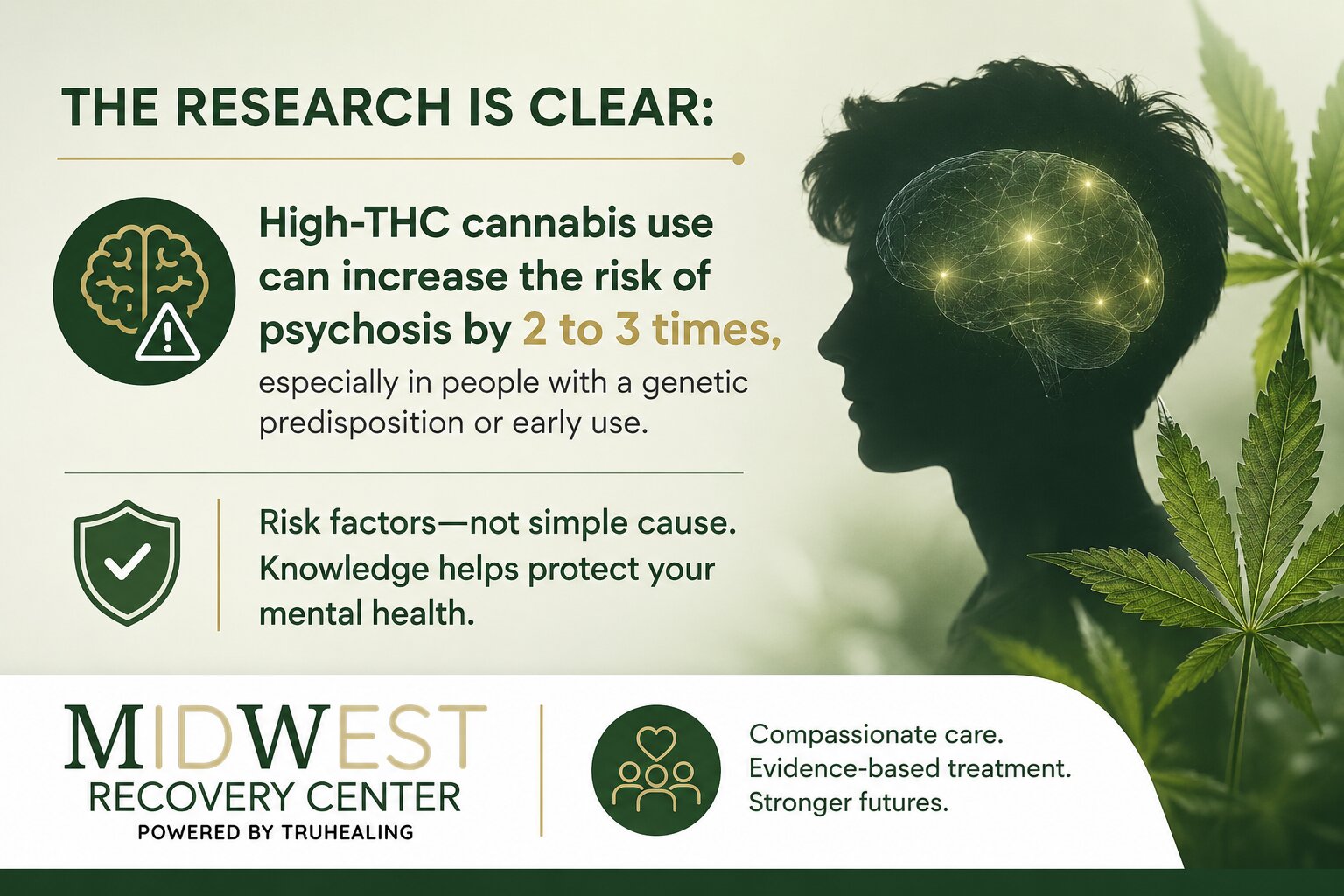
Weed and Schizophrenia What Research Shows  Midwest

Warning Signs That Should Never Be Ignored

Anyone experiencing psychotic symptoms should receive prompt medical evaluation.

Warning signs include:

  • Hearing voices
  • Seeing things that others cannot
  • Strong beliefs that are clearly false despite evidence
  • Extreme paranoia
  • Confused or disorganized thinking
  • Severe agitation
  • Sudden personality changes
  • Difficulty distinguishing reality from imagination

Psychosis is a medical emergency when it creates a risk of harm to oneself or others or significantly impairs the ability to care for basic needs.

Early treatment is associated with better long-term outcomes.

What to Do If You or Someone You Know Is Experiencing Symptoms

If psychotic symptoms develop after cannabis use, it is important not to assume they will simply disappear on their own.

The safest next steps include:

  • Stop using cannabis immediately.
  • Seek prompt medical evaluation.
  • Be honest about recent cannabis use with healthcare providers.
  • Avoid alcohol or other drugs.
  • Follow recommendations for psychiatric assessment.

If symptoms include suicidal thoughts, violent behavior, inability to care for oneself, or severe confusion, call 911 or go to the nearest emergency department immediately.

Even if symptoms improve quickly, follow-up evaluation remains important because healthcare providers can determine whether additional treatment or monitoring is needed.

Getting Help at Midwest Recovery Center

For some individuals, cannabis use becomes more than an occasional habit. It begins affecting relationships, work, school, emotional well-being, and mental health.

At Midwest Recovery Center, we provide individualized treatment for marijuana addiction and cannabis-related mental health concerns throughout Toledo and Northwest Ohio.

Treatment may include:

  • Comprehensive clinical assessment
  • Individual counseling
  • Group therapy
  • Relapse prevention planning
  • Family support
  • Mental health evaluation
  • Ongoing recovery planning

If cannabis use has contributed to psychotic symptoms or become difficult to stop, early intervention can improve long-term outcomes and support lasting recovery.

Recovery Starts With Accurate Information

Questions about weed and schizophrenia deserve answers based on evidence rather than myths or fear.

Current research suggests that cannabis does not simply cause schizophrenia in every person who uses it. Instead, high-THC cannabis appears to increase the risk of psychosis and schizophrenia-spectrum disorders in certain individuals, particularly those with genetic vulnerability, early and frequent use, or exposure during adolescence.

Recognizing symptoms early and seeking professional evaluation can make a meaningful difference.

If you or someone you love is struggling with marijuana use or has experienced psychotic symptoms after using cannabis, Midwest Recovery Center is here to help individuals and families across Toledo and Northwest Ohio.

Call Midwest Recovery Center today at (833) 657-0858 to learn more about cannabis addiction treatment and available recovery options.

Frequently Asked Questions

Does weed cause schizophrenia?

Current evidence does not show that cannabis directly causes schizophrenia in everyone who uses it. However, cannabis—especially high-THC products—appears to increase the risk of psychosis and schizophrenia in people who already have certain biological or environmental risk factors.

Who is most at risk?

People at higher risk include those with a family history of schizophrenia or psychotic disorders, individuals who begin using cannabis during adolescence, frequent users, and those who regularly use high-potency THC products.

What is cannabis-induced psychosis?

Cannabis-induced psychosis is a condition in which hallucinations, delusions, paranoia, or other psychotic symptoms develop during or shortly after cannabis use. While many people recover with abstinence and appropriate care, some individuals may later develop a chronic psychotic disorder, making prompt medical evaluation important.

*The stories shared in this blog are meant to illustrate personal experiences and offer hope. Unless otherwise stated, any first-person narratives are fictional or blended accounts of others’ personal experiences. Everyone’s journey is unique, and this post does not replace medical advice or guarantee outcomes. Please speak with a licensed provider for help.

Level Of Care

PHP (Partial Hospitalization Program)
Daytime treatment with structure, therapy, and support—return home each night.

IOP (Intensive Outpatient Program)
Flexible therapy a few days a week to balance life and recovery.

OP (Outpatient Program)
Ongoing therapy and support to maintain progress.

MAT (Medication-Assisted Treatment)
Evidence-based care using medication and counseling to reduce cravings.

Ready to Start?
Call (833) 657-0858: to learn which program fits your recovery goals.

Who are you seeking help for? *

We’re here to listen and help you find the right path forward. Please tell us who needs care so we can match you with the best program and support.

💬 Your responses are 100% confidential and never shared outside our admissions team.

Recovery Shouldn’t Have to Wait — Begin Treatment Today.

At Ohio Treatment Center in Toledo, Ohio, we make it simple to take that first step toward healing. Our streamlined admissions process can often lead to same-day placement in treatment for MAT, PHP, IOP and more..

Call today for a free, confidential consultation with our caring admissions team — we’ll walk you through every step with compassion and clarity.

Call (833) 657-0858
Why call us?

Check Your Insurance Coverage in Minutes

We’ll handle the insurance details — so you can focus on getting better.

At Ohio Treatment Center, we work with most major private insurance providers to make treatment affordable and accessible. Complete our quick, confidential form below, and we’ll let you know if your plan is in-network — without contacting your insurance company.

Commonly accepted providers include:
Blue Cross Blue Shield (BCBS) • Aetna • Cigna • UnitedHealthcare • Humana • Anthem • Tricare

What Happens Next

  • Fill out the short form below
  • Our team reviews your benefits
  • We’ll contact you with your coverage details

Getting help shouldn’t be stressful. Let’s find out what your insurance can cover today.

Level Of Care

Detox
Begin recovery safely with 24/7 medical support. Our detox program helps you manage withdrawal comfortably and prepares you for the next step.

Residential Treatment
Continue healing in a supportive, structured setting with daily therapy, wellness activities, and round-the-clock care.

Aftercare
Before you leave, we’ll help you create a plan for ongoing support and lasting recovery.

Ready to Start?
Call (833) 657-0858: to learn which program fits your recovery goals.

Who are you seeking help for? *

We’re here to listen and help you find the right path forward. Please tell us who needs care so we can match you with the best program and support.

💬 Your responses are 100% confidential and never shared outside our admissions team.

Recovery Shouldn’t Have to Wait — Begin Treatment Today.

At Midwest Detox Center in Maumee, Ohio, we make it simple to take that first step toward healing. Our streamlined admissions process can often lead to same-day placement in treatment for medically supervised detox and residential treatment programs.

Call today for a free, confidential consultation with our caring admissions team — we’ll walk you through every step with compassion and clarity.

Call (833) 657-0858
Why call us?

Check Your Insurance Coverage in Minutes

We’ll handle the insurance details — so you can focus on getting better.

At Midwest Detox, we work with most major private insurance providers to make treatment affordable and accessible. Complete our quick, confidential form below, and we’ll let you know if your plan is in-network — without contacting your insurance company.

Commonly accepted providers include:
Blue Cross Blue Shield (BCBS) • Aetna • Cigna • UnitedHealthcare • Humana • Anthem • Tricare

What Happens Next

  • Fill out the short form below
  • Our team reviews your benefits
  • We’ll contact you with your coverage details

Getting help shouldn’t be stressful. Let’s find out what your insurance can cover today.

Level Of Care

Medical Detox
24/7 medically supervised detox to help you safely withdraw from drugs or alcohol while managing symptoms and preventing complications.

Inpatient Treatment
A structured, residential setting that provides continuous medical care, counseling, and therapeutic support to build a foundation for long-term recovery.

Residential Program
Comfortable, home-like housing where you can focus fully on healing with daily therapy, peer support, and holistic recovery services.

Ready to Start?
Call (833) 657-0858: to learn which program fits your recovery goals.

Who are you seeking help for? *

We’re here to listen and help you find the right path forward. Please tell us who needs care so we can match you with the best program and support.

💬 Your responses are 100% confidential and never shared outside our admissions team.

Recovery Shouldn’t Have to Wait — Begin Detox Today

At Ohio Detox Center in Maumee, Ohio, we make it simple to take that first step toward healing. Our streamlined admissions process can often lead to same-day placement in detox or inpatient treatment for substance use and co-occurring mental health conditions.

Call today for a free, confidential consultation with our caring admissions team — we’ll walk you through every step with compassion and clarity.

Call (833) 657-0858
Why call us?

Check Your Insurance Coverage in Minutes

We’ll handle the insurance details — so you can focus on getting better.

We’ll take care of the details — so you can focus on getting better.
At Ohio Detox Center, we work with Ohio Medicaid and most major insurance providers to make treatment affordable and accessible.

Here’s how it works:

  1. Fill out the short form below
  2. Our team reviews your benefits
  3. We’ll contact you with your coverage details

Getting help shouldn’t be stressful. Let’s find out what your insurance can cover today.

Levels of Care

Detox
We understand that taking the first step can feel overwhelming. Our detox program offers a compassionate, medically supported environment where you can rest, heal, and begin recovery safely. You’ll never go through it alone — our team is with you every step of the way.

IOP (Intensive Outpatient Program)
A flexible treatment option that lets you maintain work, school, or family responsibilities while attending therapy several days a week. IOP focuses on relapse prevention, coping skills, and long-term recovery through group and individual sessions.

Residential
Residential care gives you the time and space to focus fully on healing. Surrounded by supportive staff and peers, you’ll work through underlying causes of addiction, rebuild healthy routines, and rediscover confidence in your recovery journey.

MAT (Medication-Assisted Treatment)
Combining FDA-approved medications with counseling and behavioral therapy, MAT helps reduce cravings and withdrawal symptoms related to opioid or alcohol use. Each treatment plan is closely monitored to ensure comfort, safety, and lasting recovery.

Ready to Start?
Call (833) 657-0858: to learn which program fits your recovery goals.

Who are you seeking help for? *

We’re here to listen and help you find the right path forward. Please tell us who needs care so we can match you with the best program and support.

Myself

A loved one or family member

💬 Your responses are 100% confidential and never shared outside our admissions team.

Check Your Insurance Coverage in Minutes

We’ll handle the insurance details — so you can focus on getting better.

At Midwest Centers at Youngstown, we work with most major private insurance providers to make treatment affordable and accessible. Complete our quick, confidential form below, and we’ll let you know if your plan is in-network — without contacting your insurance company.

Commonly accepted providers include:
Blue Cross Blue Shield (BCBS) • Aetna • Cigna • UnitedHealthcare • Humana • Anthem • Tricare

What Happens Next

  • Fill out the short form below
  • Our team reviews your benefits
  • We’ll contact you with your coverage details

Getting help shouldn’t be stressful. Let’s find out what your insurance can cover today.

Recovery Shouldn’t Have to Wait — Begin Treatment Today.

At Midwest Centers at Youngstown in Ohio, we make it simple to take that first step toward healing. Our streamlined admissions process can often lead to same-day placement in treatment for substance use or co-occurring mental health disorders.

Call today for a free, confidential consultation with our caring admissions team — we’ll walk you through every step with compassion and clarity.

Level Of Care

Partial Hospitalization Program (PHP)
Our PHP offers a highly structured, supportive environment where you can focus on recovery during the day and return home at night. It’s an ideal step between inpatient and outpatient care, providing daily therapy, accountability, and a strong recovery routine.

Intensive Outpatient Program (IOP)
Our IOP gives you the flexibility to continue work, school, or family life while receiving evidence-based treatment several days a week. You’ll participate in group and individual therapy focused on relapse prevention, coping skills, and long-term healing.

Outpatient Program (OP)
For those transitioning from a higher level of care or seeking ongoing support, our outpatient program offers continued therapy at a pace that fits your lifestyle. It’s a supportive bridge that helps you maintain recovery and stay connected to care.

Medication-Assisted Treatment (MAT)
MAT combines FDA-approved medications with therapy and counseling to reduce cravings and support long-term recovery from opioid or alcohol addiction. Our team monitors each plan closely to ensure safety, comfort, and effectiveness.

Ready to Start?
Call (833) 657-0858: to learn which program fits your recovery goals.

Who are you seeking help for? *

We’re here to listen and help you find the right path forward. Please tell us who needs care so we can match you with the best program and support.

Myself

A loved one or family member

💬 Your responses are 100% confidential and never shared outside our admissions team.

Recovery Shouldn’t Have to Wait — Begin Treatment Today.

At Midwest Recovery Center in Toledo, Ohio, we make it simple to take that first step toward healing. Our streamlined admissions process can often lead to same-day placement in treatment for substance use or co-occurring mental health disorders.

Call today for a free, confidential consultation with our caring admissions team — we’ll walk you through every step with compassion and clarity.

Check Your Insurance Coverage in Minutes

We’ll handle the insurance details — so you can focus on getting better.

At Midwest Recovery Center, we work with most major private insurance providers to make treatment affordable and accessible. Complete our quick, confidential form below, and we’ll let you know if your plan is in-network — without contacting your insurance company.

Commonly accepted providers include:
Blue Cross Blue Shield (BCBS) • Aetna • Cigna • UnitedHealthcare • Humana • Anthem • Tricare

What Happens Next

  • Fill out the short form below
  • Our team reviews your benefits
  • We’ll contact you with your coverage details

Getting help shouldn’t be stressful. Let’s find out what your insurance can cover today.