

Starting treatment for opioid addiction is a significant step toward recovery. For many people, one of the biggest concerns is hearing stories about feeling dramatically worse after taking their first dose of Suboxone®. These experiences are often linked to precipitated withdrawal, a preventable complication that usually happens when medication is started too soon.
If you’re considering medication-assisted treatment, understanding how the process works can make the experience much less intimidating. At Midwest Recovery Center, our Office-Based Opioid Treatment (OBOT) program helps individuals throughout Toledo and surrounding Northwest Ohio begin treatment safely with individualized medical guidance. Many patients, including those using Medicaid coverage, benefit from carefully supervised medication induction designed to reduce discomfort and improve treatment success.
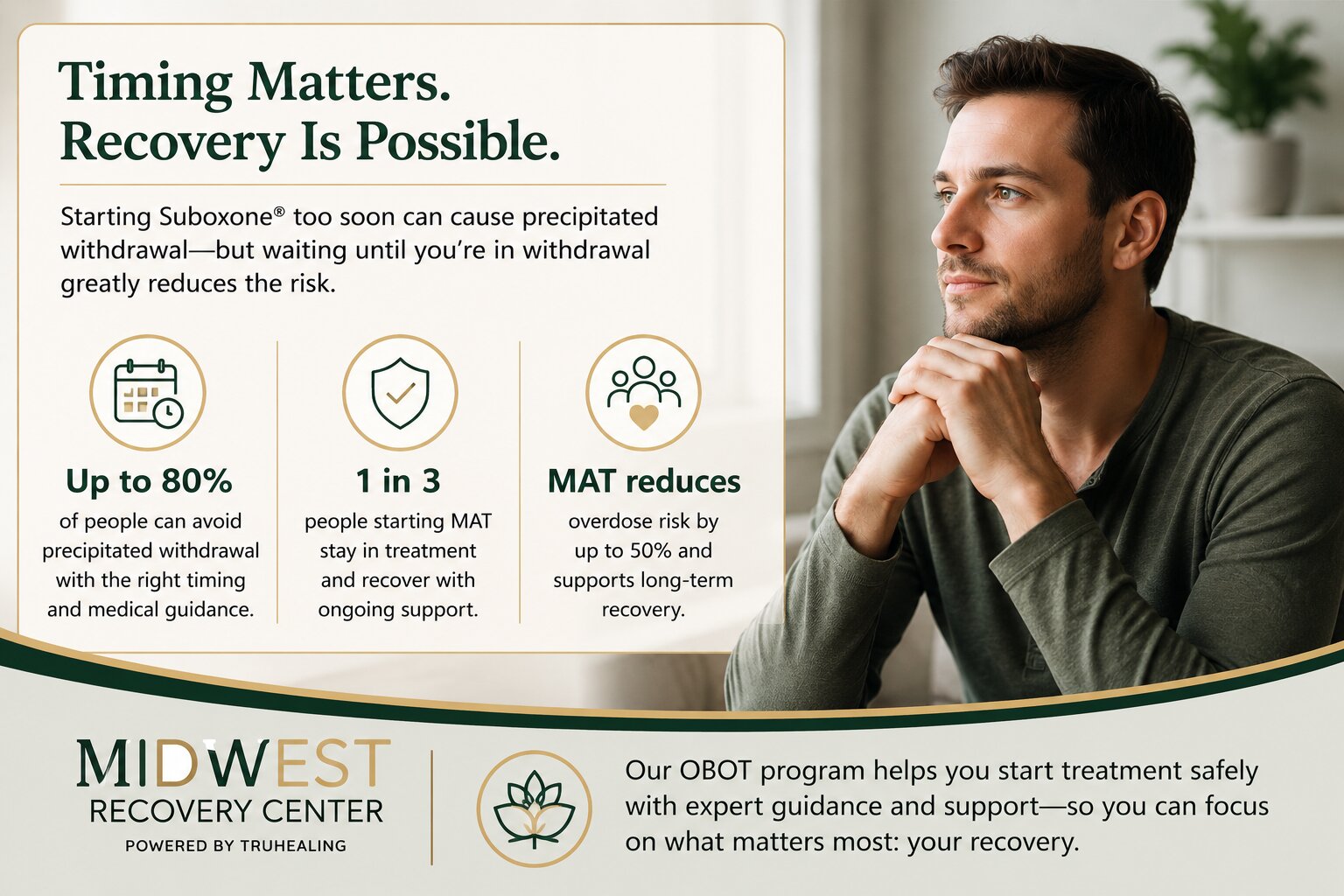
The most important message is simple: the timing of your first medication dose matters. When treatment begins at the right time under medical supervision, the risk of precipitated withdrawal can be significantly reduced.
What Precipitated Withdrawal Is
Precipitated withdrawal is a rapid, intense form of opioid withdrawal that can occur after taking buprenorphine-containing medications such as Suboxone before enough opioids have naturally left the body’s opioid receptors.
Unlike ordinary withdrawal, which develops gradually as opioids wear off, precipitated withdrawal can begin relatively quickly after the first dose of medication. Symptoms may feel more sudden and intense because the medication changes receptor activity almost immediately.
Common symptoms may include:
- Severe muscle aches
- Sweating
- Chills
- Nausea and vomiting
- Diarrhea
- Anxiety or panic
- Restlessness
- Dilated pupils
- Goosebumps
- Rapid heart rate
- Intense opioid cravings
Although these symptoms can be extremely uncomfortable, precipitated withdrawal is generally not life-threatening in otherwise healthy adults. The experience can be frightening enough, however, that some people become hesitant to continue treatment unless they understand why it happened.
Why It Happens
Understanding why precipitated withdrawal occurs starts with knowing how opioids affect the brain.
Most opioids—including heroin, fentanyl, oxycodone, hydrocodone, and morphine—attach to opioid receptors and activate them fully. Buprenorphine, the primary medication in Suboxone, behaves differently.
Buprenorphine:
- Has an extremely high attraction for opioid receptors
- Pushes other opioids off those receptors
- Activates the receptors only partially
If significant amounts of another opioid are still attached when buprenorphine is taken, buprenorphine rapidly replaces them. Because receptor activation suddenly drops, the brain experiences an abrupt decrease in opioid stimulation.
That sudden change is what causes precipitated withdrawal.
Rather than medication causing withdrawal directly, it is the timing of the medication in relation to recent opioid use that creates the problem.
The Induction Window: Knowing When You’re Ready
One of the most important parts of starting buprenorphine treatment is waiting until natural withdrawal has already begun.
Many people worry about waiting because withdrawal symptoms are uncomfortable. However, beginning medication before withdrawal develops actually increases the likelihood of feeling much worse.
Healthcare providers often evaluate readiness by looking at:
- Time since the last opioid use
- Type of opioid used
- Severity of current withdrawal symptoms
- Overall medical history
The exact waiting period varies because different opioids remain in the body for different lengths of time.
Generally speaking:
Opioid Type |
Typical Consideration Before Buprenorphine |
|---|---|
| Short-acting opioids (heroin, immediate-release oxycodone) | Withdrawal symptoms are usually expected before the first dose. |
| Long-acting opioids (methadone) | A longer waiting period and careful medical planning are often required. |
| Fentanyl | May require additional assessment because it can remain in body tissues longer than many people expect. |
Rather than relying only on the clock, providers look at how the patient is actually feeling.
Someone who says, “I don’t feel sick yet,” usually is not ready for induction.
Someone experiencing obvious withdrawal symptoms is often much closer to the appropriate starting point.
Using the Clinical Opiate Withdrawal Scale (COWS)
Medical providers frequently use the Clinical Opiate Withdrawal Scale (COWS) to determine whether someone has reached an appropriate level of withdrawal before beginning buprenorphine.
The assessment measures signs such as:
- Resting pulse
- Sweating
- Restlessness
- Tremors
- Runny nose
- Tearing
- Yawning
- Anxiety
- Bone and joint aches
- Gastrointestinal symptoms
- Pupil size
The total score helps clinicians decide whether it is appropriate to begin medication safely.
Using an objective assessment instead of guessing greatly reduces the risk of precipitated withdrawal.
How to Avoid It
Fortunately, precipitated withdrawal is often preventable.
Be honest about your last opioid use
It can feel uncomfortable discussing exactly when you last used opioids, but accurate information allows your provider to determine the safest induction plan.
Even a few hours can make an important difference.
Don’t rush your first dose
Many people understandably want relief as quickly as possible.
Taking Suboxone early may seem like it will stop withdrawal sooner, but starting too early can actually make symptoms significantly worse.
Following your provider’s instructions carefully is one of the most effective ways to avoid complications.
Never guess based on someone else’s experience
Friends, online forums, and social media often describe induction timelines that may not apply to your situation.
Factors that influence timing include:
- Which opioid you used
- How often you used it
- Whether fentanyl was involved
- Your metabolism
- Your overall health
A personalized medical evaluation is far more reliable than comparing experiences online.
Stay in communication with your treatment team
If withdrawal symptoms change unexpectedly or you have questions before taking your medication, contact your provider.
Small adjustments to timing can sometimes prevent unnecessary discomfort.
Follow your prescribed induction plan
Do not:
- Take extra medication
- Skip instructions
- Restart after relapse without speaking to your provider
- Change your dose on your own
Medication-assisted treatment works best when medication is adjusted by clinicians who understand your specific situation.
What If Precipitated Withdrawal Happens?
Although prevention is the goal, precipitated withdrawal can still occur despite careful planning—particularly for people using fentanyl or multiple opioids.
If symptoms develop:
- Contact your treatment provider immediately.
- Do not panic.
- Follow medical instructions closely.
- Avoid taking additional opioids without discussing it with your provider.
Most cases improve with supportive medical care and appropriate management.
The important thing to remember is that experiencing precipitated withdrawal does not mean treatment has failed. Many people successfully continue medication-assisted treatment after symptoms resolve.
Starting MAT Through Midwest Recovery Center’s OBOT Program
Beginning medication-assisted treatment doesn’t have to be confusing or frightening.
At Midwest Recovery Center, our Office-Based Opioid Treatment (OBOT) program provides individualized medical care designed to help patients start buprenorphine as safely as possible. Providers carefully assess withdrawal symptoms, review recent opioid use, explain what to expect during induction, and create treatment plans based on each person’s needs.
Our team works with adults throughout Toledo and surrounding Northwest Ohio, including many patients using Medicaid coverage, making evidence-based opioid treatment more accessible for individuals seeking recovery close to home.
Rather than navigating induction alone, patients receive guidance throughout every step of the process—from the initial evaluation through ongoing medication management and recovery support.
Recovery Doesn’t Have to Start With Fear
Stories about precipitated withdrawal can make medication-assisted treatment seem overwhelming, but understanding why it happens helps put those stories into perspective.
The complication is usually related to timing, not the medication itself.
When buprenorphine is started after sufficient withdrawal has begun—and under the supervision of experienced medical providers—the risk can be greatly reduced. For many people struggling with opioid addiction, medication-assisted treatment remains one of the most effective tools available for reducing cravings, preventing overdose, and supporting long-term recovery.
If you’re considering treatment, Midwest Recovery Center’s Office-Based Opioid Treatment program can help you understand when it’s safe to begin medication and guide you through the process with compassionate, evidence-based care. Call Midwest Recovery Center today at (833) 657-0858 to speak with a caring team member, or learn more about our treatment services and take the first step toward feeling like yourself again.
Frequently Asked Questions
What causes precipitated withdrawal?
Precipitated withdrawal occurs when buprenorphine is taken before enough opioids have naturally cleared from the brain’s opioid receptors. The medication quickly replaces those opioids, causing a sudden drop in receptor activation that triggers rapid withdrawal symptoms.
How long does precipitated withdrawal last?
The duration varies depending on the opioid involved, the amount used, and individual health factors. Symptoms often begin shortly after the first dose and may improve over the following hours to a day with appropriate medical management, although some people may experience lingering discomfort longer.
How do you avoid precipitated withdrawal?
The best way to reduce the risk is to wait until you are in measurable opioid withdrawal before taking your first dose of buprenorphine, follow your provider’s induction instructions carefully, communicate honestly about your recent opioid use, and allow your healthcare team to assess your readiness using tools such as the Clinical Opiate Withdrawal Scale (COWS).