
When your doctor recommends medication for alcohol or opioid use disorder, one of the first questions you may have is about naltrexone side effects. That’s a reasonable concern. Starting any medication involves weighing the benefits against the potential risks, especially when you’re already focused on rebuilding your health.
If you’re exploring medication-assisted treatment (MAT), it’s important to understand that naltrexone has helped many people reduce cravings and lower their risk of relapse without creating physical dependence. Like any prescription medication, it can cause side effects, but many people tolerate it well, and common symptoms often improve as the body adjusts.
At Midwest Recovery Center, medication is never viewed as a standalone solution. It is combined with counseling, behavioral therapies, relapse prevention planning, and ongoing medical support to give each person the best opportunity for lasting recovery. Learn more about our medication-assisted treatment (MAT) program and how it may fit into your individualized treatment plan.
Understanding what to expect can help you feel more confident about your treatment decisions and know when to contact your healthcare provider if concerns arise.
What Naltrexone (and Vivitrol) Is and How It Works
Naltrexone is a medication approved by the U.S. Food and Drug Administration (FDA) to help treat both alcohol use disorder and opioid use disorder.
Unlike medications such as methadone or buprenorphine, naltrexone is an opioid antagonist. Instead of activating opioid receptors, it blocks them.
This creates two important effects:
- Opioids cannot produce their usual euphoric effects while the medication is active.
- Many people experience reduced alcohol cravings and fewer rewarding effects from drinking.
Because of this, naltrexone can support recovery by making relapse less reinforcing while giving individuals more space to build healthy coping skills.
Naltrexone is available in two forms:
Oral Naltrexone
- Taken once daily as a tablet
- Allows flexibility if treatment needs change
- Requires consistent daily adherence
Vivitrol®
Vivitrol is an extended-release injectable form of naltrexone.
- Given once every four weeks
- Provides continuous medication coverage
- Eliminates the need to remember a daily pill
- Commonly used for individuals who prefer monthly dosing
Before starting either form, patients must be completely opioid-free for an adequate period—typically 7 to 10 days or longer depending on the opioid used—to avoid precipitated withdrawal.
Common Side Effects
Most people who experience naltrexone side effects notice mild or temporary symptoms that improve during the first few days or weeks of treatment.
Common effects include:
Nausea
Nausea is among the most frequently reported side effects, especially after beginning oral medication.
It often improves by:
- Taking the medication with food
- Staying hydrated
- Continuing treatment as directed if symptoms remain mild
Headache
Some individuals develop headaches during the first week.
These are typically manageable with rest, hydration, or medications recommended by a healthcare provider.
Fatigue
Feeling tired or having lower energy can occur initially.
For many people, this improves as the body adjusts.
Dizziness
Mild dizziness may occur, particularly after the first few doses.
Patients should avoid driving or operating machinery until they understand how the medication affects them.
Sleep Changes
Some people notice:
- Difficulty sleeping
- Vivid dreams
- Mild daytime drowsiness
These symptoms are generally temporary.
Decreased Appetite
A temporary reduction in appetite or mild stomach discomfort can occur early in treatment.
Serious Risks to Know
Although serious complications are uncommon, patients should understand the risks before beginning treatment.
Liver Concerns
Naltrexone is processed through the liver.
At standard therapeutic doses, serious liver injury is uncommon. However, the medication should be used carefully in people with existing liver disease or abnormal liver function.
Healthcare providers often:
- Review medical history
- Obtain baseline liver function tests when appropriate
- Monitor for symptoms if concerns arise
Possible warning signs include:
- Yellowing of the skin or eyes
- Dark urine
- Persistent abdominal pain
- Severe fatigue
- Unexplained nausea that worsens
Anyone experiencing these symptoms should contact a healthcare provider promptly.
Increased Opioid Sensitivity
One of the most important safety considerations occurs after stopping naltrexone.
Because opioid tolerance decreases during treatment, returning to previous opioid doses can significantly increase the risk of overdose.
For this reason, patients should:
- Never attempt to overcome the medication by taking large amounts of opioids.
- Follow discharge and relapse prevention plans carefully.
- Inform emergency healthcare providers that they are taking or recently stopped naltrexone.
Injection Site Reactions (Vivitrol)
Most injection-site reactions are mild.
These may include:
- Soreness
- Swelling
- Firmness
- Bruising
- Redness
Rarely, more serious injection-site complications can occur.
Patients should seek medical evaluation if they notice:
- Severe pain
- Significant swelling
- Skin breakdown
- Increasing redness
- Drainage
- Tissue changes
Allergic Reactions
Although uncommon, allergic reactions require immediate medical attention.
Emergency symptoms include:
- Difficulty breathing
- Facial swelling
- Severe rash
- Hives
- Swelling of the lips or throat
Why It Is Used in MAT
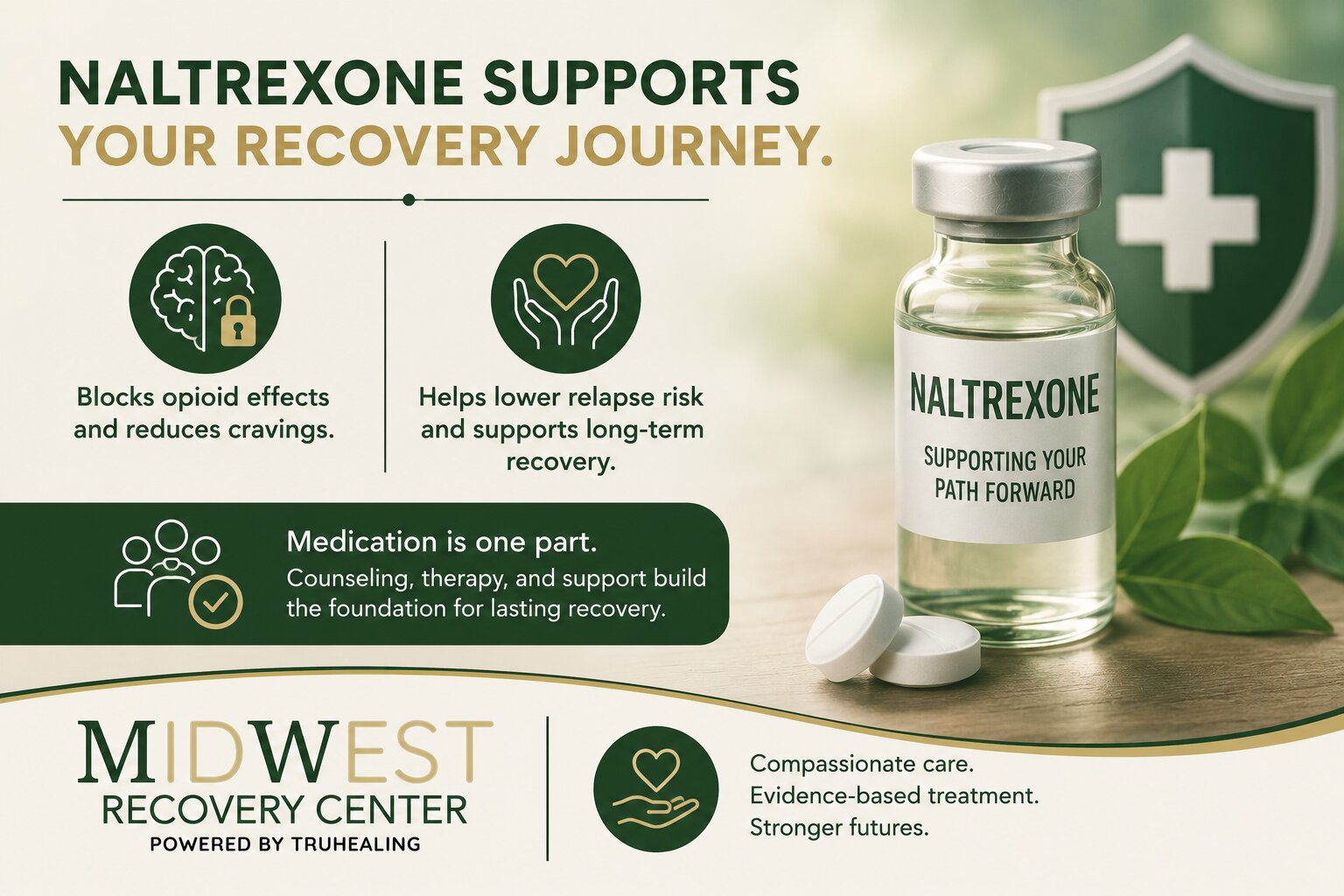
Reading about medication risks without understanding the benefits can make treatment seem intimidating. However, healthcare providers recommend naltrexone because research has shown it can play an important role in recovery for many people.
It Blocks the Rewarding Effects of Opioids
If someone relapses while taking naltrexone, opioids generally cannot produce the same euphoric effects.
This can reduce reinforcement of continued opioid use.
It May Reduce Alcohol Cravings
For individuals with alcohol use disorder, naltrexone may help decrease cravings and reduce heavy drinking by making alcohol less rewarding.
Not everyone experiences the same degree of benefit, but many people report that urges become more manageable.
It Supports Long-Term Recovery
Medication creates an opportunity—not a cure.
Recovery still requires:
- Counseling
- Behavioral therapy
- Lifestyle changes
- Relapse prevention planning
- Family support
- Ongoing accountability
When medication is combined with comprehensive treatment, many individuals are better able to remain engaged in recovery.
It Is Not Addictive
Unlike some medications used in addiction treatment, naltrexone does not produce a euphoric effect and is not considered addictive.
There is also no physical withdrawal syndrome when stopping the medication under medical guidance.
For many people, this makes it an appealing option within medication-assisted treatment.
What to Expect at Midwest Recovery Center
Choosing medication is a personal decision that should always be made with qualified medical professionals.
At Midwest Recovery Center in Toledo, treatment begins with a comprehensive assessment to determine whether naltrexone is appropriate based on your:
- Medical history
- Recovery goals
- Substance use history
- Current medications
- Liver health
- Previous treatment experiences
If naltrexone is recommended, your care team will ensure you have completed the necessary opioid-free period before treatment begins.
Throughout treatment, patients receive:
- Medical supervision
- Individual therapy
- Group counseling
- Relapse prevention education
- Ongoing progress monitoring
- Personalized recovery planning
Medication is used as one tool within a broader evidence-based treatment plan designed to support long-term recovery.
Recovery Is About More Than Medication
Learning about naltrexone side effects is an important part of making an informed treatment decision, but it is only one piece of the picture.
For many people, temporary side effects are outweighed by the opportunity to reduce cravings, lower relapse risk, and build a stronger foundation for recovery. Others may find that a different medication or treatment approach is a better fit. The right choice depends on your medical history, recovery goals, and conversations with your healthcare team.
If you or someone you love is struggling with alcohol or opioid addiction, Midwest Recovery Center provides compassionate, evidence-based care for individuals throughout Toledo and Northwest Ohio. Our team can help determine whether medication-assisted treatment, including naltrexone or Vivitrol, is appropriate as part of a personalized recovery plan.
Call Midwest Recovery Center today at (833) 657-0858 to learn more about your treatment options and begin your path toward lasting recovery.
Frequently Asked Questions
What are the most common side effects?
The most common side effects include nausea, headache, fatigue, dizziness, stomach discomfort, decreased appetite, and sleep changes. Many of these symptoms are mild and improve after the first few weeks of treatment.
Is naltrexone safe?
For most people, naltrexone is considered safe when prescribed and monitored by a qualified healthcare provider. Medical evaluation before treatment helps determine whether it is appropriate, particularly for individuals with liver disease or recent opioid use.
What is the difference between the pill and the Vivitrol shot?
The oral tablet is taken once daily, while Vivitrol is an extended-release injection administered once every four weeks. Both contain naltrexone, but the injectable version provides consistent medication levels without requiring a daily dose. Your healthcare provider can help determine which option best fits your needs.