
There’s a specific kind of fear that doesn’t always get named in early sobriety. It’s not about detox, relapse, or withdrawal. It’s about identity.
I’ve heard it from actors, poets, musicians, late-night thinkers, and sensitive types of every kind. The fear goes something like this: If I stop drinking, will I still be me?
Sometimes it’s whispered. Sometimes it’s wrapped in humor. But underneath, it’s serious. And I take it seriously—because I’ve walked with enough clients through that fog to know it doesn’t lift on its own.
It takes curiosity. It takes care. And often, it takes Cognitive Behavioral Therapy Program in Ohio to turn that fear into something else: freedom.
The Real Fear Beneath the Drinking
For some people, alcohol is a buffer. For others, it’s a portal.
Maybe it helps you get out of your head and into your body. Maybe it helps you cry when nothing else does. Maybe it gives you permission to speak your truth—on stage, at a party, or in the quiet dark of your own mind.
If that’s what alcohol feels like to you, then giving it up doesn’t just feel hard. It feels like giving up part of who you are.
That’s why the first step in CBT isn’t about quitting. It’s about mapping.
Mapping What Alcohol Represents
In CBT, we talk a lot about thoughts, feelings, and behaviors—and how they feed into each other.
One exercise I use with clients is identifying what alcohol represents emotionally. We look at patterns over time. Not just the habit, but the emotional story behind it.
For example:
- If you always pour a drink before performing, we ask: What does that drink give you in that moment?
- If you write better after two glasses of wine, we ask: What shifts in your mind or body that helps the words come out?
These aren’t trick questions. They’re invitations. And the answers often surprise people.
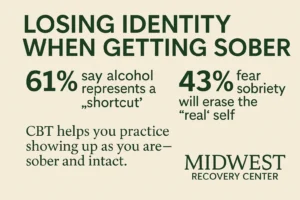
Because the drink isn’t the source. It’s a shortcut. CBT helps you find the real source—and practice accessing it in other ways.
Creativity Isn’t Drunk. It’s Deep.
There’s a common myth in creative circles that alcohol fuels brilliance. That it unlocks the raw, messy beauty inside us.
But in my work, I’ve seen that what alcohol often unlocks isn’t brilliance. It’s permission—to feel, to risk, to reveal.
CBT teaches you how to give yourself that permission without needing a substance to get there.
One client, a musician, told me, “I thought I’d stop writing if I got sober. But now I write from a place that’s clearer. There’s less chaos. The lyrics still come—they just come without the hangover.”
Another said, “It used to feel like drinking helped me feel everything. But I was actually skipping the feeling part and going straight to numb.”
CBT isn’t about silencing the creative voice. It’s about clearing the static so you can hear it more fully.
How CBT Helps You Rebuild Without Erasing Yourself
CBT works in layers. At first, we explore your current patterns. Then we begin practicing new ones—ones that feel safer, more aligned, more you.
Let’s say alcohol helps you be social. In CBT, we don’t shame that. We ask:
- What thoughts come up before a social event? (“I’m awkward.” “They won’t like me sober.”)
- What emotions do those thoughts trigger? (Anxiety, shame, pressure)
- What behaviors follow? (Drinking, avoiding, masking)
Then we start working at each point:
- Reframing the thought (“It’s okay to be quiet. I don’t have to perform.”)
- Regulating the emotion (deep breathing, grounding, naming it)
- Choosing new behaviors (showing up as you are, setting limits, planning exits)
Over time, this becomes second nature. The version of you that used to drink to show up? They’re still here. They just learn how to show up sober—and intact.
You Don’t Have to Commit to Forever
One of the biggest blockers for identity-based fear is the idea that sobriety = permanent.
But CBT doesn’t require an all-or-nothing mindset.
In fact, for many sober curious clients, CBT is a place to try things on. It’s where you can say:
- “I’m not sure I’m quitting forever.”
- “I just want to understand my patterns better.”
- “I’m afraid of losing who I am.”
And that’s not only okay—it’s welcomed.
Midwest Recovery Center’s CBT program in Toledo, OH is designed to support you wherever you are on the spectrum of change. No pressure. No fixed identity. Just space to grow.
A Real Story of Shift: Lila’s Words
Lila (name changed) came to me as a client, a poet, and a long-time drinker. Her first sentence in therapy was this:
“I’ve only ever written when I’m drinking. I don’t know if I exist without it.”
We spent months working gently through that story—mapping, testing, writing sober, not writing, trying again. One day, she brought in a poem written without alcohol. Her voice shook when she read it. But the clarity was breathtaking.
She said afterward, “I thought drinking gave me access to something deep. Turns out, it was covering it.”
CBT didn’t make her less of a poet. It helped her become one on her own terms.
FAQs About CBT for Creative Identity and Sobriety
Is CBT only for people with addiction?
No. CBT is incredibly effective for people who are sober curious or exploring their relationship with alcohol. You don’t need a diagnosis to benefit from therapy.
What if I don’t want to quit drinking completely?
That’s okay. CBT supports harm reduction, exploration, and curiosity. You set the pace. The therapy adapts to your goals—not the other way around.
Can CBT help with creative blocks?
Yes. CBT can address the anxiety, perfectionism, and self-doubt that often drive both creative avoidance and reliance on substances for performance.
What’s a CBT session like?
It’s a mix of talking, noticing patterns, and practicing new mental or emotional habits. Sessions are structured but flexible—and never judgmental.
How soon will I see changes?
Many people start noticing shifts within a few weeks. Lasting change takes time, but the process often brings immediate clarity and emotional relief.
Is CBT available in person in Toledo, Ohio?
Yes—Midwest Recovery Center offers CBT services in person and may also offer virtual options depending on your needs and preferences.
If You’re Scared to Let Go, You’re Not Alone
You don’t have to give up your spark to get sober. You don’t have to choose between being real and being whole.
CBT doesn’t take anything away from you. It just helps you sort through what’s truly you—and what’s been borrowed, masked, or blurred by alcohol.
If you’re afraid that sobriety will erase your edge, your voice, or your identity, I’d like to gently offer this: the best parts of you aren’t dependent on a drink. They’re already yours.
Curious about CBT?
Call (888) 657-0858 or visit our CBT services in Toledo, Ohio to see how Midwest Recovery Center can help you explore sobriety—without pressure, without labels, and without losing yourself.