
Can Anxiety Cause Vertigo? The Link Between Anxiety and Dizziness, and How to Get Relief

Can Anxiety Cause Vertigo The Link Between Anxiety and Dizziness, and How to Get Relief

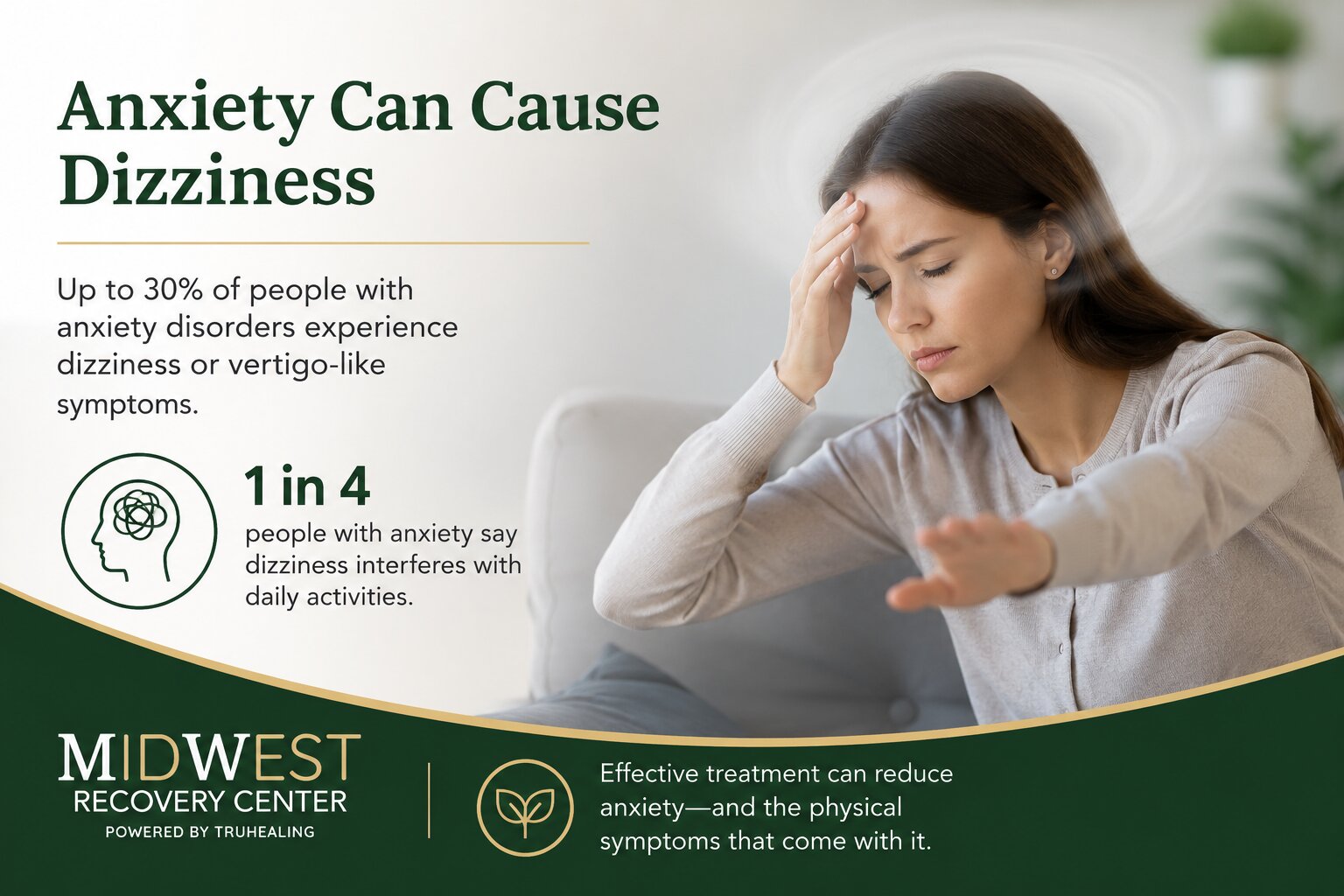
Feeling like the room is spinning can be frightening. It can happen while you’re standing in line at the grocery store, driving, sitting at work, or even lying in bed. If medical tests have come back normal, you may have started wondering whether anxiety could really be causing these sensations.

The answer is yes—for many people, anxiety can contribute to dizziness and vertigo-like symptoms.

If you’ve been searching “can anxiety cause vertigo,” you’re not imagining what you’re feeling. Anxiety affects far more than your thoughts. It can influence your breathing, heart rate, balance, muscle tension, and the way your brain processes sensory information. The result can be dizziness that feels very real, even when no inner-ear disorder is present.

At Midwest Recovery Center, we help people throughout Toledo and Northwest Ohio understand and treat anxiety disorders with evidence-based care. Learn more about our anxiety treatment program and how individualized treatment can help address both the emotional and physical symptoms of anxiety.

While anxiety can cause dizziness, it’s also important to remember that dizziness has many possible causes. New, severe, or persistent symptoms should always be evaluated by a healthcare provider to rule out medical conditions that require treatment.

Can Anxiety Cause Vertigo?

Yes.

Although anxiety does not usually cause true vertigo resulting from an inner-ear disorder, it can produce sensations that feel remarkably similar.

People commonly describe feeling:

  • Dizzy or lightheaded
  • Off balance
  • Unsteady while walking
  • As though the room is moving
  • Like they might faint
  • As though they are floating or rocking
  • Sensitive to motion

These symptoms are especially common during:

  • Panic attacks
  • Periods of intense stress
  • Chronic anxiety
  • Persistent worry
  • Hypervigilance

For some individuals, dizziness becomes one of the most distressing physical symptoms of anxiety. Others become so concerned about feeling dizzy that they begin avoiding stores, driving, crowded places, or other situations where they fear symptoms might occur.

This can create a cycle in which anxiety increases dizziness, and dizziness increases anxiety.

How Anxiety Triggers Dizziness and Vertigo

Anxiety activates the body’s natural stress response, often called the “fight-or-flight” system.

This response is designed to protect us from danger, but it also produces physical changes that can affect balance and coordination.

Changes in breathing

When people become anxious, they often begin breathing faster or more shallowly without realizing it.

Rapid breathing can lower carbon dioxide levels in the blood, leading to symptoms such as:

  • Lightheadedness
  • Tingling in the hands or face
  • Feeling disconnected
  • Unsteadiness
  • Dizziness

Many people mistake these sensations for a serious medical emergency, which increases anxiety even further.

Muscle tension

Anxiety frequently causes muscles to tighten, particularly in the:

  • Neck
  • Shoulders
  • Jaw
  • Upper back

Tension around the neck and upper body may contribute to feelings of imbalance or discomfort that resemble dizziness.

Increased adrenaline

During periods of anxiety, the body releases stress hormones such as adrenaline.

These hormones increase:

  • Heart rate
  • Blood pressure
  • Alertness
  • Muscle readiness

While these changes prepare the body for perceived danger, they can also create sensations of shakiness, lightheadedness, and instability.

Heightened body awareness

People living with anxiety often become extremely aware of normal physical sensations.

Small changes in balance or movement that most people would ignore may suddenly feel alarming.

The brain begins monitoring every sensation, making dizziness seem stronger and more frequent.

Persistent nervous system activation

When anxiety becomes chronic, the nervous system may remain in a heightened state for long periods.

Over time, this constant activation can make dizziness occur more easily—even during relatively calm situations.

Anxiety Dizziness vs. Inner-Ear Vertigo

Because the symptoms can overlap, it is sometimes difficult to know whether dizziness is related to anxiety or an inner-ear condition.

Although only a healthcare provider can make that determination, there are some general differences.

Anxiety-Related Dizziness

Inner-Ear Vertigo

Often occurs during stress, worry, or panic Often triggered by head movement or changes in position
May feel like lightheadedness, floating, rocking, or unsteadiness Usually involves a strong sensation that the room is spinning
Frequently improves as anxiety decreases May continue regardless of emotional state
Often occurs alongside rapid heartbeat, muscle tension, or shortness of breath May occur with hearing changes, ringing in the ears, or nausea depending on the cause
Medical testing is often normal May be linked to conditions affecting the inner ear or balance system

These differences are not absolute. Some people have both anxiety and a vestibular (inner-ear) disorder at the same time.

That is why medical evaluation is important, especially if dizziness is new, severe, or persistent.
Can Anxiety Cause Vertigo Understanding Anxiety and Dizziness

How Anxiety Can Make Existing Vertigo Worse

Even when dizziness begins with an inner-ear problem, anxiety can amplify symptoms.

Someone who has experienced vertigo before may begin worrying constantly about another episode.

This fear can lead to:

  • Avoiding movement
  • Avoiding driving
  • Staying home
  • Monitoring every physical sensation

The resulting anxiety may increase dizziness, making recovery feel much slower.

Treating both the physical and emotional aspects of dizziness often leads to better outcomes than focusing on only one.

How to Calm Anxiety-Related Dizziness

Although long-term treatment addresses the underlying anxiety, several strategies may help reduce symptoms in the moment.

Slow your breathing

Gentle, controlled breathing can help regulate the nervous system and reduce lightheadedness caused by rapid breathing.

Focus on slow, steady breaths rather than deep, forceful ones.

Ground yourself

Directing your attention to your surroundings can interrupt escalating anxiety.

Some people find it helpful to notice:

  • Five things they can see
  • Four things they can touch
  • Three things they can hear
  • Two things they can smell
  • One thing they can taste

Grounding exercises help shift attention away from frightening physical sensations.

Stay hydrated

Dehydration can worsen dizziness regardless of the cause.

Drinking fluids regularly and eating balanced meals may help reduce symptoms.

Avoid sudden movements

Standing up slowly and moving carefully during episodes of dizziness may reduce the sensation of imbalance.

Address the anxiety itself

If dizziness repeatedly occurs during periods of stress or worry, treating the underlying anxiety is often the most effective long-term solution.

When to Get Help for Anxiety

Occasional anxiety is part of life.

However, professional support may be beneficial if anxiety:

  • Causes frequent dizziness
  • Leads to panic attacks
  • Interferes with work or school
  • Affects relationships
  • Prevents you from driving or leaving home
  • Causes you to avoid everyday activities
  • Persists despite reassurance or medical evaluation

Anxiety disorders are highly treatable.

Evidence-based treatments such as Cognitive Behavioral Therapy (CBT), Acceptance and Commitment Therapy (ACT), and, when appropriate, medication can significantly reduce both emotional distress and physical symptoms.

At Midwest Recovery Center, we work with adults throughout Toledo and Northwest Ohio to develop individualized treatment plans that address anxiety from every angle—not just the emotional symptoms, but the physical effects that can interfere with daily life as well.

When Dizziness Needs Immediate Medical Attention

Although anxiety can cause dizziness, some symptoms require urgent medical evaluation.

Seek emergency medical care immediately if dizziness occurs with:

  • Sudden weakness or numbness
  • Difficulty speaking
  • Vision loss or double vision
  • Severe chest pain
  • Loss of consciousness
  • A severe, sudden headache
  • Persistent vomiting
  • Difficulty walking that is new or worsening

These symptoms may indicate a medical emergency rather than anxiety.

Relief Is Possible

Living with unexplained dizziness can be exhausting, especially if you’ve been told that “everything looks normal.”

Normal test results do not mean your symptoms are imaginary.

Anxiety can produce powerful physical sensations, including dizziness and vertigo-like experiences that feel every bit as real as those caused by medical conditions. The encouraging news is that when anxiety is identified and treated, these symptoms often become much more manageable.

You deserve answers, validation, and care that takes both your physical and emotional health seriously. Call Midwest Recovery Center today at (833) 657-0858 to speak with a caring team member, or learn more about our treatment services and take the first step toward feeling like yourself again.

Frequently Asked Questions

Is my dizziness anxiety or my ears?

It can be difficult to tell because the symptoms often overlap. Anxiety-related dizziness is more likely to occur during stress, panic, or ongoing worry, while inner-ear vertigo is often triggered by head movements or balance disorders. A healthcare provider can evaluate your symptoms and rule out medical causes before determining whether anxiety is contributing.

How do I stop anxiety dizziness?

Managing anxiety is often the most effective long-term approach. Techniques such as slow breathing, grounding exercises, staying hydrated, getting adequate sleep, and participating in evidence-based therapy can help reduce symptoms. If dizziness is frequent or interferes with daily life, professional treatment for anxiety may be beneficial.

Is anxiety vertigo normal?

Yes. Many people with anxiety disorders experience dizziness, lightheadedness, or vertigo-like sensations. While these symptoms are common, they should not automatically be assumed to be caused by anxiety. A medical evaluation is important, particularly if dizziness is new, severe, persistent, or accompanied by other concerning symptoms.

*The stories shared in this blog are meant to illustrate personal experiences and offer hope. Unless otherwise stated, any first-person narratives are fictional or blended accounts of others’ personal experiences. Everyone’s journey is unique, and this post does not replace medical advice or guarantee outcomes. Please speak with a licensed provider for help.

Level Of Care

PHP (Partial Hospitalization Program)
Daytime treatment with structure, therapy, and support—return home each night.

IOP (Intensive Outpatient Program)
Flexible therapy a few days a week to balance life and recovery.

OP (Outpatient Program)
Ongoing therapy and support to maintain progress.

MAT (Medication-Assisted Treatment)
Evidence-based care using medication and counseling to reduce cravings.

Ready to Start?
Call (833) 657-0858: to learn which program fits your recovery goals.

Who are you seeking help for? *

We’re here to listen and help you find the right path forward. Please tell us who needs care so we can match you with the best program and support.

💬 Your responses are 100% confidential and never shared outside our admissions team.

Recovery Shouldn’t Have to Wait — Begin Treatment Today.

At Ohio Treatment Center in Toledo, Ohio, we make it simple to take that first step toward healing. Our streamlined admissions process can often lead to same-day placement in treatment for MAT, PHP, IOP and more..

Call today for a free, confidential consultation with our caring admissions team — we’ll walk you through every step with compassion and clarity.

Call (833) 657-0858
Why call us?

Check Your Insurance Coverage in Minutes

We’ll handle the insurance details — so you can focus on getting better.

At Ohio Treatment Center, we work with most major private insurance providers to make treatment affordable and accessible. Complete our quick, confidential form below, and we’ll let you know if your plan is in-network — without contacting your insurance company.

Commonly accepted providers include:
Blue Cross Blue Shield (BCBS) • Aetna • Cigna • UnitedHealthcare • Humana • Anthem • Tricare

What Happens Next

  • Fill out the short form below
  • Our team reviews your benefits
  • We’ll contact you with your coverage details

Getting help shouldn’t be stressful. Let’s find out what your insurance can cover today.

Level Of Care

Detox
Begin recovery safely with 24/7 medical support. Our detox program helps you manage withdrawal comfortably and prepares you for the next step.

Residential Treatment
Continue healing in a supportive, structured setting with daily therapy, wellness activities, and round-the-clock care.

Aftercare
Before you leave, we’ll help you create a plan for ongoing support and lasting recovery.

Ready to Start?
Call (833) 657-0858: to learn which program fits your recovery goals.

Who are you seeking help for? *

We’re here to listen and help you find the right path forward. Please tell us who needs care so we can match you with the best program and support.

💬 Your responses are 100% confidential and never shared outside our admissions team.

Recovery Shouldn’t Have to Wait — Begin Treatment Today.

At Midwest Detox Center in Maumee, Ohio, we make it simple to take that first step toward healing. Our streamlined admissions process can often lead to same-day placement in treatment for medically supervised detox and residential treatment programs.

Call today for a free, confidential consultation with our caring admissions team — we’ll walk you through every step with compassion and clarity.

Call (833) 657-0858
Why call us?

Check Your Insurance Coverage in Minutes

We’ll handle the insurance details — so you can focus on getting better.

At Midwest Detox, we work with most major private insurance providers to make treatment affordable and accessible. Complete our quick, confidential form below, and we’ll let you know if your plan is in-network — without contacting your insurance company.

Commonly accepted providers include:
Blue Cross Blue Shield (BCBS) • Aetna • Cigna • UnitedHealthcare • Humana • Anthem • Tricare

What Happens Next

  • Fill out the short form below
  • Our team reviews your benefits
  • We’ll contact you with your coverage details

Getting help shouldn’t be stressful. Let’s find out what your insurance can cover today.

Level Of Care

Medical Detox
24/7 medically supervised detox to help you safely withdraw from drugs or alcohol while managing symptoms and preventing complications.

Inpatient Treatment
A structured, residential setting that provides continuous medical care, counseling, and therapeutic support to build a foundation for long-term recovery.

Residential Program
Comfortable, home-like housing where you can focus fully on healing with daily therapy, peer support, and holistic recovery services.

Ready to Start?
Call (833) 657-0858: to learn which program fits your recovery goals.

Who are you seeking help for? *

We’re here to listen and help you find the right path forward. Please tell us who needs care so we can match you with the best program and support.

💬 Your responses are 100% confidential and never shared outside our admissions team.

Recovery Shouldn’t Have to Wait — Begin Detox Today

At Ohio Detox Center in Maumee, Ohio, we make it simple to take that first step toward healing. Our streamlined admissions process can often lead to same-day placement in detox or inpatient treatment for substance use and co-occurring mental health conditions.

Call today for a free, confidential consultation with our caring admissions team — we’ll walk you through every step with compassion and clarity.

Call (833) 657-0858
Why call us?

Check Your Insurance Coverage in Minutes

We’ll handle the insurance details — so you can focus on getting better.

We’ll take care of the details — so you can focus on getting better.
At Ohio Detox Center, we work with Ohio Medicaid and most major insurance providers to make treatment affordable and accessible.

Here’s how it works:

  1. Fill out the short form below
  2. Our team reviews your benefits
  3. We’ll contact you with your coverage details

Getting help shouldn’t be stressful. Let’s find out what your insurance can cover today.

Levels of Care

Detox
We understand that taking the first step can feel overwhelming. Our detox program offers a compassionate, medically supported environment where you can rest, heal, and begin recovery safely. You’ll never go through it alone — our team is with you every step of the way.

IOP (Intensive Outpatient Program)
A flexible treatment option that lets you maintain work, school, or family responsibilities while attending therapy several days a week. IOP focuses on relapse prevention, coping skills, and long-term recovery through group and individual sessions.

Residential
Residential care gives you the time and space to focus fully on healing. Surrounded by supportive staff and peers, you’ll work through underlying causes of addiction, rebuild healthy routines, and rediscover confidence in your recovery journey.

MAT (Medication-Assisted Treatment)
Combining FDA-approved medications with counseling and behavioral therapy, MAT helps reduce cravings and withdrawal symptoms related to opioid or alcohol use. Each treatment plan is closely monitored to ensure comfort, safety, and lasting recovery.

Ready to Start?
Call (833) 657-0858: to learn which program fits your recovery goals.

Who are you seeking help for? *

We’re here to listen and help you find the right path forward. Please tell us who needs care so we can match you with the best program and support.

Myself

A loved one or family member

💬 Your responses are 100% confidential and never shared outside our admissions team.

Check Your Insurance Coverage in Minutes

We’ll handle the insurance details — so you can focus on getting better.

At Midwest Centers at Youngstown, we work with most major private insurance providers to make treatment affordable and accessible. Complete our quick, confidential form below, and we’ll let you know if your plan is in-network — without contacting your insurance company.

Commonly accepted providers include:
Blue Cross Blue Shield (BCBS) • Aetna • Cigna • UnitedHealthcare • Humana • Anthem • Tricare

What Happens Next

  • Fill out the short form below
  • Our team reviews your benefits
  • We’ll contact you with your coverage details

Getting help shouldn’t be stressful. Let’s find out what your insurance can cover today.

Recovery Shouldn’t Have to Wait — Begin Treatment Today.

At Midwest Centers at Youngstown in Ohio, we make it simple to take that first step toward healing. Our streamlined admissions process can often lead to same-day placement in treatment for substance use or co-occurring mental health disorders.

Call today for a free, confidential consultation with our caring admissions team — we’ll walk you through every step with compassion and clarity.

Level Of Care

Partial Hospitalization Program (PHP)
Our PHP offers a highly structured, supportive environment where you can focus on recovery during the day and return home at night. It’s an ideal step between inpatient and outpatient care, providing daily therapy, accountability, and a strong recovery routine.

Intensive Outpatient Program (IOP)
Our IOP gives you the flexibility to continue work, school, or family life while receiving evidence-based treatment several days a week. You’ll participate in group and individual therapy focused on relapse prevention, coping skills, and long-term healing.

Outpatient Program (OP)
For those transitioning from a higher level of care or seeking ongoing support, our outpatient program offers continued therapy at a pace that fits your lifestyle. It’s a supportive bridge that helps you maintain recovery and stay connected to care.

Medication-Assisted Treatment (MAT)
MAT combines FDA-approved medications with therapy and counseling to reduce cravings and support long-term recovery from opioid or alcohol addiction. Our team monitors each plan closely to ensure safety, comfort, and effectiveness.

Ready to Start?
Call (833) 657-0858: to learn which program fits your recovery goals.

Who are you seeking help for? *

We’re here to listen and help you find the right path forward. Please tell us who needs care so we can match you with the best program and support.

Myself

A loved one or family member

💬 Your responses are 100% confidential and never shared outside our admissions team.

Recovery Shouldn’t Have to Wait — Begin Treatment Today.

At Midwest Recovery Center in Toledo, Ohio, we make it simple to take that first step toward healing. Our streamlined admissions process can often lead to same-day placement in treatment for substance use or co-occurring mental health disorders.

Call today for a free, confidential consultation with our caring admissions team — we’ll walk you through every step with compassion and clarity.

Check Your Insurance Coverage in Minutes

We’ll handle the insurance details — so you can focus on getting better.

At Midwest Recovery Center, we work with most major private insurance providers to make treatment affordable and accessible. Complete our quick, confidential form below, and we’ll let you know if your plan is in-network — without contacting your insurance company.

Commonly accepted providers include:
Blue Cross Blue Shield (BCBS) • Aetna • Cigna • UnitedHealthcare • Humana • Anthem • Tricare

What Happens Next

  • Fill out the short form below
  • Our team reviews your benefits
  • We’ll contact you with your coverage details

Getting help shouldn’t be stressful. Let’s find out what your insurance can cover today.