
At Midwest Recovery Center, we’ve met a lot of people who carry a secret into Monday morning.
Not a dramatic secret.
Not one that coworkers immediately notice.
A quieter one.
The kind that sits in your stomach during the drive to work.
The kind that follows you into meetings.
The kind that makes you stare at your computer screen while replaying the last forty-eight hours in your head.
Maybe you attended your recovery meeting on Thursday.
Maybe you checked in with your sponsor.
Maybe you genuinely intended to stay sober.
Then the weekend arrived.
Now it’s Monday.
Again.
And you’re wondering how the same thing happened.
Again.
If you’re a long-term alumni who feels stuck in this cycle, we want to start with something important:
This pattern is more common than you think.
And it does not mean recovery has stopped being possible.
In fact, many people who eventually found stronger footing in recovery first experienced exactly what you’re experiencing now.
The weekend relapse.
The Monday regret.
The promise to do better.
The slow return of confidence.
And then another weekend.
Many alumni who reach this point begin exploring structured daytime recovery support because they realize the issue isn’t a lack of desire.
It’s a mismatch between the support they currently have and the support they currently need.
The Cycle Usually Starts Long Before Friday
One mistake people make is focusing only on the moment they pick up a drink.
That moment matters.
But it’s rarely where the story begins.
The story often starts much earlier.
Monday stress.
Tuesday frustration.
Wednesday loneliness.
Thursday exhaustion.
Friday resentment.
By the time the weekend arrives, you’ve been carrying emotional weight for days.
The relapse doesn’t always begin with alcohol.
It often begins with everything that happened before alcohol entered the picture.
Think of it like a pressure cooker.
The weekend isn’t creating the pressure.
It’s simply the moment when the pressure finally escapes.
That’s why many people feel confused.
They focus on the symptom while missing the buildup.
Why Meetings Sometimes Stop Feeling Like Enough
This can be difficult to talk about.
Especially if meetings have helped you before.
For many people, meetings are incredibly valuable.
They provide:
- Accountability
- Community
- Perspective
- Encouragement
- Shared experience
But meetings are not designed to carry every burden a person faces.
We’ve worked with alumni who faithfully attended meetings while simultaneously struggling with:
- Depression
- Anxiety
- Burnout
- Chronic stress
- Grief
- Relationship issues
- Isolation
The meetings weren’t failing.
The person simply needed additional support.
Imagine trying to fix a leaking roof with a bucket.
The bucket helps.
It’s important.
But eventually, you may need to address the roof itself.
Recovery often works the same way.
The Hidden Cost of Looking Fine
One reason this pattern becomes especially common among long-term alumni is because they continue functioning.
They keep working.
They keep parenting.
They keep paying bills.
They keep showing up.
From the outside, everything appears relatively stable.
This creates a dangerous illusion.
People assume they’re okay because they’re functioning.
But functioning and thriving are not the same thing.
Many people who repeatedly relapse on weekends are carrying immense emotional strain beneath a highly functional exterior.
They’re surviving.
Not healing.
There is a difference.
And eventually, survival mode becomes exhausting.
Monday Is Often Harder Than the Relapse
Most people think the relapse is the hardest part.
For many alumni, Monday is worse.
Monday is where the shame shows up.
The anxiety.
The disappointment.
The self-criticism.
The endless mental replay.
You begin questioning everything.
Your recovery.
Your commitment.
Your identity.
Your future.
You tell yourself things you would never say to another person.
You’re weak.
You’re failing.
You’ll never get this right.
Those thoughts often create more damage than the relapse itself.
Because shame doesn’t inspire change.
It inspires hiding.
And hiding is where relapse tends to grow stronger.
Why Willpower Eventually Gets Tired
Many long-term alumni become trapped in a cycle of relying entirely on determination.
Every weekend becomes a test of self-control.
Every craving becomes a battle.
Every temptation becomes something to overpower.
The problem is that willpower is not an unlimited resource.
Imagine trying to drive across the country using only the spare tire.
Eventually, something gives out.
Willpower matters.
It absolutely matters.
But sustainable recovery usually requires more than white-knuckling your way through every challenge.
It requires support.
Structure.
Connection.
Skills.
Accountability.
And sometimes it requires a level of care that reflects what you’re actually experiencing right now—not what you needed three years ago.
The Question Many Alumni Are Afraid to Ask
We hear this concern often.
“If I need more support, does that mean I’ve failed?”
No.
Not even close.
In fact, recognizing that your current approach isn’t working may be one of the healthiest insights you can have.
Imagine someone with recurring back pain.
If physical therapy isn’t solving the issue, they don’t conclude they’re a failure.
They explore additional treatment options.
Recovery deserves the same practical mindset.
Needing more support doesn’t erase your progress.
It reflects your willingness to keep growing.
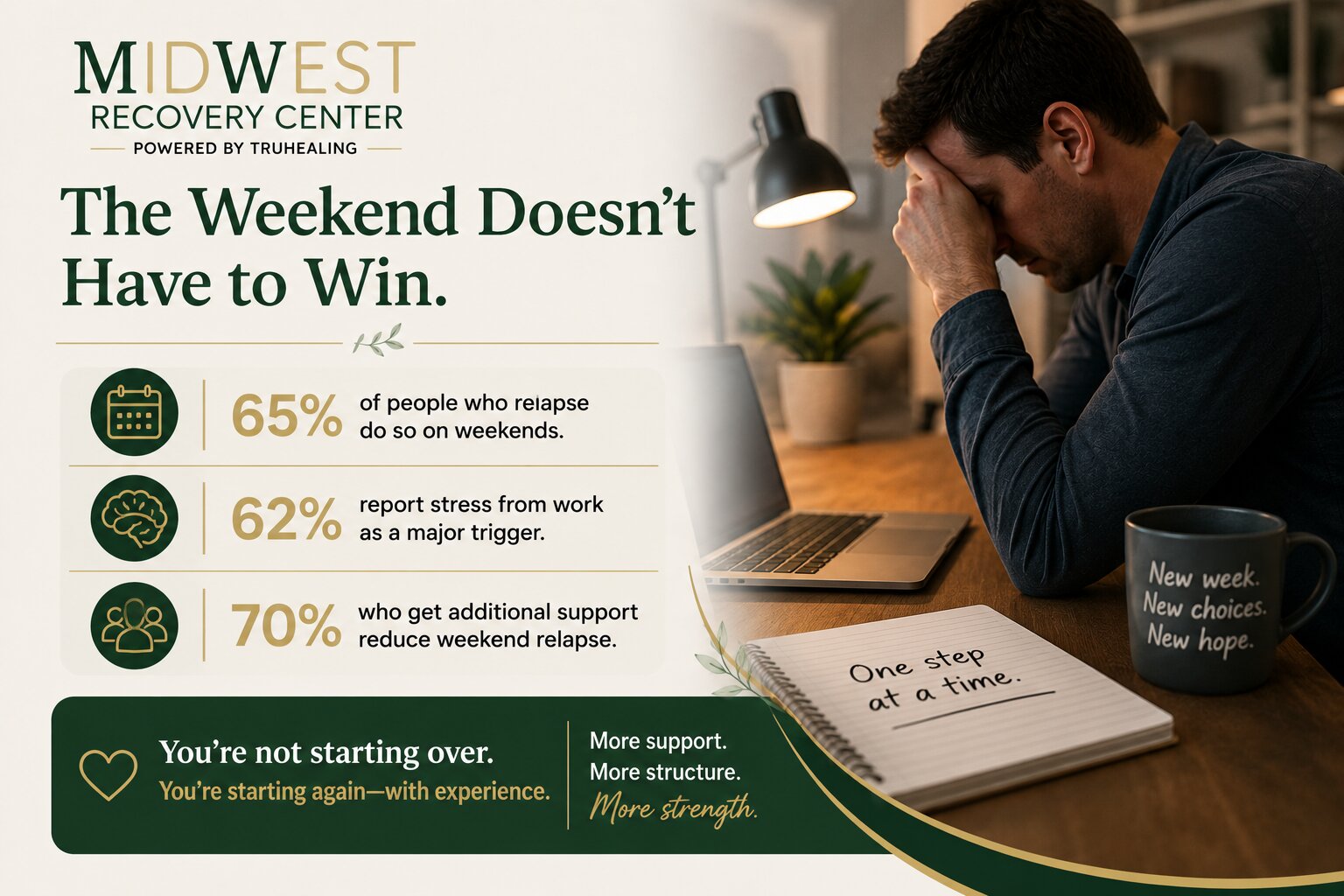
When Work Makes Everything More Complicated
For many alumni, work becomes one of the biggest reasons they avoid seeking additional help.
They tell themselves:
“I can’t take time off.”
“I have responsibilities.”
“My team depends on me.”
“My family depends on me.”
These concerns are real.
But they can also become barriers.
Many people searching for relapse help while working aren’t trying to abandon their careers.
They’re trying to save them.
Because eventually, unresolved relapse patterns begin affecting concentration, energy, confidence, and emotional wellbeing.
The goal isn’t choosing recovery instead of responsibility.
The goal is creating a recovery strategy strong enough to support your responsibilities.
The Weekend Is Often Filling a Need
This is something many people overlook.
Alcohol continues showing up because it serves a purpose.
Maybe it’s relief.
Maybe it’s escape.
Maybe it’s connection.
Maybe it’s distraction.
Maybe it’s comfort.
Understanding what alcohol is providing can reveal what recovery still needs to address.
Because simply removing alcohol doesn’t automatically create fulfillment.
Recovery becomes stronger when people build healthier ways to meet the needs alcohol once served.
That process takes time.
And often, additional support.
Our Story Includes People Who Came Back
One thing we’ve learned over the years is that recovery stories rarely follow a straight line.
Some of our strongest alumni once believed they were out of chances.
They relapsed repeatedly.
They felt disconnected.
They questioned whether treatment had worked.
They wondered if they were broken.
Then something shifted.
Not because they suddenly became perfect.
Because they became honest.
Honest about needing more support.
Honest about what wasn’t working.
Honest about the fact that they were tired of carrying everything alone.
That honesty became a turning point.
And it can become one for you too.
You Are Not Back at Day One
This may be the most important message in this article.
You are not starting over.
You still have everything you’ve learned.
You still have recovery experience.
You still have insight.
You still have resilience.
You still have proof that change is possible.
Even if the last few weekends haven’t looked the way you wanted.
Think of recovery like learning a language.
If you stop practicing for a while, you don’t forget everything.
You may become rusty.
But the foundation remains.
Your foundation remains too.
Whether you’re exploring treatment options in locations or seeking additional care in Youngstown, know that asking for more support is not a step backward.
It may be the exact step that helps you move forward.
Frequently Asked Questions
Why do I only seem to relapse on weekends?
Weekends often involve less structure, more free time, increased social triggers, and accumulated stress from the workweek. The relapse may be happening on Saturday, but the contributing factors often begin days earlier.
Can I relapse even if I attend meetings regularly?
Yes. Meetings are valuable, but some people may need additional support to address underlying challenges affecting their recovery.
Does repeated relapse mean recovery isn’t working?
No. Repeated relapse may indicate that your current recovery plan needs adjustments, not that recovery itself is impossible.
Why does the shame feel so overwhelming afterward?
Many people experience intense guilt, disappointment, and self-criticism after a relapse. These emotions are common but can become barriers if they lead to isolation.
What if I still have to work every Monday?
Many people maintain employment while seeking additional support. Recovery and professional responsibilities do not always have to compete.
Is it normal to feel disconnected after years of sobriety work?
Yes. Long-term recovery can include periods of stagnation, loneliness, burnout, and emotional disconnection.
How do I know if I need more structure?
If you’re repeating the same cycle despite consistent effort, it may be worth exploring whether additional support could help.
Does asking for help again mean I’m starting over?
No. You are bringing years of experience, recovery knowledge, and self-awareness with you.
What if I’m embarrassed to reach out?
Many alumni feel this way. The good news is that recovery communities and treatment professionals understand setbacks far more than most people expect.
Can recovery still work for me after multiple relapses?
Absolutely. Many people who now enjoy stable recovery once believed they had exhausted every chance. Change remains possible.
The Weekend Doesn’t Have to Keep Writing Your Story
If you’re tired of spending Monday mornings wondering how you ended up in the same place again, it may be time to stop fighting this battle alone.
Not because you’re weak.
Because you’re human.
And humans recover best when they are supported.
Call (833) 657-0858 or visit our partial hospitalization program services to learn more about our partial hospitalization program services Cincinnati, Ohio.