

Receiving a mental health diagnosis is often supposed to bring clarity. But if your provider told you that you have unspecified anxiety disorder, you may have left your appointment with more questions than answers.
You might wonder:
- “Does this mean they don’t know what’s wrong?”
- “Is my anxiety not serious enough?”
- “Will I still be able to get treatment?”
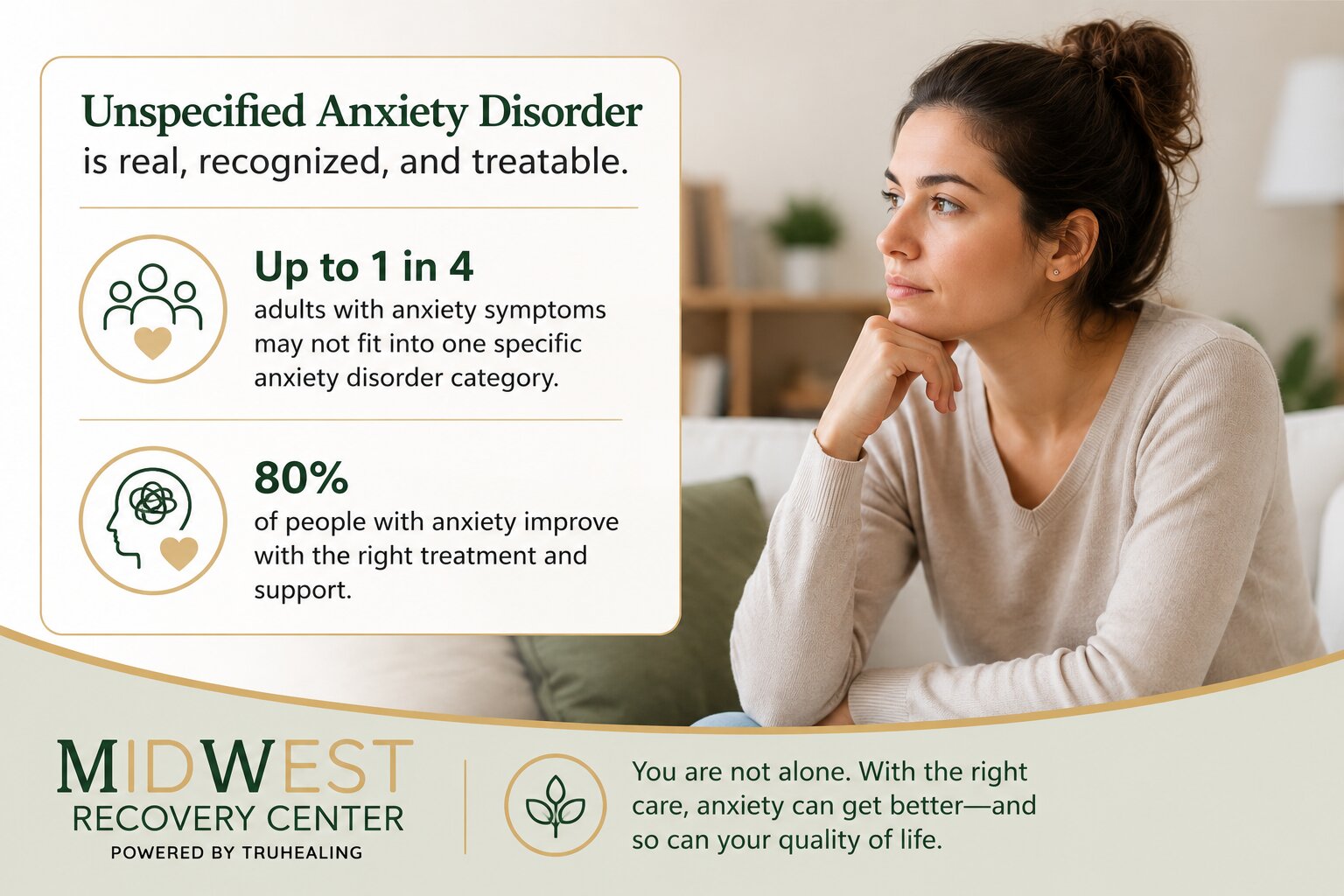
These are understandable concerns. The good news is that this diagnosis is real, recognized, and treatable. It does not mean your symptoms are being dismissed or that your experiences are “less valid” than someone diagnosed with generalized anxiety disorder or panic disorder.
If you’re looking for support, Midwest Recovery Center provides evidence-based care for anxiety and other mental health conditions. You can learn more about our anxiety treatment program and the therapies available to help people regain confidence, reduce overwhelming worry, and improve daily functioning.
A diagnosis is simply a tool that helps providers guide treatment. It does not define you, and it does not determine your ability to recover.
What Unspecified Anxiety Disorder Is
The Diagnostic and Statistical Manual of Mental Disorders (DSM-5) includes a category called unspecified anxiety disorder. Mental health professionals use this diagnosis when someone is clearly experiencing clinically significant anxiety, but their symptoms do not fully match the criteria for one specific anxiety disorder.
In other words, the anxiety is real and causing distress or interfering with daily life, but it does not fit neatly into categories such as:
- Generalized anxiety disorder (GAD)
- Panic disorder
- Social anxiety disorder
- Specific phobias
- Separation anxiety disorder
Mental health conditions do not always present in textbook ways. Many people experience symptoms that overlap multiple disorders or change over time. The DSM-5 recognizes this reality by allowing clinicians to diagnose significant anxiety even when it doesn’t align perfectly with one established subtype.
Rather than delaying treatment while trying to force symptoms into a particular category, providers can begin addressing the anxiety that is already affecting the person’s life.
Why This Diagnosis Is Used
Many people assume that an “unspecified” diagnosis means their provider is uncertain or has not completed the evaluation. While that can occasionally happen during an initial assessment, it is not the only reason this diagnosis is used.
There are several situations in which this diagnosis may be appropriate.
Symptoms don’t fit one clear anxiety disorder
Someone may experience frequent anxiety, physical tension, racing thoughts, and avoidance behaviors without meeting every diagnostic requirement for generalized anxiety disorder or another specific condition.
The symptoms are significant, but the overall pattern is different.
There isn’t enough information yet
During an initial appointment, a provider may not have enough information to determine which anxiety disorder best matches the person’s experiences.
This does not mean treatment has to wait.
Beginning therapy, building coping skills, and monitoring symptoms can all happen while the diagnostic picture becomes clearer over time.
Multiple conditions may overlap
Anxiety commonly occurs alongside other mental health conditions, including:
- Depression
- Trauma-related disorders
- Obsessive-compulsive symptoms
- Substance use disorders
- Chronic medical conditions
When several conditions interact, anxiety symptoms may not fit one diagnosis perfectly.
Symptoms may change over time
Mental health is not static.
Someone may initially receive an unspecified diagnosis and later meet criteria for generalized anxiety disorder, panic disorder, or another condition as symptoms evolve.
Likewise, treatment may reduce symptoms enough that the original diagnosis is no longer the best description.
Common Symptoms of Unspecified Anxiety
Although everyone’s experience is unique, people diagnosed with unspecified anxiety disorder often report symptoms similar to those seen in other anxiety disorders.
These may include:
Persistent worry
Many people feel unable to stop thinking about potential problems, even when they recognize that the worry feels excessive.
Restlessness
Feeling constantly “on edge” can make it difficult to relax, concentrate, or enjoy everyday activities.
Muscle tension
Chronic anxiety frequently causes tight muscles, headaches, neck pain, jaw clenching, or unexplained body aches.
Trouble sleeping
People may struggle to:
- Fall asleep
- Stay asleep
- Wake feeling rested
Racing thoughts often become more noticeable at bedtime.
Fatigue
Living with ongoing anxiety requires tremendous mental energy.
Many people feel exhausted even after a full night’s sleep.
Difficulty concentrating
Persistent worry can interfere with:
- Work performance
- School
- Decision-making
- Conversations
- Memory
People sometimes describe feeling mentally “foggy” because anxious thoughts continually interrupt their focus.
Physical symptoms
Anxiety affects the body as well as the mind.
Physical symptoms may include:
- Rapid heartbeat
- Sweating
- Trembling
- Upset stomach
- Nausea
- Shortness of breath
- Dizziness
- Chest tightness
These symptoms are genuine physical responses to anxiety and should never be dismissed as “just in your head.”
Avoidance
People often begin avoiding situations that seem likely to trigger anxiety, even if they cannot fully explain why those situations feel difficult.
Over time, avoidance can shrink daily life and reinforce anxiety.
Is This Diagnosis Serious?
The word “unspecified” sometimes makes people worry that their diagnosis is somehow less important.
That is not the case.
The seriousness of an anxiety disorder is determined by how much it affects daily functioning—not by the wording of the diagnosis itself.
Anxiety can become serious when it interferes with:
- Employment
- School performance
- Relationships
- Sleep
- Physical health
- Parenting
- Social activities
- Daily responsibilities
Whether symptoms fit a specific DSM-5 category or fall under an unspecified diagnosis, they deserve professional attention if they are causing significant distress.
Receiving this diagnosis should never be interpreted as a sign that your symptoms are exaggerated, imagined, or unworthy of treatment.
Treatment Options That Work
One reassuring aspect of this diagnosis is that treatment focuses on the symptoms you’re experiencing—not simply the label attached to them.
Individual therapy
Therapy is often the foundation of anxiety treatment.
Evidence-based approaches help people:
- Understand anxiety patterns
- Develop healthier coping strategies
- Reduce avoidance
- Build confidence
- Improve emotional regulation
Many individuals benefit from Cognitive Behavioral Therapy (CBT), Acceptance and Commitment Therapy (ACT), or other structured therapeutic approaches tailored to their needs.
Medication
For some people, medication may help reduce symptoms enough to make therapy more effective.
A psychiatric provider may recommend medication based on:
- Symptom severity
- Medical history
- Other mental health conditions
- Individual treatment goals
Medication decisions are always individualized.
Stress management skills
Learning practical coping techniques can reduce anxiety’s impact on everyday life.
Examples include:
- Deep breathing exercises
- Mindfulness practices
- Progressive muscle relaxation
- Healthy sleep habits
- Regular physical activity
- Structured daily routines
These strategies are often most effective when combined with professional treatment.
Addressing co-occurring conditions
Many people experience anxiety alongside depression, trauma, or substance use concerns.
Treating both conditions together often leads to better long-term outcomes than focusing on only one issue.
Getting Help at Midwest Recovery Center
Living with anxiety can be exhausting, especially when you’re unsure whether your diagnosis “counts.”
It does.
At Midwest Recovery Center, we understand that anxiety doesn’t always fit neatly into one diagnostic category. Our clinical team focuses on understanding the whole person—not just the diagnosis written in a medical record.
We work with adults throughout Toledo and surrounding Northwest Ohio to develop individualized treatment plans based on each person’s symptoms, goals, and overall mental health needs. Whether your anxiety has been present for years or you’ve only recently sought help, treatment can provide practical tools for managing symptoms and improving daily life.
Recovery isn’t about finding the perfect label. It’s about finding the right support.
You Deserve Answers—and Effective Treatment
Being told you have unspecified anxiety disorder can initially feel confusing, but it should never make you feel dismissed.
The diagnosis exists because mental health conditions are often more complex than simple checklists. It allows providers to recognize significant anxiety, begin treatment promptly, and continue refining care as they learn more about your experiences.
Most importantly, this diagnosis is treatable.
With evidence-based therapy, appropriate medical care when needed, and ongoing support, many people experience meaningful improvements in their symptoms and quality of life. If anxiety is interfering with your work, relationships, or overall well-being, reaching out for professional help can be the first step toward lasting relief. Call Midwest Recovery Center today at (833) 657-0858 to speak with a caring team member, or learn more about our treatment services and take the first step toward feeling like yourself again.
Frequently Asked Questions
What does unspecified anxiety disorder mean?
It is a DSM-5 diagnosis used when someone has clinically significant anxiety symptoms that do not fully meet the criteria for one specific anxiety disorder or when there is not yet enough information to assign a more specific diagnosis. It is a legitimate mental health condition that allows treatment to begin without delay.
Is unspecified anxiety disorder serious?
It can be. The seriousness depends on how much the symptoms interfere with daily life, relationships, work, school, or overall well-being—not on the wording of the diagnosis. Even if the diagnosis is “unspecified,” the anxiety itself can still require professional treatment.
Is unspecified anxiety disorder treatable?
Yes. Most people benefit from evidence-based treatments such as psychotherapy, healthy coping strategies, lifestyle changes, and, when appropriate, medication. Treatment is based on your symptoms and individual needs rather than the diagnosis label alone.