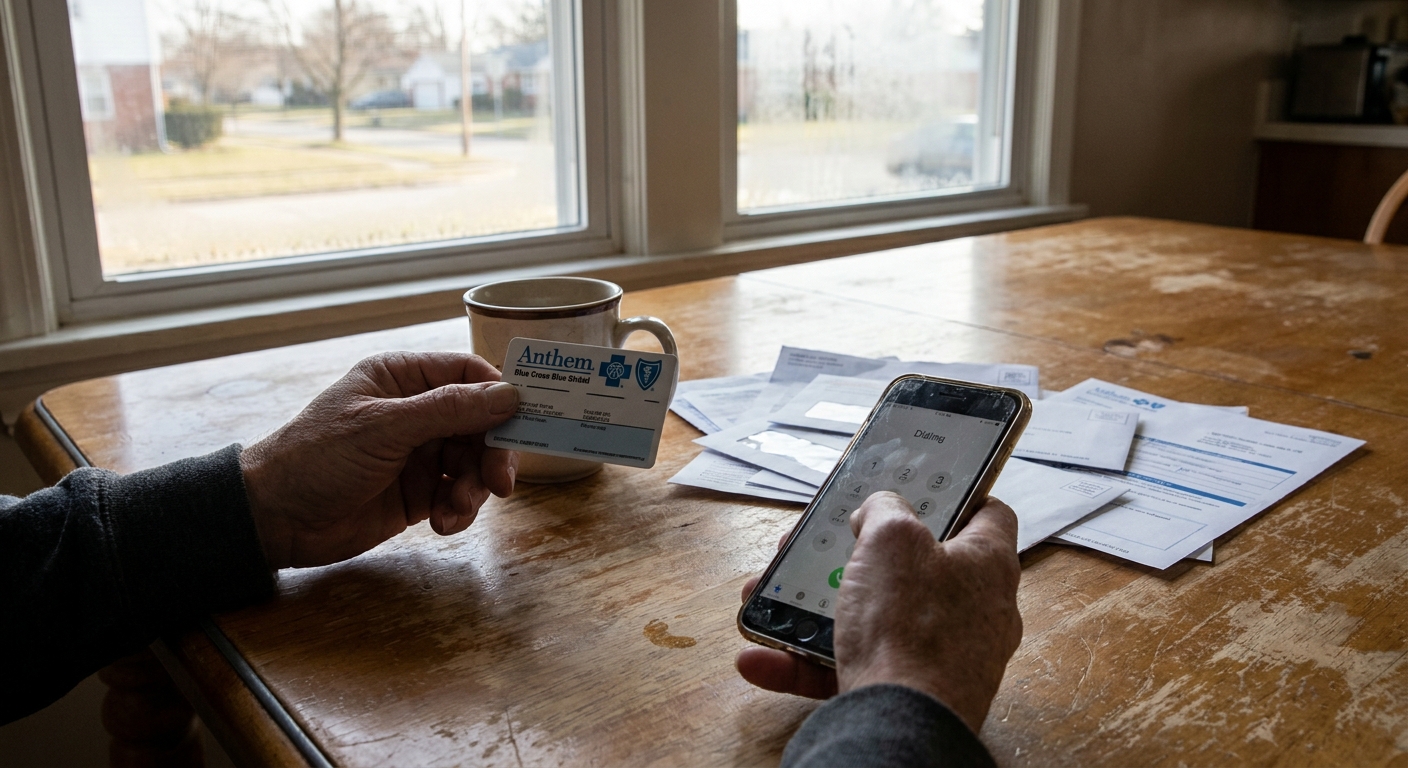
Finding a rehab that takes Aetna in Toledo, Ohio is more complicated than it should be, and the gap between “accepts Aetna” and “is actually in-network with your specific plan” costs people thousands of dollars every year. This guide walks you through exactly how Aetna covers substance use treatment in Ohio, how to confirm in-network status before you commit, and what to do when the process stalls.
What “in-network” actually means for rehab coverage
When a facility is in-network with Aetna, it has signed a contract agreeing to negotiated rates for services. Aetna pays its contracted share, and you pay your portion based on your plan’s deductible, co-insurance, and co-pay structure. When a facility is out-of-network, no such contract exists. Aetna either pays nothing or pays a much smaller reimbursement, and you’re responsible for the difference, which can reach tens of thousands of dollars for a residential stay.
The financial stakes are not abstract. A 2022 KFF analysis found that out-of-pocket costs are one of the leading reasons adults delay or abandon substance use treatment entirely, with cost cited as a barrier by roughly one in three people who needed but did not receive care. The practical takeaway: before calling any facility, ask one question directly: “Is your facility in-network with my specific Aetna plan?” Not “Do you accept Aetna?” The answer to the second question is almost always yes. The answer to the first determines your actual cost.
How aetna covers substance use treatment in ohio
Federal law requires it. The Mental Health Parity and Addiction Equity Act, passed in 2008 and strengthened by subsequent CMS guidance, mandates that insurers like Aetna cover substance use disorder treatment at parity with medical and surgical benefits. That means Aetna cannot impose stricter day limits, higher co-pays, or more burdensome prior authorization requirements for addiction treatment than it does for comparable medical care.
In practice, enforcement gaps exist. A 2021 SAMHSA report documented that parity violations remain widespread, with behavioral health benefits routinely subject to more restrictive utilization management than physical health benefits. Knowing the law exists gives you standing to push back when Aetna applies unreasonable restrictions. Before your first call to any facility, pull your Summary of Benefits and Coverage document from your Aetna online account or request it by calling member services. It lists the actual benefit levels for behavioral health services and is the document you use to hold Aetna accountable.
Detox and residential care
Detox and residential treatment are the most intensively managed levels of care under Aetna. Both typically require prior authorization before admission, meaning Aetna must approve the stay in advance based on medical necessity criteria. Those criteria generally require documentation that you cannot safely manage withdrawal or early recovery in a less intensive setting. Approval timelines for urgent detox situations are usually 24 to 72 hours, but residential authorizations for longer stays are reviewed on a concurrent basis, often in 7-day increments. The facility’s clinical team handles this documentation, but you need to know it’s happening so you can follow up if there are delays.
Partial hospitalization and intensive outpatient programs
Partial hospitalization programs (PHP) and intensive outpatient programs (IOP) are frequently the most accessible levels of care for Aetna members because they carry lower prior authorization burdens and are widely available in the Toledo area. PHP typically runs five to six hours per day, five days per week. IOP runs three to four hours per day, three to five days per week. Aetna structures benefits at these levels differently depending on your plan: some plans use a co-pay per session, others apply co-insurance (a percentage of the allowed amount) after your deductible is met. Knowing which structure your plan uses changes your cost estimate significantly, so confirm this when you pull your Summary of Benefits.
Standard outpatient and medication-assisted treatment
Standard outpatient care, typically one to two hours per week, carries the lightest authorization requirements and the lowest cost-share. Medication-assisted treatment (MAT), including buprenorphine, naltrexone, and methadone, falls under both the pharmacy and behavioral health benefits depending on the medication and how it’s administered. A 2023 NIDA analysis confirmed what clinical evidence has shown consistently: MAT reduces opioid use, overdose deaths, and treatment dropout rates more effectively than abstinence-based approaches alone. When calling any facility, ask upfront whether MAT is integrated into their clinical program, not offered as a separate referral. Facilities that provide MAT within the same program produce better outcomes.
The four ways to find aetna in-network rehab in toledo
There are four reliable methods for confirming in-network status: Aetna’s online provider directory, member services by phone, the facility’s intake team, and an independent patient advocate. Use at least two of them and cross-check the results. A 2022 GAO report on provider directory accuracy found that one in five directory listings for behavioral health providers contained errors, including providers listed as in-network who were not accepting patients or had no active contract with the insurer. A directory result is a starting point, not a confirmation.
Using aetna’s online provider directory
Start at Aetna’s website and navigate to the “Find a Doctor” or provider search tool. Select “Behavioral Health” as the specialty category and enter your zip code in Toledo or the surrounding Lucas County area. Filter results by “Substance Use Treatment” or “Addiction Services” to narrow the list to relevant facility types. Write down the name, address, and NPI number of any facility you’re considering. Then call the facility directly and verify that the directory information is current. The GAO identified “ghost networks” as a persistent problem, where providers appear in directories but are no longer contracted. Treat directory results as a lead list, not a guarantee.
Calling aetna member services directly
The member services number is on the back of your Aetna insurance card. Call it and use this script: “I’m looking for in-network substance use treatment facilities in the Toledo, Ohio area. Can you confirm whether [facility name] is in-network with my specific plan? What are the prior authorization requirements for detox and residential care? What is my deductible, my co-insurance rate for behavioral health, and my out-of-pocket maximum?” Write down the name of the representative, the date and time of the call, and the reference number for the call. If there’s a dispute later, that documentation matters.
Verifying coverage through the facility’s intake team
Any reputable facility will run a benefits verification before admission, and they do it at no cost to you. To initiate this, provide the facility’s intake coordinator with your Aetna member ID number, group number, date of birth, and the name of the subscriber if the policy is through someone else’s employer. The verification confirms your in-network status, your deductible and co-insurance levels, and whether prior authorization is required. What it does not guarantee is that Aetna will approve every day of treatment. Request written confirmation of your in-network status and your estimated cost-share before agreeing to admission. Verbal assurances are not sufficient.
Working with a patient advocate or addiction specialist
Independent patient advocates specialize in navigating insurance systems on behalf of patients, including managing prior authorization denials and appeals. They’re most valuable in complex cases: multiple prior denials, dual-diagnosis treatment needs, or situations where a loved one is in crisis and the insurance process is stalling. SAMHSA’s National Helpline (1-800-662-4357) is a free, confidential starting point available 24 hours a day. If the first two verification methods stall or produce conflicting information, call that number. The staff can help connect you with local resources and navigate the coverage process.
Aetna plan types in ohio and why they change your options
Your Aetna plan type determines how much freedom you have to choose a facility. HMO plans require you to use in-network providers and typically require a referral from a primary care physician before accessing specialty behavioral health care. EPO plans also restrict you to the network but don’t require a referral. PPO plans allow you to use out-of-network providers, though at a higher cost-share. POS plans combine features of HMO and PPO structures.
Most Toledo-area residents with employer-sponsored Aetna coverage have a PPO plan. A 2023 KFF Employer Health Benefits Survey found that PPO plans cover 49% of covered workers nationally, and that proportion is consistent with Ohio’s employer-sponsored market. A PPO gives you meaningful flexibility, including the ability to access out-of-network facilities if no in-network option meets your clinical needs. Understanding how PPO coverage applies to behavioral health facilities in Lucas County helps you use that flexibility without generating unexpected bills. Locate your plan type on your insurance card or the Summary of Benefits document before starting your facility search.
Prior authorization: what aetna requires and how to navigate it
Prior authorization is Aetna’s process for reviewing medical necessity before approving coverage for a service. For rehab, Aetna typically requires prior authorization for detox and residential treatment. PHP and IOP may require authorization depending on your plan. Standard outpatient and MAT office visits usually do not.
A 2023 AMA Prior Authorization Physician Survey found that 94% of physicians reported prior authorization delays that caused patients to abandon recommended treatment. The mechanism is straightforward: delays create friction, friction leads to drop-off, and drop-off means no treatment. The best way to navigate prior auth is to let the facility handle it. Ask the intake coordinator to initiate prior authorization on your behalf as soon as you’ve verified in-network status. Don’t wait to do it yourself. Facilities that work with Aetna regularly know the documentation requirements and can expedite the process.
What to do if aetna denies your claim
A denial is not the end of the process. Aetna is required to provide a written explanation of any denial, including the clinical criteria it used to make the decision. The first step is an internal appeal, which you must file within 180 days of the denial. File it in writing, not over the phone. A denial accepted verbally is still a denial. The appeal should include a letter from the treating clinician explaining the medical necessity, supporting clinical documentation, and a citation to the federal parity law if the denial appears to apply stricter standards to behavioral health than to comparable medical care.
If the internal appeal fails, you can request an external review by an independent organization, which Aetna is required to accept. The Ohio Department of Insurance oversees insurance compliance in the state and accepts complaints when insurers fail to follow federal parity requirements. A 2023 KFF analysis of insurer claim denials found that when patients do appeal, they win a significant share of cases, but fewer than 1 in 10 denied claims are ever appealed. File the appeal.
Toledo-area rehab options that accept aetna
Lucas County and the broader Northwest Ohio area include hospital-based behavioral health programs, freestanding residential facilities, community mental health centers, and outpatient and IOP clinics. The types of facilities that most consistently maintain Aetna contracts are those with dedicated insurance verification teams, meaning they process Aetna claims regularly enough to keep their credentialing current.
SAMHSA’s 2023 Behavioral Health Barometer for Ohio documented persistent treatment capacity gaps across the state, with demand for substance use treatment outpacing available provider slots in many markets, including Northwest Ohio. That gap means the facilities that do accept commercial insurance like Aetna carry significant patient volume, and confirming current in-network status before your first appointment is particularly important in this market.
The geographic scope of the Toledo-area Aetna network typically covers facilities in Toledo proper, Maumee, and surrounding Lucas County. Start with facilities that have dedicated intake and insurance verification teams, because those programs are built to handle the authorization and credentialing process without delays that could push back your admission date. If you’re also evaluating coverage in the eastern part of the state, the process for confirming in-network status in Mahoning County follows the same verification steps, though the specific network contracts differ.
Co-occurring mental health conditions and aetna coverage
A 2023 SAMHSA National Survey on Drug Use and Health found that 21.5 million adults in the United States had a co-occurring substance use disorder and mental health condition. In practical terms, this means the majority of people entering addiction treatment carry a dual diagnosis, whether that’s depression, anxiety, PTSD, or another condition alongside the substance use disorder.
Aetna covers dual-diagnosis treatment under the same parity protections that apply to addiction treatment. The coverage is there. The question is whether the facility you choose actually delivers integrated care. Many programs address substance use and mental health separately, with different clinicians and disconnected treatment plans. Ask facilities directly: “Does your clinical team address both substance use and mental health conditions within the same program?” The answer tells you whether integrated care is part of their model or an add-on referral. Integrated treatment produces better outcomes, and it’s the standard you should hold facilities to when making your decision.
What rehab will actually cost you with aetna
The real cost of rehab with Aetna depends on four numbers: your deductible, your co-insurance rate, your co-pay structure, and your out-of-pocket maximum. The deductible is what you pay before Aetna starts sharing costs. Once you’ve met the deductible, co-insurance applies, meaning you pay a percentage of the allowed amount (commonly 20-30% for in-network care) until you hit your out-of-pocket maximum. After that point, Aetna covers 100% of covered services for the rest of the calendar year.
A 2023 KFF analysis of employer-sponsored plans found that the average in-network out-of-pocket maximum was approximately $4,500 for individual coverage and $9,000 for family coverage. Those numbers represent the ceiling on your financial exposure for the year, not the amount you’ll necessarily pay. If you’ve already met part of your deductible through other medical care earlier in the year, your cost for rehab is correspondingly lower.
Calculate how much of your deductible you’ve already met this calendar year before estimating your cost for rehab. You can find this on your Aetna member portal under “Spending Summary” or by calling member services. This single number changes your cost estimate significantly and determines whether starting treatment now versus waiting until January is financially relevant. Specific dollar amounts vary by plan and cannot be confirmed without a formal benefits verification, which is exactly why the verification step matters.
What to ask about financial assistance
If the cost-share after insurance is still a barrier, ask the facility’s financial counselor directly about assistance options. The financial counselor is a different person than the intake coordinator. The intake team handles clinical admissions. The financial counselor handles billing, payment plans, and assistance programs. Many facilities offer sliding-scale fees, hardship adjustments, or facility-sponsored financial assistance for patients with demonstrated need. Some Ohio residents with Aetna commercial coverage also qualify for state-funded behavioral health assistance through county-level programs, particularly for those who are underinsured relative to income. Ask the financial counselor, not the intake coordinator, about every option before ruling out care based on cost.
Common mistakes people make when using aetna for rehab
The most expensive mistake is assuming a facility is in-network because it says it accepts Aetna. “Accepts Aetna” and “in-network with your plan” are not the same thing. A facility can accept Aetna payments as an out-of-network provider, leaving you responsible for the balance. A 2022 GAO report on surprise billing in behavioral health found that out-of-network billing for substance use treatment was one of the most common sources of unexpected medical debt. Verify in-network status in writing before admission.
The second mistake is not getting prior authorization before admission for detox or residential care. Showing up without authorization puts the entire cost at risk. Aetna can retroactively deny coverage for services that weren’t authorized in advance, and the facility’s agreement to admit you is not the same as Aetna’s agreement to pay.
Choosing a facility based on marketing rather than network status is a related problem. Facilities with polished websites and aggressive outreach are not necessarily in-network. The in-network question is separate from the quality question, and both matter. Check network status first, then evaluate clinical quality.
Failing to appeal a denial is the final and most financially damaging mistake. A 2023 CMS analysis of marketplace plan denial data found that insurers denied approximately 17% of in-network claims, but appeal rates remained very low. If Aetna denies coverage, file the written internal appeal within 180 days. Do not accept a phone denial as the final word. Do not confirm admission to any facility until you have written benefits verification in hand. Everything else in this guide is preparation for that moment.
For those exploring coverage beyond Aetna, understanding what commercial insurance generally covers for rehab provides useful context for comparing benefits across carriers.
What to do this week
The sequence is specific and it works. Start by locating your Aetna member ID card and identifying your plan type, which appears on the front of the card or in your Summary of Benefits. If you don’t have the card, call member services and request a replacement or access your digital card through the Aetna member portal.
Next, call Aetna member services using the script from the earlier section. Ask about in-network facilities in Toledo, prior authorization requirements, your deductible balance, your co-insurance rate, and your out-of-pocket maximum. Write down the reference number.
Then contact one Toledo-area facility that has a dedicated insurance verification team and request a benefits verification before the end of the week. Provide your member ID, group number, date of birth, and subscriber name. Ask for written confirmation of in-network status and your estimated cost-share before agreeing to anything.
That sequence, completed this week, moves you from uncertainty to a specific, documented understanding of what treatment will cost and where you can access it. That’s the information you need to make a decision and start care.
Frequently asked questions
How do I know if a toledo rehab facility is actually in-network with my aetna plan?
Call the facility directly and ask: “Are you in-network with my specific Aetna plan?” Provide your member ID and plan type so the intake team can run a benefits verification. Cross-check by calling Aetna member services and asking them to confirm the facility’s in-network status. Directory listings alone are not reliable, as the GAO documented significant error rates in insurer provider directories for behavioral health providers.
Does aetna require prior authorization for rehab in ohio?
Yes, for most levels of care. Detox and residential treatment almost always require prior authorization before admission. PHP and IOP may require authorization depending on your specific plan. Standard outpatient visits and MAT office visits typically do not. The facility’s intake team initiates prior authorization on your behalf once you begin the admissions process. Ask the intake coordinator to confirm this step is underway before your admission date.
What if aetna denies my request for rehab coverage?
File a written internal appeal within 180 days of the denial. Do not accept a verbal denial as final. The appeal should include clinical documentation from a treating provider, an explanation of medical necessity, and a reference to the federal Mental Health Parity and Addiction Equity Act if the denial appears to apply stricter standards to behavioral health than to comparable medical care. If the internal appeal fails, request an external review. The Ohio Department of Insurance is the state oversight body for insurance complaints.
Does aetna cover medication-assisted treatment (MAT) for opioid use disorder?
Yes. Aetna covers FDA-approved MAT medications including buprenorphine, naltrexone, and methadone under its behavioral health and pharmacy benefits, depending on the medication and how it’s administered. Coverage specifics vary by plan. When evaluating facilities, ask whether MAT is integrated into the clinical program or handled through a separate referral, since integrated MAT programs produce better treatment outcomes according to 2023 NIDA data.
Can I use my aetna coverage at a rehab facility outside of toledo?
If you have an Aetna PPO plan, yes. PPO plans allow you to use out-of-network providers, though at a higher cost-share than in-network care. If you have an HMO or EPO plan, your coverage is generally restricted to in-network providers. Confirm your plan type before expanding your search beyond Lucas County. If you’re considering facilities in the Youngstown or Mahoning County area, the same verification steps apply.
What does a free benefits verification actually confirm?
A benefits verification confirms your in-network status with that specific facility, your deductible balance, your co-insurance or co-pay rate for behavioral health services, your out-of-pocket maximum, and whether prior authorization is required for your level of care. It does not guarantee that Aetna will approve every day of treatment, since residential and PHP levels of care are reviewed on an ongoing basis during treatment. Request the verification results in writing before agreeing to admission.