Most people searching for a partial hospitalization program in Youngstown, Ohio already know something is wrong. What they need to know is whether PHP is the right level of care, what it actually involves, and how to get started without losing days to confusion and paperwork.
What a partial hospitalization program actually is
According to SAMHSA’s 2022 National Survey on Drug Use and Health, roughly 19.3 million adults in the United States needed substance use treatment but did not receive it, with access gaps especially pronounced in smaller metro areas like Youngstown. A partial hospitalization program fills a specific clinical gap: it delivers the intensity of structured inpatient treatment while letting patients return home each evening.
PHP typically runs five days a week, with treatment hours ranging from 20 to 30 hours per week. A standard program day includes group therapy sessions, individual counseling, psychoeducation, medication management, and skill-building exercises. You spend your mornings and afternoons in a structured clinical environment, then return to your home, sober living arrangement, or family support each night. That distinction matters practically. It means you keep connections to family and community while still receiving the kind of sustained clinical attention that weekly outpatient appointments simply cannot provide.
How PHP differs from inpatient and intensive outpatient
SAMHSA’s Treatment Episode Data Set consistently shows that patients who are medically stable but at high relapse risk benefit most from structured daytime programming rather than round-the-clock residential confinement or minimal outpatient contact. PHP sits precisely between those two poles.
Inpatient or residential care means 24-hour supervision, on-site sleeping, and complete removal from your daily environment. Intensive outpatient (IOP) typically runs 9 to 12 hours per week across three days, making it appropriate for people who are stable and have strong support systems. PHP delivers 20 or more hours per week in a daytime setting, making it the right level of care in three clear situations: you have completed detox but are not yet stable enough for IOP, you have relapsed after outpatient-only treatment and need a higher level of support, or you are stepping down from residential care and need continued structure before transitioning to less intensive treatment.
Who PHP is designed for in the youngstown area
Mahoning County has been among the hardest-hit counties in Ohio for opioid overdose deaths. The Ohio Department of Mental Health and Addiction Services reported that Mahoning County consistently ranks in the top tier of Ohio counties for drug-related mortality, with fentanyl involvement in the majority of overdose fatalities. At the same time, research published in the Journal of Dual Diagnosis found that approximately 50% of individuals with a substance use disorder also meet criteria for at least one co-occurring mental health condition.
PHP in Youngstown is designed for two overlapping groups. The first is adults dealing with substance use disorders: opioid dependence, alcohol use disorder, stimulant use disorder, and polysubstance use. The second is adults managing co-occurring mental health conditions alongside substance use, including major depressive disorder, generalized anxiety disorder, PTSD, and bipolar disorder. These are not treated as separate problems. A strong PHP addresses both simultaneously, because treating only the addiction without treating the depression or trauma that fuels it produces predictably poor results.
For a Youngstown or Austintown resident, local access to PHP means avoiding the disruption of traveling to Cleveland or Pittsburgh for treatment. For families supporting a loved one through early recovery, proximity matters. If you want to understand how PHP operates in the broader Youngstown corridor, the structure and expectations are largely consistent across this region.
Signs that PHP is the right next step
The American Society of Addiction Medicine (ASAM) criteria are the clinical standard used to determine appropriate level of care. Based on those criteria, the clearest indicators that PHP is the right fit are specific and observable.
You have completed a medical detox program and your prescriber has cleared you physically, but you do not have a home environment that supports early recovery. You have attempted outpatient treatment before and relapsed, meaning the lower level of support was not sufficient. Your mental health symptoms, whether anxiety, depression, or mood instability, are severe enough that weekly therapy sessions alone leave too much unmanaged time between appointments. You are struggling to hold down employment, manage relationships, or handle daily responsibilities because your substance use or mental health symptoms have reached a point where more intensive intervention is the only realistic path to stabilization.
What to expect from a PHP in youngstown, ohio
A 2020 study published in the Journal of Substance Abuse Treatment found that treatment engagement and retention rates in structured daytime programs were significantly higher than in standard outpatient settings, with patients who completed PHP showing lower rates of inpatient readmission at 12-month follow-up. Structure itself is therapeutic.
A typical PHP week in Youngstown begins with morning arrival, usually between 8 and 9 a.m. The first group session of the day is often focused on psychoeducation, covering the neuroscience of addiction, coping skills, or relapse prevention strategies. Individual therapy is scheduled several times per week, not as an afterthought. Afternoon sessions typically include process groups, trauma-informed work, or skill-building specific to co-occurring conditions. You leave by mid-to-late afternoon and return home.
Duration runs 4 to 6 weeks for most patients, though clinical reassessment happens continuously. If you are stabilizing faster than anticipated, the team moves you to IOP sooner. If you are not yet ready, PHP continues. Week one is typically the most disorienting, not because the program is difficult to navigate, but because the structure itself is new. By week two, most patients report that the routine becomes grounding rather than burdensome.
Therapies and clinical services included
Research on cognitive behavioral therapy (CBT) from the National Institute on Drug Abuse demonstrates that CBT reduces substance use and relapse rates across a wide range of substance use disorders by changing the thought patterns and behavioral responses that sustain addiction. Dialectical behavior therapy (DBT), developed by Dr. Marsha Linehan and validated in dozens of clinical trials, addresses emotional dysregulation and distress tolerance, making it especially effective for patients with PTSD, borderline features, or severe anxiety.
A PHP at this level of care includes both. Trauma-informed care is not a separate track but woven into all clinical interactions, because unprocessed trauma is one of the most common drivers of substance use relapse. For patients with opioid use disorder, medication-assisted treatment (MAT) using buprenorphine or naltrexone is integrated into the medical component of care. Psychiatric services and medication management address co-occurring conditions directly, which means if you arrive managing depression on no medication, that gets assessed and treated within the program rather than referred out.
Family involvement and support
A 2014 meta-analysis published in Drug and Alcohol Dependence reviewed 39 studies and found that family involvement in addiction treatment significantly improved patient retention and long-term abstinence rates. The mechanism is straightforward: recovery does not happen in isolation, and the people around you either support it or undermine it.
In PHP, family involvement takes several forms. Family therapy sessions are scheduled periodically throughout the program. Education components help family members understand addiction as a condition rather than a character flaw, and teach them how to support recovery without enabling continued use. Family members can communicate with the treatment team when appropriate and with the patient’s consent. The practical step here is simple: if you have a family member or partner willing to participate, bring them in from the start. Their involvement from week one measurably improves outcomes.
Insurance coverage for PHP in youngstown, ohio
The 2022 SAMHSA Behavioral Health Barometer reported that insurance coverage for substance use treatment has expanded significantly since the passage of the Affordable Care Act, yet billing complexity remains a primary reason people delay starting treatment. PHP is a covered benefit under commercial insurance plans, Tricare, and Ohio Medicaid, but the coverage details require a direct conversation with your insurer.
For Youngstown and Mahoning County residents, the relevant payers span a wide range. Commercial plans including Aetna, Anthem BCBS, Cigna, and Optum all cover PHP when medical necessity criteria are met. Tricare covers PHP for service members, veterans, and eligible dependents. Ohio Medicaid managed-care plans, including CareSource, Buckeye, Molina, Anthem, Aetna, AmeriHealth Caritas, and Humana, cover PHP as a behavioral health benefit. Most plans require prior authorization, meaning the treatment program submits clinical documentation demonstrating that PHP is medically necessary for your situation before coverage is confirmed. For a broader picture of how coverage works for PHP across Ohio, the authorization process follows a consistent structure regardless of which plan you carry.
How to verify your PHP benefits before you start
The Mental Health Parity and Addiction Equity Act (MHPAEA) requires that insurance plans cover mental health and substance use disorder treatment at the same level as medical and surgical care. PHP coverage is not a discretionary favor from your insurer. It is a legal requirement when the clinical criteria are met.
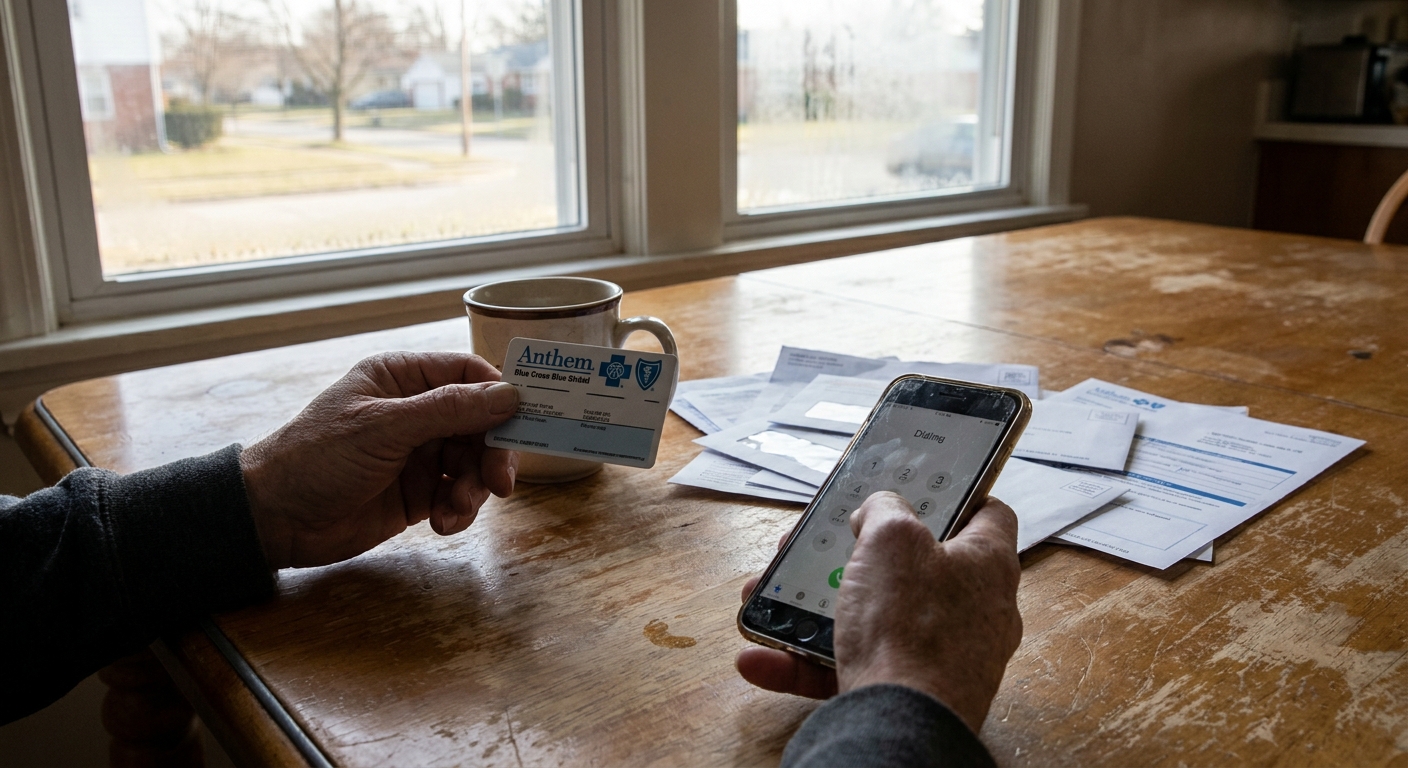
To verify your benefits, call the member services number on the back of your insurance card and ask four specific questions: Is partial hospitalization for behavioral health covered under my plan? What is my in-network deductible and out-of-pocket maximum for behavioral health? Is prior authorization required, and what documentation triggers approval? Which PHP providers in Mahoning County are in-network? At the same time, call the admissions team at any PHP you are considering and ask them to run a benefits verification on your behalf. Admissions teams do this routinely. They know the payer language, the authorization requirements, and where delays commonly occur. Make both calls today, before your intake appointment, not after.
Choosing the right PHP program in the youngstown area
SAMHSA data consistently shows that accredited programs produce better patient outcomes than non-accredited facilities, with accreditation from CARF or The Joint Commission serving as the most reliable quality indicator available to consumers. The five criteria that actually predict program quality are accreditation status, dual-diagnosis capability, licensed clinical staff, individualized treatment planning, and clear step-down planning to IOP or outpatient care.
Accreditation means an external body has reviewed the program’s clinical practices, safety protocols, and quality standards. Dual-diagnosis capability means the program treats mental health and substance use simultaneously, not sequentially. Licensed clinical staff means your therapist is an LPCC, LSW, or equivalent, not a peer support specialist working beyond their scope. Individualized treatment planning means your care plan reflects your specific diagnoses, history, and goals, not a generic schedule applied to every patient. Step-down planning means the program has a clear pathway to IOP or outpatient care when you are ready, rather than discharging you without a next step. For a fuller overview of what PHP involves as a level of care, these criteria apply regardless of geography.
Questions to ask during the admissions call
Research on patient placement and treatment matching, including work from Project MATCH, established that the quality of the initial placement decision directly affects treatment retention. Asking specific questions during the admissions call is not being demanding. It is being an informed patient.
Ask what a typical program day looks like and what time treatment starts and ends. Ask how the treatment plan is individualized rather than standardized. Ask what happens if your clinical status changes and you need a higher or lower level of care mid-program. Ask how co-occurring mental health conditions are treated within the program. Ask what aftercare planning looks like and who coordinates your step-down to IOP.
A strong answer to the last question includes a named coordinator, a timeline, and a process. A weak answer is “we’ll cross that bridge when we come to it.” The quality of aftercare planning at the beginning of treatment tells you a great deal about the program’s clinical culture.
What to try this week
Call a PHP admissions line in Youngstown today and ask for a clinical assessment. Not a sales conversation about the program, a clinical evaluation of your level of care needs. That call determines whether PHP is the appropriate starting point, begins the insurance verification process, and gives you direct answers to the questions in this guide. Clinical assessments at this level are typically available within 24 hours. The assessment itself is the first concrete step, and it costs nothing to take it.
Frequently asked questions
How many hours per day does a partial hospitalization program in youngstown involve?
Most PHP programs run approximately 5 to 6 hours per day, five days per week, totaling 20 to 30 hours of structured treatment per week. You attend during daytime hours and return home each evening.
Can you work while attending PHP in youngstown?
Full-time employment is generally incompatible with PHP because the program runs during standard business hours. Some patients arrange short-term medical leave using FMLA coverage while enrolled. Part-time or evening work is more manageable depending on your specific schedule.
Does ohio medicaid cover partial hospitalization in mahoning county?
Yes. All Ohio Medicaid managed-care plans, including CareSource, Buckeye, Molina, and others, cover PHP as a behavioral health benefit when medical necessity is established. Contact your plan’s member services line or ask the admissions team to verify your specific benefits before starting.
How long does PHP typically last before stepping down to IOP?
Most patients complete PHP in 4 to 6 weeks, though duration is determined by ongoing clinical assessment rather than a fixed schedule. Transition to IOP happens when your treatment team determines you are clinically stable enough for a lower level of support.
What is the difference between PHP and residential treatment?
Residential treatment involves 24-hour supervised care with on-site sleeping. PHP delivers comparable clinical intensity during daytime hours, with patients returning home each evening. PHP is appropriate for individuals who are medically stable but still need structured, high-frequency treatment.
Do I need to complete detox before starting PHP in youngstown?
If you are physically dependent on alcohol or opioids, medical detox is typically required before PHP begins, because PHP is not equipped to manage acute withdrawal. Once medically cleared from detox, PHP is often the recommended next step to begin the structured therapeutic work of recovery.