Choosing an outpatient drug and alcohol program in Austintown, Ohio is harder than it looks. Every program describes itself as “comprehensive,” and the differences between levels of care are rarely explained in plain language. This guide cuts through that noise by showing you exactly what each level of outpatient care involves, what to look for when evaluating programs, and how to match a program to your actual clinical needs.
What outpatient treatment actually is (and what it isn’t)
The most persistent myth about outpatient treatment is that it represents a lesser commitment than residential care. The data says otherwise. According to SAMHSA’s 2022 National Survey on Drug Use and Health, outpatient treatment is clinically appropriate for the majority of adults with substance use disorders, particularly those without medical detox needs or severe psychiatric instability. For those candidates, outcomes are comparable to inpatient care.
What separates outpatient from residential is simple: no overnight stay. You attend scheduled sessions, then return home. That structure is not a shortcut. It is a clinical model designed to help you practice recovery skills in the actual environment where you live, work, and maintain relationships. Level of care is determined by clinical assessment, not by how serious your situation feels or how much willpower you believe you have.
The three levels of outpatient care available in austintown
Outpatient treatment is not a single program. It is a clinical spectrum, and the American Society of Addiction Medicine (ASAM) has developed standardized criteria to match patients to the right point on that spectrum. Understanding where you land on this spectrum before you call a program is the most useful preparation you can do.
Standard outpatient (OP)
Standard outpatient typically involves one to three sessions per week, each lasting one to two hours. At Midwest Recovery Center, this is the lowest-intensity level in the continuum of care, designed for people who have already achieved stability and are focused on maintaining recovery while rebuilding their daily lives. Think of it as the maintenance phase: you are working on reintegrating into work, family, and social routines, with ongoing therapy providing support as you do.
Clinically, standard OP fits people with stable housing, a functional support system, lower-severity use patterns, or those stepping down from a more intensive level of care. The concrete marker to assess fit: if you can manage the demands of daily life without daily clinical contact, and your substance use does not involve withdrawal risk, standard outpatient is likely the appropriate level. It is distinct from IOP in both purpose and intensity.
Intensive outpatient program (IOP)
IOP is the level most commonly sought by Austintown-area adults who need structured treatment but cannot step away from work or family responsibilities. The ASAM standard is a minimum of nine hours of treatment per week, typically spread across three days. Sessions cover group therapy, individual counseling, psychoeducation, and relapse prevention.
A 2020 SAMHSA Treatment Episode Data Set (TEDS) analysis found that IOP completion rates are comparable to short-term residential treatment for individuals without a medical detox requirement. That is significant: if you do not need medically supervised withdrawal management, IOP delivers equivalent clinical outcomes with far less disruption to your life. A typical IOP week looks like this: three evenings or mornings in structured group and individual sessions, with the rest of your week spent applying those skills at home and at work. For more context on how IOP fits within the broader picture of outpatient care, what outpatient rehab actually involves is worth reading before you make your first call.
Partial hospitalization program (PHP)
PHP sits just below inpatient on the intensity scale: typically 20 to 30 hours of treatment per week, with no overnight stay. It is the right starting point for people stepping down from inpatient detox, or for those whose co-occurring mental health conditions require daily clinical contact to stabilize.
A 2021 study published in the Journal of Substance Abuse Treatment found that PHP produced significantly better outcomes for patients with co-occurring mood disorders compared to direct entry into standard IOP, particularly in the first 90 days of treatment. The practical question to ask yourself: if going 24 hours without clinical support feels unsafe right now, PHP is the appropriate level. If you are stable enough to manage evenings and weekends independently, IOP is likely sufficient.
What to look for in an austintown-area outpatient program
A 2019 NIDA report on treatment quality indicators found that programs delivering evidence-based modalities show significantly higher rates of sustained recovery at 12 months compared to programs using non-standardized approaches. Knowing what those modalities are, and asking directly whether a program uses them, is the single most useful quality filter available to you.
Evidence-based treatment modalities
The modalities with the strongest research base are Cognitive Behavioral Therapy (CBT), Dialectical Behavior Therapy (DBT), Motivational Interviewing (MI), and Medication-Assisted Treatment (MAT). A 2022 NIDA analysis found that MAT reduces opioid relapse rates by 50% or more compared to behavioral treatment alone, and that effect holds across outpatient settings when medication is integrated into the clinical plan rather than managed separately.
When you call a program, ask this directly: “Are CBT, motivational interviewing, and MAT standard parts of your program, or are they available only for certain patients?” The answer tells you whether these tools are built into the model or treated as optional add-ons. Programs where they are add-ons produce weaker outcomes.
Co-occurring mental health treatment
According to SAMHSA’s 2022 National Survey on Drug Use and Health, approximately 50% of adults with a substance use disorder also meet criteria for at least one co-occurring mental health condition. In Mahoning County and the broader Youngstown area, post-industrial economic stress has elevated rates of anxiety, depression, and trauma exposure, making integrated dual diagnosis treatment especially relevant.
The question to ask any program is specific: “Do you treat co-occurring mental health conditions on-site with your own licensed clinicians, or do you refer out?” Referral-based models create gaps in care. Integrated programs, where a therapist or psychiatrist addresses both the substance use and the mental health condition simultaneously, produce better outcomes for people with dual diagnoses.
Insurance and payment options in mahoning county
The Austintown area draws patients with a wide range of coverage. Commercial plans including Aetna, Anthem BCBS, Cigna, and Optum are common, as is Tricare for military families. Ohio Medicaid managed care plans, including CareSource, Buckeye, Molina, Anthem, Aetna, AmeriHealth Caritas, and Humana, cover a large share of the population seeking treatment. According to KFF data from 2023, Ohio’s Medicaid expansion under the ACA has extended coverage to roughly 770,000 additional adults, directly increasing access to behavioral health treatment.
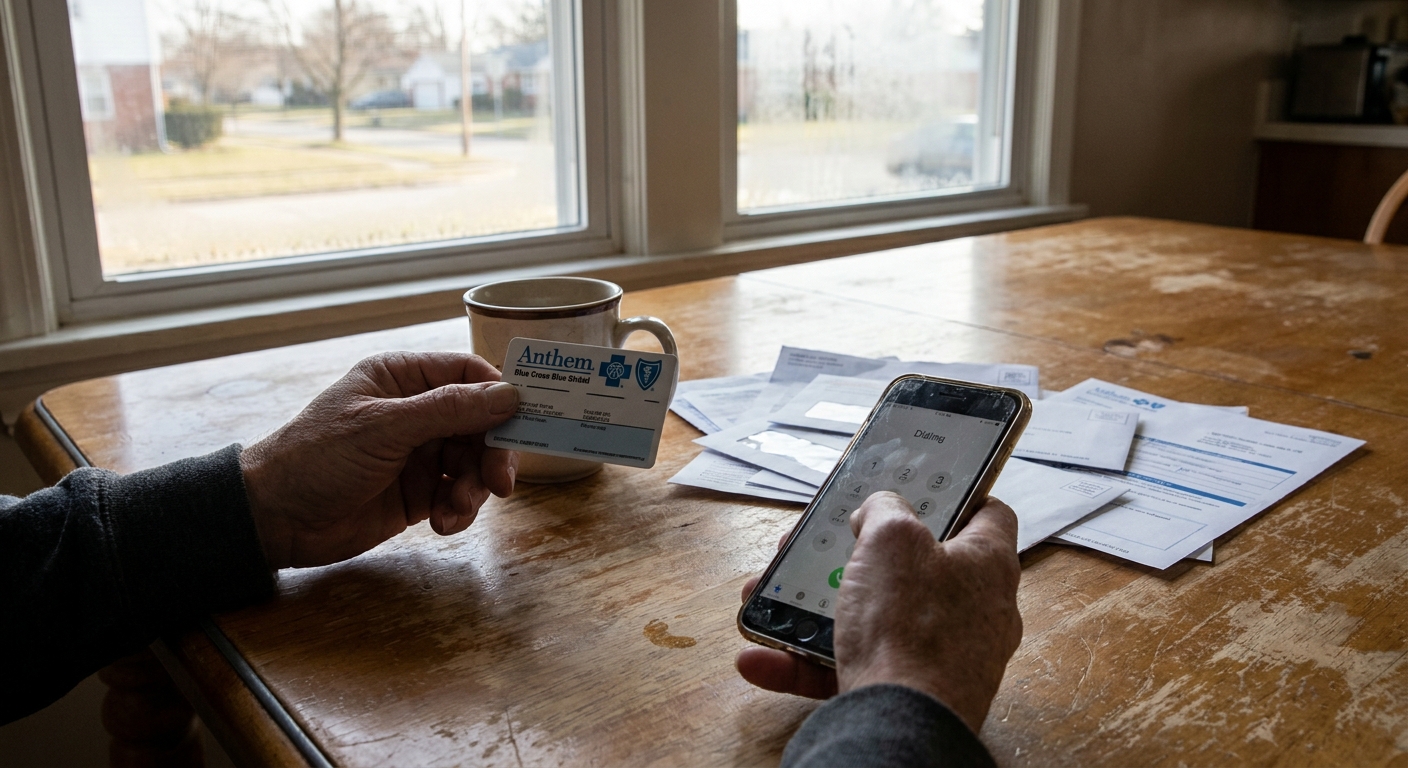
Before your first appointment, call the program’s admissions line with your insurance card in hand and ask for a benefits verification. This one step tells you exactly what your plan covers, what your out-of-pocket costs are, and whether prior authorization is required. Do not assume coverage; verify it.
Common mistakes when choosing an outpatient program
A 2020 study in the Journal of Substance Abuse Treatment found that early dropout from outpatient treatment, defined as leaving within the first 30 days, is predicted most strongly by poor program fit rather than by severity of use. The program mattered more than the diagnosis.
The first common mistake is choosing based on proximity alone. Distance is a real barrier, but selecting the closest program without checking whether it offers the modalities and level of care you need almost guarantees a mismatch. A 20-minute drive to a program that treats co-occurring conditions is more valuable than walking distance to one that does not.
The second mistake is skipping the intake assessment. The ASAM level of care determination happens during intake, and bypassing it means you end up in whatever level the program defaults to, not the level your clinical picture actually warrants. An intake is not a formality; it is the mechanism that produces a personalized clinical recommendation.
The third mistake is underestimating the role of co-occurring mental health conditions. Many people enter treatment focused entirely on the substance use and are caught off guard when anxiety, depression, or trauma symptoms intensify in early recovery. Choosing a program that can address both from day one avoids the situation where you complete addiction treatment but remain destabilized by untreated mental health symptoms.
How to compare outpatient programs in the austintown area
A 2021 study in Patient Education and Counseling found that patients who participated in shared decision-making during treatment selection showed 34% higher engagement rates at 60-day follow-up compared to those who had programs chosen for them. The questions you ask during an inquiry call are how that shared decision-making happens.
Ask each program: “What evidence-based modalities are standard in your program?” Then: “Do you treat co-occurring mental health conditions on-site?” Then: “What does a typical week look like for someone at my level of care?” Follow that with: “What does aftercare look like after I complete the program?” Finally: “Who do I contact if I am struggling between sessions?”
Each question has a practical purpose. The modality question filters out programs that rely on non-evidence-based approaches. The co-occurring question identifies integrated programs. The weekly structure question helps you assess whether the schedule fits your life. The aftercare question tells you whether the program treats discharge as an ending or a transition. The between-session contact question reveals whether support exists when you need it most. If you are also evaluating programs in the broader Youngstown area, comparing outpatient options nearby gives you a useful frame for that side-by-side assessment.
What to do this week
Call the admissions line of the program you are considering and ask for a benefits verification and an intake appointment. Those two steps are not administrative tasks; they are the clinical mechanism that matches you to the right level of care. The intake assessment is where ASAM criteria are applied to your actual situation, producing a recommendation grounded in clinical evidence rather than guesswork. Once you have that recommendation, you have something concrete to act on.
Frequently asked questions
What is the difference between IOP and standard outpatient in austintown?
Intensive Outpatient (IOP) involves a minimum of nine hours of structured treatment per week across multiple days, and is designed for people in the active phase of early recovery. Standard outpatient is a lower-intensity level, typically one to three sessions per week, suited for people who have already achieved stability and are focused on maintaining recovery while rebuilding work and social routines. The two levels are clinically distinct and serve different phases of recovery.
Does ohio medicaid cover outpatient drug and alcohol treatment?
Yes. Ohio Medicaid managed care plans, including CareSource, Buckeye, Molina, Anthem, Aetna, AmeriHealth Caritas, and Humana, cover outpatient substance use disorder treatment. Coverage specifics vary by plan, so call the program’s admissions line with your Medicaid card and request a benefits verification before your first appointment.
How do I know what level of outpatient care I need?
Level of care is determined through an intake assessment using ASAM criteria. The assessment evaluates factors including medical stability, withdrawal risk, co-occurring mental health conditions, housing stability, and social support. You do not need to self-diagnose the appropriate level; the intake process produces that clinical recommendation.
Can I attend outpatient treatment while working full-time?
Yes. IOP programs in the Austintown area typically schedule sessions in the morning or evening to accommodate work schedules. Standard outpatient, with its one-to-three sessions per week format, is even more compatible with full-time employment. During your inquiry call, ask specifically what scheduling options are available.
What should I ask when I call an outpatient program?
Ask whether the program uses evidence-based modalities like CBT, Motivational Interviewing, and MAT as standard practice. Ask whether co-occurring mental health conditions are treated on-site. Ask what a typical week looks like at your level of care, what aftercare planning includes, and who to contact between sessions if you are struggling. Those five questions give you the information needed to assess program quality and fit.
Does tricare cover outpatient addiction treatment in ohio?
Tricare covers outpatient substance use disorder treatment for eligible military members and their families, including IOP and standard outpatient levels. Coverage details depend on your specific Tricare plan and whether the provider is in-network. Call the program’s admissions team with your Tricare information and request a benefits verification before scheduling an intake.