According to SAMHSA’s 2023 National Survey on Drug Use and Health, nearly 94% of people who needed substance use treatment did not receive it, and one of the most commonly cited barriers was uncertainty about insurance coverage. If you have Optum behavioral health benefits and you’re trying to access rehab in the Youngstown area, that uncertainty is solvable, and this guide walks you through exactly how to solve it.
What optum coverage actually means for rehab in youngstown
Optum is not an insurance company in the traditional sense. It is a behavioral health subsidiary of UnitedHealth Group, and many commercial insurance plans, including some UnitedHealthcare plans and employer-sponsored plans across Northeast Ohio, contract Optum to manage their mental health and substance use disorder benefits separately from medical benefits. This arrangement is called a carve-out, and it has real consequences for how you access rehab in Mahoning County.
Understanding this distinction saves you time and prevents the single most common mistake people make when trying to get into treatment: calling the wrong phone number.
How optum manages your behavioral health benefits
When your employer or insurance plan contracts Optum as its behavioral health administrator, Optum handles a distinct set of functions: it maintains its own provider network for mental health and SUD services, it runs its own prior authorization process separate from your medical plan, and it manages its own appeals process. Your medical insurer pays the bills, but Optum decides what gets approved.
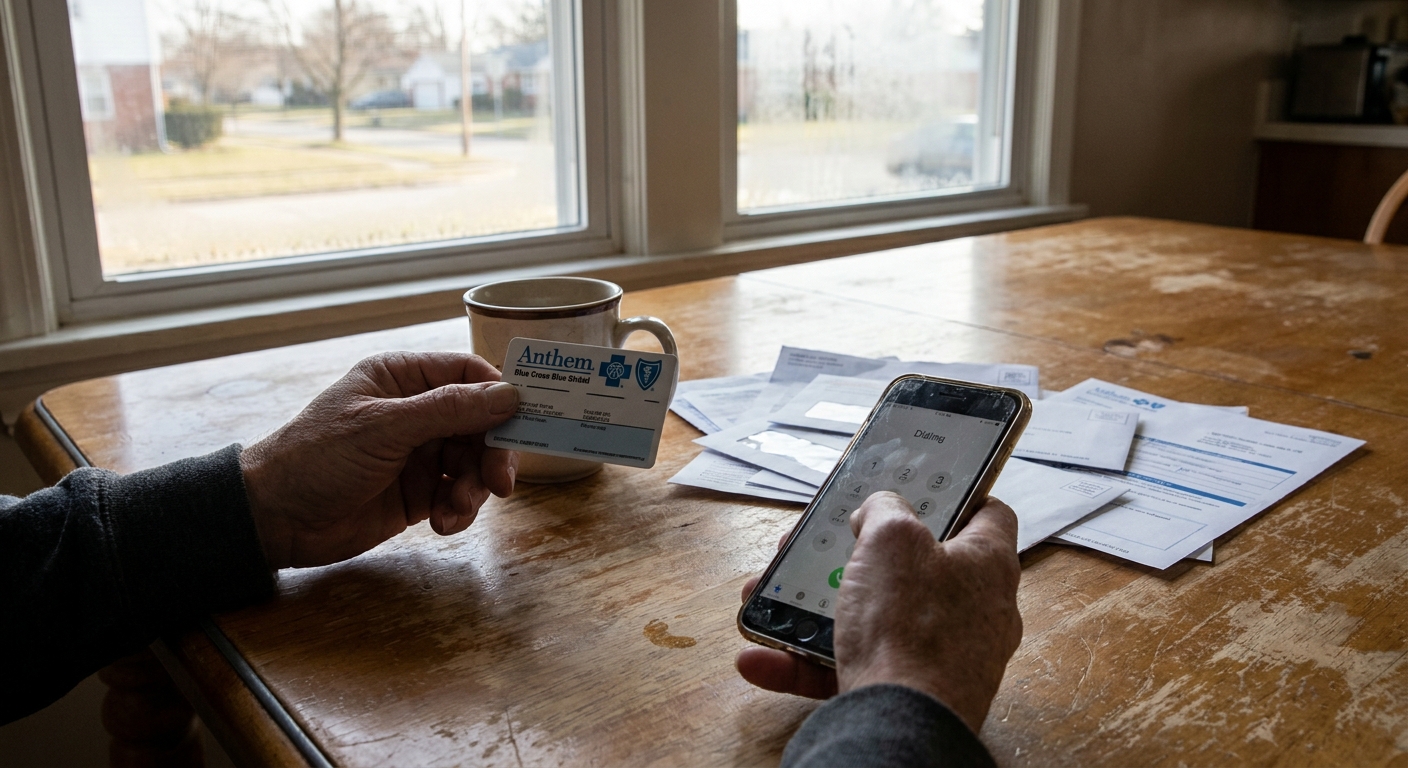
What this means in practice is that the main member services number on your insurance card often routes to general medical benefits, not behavioral health. Calling that line for rehab questions gets you incomplete information, or worse, incorrect information about your SUD coverage. The behavioral health or mental health phone number, which appears separately on most insurance cards, routes directly to Optum and gets you accurate answers about rehab authorization, network providers, and your specific benefits.
The concrete action here is simple: locate the behavioral health phone number on the back of your card before making any calls. It is usually labeled “Mental Health and Substance Use” or “Behavioral Health.” That is the line that connects you to the people who actually manage your rehab benefits.
Optum’s role vs. your insurance plan’s role
Your insurance plan determines coverage, meaning what it promises to pay for based on your benefits package. Optum determines authorization, meaning whether a specific treatment service at a specific level of care meets clinical criteria for approval. These are two different questions, and a “yes” on one does not guarantee a “yes” on the other.
The mechanism Optum uses to make authorization decisions is called medical necessity determination. Optum’s clinical staff reviews your case against established criteria, primarily the American Society of Addiction Medicine (ASAM) Patient Placement Criteria, and decides whether the level of care being requested is appropriate for your clinical situation. Your plan may cover residential rehab in principle, but Optum still has to approve your specific admission to a residential program.
Before you call Optum, locate your Explanation of Benefits (EOB) or Summary of Plan Description. These documents tell you what your plan covers in writing, and having them in front of you during the call lets you ask sharper questions and catch discrepancies between what your plan promises and what Optum is approving.
Levels of care optum covers for substance use and co-occurring disorders
The American Society of Addiction Medicine developed its Patient Placement Criteria specifically to match treatment intensity to clinical need. A 2020 study published in the Journal of Addiction Medicine found that patients placed at the appropriate ASAM level of care had significantly better retention and outcomes than those placed at a level that did not match their clinical severity. Optum uses ASAM criteria as its primary framework for deciding which level of care is medically necessary for your situation, which means understanding the continuum of care is not abstract knowledge. It directly affects what gets approved.
The full continuum covered under Optum behavioral health benefits includes medical detox, residential and inpatient rehab, partial hospitalization programs (PHP), intensive outpatient programs (IOP), standard outpatient therapy, and medication-assisted treatment (MAT). Each level has distinct clinical criteria, authorization requirements, and typical approval timelines.
Medical detox coverage
Medical detox is the process of managing acute withdrawal under clinical supervision, typically lasting five to seven days depending on the substance and severity of dependence. Alcohol and opioid withdrawal are not simply uncomfortable. According to the National Institute on Alcohol Abuse and Alcoholism, severe alcohol withdrawal can produce seizures and delirium tremens with a mortality rate that reaches 37% without proper medical management. Opioid withdrawal, while rarely fatal on its own, carries significant risk of relapse and overdose during and immediately after the withdrawal period.
Because of the medical urgency involved, Optum typically treats detox authorization as an urgent or emergent request, with faster timelines than standard residential or outpatient authorization. If you or someone you know is in active withdrawal, the right first step is calling 911 or going to a Youngstown-area emergency department. The facility can initiate detox authorization on your behalf, and the clinical urgency of the situation supports faster approval.
Residential and inpatient rehab coverage
Optum applies several clinical criteria when evaluating whether residential or inpatient rehab is medically necessary. The factors that most often support residential authorization include: severe or chronic substance use with significant functional impairment, co-occurring psychiatric conditions that require structured clinical support, a history of failed attempts at lower levels of care such as IOP or outpatient, and the absence of a safe or supportive home environment.
A 2019 study in the Journal of Substance Abuse Treatment found that residential treatment produced significantly better outcomes for patients with co-occurring mental health disorders compared to outpatient-only approaches, particularly for those with PTSD or major depression alongside SUD. If you are dealing with a dual-diagnosis situation, this research supports the clinical case for residential authorization.
The practical implication: gather documentation of any prior treatment attempts before your intake call. Prior treatment history is one of the strongest clinical arguments for residential care, because it demonstrates that lower levels of care have been tried and were insufficient. Treatment records, discharge summaries, or even a clear personal timeline of what you’ve tried and when, all strengthen the medical necessity case that your admitting provider will make to Optum.
Partial hospitalization (PHP) and intensive outpatient (IOP)
PHP typically runs five to six hours per day, five days per week, and provides structured clinical programming without overnight stays. IOP runs approximately three hours per day, three days per week, and is designed for people who have completed a higher level of care or whose clinical severity does not require full-day programming. These two levels are the most commonly authorized starting points in Optum’s approval process.
A 2021 study in Psychiatric Services analyzing outcomes for 1,800 working adults found that IOP completion rates were comparable to residential completion when patients had stable housing and strong family support, and that employment retention was significantly higher for IOP participants. For adults in Mahoning County managing family obligations or employment, IOP represents a clinically sound option, not just a fallback.
Here is the catch, though: Optum frequently starts authorization at IOP even when a higher level might be more appropriate clinically. This is not necessarily wrong, but it means your provider may need to make an active case for step-up authorization if your situation warrants residential or PHP. Ask the admissions team at any provider you contact how they document step-up requests and whether they have experience advocating for higher levels of care with Optum specifically.
Medication-assisted treatment (MAT) coverage
A 2021 NIDA analysis of large-scale outcome data found that medication-assisted treatment reduces opioid overdose mortality by more than 50% among people with opioid use disorder. Buprenorphine (Suboxone, Zubsolv, and generics), injectable naltrexone (Vivitrol), and methadone through opioid treatment programs are all FDA-approved MAT options, and Optum covers them under its behavioral health and pharmacy benefits.
The nuance is in the authorization. Some buprenorphine formulations require prior authorization under Optum’s formulary, and injectable naltrexone almost universally requires it. Methadone through a licensed OTP operates under a different regulatory and payment structure. MAT authorization, however, moves faster than residential authorization in most cases, which means that starting MAT can be your first concrete step into care even while other treatment decisions are being sorted out.
Ask any provider you’re considering whether they are credentialed to prescribe MAT under your specific Optum plan. In-network status for general behavioral health does not automatically mean in-network status for MAT prescribing.
How prior authorization works under optum
A 2023 American Medical Association survey found that 94% of physicians reported that prior authorization delays negatively affected patient care, and that 33% of physicians reported prior authorization had led a patient to abandon treatment. In behavioral health, these delays carry acute risk. Understanding how Optum’s prior authorization process works lets you anticipate it rather than be stopped by it.
Prior authorization is Optum’s formal clinical review before treatment begins, or in some cases concurrently with treatment. It is the process by which Optum confirms that the requested level of care meets medical necessity criteria before committing to payment.
What information optum requires for authorization
The clinical documentation for a prior authorization request comes from your admitting provider, not from you directly. Your provider submits diagnosis codes, the recommended ASAM level of care, your substance use history including severity and duration, any prior treatment episodes, co-occurring psychiatric diagnoses, a safety risk assessment, and clinical rationale for the specific level of care requested.
Your role is to make sure the admitting provider has everything they need to make that submission complete and accurate. The simplest way to do this is to write a one-page personal timeline before your intake appointment, covering your substance use history, any prior treatment you’ve received, what worked, what did not, and any mental health diagnoses or medications. This is not a formal document. It is a reference tool that helps the clinical team build a complete and accurate picture quickly, without gaps that slow authorization.
How long authorization takes and what to do if it’s delayed
Under Optum’s standard timelines, urgent prior authorization requests are processed within 24 to 72 hours. Standard non-urgent requests can take up to 14 calendar days. For detox and situations involving acute safety risk, the urgent pathway applies. For residential and PHP, the standard timeline is more common, though clinical urgency can support an expedited request.
According to a 2023 KFF analysis of insurer prior authorization practices, behavioral health services experienced denial and delay rates consistently higher than medical and surgical services at comparable levels of care. When delay or denial occurs, the most effective provider-side intervention is a peer-to-peer call, a direct clinician-to-clinician conversation between your admitting provider’s medical director and an Optum medical reviewer. Peer-to-peer calls resolve a significant portion of initial denials by allowing clinical nuance that doesn’t always come through in a written submission.
Ask the admissions team directly: have they conducted peer-to-peer calls with Optum before? A team with this experience is a meaningfully different resource than one that simply submits paperwork and waits.
Concurrent review: staying authorized during treatment
Optum does not authorize a residential or PHP stay and then step away. It conducts concurrent reviews throughout your treatment, requiring your provider to submit clinical updates that demonstrate ongoing medical necessity. This is standard practice, but it has a practical consequence that patients often encounter without understanding what’s happening.
If you are in treatment and told that your insurance has stopped covering your stay, that typically means Optum’s concurrent review has not approved continued treatment at the current level of care, often because the submitted clinical documentation didn’t meet the criteria for continued stay. Before agreeing to discharge or a step-down under those circumstances, ask for the specific denial reason in writing. A written denial triggers your formal appeal rights, and your provider can submit additional clinical documentation or request a peer-to-peer review. Verbal notifications do not trigger the same protections.
Understanding your out-of-pocket costs with optum
A 2024 KFF Employer Health Benefits Survey found that the average annual deductible for single coverage in an employer-sponsored plan was $1,787, with many plans in the $2,000 to $3,000 range. For a multi-week rehab stay, the interaction between your deductible, coinsurance, and out-of-pocket maximum determines your real financial exposure, and the numbers can vary significantly.
Midwest Recovery Center verifies benefits before admission and does not ask you to estimate your own coverage. That verification call is the single most reliable way to understand what you’ll actually owe.
Deductibles, coinsurance, and out-of-pocket maximums
Here is how the cost structure typically works in practice. Suppose your plan has a $2,000 deductible and 20% coinsurance on behavioral health services, with an out-of-pocket maximum of $7,000. If you have not yet met your deductible for the year, the first $2,000 of your rehab costs comes entirely out of pocket. After that, you pay 20% of covered charges until you reach the $7,000 OOP maximum, at which point Optum covers 100% of in-network services for the remainder of the benefit year.
On a $20,000 residential stay, your maximum exposure would be $7,000 if you have not met any prior deductible or coinsurance spending that year. If you have already met part of your deductible through other medical care, your actual exposure is lower. This is why calling Optum member services to ask for your current deductible status and OOP max before admission is not a bureaucratic exercise. It tells you your real financial ceiling for the year.
Call the behavioral health number on your card, ask specifically for your current deductible balance and your remaining out-of-pocket maximum, and write down the representative’s name, employee ID, and call reference number. That documentation protects you if billing discrepancies come up later.
In-network vs. out-of-network rehab in youngstown
A 2022 Health Affairs analysis found that out-of-network behavioral health care cost patients an average of 3.5 times more than equivalent in-network care, after accounting for both higher provider rates and lower plan payment percentages. For a residential rehab stay, the difference between in-network and out-of-network costs is not marginal.
In-network providers in Mahoning County and the broader Youngstown metro have negotiated rates with Optum that reduce both the facility’s charges and your share. Out-of-network providers may apply your out-of-network benefits, which typically involve higher coinsurance percentages and may not count the full billed amount toward your deductible. If you are evaluating coverage across different plans, verifying in-network status before admission is one of the highest-value steps you can take.
One important clarification: asking a provider whether they “take Optum” is not enough. Optum manages benefits for multiple plan types, and in-network status can vary between UnitedHealthcare commercial plans, employer-sponsored plans using Optum as administrator, and other arrangements. Ask specifically whether the provider is in-network with your plan, identified by your specific plan name and group number.
When a verification of benefits call changes everything
A verification of benefits (VOB) call is a detailed benefits check that your admitting provider runs on your behalf before admission. It is more specific than the general benefits summary on your insurance card. A VOB surfaces your actual in-network deductible balance, your coinsurance rate for the specific level of care, your OOP maximum and how much of it remains, and whether the provider’s specific billing codes are covered under your plan.
A VOB is not a guarantee of payment. It is an estimate based on your current benefits, and actual reimbursement depends on Optum’s final adjudication after claims are submitted. But the difference between going in blind and going in with a written VOB summary is the difference between a surprise bill and a number you planned for.
Request a written VOB summary from your admissions contact before signing any financial responsibility agreement. If the admissions team is not offering this as a standard step, ask for it explicitly.
Finding optum-covered rehab providers in the youngstown area
SAMHSA’s 2023 treatment locator data identifies significant treatment access gaps in post-industrial Ohio metros, with Mahoning County showing both high overdose rates and limited high-intensity treatment capacity relative to need. The geographic scope for in-network Optum providers in this region covers Mahoning County, Trumbull County, and Columbiana County, along with the broader Youngstown-Warren-Boardman metro. Optum’s network in this region includes both freestanding behavioral health centers and hospital-based programs.
How to search optum’s provider directory
The UnitedHealthcare and Optum provider directories are accessible online at uhc.com and optum.com. To search for Youngstown-area SUD providers, select “Find Care,” filter by behavioral health, then select substance use disorder treatment as the specialty. Entering a Youngstown-area ZIP code such as 44512 for Boardman or 44505 for the Youngstown proper area returns geographically relevant results.
The practical problem with online provider directories is that they lag behind actual contracting status. Providers listed as in-network may have ended their contracts, and providers not listed may have been added recently. According to a 2022 CMS report on network adequacy, behavioral health directory error rates consistently exceeded those for medical and surgical specialties. This is not a hypothetical problem. It is a documented, systemic issue.
Always call the provider directly to confirm active Optum contracting before scheduling an intake. One phone call prevents the most common and most costly coverage surprise in the rehab intake process.
Questions to ask a potential rehab provider about optum coverage
The right questions to lead with on a first admissions call are specific, not general. Ask: Are you in-network with my specific Optum plan, and can you confirm with my plan name and group number? Do you handle prior authorization with Optum on my behalf, or do I need to initiate it myself? What is your typical authorization timeline for the level of care I need? Do you conduct concurrent review documentation to maintain authorization during treatment? And: if authorization is denied, do you have a peer-to-peer process with Optum?
These five questions tell you whether the provider is experienced with Optum’s administrative requirements or whether you’ll be navigating authorization largely on your own. Write them down before your first call. An admissions team that can answer all five clearly and confidently is a meaningfully different resource than one that redirects you to your insurance company for answers.
Co-occurring mental health coverage under optum in youngstown
The Mental Health Parity and Addiction Equity Act (MHPAEA) requires insurers to apply the same authorization criteria, visit limits, and coverage standards to mental health and SUD treatment as to comparable medical and surgical care. A 2023 Department of Labor report to Congress found that parity violations remain widespread, with behavioral health services subject to more restrictive prior authorization requirements than equivalent medical services at the same plan.
For Youngstown-area patients with co-occurring conditions, which is the majority of people seeking SUD treatment, this law matters. Optum covers dual-diagnosis treatment, including depression, PTSD, anxiety, and bipolar disorder alongside SUD, under the same behavioral health benefit. If you are receiving an authorization denial for a mental health-related service that would be routinely approved for a comparable medical condition, you have legal standing to challenge that decision.
Request a written explanation of the specific criteria applied to your denial. If those criteria are stricter than what applies to comparable medical services, that discrepancy is the basis for a parity complaint.
The mental health parity law and your optum rights in ohio
The 2023 DOL/HHS MHPAEA Report to Congress identified continued widespread violations in how insurers apply prior authorization and utilization management to behavioral health services. Parity does not mean identical treatment; it means that restrictions on mental health and SUD care cannot be more stringent than restrictions on comparable medical or surgical care. In plain English: if your plan approves medical inpatient stays without prior authorization, it cannot require prior authorization for SUD inpatient stays without violating federal law.
What parity violations look like in practice
Parity violations take concrete, recognizable forms. Requiring prior authorization for SUD residential care when the same plan does not require prior auth for medical inpatient admission is a violation. Applying strict step-therapy requirements to psychiatric medications when equivalent cardiac medications are approved without step therapy is a violation. Limiting SUD outpatient visits to a specific annual number when no such limit exists for physical therapy or diabetes management is a violation.
You can spot these patterns in your own EOB or denial letter by comparing the criteria cited in a behavioral health denial to what you know about how your plan handles comparable medical services. If your plan has a utilization management policy document, request it directly from Optum. Ohio members have the right to request Optum’s Non-Quantitative Treatment Limitation (NQTL) analysis, which shows how the plan’s behavioral health criteria compare to its medical and surgical criteria. If those criteria are meaningfully stricter on the behavioral health side, that is actionable evidence of a parity violation.
How to file a parity complaint in ohio
The Ohio Department of Insurance is the primary state enforcement body for parity violations affecting fully-insured commercial plans. The complaint process follows a defined sequence: first, file an internal appeal with Optum. If that appeal is denied, request an external appeal through ODI. If your plan is employer-sponsored and self-funded, the enforcement authority shifts to the U.S. Department of Labor, where you file an MHPAEA complaint directly.
Under Ohio law, standard external appeals are resolved within 45 days. Urgent appeals, defined as situations where standard timelines would seriously jeopardize health, are resolved within 72 hours. External review decisions are binding on Optum. If the independent reviewer overturns Optum’s denial, Optum must cover the service.
File your external review request with the Ohio Department of Insurance at insurance.ohio.gov. The online process takes approximately 10 minutes. Request the external review form from ODI at the same time you file your internal appeal, because both deadlines run concurrently and missing the external review deadline forfeits that right.
What to do if optum denies your rehab claim
A 2023 KFF analysis of insurer claim denials found that consumers who file formal appeals win approximately 40% of those appeals. A 2022 NAMI report found that behavioral health claims had higher initial denial rates than medical claims across major insurers. Taken together, these findings establish something important: denials are common, but they are not final, and the appeal process has a meaningful success rate.
Understanding the denial letter
A denial letter from Optum contains specific, actionable information. It includes the denial reason code, the clinical rationale Optum applied, the specific criteria used to reach the decision, and your appeal rights including deadlines. The most common denial reasons for rehab authorizations are “not medically necessary,” “lower level of care is appropriate,” and “insufficient documentation.”
Each denial reason leads to a different appeal argument. “Not medically necessary” requires additional clinical documentation demonstrating severity. “Lower level of care is appropriate” requires evidence that lower-level treatment has been tried and failed, or that your clinical situation makes lower-level care unsafe. “Insufficient documentation” is the most straightforward: the provider resubmits a more complete clinical record.
Read the denial letter completely before calling Optum. The reason code tells you exactly what to address.
The internal appeal process
Optum’s standard internal appeal timeline allows 180 days from the date of denial to submit a written appeal. The appeal should include a written statement explaining why the denial criteria were incorrectly applied, supporting clinical documentation from your provider, any relevant peer-reviewed literature on treatment outcomes at the requested level of care, and a request for peer-to-peer review if that has not already occurred.
According to the 2022 KFF analysis cited above, consumers who submit formal written appeals win nearly 40% of cases. That is a real reversal rate, not a symbolic one. Submit your appeal in writing, not by phone. A written submission creates a documented record that protects your appeal rights and ensures the clinical argument is preserved precisely as you intend it.
External appeal and independent medical review in ohio
If Optum’s internal appeal process results in a continued denial, Ohio law provides for external review by an independent organization. The Ohio Department of Insurance administers this process. An independent medical reviewer, who has no financial relationship with Optum, evaluates your case against the same medical necessity criteria. The process is typically free for the consumer.
If the independent reviewer overturns Optum’s denial, that decision is binding. Optum must cover the service. This is not an advisory opinion. It is an enforceable outcome. Understanding how these appeals work across different insurance carriers is relevant context regardless of which plan you hold, because the legal framework is consistent.
Request the external review form from ODI at insurance.ohio.gov at the same time you file your internal appeal. The deadlines for internal and external appeals run concurrently in Ohio, so waiting for the internal appeal outcome before requesting external review can eliminate that option.
Optum coverage for detox and MAT in mahoning county
The Ohio Department of Health’s 2023 overdose report identified Mahoning County as one of the highest-burden counties in the state, with unintentional drug overdose death rates well above the state average. Fentanyl and fentanyl analogs were involved in the overwhelming majority of those deaths. Optum covers the two treatments with the strongest evidence base for reducing this mortality: medically supervised detox and medication-assisted treatment.
Medically supervised detox in the youngstown area
Medically supervised detox involves withdrawal management under clinical supervision, typically in a hospital-based unit, a freestanding detox facility, or a residential program with medical staff. The process usually runs five to seven days, with medication protocols adjusted based on the substance, the severity of dependence, and the patient’s medical history.
Under Optum’s authorization structure, detox requests are typically treated as urgent or emergent, with approval timelines of 24 to 72 hours rather than the standard 14-day window. Facilities in the Youngstown metro that provide medical detox can initiate authorization on your behalf from the point of admission, which means the paperwork does not have to precede your arrival.
If someone is in active withdrawal right now, call 911 or go to a Youngstown-area emergency department. Authorization follows the patient in acute situations. Don’t wait for paperwork to resolve a medical emergency.
Buprenorphine and naltrexone coverage under optum
NIDA’s 2022 synthesis of large-scale outcome studies found that buprenorphine and naltrexone reduced opioid overdose mortality by more than 50% among people with opioid use disorder. These are not experimental treatments. They are the standard of care, and Optum covers them.
Buprenorphine products including Suboxone, Zubsolv, and generics are covered under Optum’s pharmacy benefit, though specific formulations may require prior authorization or face step therapy requirements depending on your plan’s formulary tier. Injectable naltrexone (Vivitrol) almost universally requires prior authorization. Methadone through a licensed opioid treatment program operates under a distinct regulatory framework and is covered under the behavioral health benefit rather than the pharmacy benefit.
Step therapy requirements mean Optum may require a trial of a lower-tier buprenorphine formulation before approving a branded product. Your prescribing provider can request a step therapy exception by documenting a clinical reason why the lower-tier option is inappropriate for your situation. This exception process moves faster than most people expect when the clinical documentation is clear.
Ask your prescribing provider to submit the prior authorization for MAT on day one, before the first prescription reaches the pharmacy. A pharmacy denial on day one is avoidable with proactive authorization. Providers who handle Optum authorizations regularly know this step and initiate it automatically.
Ohio medicaid and other payer options if optum doesn’t cover your care
SAMHSA’s 2023 national survey data found that Medicaid is the single largest payer for substance use disorder treatment in the United States, covering approximately 40% of all people in treatment. In Ohio, Medicaid managed care is the dominant coverage pathway for lower-income adults, and most Youngstown-area rehab facilities accept it. If your Optum coverage lapses, changes, or does not cover the level of care you need, Ohio Medicaid is the primary alternative.
Note that Midwest Recovery Center’s focus is on commercial insurance carriers and Tricare for military families. For Medicaid-specific coverage questions in the Youngstown area, the resources below direct you to the appropriate contacts.
Ohio medicaid managed care plans in mahoning county
Ohio operates its Medicaid program through managed care plans rather than fee-for-service, and Mahoning County residents are served by plans including CareSource, Buckeye Health Plan, Molina Healthcare, Anthem BCBS (Medicaid), AmeriHealth Caritas, and Humana. All Ohio Medicaid managed care plans are required to cover SUD treatment under the same parity rules that apply to commercial plans, and EPSDT requirements ensure comprehensive coverage for eligible adults.
If your Optum coverage ends or does not cover the level of care you need, call 1-800-324-8680, the Ohio Benefits line, to check your Medicaid eligibility. Eligibility determination typically takes under 20 minutes for straightforward cases.
Sliding scale and state-funded treatment in youngstown
Ohio’s 317E behavioral health funding stream supports community behavioral health centers serving uninsured and underinsured Ohioans. The ADAMHS Board of Mahoning County serves as the county-level authority coordinating this funding and providing referrals to state-funded and sliding-scale treatment programs in the Youngstown area.
If commercial coverage is a barrier for any reason, contact the ADAMHS Board of Mahoning County directly at (330) 480-2100. They maintain up-to-date information on which local providers accept state funding, what sliding scale fees look like, and how to navigate the referral process for county-funded care.
How to verify your optum coverage and take the next step today
SAMHSA’s 2023 National Survey on Drug Use and Health estimated that 28.9 million Americans met criteria for a substance use disorder in the past year, while fewer than 4 million received specialty treatment. The gap between needing care and receiving it is not primarily a question of willpower or motivation. It is largely a question of navigating the system. Knowing exactly how to verify your Optum benefits removes one of the largest structural barriers between you and treatment in the Youngstown area.
The exact steps to verify optum rehab coverage
The verification process is a single phone call that takes approximately 15 minutes and produces concrete answers you can act on. Find the behavioral health number on the back of your insurance card. Call that number and tell the representative you are asking about your substance use disorder and mental health benefits specifically. Ask for your in-network coverage for residential rehab, PHP, IOP, MAT, and detox. Ask for your current deductible balance and your remaining out-of-pocket maximum for the benefit year. Ask whether prior authorization is required for each level of care and what the standard timeline is.
Before you hang up, write down the representative’s name, employee ID number, and the call reference or confirmation number. This documentation is your record of what you were told and when, and it matters if billing questions arise later.
Make this call today. Not after you have researched more providers. Not after you have decided which facility you prefer. The benefits information from this call informs every other decision, and it takes 15 minutes.
What to expect during admissions at a youngstown-area rehab
The admissions process at a Youngstown-area rehab follows a consistent sequence regardless of the specific facility. It begins with an initial phone screen, typically 15 to 30 minutes, where a staff member gathers basic information about your situation and coverage. This is followed by a clinical intake assessment, usually conducted by a licensed clinician using ASAM criteria to determine the appropriate level of care. The admissions team then runs a verification of benefits with Optum and submits a prior authorization request. Once authorization is received, an intake appointment is scheduled.
Gather four things before your first intake call: your insurance card, a photo ID, a current medication list, and any prior treatment records you have access to. These documents let the clinical team complete the intake accurately and submit the authorization with complete information, which reduces delays. If your intake call has to pause because basic information is missing, the authorization timeline extends accordingly.
Facilities that handle Optum prior authorization on your behalf, like Midwest Recovery Center, absorb most of the administrative burden. The Tricare coverage process for military families follows a parallel structure with different authorization contacts, which is worth understanding if coverage overlaps apply to your situation.
What to try this week
Call the behavioral health number on your Optum card today. Ask for your SUD benefits summary and your current deductible status. Then call any Youngstown-area provider you’re considering and ask the five questions from the provider verification section above. Ask specifically whether they handle Optum prior authorization on your behalf.
If you do not know where to start with providers, SAMHSA’s National Helpline at 1-800-662-4357 is a free, confidential, 24-hour resource that can identify treatment options in your area. The ADAMHS Board of Mahoning County at (330) 480-2100 provides local referrals and can connect you with providers familiar with Optum authorization in the Youngstown market.
One call today is enough to start. The rest of the process builds from that first conversation.
Frequently asked questions
Is optum the same as UnitedHealthcare?
Optum is a subsidiary of UnitedHealth Group, which also owns UnitedHealthcare. They are part of the same corporate family but serve different functions. UnitedHealthcare is the insurance carrier that issues your plan and processes claims. Optum is the behavioral health administrator that manages mental health and SUD benefits for many UnitedHealthcare plans, as well as for other commercial insurers that contract its services. When you are seeking rehab coverage, you call the Optum behavioral health line, not the general UnitedHealthcare member services line.
Does optum require prior authorization for all levels of rehab?
Yes, prior authorization is typically required for all levels of care beyond standard outpatient therapy. Medical detox, residential rehab, PHP, IOP, and MAT often require prior authorization, though detox and acute situations are handled on an expedited timeline of 24 to 72 hours. Your admitting provider submits the authorization on your behalf using your clinical information, diagnosis codes, and ASAM level of care recommendation.
What happens if optum denies my rehab authorization?
A denial triggers a formal appeal process. Your first step is an internal appeal with Optum, which you have 180 days to file from the date of denial. Include a written statement, supporting clinical documentation from your provider, and a request for a peer-to-peer review between your provider’s clinician and an Optum medical reviewer. If the internal appeal is denied, you can request an external independent medical review through the Ohio Department of Insurance at insurance.ohio.gov. External review decisions are binding on Optum.
How do I find out if a youngstown-area rehab is in-network with my optum plan?
Search the UnitedHealthcare or Optum online provider directory and filter for behavioral health and substance use disorder treatment in a Youngstown-area ZIP code. Then call the provider directly to confirm their active contracting status with your specific plan, identified by your plan name and group number. Online directories contain errors, and a direct confirmation call is the only reliable verification.
Does optum cover treatment for both addiction and co-occurring mental health conditions?
Yes. Optum covers dual-diagnosis treatment under the same behavioral health benefit that covers SUD-only care. Depression, PTSD, anxiety, and bipolar disorder are all covered alongside substance use disorder treatment. The Mental Health Parity and Addiction Equity Act requires Optum to apply the same authorization criteria to co-occurring mental health care as to comparable medical services. If you receive a denial for mental health services that appears more restrictive than what applies to equivalent medical care, you have the right to request Optum’s NQTL analysis documenting how those criteria were determined.
Can midwest recovery center verify my optum benefits before I commit to treatment?
Yes. Midwest Recovery Center verifies benefits before admission at no cost to you. The admissions team runs a verification of benefits with Optum that surfaces your specific deductible status, coinsurance rate, out-of-pocket maximum, and in-network coverage for the relevant levels of care. This is a standard part of the intake process, not a separate service. Comparing how this process works across different carriers can help you understand what to expect regardless of which plan you hold.