
I remember staring at my phone after I relapsed.
Not immediately after.
A few days later.
Long enough for the panic to settle into something quieter. Something heavier.
I wasn’t asking myself whether I needed help. Deep down, I already knew the answer.
I was asking a different question.
“What happens next?”
If you’ve been sober before, even for a few months, you know how complicated that question can become.
You remember the effort it took to stop. You remember the uncomfortable conversations, the difficult days, and the work of rebuilding trust. You remember the hope that came with seeing your life begin to change.
Then something happened.
Maybe it was stress. Maybe it was grief. Maybe it was overconfidence. Maybe it was simply a bad day that became a bad week.
Now you’re here again.
And before you can even think about recovery, another question starts looping through your mind:
“How much time is this going to take?”
I remember searching for answers late at night while trying to decide whether I could handle another attempt at getting help.
For many people, that search eventually leads them toward learning more about medical detox support.
Not because they’re ready.
Because they’re trying to understand what comes next.
I Wasn’t Afraid of Treatment
I Was Afraid of Disappointment
The strange thing about relapse is that it changes your fears.
The first time I got help, I was afraid of treatment itself.
The second time, I was afraid treatment wouldn’t work.
That’s a very different fear.
When you’ve experienced sobriety before, you know what’s possible. You know life can improve. You know healing is real.
But relapse can create a painful narrative that whispers:
“If you couldn’t keep it before, why would this time be different?”
That voice is persuasive.
It tells you that asking for help again means admitting failure.
It tells you people will judge you.
It tells you you’ve already used up your second chance.
None of those things are true.
Recovery communities are filled with people whose stories include setbacks. Many alumni who now enjoy years of sobriety once sat exactly where you are now, wondering whether returning for support would even matter.
The Question Behind the Question
When someone asks about timelines, they are often asking something deeper.
They are asking:
“Can I afford to do this again?”
“Will my employer understand?”
“Will my family support me?”
“Will I lose everything while trying to save myself?”
Those concerns are real.
Life doesn’t pause because you’re struggling.
Responsibilities continue showing up.
The bills still arrive.
Children still need rides.
Work still expects deadlines.
That’s why so many people focus on how long the process might take. They aren’t looking for a calendar.
They’re trying to figure out whether recovery can fit into a life that’s already carrying too much weight.
The good news is that the first step is often more manageable than people imagine.
The Fear Usually Lasts Longer Than the First Step
One thing nobody told me before I returned for help was how much energy I was spending worrying.
I was exhausted before I ever made a phone call.
I had imagined every possible outcome.
I pictured weeks of misery.
I pictured losing everything.
I pictured disappointing everyone around me.
What actually happened was far less dramatic.
The first stage focused on safety, stabilization, and helping me get through the immediate challenges of stopping substance use.
Was it easy?
No.
But it was also not the nightmare my anxiety had created.
Fear often behaves like a magnifying glass.
It takes a difficult situation and makes it appear impossible.
Once I stepped forward, I realized I had been carrying a backpack full of imagined problems in addition to the real ones.
Recovery Doesn’t Require Confidence
This might have been the most important lesson of my entire journey.
I kept waiting until I felt ready.
I thought readiness would feel like certainty.
Instead, it felt like exhaustion.
I was tired of bargaining with myself.
Tired of promising tomorrow would be different.
Tired of trying to control something that was increasingly controlling me.
Readiness wasn’t confidence.
It was honesty.
Honesty about where I was.
Honesty about what wasn’t working.
Honesty about the fact that I needed support.
If you’re waiting for a moment when all your fears disappear, you may be waiting a very long time.
Most people begin moving forward while still feeling uncertain.
That’s normal.
Courage isn’t the absence of fear.
It’s moving despite it.
The Calendar Isn’t the Most Important Part
I understand why people become focused on timelines.
I did too.
I wanted exact answers.
I wanted certainty.
I wanted someone to tell me exactly how many days it would take before I felt better.
Recovery doesn’t always work that way.
Every person arrives with different circumstances.
Physical health matters.
Substance use history matters.
Mental health matters.
The amount of support available matters.
That’s why questions such as how long is detox don’t always have a one-size-fits-all answer.
The timeline varies because people vary.
What matters more than the exact number of days is ensuring that the process is safe, medically appropriate, and designed around your needs.
A few days invested in getting stable can create momentum that changes the direction of months or even years.
The Part Nobody Talks About Enough
Here’s what surprised me most after returning for help.
People weren’t disappointed.
They were relieved.
The family members who cared about me weren’t asking why I relapsed.
They were grateful I was doing something about it.
The counselors weren’t judging me.
They were helping me move forward.
The alumni I connected with weren’t shocked.
Many had their own stories.
Relapse felt like a personal failure because I was experiencing it alone.
The moment I started talking honestly about it, the shame began losing its grip.
Shame thrives in isolation.
Hope grows in connection.
You Still Belong Here
One of the hardest emotions after a relapse is feeling like you’ve lost your place.
You may wonder whether you’re still part of the recovery community.
You may wonder whether your previous progress counts.
It does.
Absolutely.
The lessons you learned still matter.
The sober days still matter.
The relationships you built still matter.
The growth you experienced still matters.
Nothing can erase that.
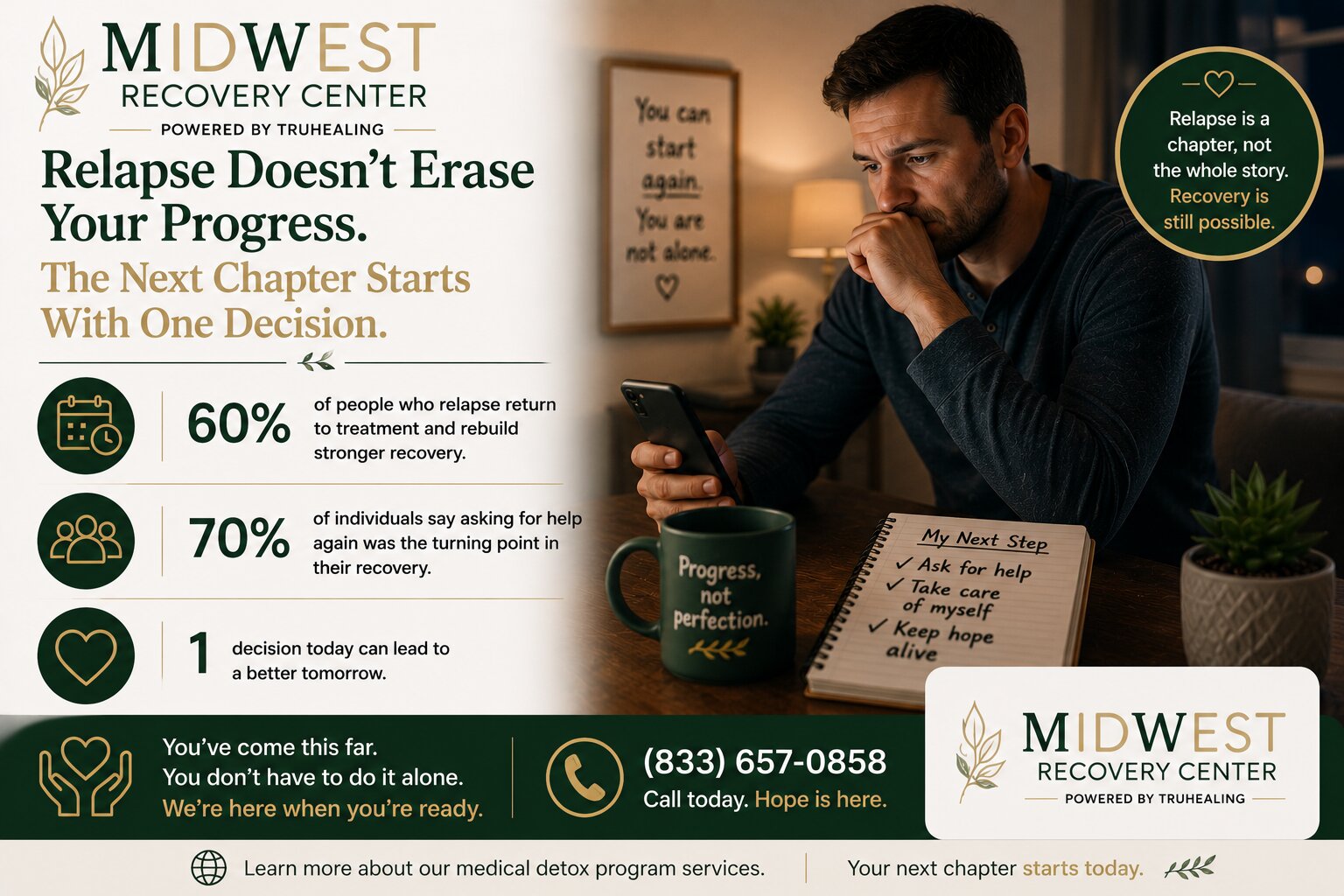
A relapse is a chapter.
It is not the entire story.
And if you’re considering reaching out for help in locations or seeking additional support through treatment in Youngstown, remember that many people arrive carrying the exact same fears and questions.
You are not uniquely broken.
You are human.
Maybe You Only Need to Decide About Today
When I was overwhelmed by the future, someone told me something simple.
“Don’t decide about forever.”
At first, I hated hearing that.
I wanted guarantees.
I wanted certainty.
I wanted proof.
But eventually I understood.
Recovery rarely begins with a lifetime commitment.
It begins with a single decision.
A phone call.
An honest conversation.
A willingness to stop carrying everything alone.
If you’re reading this right now, maybe that’s all you need to focus on.
Not next year.
Not forever.
Just today.
Because the version of you that wants help is still here.
And that version deserves another chance.
Frequently Asked Questions
Does going back for help after a relapse mean treatment failed?
No. Recovery is rarely a straight line. Many people experience setbacks before achieving long-term stability. Returning for help is often a sign of self-awareness and commitment, not failure.
Will I have to complete detox before entering rehab?
In many situations, detox is the first step when someone may experience withdrawal symptoms after stopping alcohol or drugs. The appropriate path depends on individual circumstances and should be determined by medical professionals.
How do I know if I need detox again after a relapse?
If you’ve returned to regular substance use, experienced withdrawal symptoms in the past, or are concerned about stopping safely, speaking with a treatment provider can help determine the appropriate level of care.
Is it normal to feel embarrassed about coming back?
Yes. Many alumni describe feelings of shame, guilt, or embarrassment after a relapse. These feelings are common, but they do not define your worth or your ability to recover.
What happens after detox?
For many people, detox is only the beginning. Ongoing treatment, counseling, peer support, and recovery planning often help create a stronger foundation for long-term success.
Can I recover even if I’ve relapsed before?
Absolutely. Many people with strong, lasting recovery histories experienced one or more relapses along the way. A setback does not eliminate the possibility of future success.
Call (833) 657-0858 or visit our medical detox program services to learn more about our medical detox program services Cincinnati, Ohio.