
A lot of people researching medication-assisted treatment are not just asking medical questions.
They’re asking identity questions.
Questions like:
- “Will I still feel creative?”
- “Will I still feel emotions deeply?”
- “What if sobriety makes me boring?”
- “What if medication changes my personality?”
- “What if I stop recognizing myself?”
Those fears are rarely said out loud at first because they can sound irrational to other people.
But they are incredibly real for people who have spent years building an identity around intensity, creativity, humor, nightlife, emotional depth, chaos, energy, performance, or survival.
And honestly? A lot of people comparing medication-assisted recovery support options are not just trying to understand how treatment works physically.
They are trying to understand who they might become afterward.
Especially when researching Vivitrol vs Suboxone, many people quietly worry:
“What if recovery costs me the parts of myself I actually like?”
At Midwest Recovery Center, we hear this fear more often than people realize.
Not because people want addiction.
Because they’re terrified of becoming emotionally disconnected from themselves.
A Lot of People Don’t Realize How Much Addiction Becomes Part of Identity
This happens slowly.
At first, substances feel like something someone uses occasionally. Over time, though, alcohol or drugs can start shaping entire emotional experiences:
- Social confidence
- Creativity
- Relaxation
- Motivation
- Emotional escape
- Self-expression
- Belonging
- Risk-taking
- Intimacy
Eventually, people stop separating the substance from the identity attached to it.
That’s when thoughts like these start appearing:
- “I don’t know who I am sober.”
- “I’m only creative when I’m using.”
- “People only like me when I’m fun.”
- “Without substances, I’m emotionally flat.”
- “What if I lose my spark?”
Those fears are deeply human.
Especially for people whose nervous systems have relied on substances for emotional regulation for years.
Some People Mistake Emotional Chaos for Personality
This part can feel uncomfortable to confront.
A lot of people become so accustomed to emotional intensity that calmness feels unfamiliar or even empty. Chaos becomes emotionally normalized:
- Constant highs and lows
- Impulsivity
- Overstimulation
- Adrenaline
- Emotional unpredictability
- Risk-taking
- Rapid mood shifts
Eventually, those experiences stop feeling like symptoms and start feeling like identity.
One client once said:
“I thought anxiety was just part of who I was.”
That realization hits hard for many people in recovery.
Because addiction often blurs the line between:
- Personality and coping
- Creativity and chaos
- Emotional depth and emotional instability
- Freedom and self-destruction
And when people begin treatment, they sometimes fear they are losing themselves when really they are losing survival patterns.
Medication-Assisted Treatment Is Meant to Create Stability—Not Erase Humanity
There’s a misconception that medications automatically make people emotionally numb, robotic, disconnected, or sedated.
That fear keeps many people from seeking support.
But supportive medication-assisted treatment is not designed to remove personality, creativity, humor, or emotional depth.
The goal is stabilization.
For people struggling with opioid or alcohol addiction, the nervous system often becomes trapped in cycles of:
- Cravings
- Withdrawal
- Anxiety
- Obsession
- Emotional volatility
- Fear
- Shame
- Physical exhaustion
- Hypervigilance
That level of internal chaos makes it incredibly difficult to feel emotionally grounded consistently.
One former client explained it this way:
“I thought substances helped me feel more alive. Eventually they just made me emotionally unavailable.”
That sentence stays with a lot of people.
Because at some point, addiction often stops enhancing life and starts shrinking it.
Different Recovery Medications Feel Different for Different People
This matters emotionally.
When people compare treatment options, they are often searching for the medication that feels most compatible with their nervous system, recovery goals, and identity concerns.
Some people appreciate the craving reduction and daily stability associated with Suboxone. Others feel more emotionally aligned with the monthly structure of Vivitrol because it is non-opioid based.
But underneath conversations around Vivitrol vs Suboxone, many people are actually asking a quieter question:
“Which option will help me feel stable without making me feel disconnected from myself?”
That’s a deeply valid concern.
And the answer is rarely identical for every person.
Medication-assisted treatment is individualized because recovery experiences are individualized too.
Early Recovery Can Feel Emotionally Unfamiliar No Matter What
This part deserves honesty.
Even with strong support and appropriate medication, early recovery can feel emotionally strange at first.
Why?
Because substances often become emotional regulators long before people fully recognize it.
They help people:
- Quiet anxiety
- Avoid grief
- Reduce overthinking
- Feel socially confident
- Escape loneliness
- Increase energy
- Disconnect from trauma
- Tolerate stress
When substances are removed or reduced, emotions can temporarily feel louder and more exposed.
That does not necessarily mean medication is “changing” someone’s personality.
Sometimes it means the nervous system is learning how to exist without constant chemical interference for the first time in years.
That adjustment period can feel emotionally vulnerable.
Stability Sometimes Feels “Wrong” Before It Feels Safe
This surprises many people entering treatment.
Especially people who have lived with addiction for a long time.
If someone’s nervous system becomes conditioned to chaos, calmness may initially feel emotionally unfamiliar or even uncomfortable.
One client once described it perfectly:
“I realized I confused emotional intensity with being alive.”
That distinction matters.
Because people who have spent years in survival mode sometimes mistake peace for emptiness at first.
Not because peace is bad.
Because their brain stopped recognizing calmness as emotionally normal.
Creativity Does Not Disappear in Recovery
A lot of creative people fear this deeply.
Artists. Musicians. Writers. Performers. Designers. Entrepreneurs. Highly emotional thinkers.
Many secretly worry:
- “What if sobriety ruins my creativity?”
- “What if I stop feeling things deeply?”
- “What if recovery makes me emotionally dull?”
And honestly, substances can temporarily create feelings of confidence, inspiration, emotional openness, or disinhibition.
But over time, addiction usually begins stealing far more than it gives:
- Focus
- Memory
- Consistency
- Follow-through
- Emotional presence
- Physical health
- Relationships
- Clarity
Some people eventually realize substances were not protecting creativity anymore.
They were interrupting it.
Recovery often allows people to create more sustainably because they are no longer constantly recovering from emotional and physical chaos.
There Is No “Morally Better” Medication Choice
This is important.
A lot of people become emotionally stuck trying to choose the “right” recovery path because they fear judgment from others.
But medication-assisted treatment is not a moral competition.
Some people respond better to one medication than another. Some people need different levels of structure. Some need more craving management. Others feel safer with different treatment approaches.
The purpose of medication-assisted treatment is not to prove toughness or purity.
It is to help people:
- Stay alive
- Reduce relapse risk
- Stabilize emotionally
- Improve quality of life
- Reconnect with themselves honestly
- Build sustainable recovery
That process deserves compassion, not comparison.
Recovery Often Reveals Parts of People Addiction Was Hiding
This is one of the most meaningful things many people discover.
Over time, people often reconnect with:
- Humor
- Curiosity
- Creativity
- Emotional honesty
- Genuine confidence
- Connection
- Presence
- Stability
- Rest
Not because recovery “changed” them into someone new.
Because addiction had slowly buried those parts underneath survival mode.
One former client once explained:
“I thought recovery would make me less interesting. It actually made me more available to my own life.”
That realization changes people.
The Fear Usually Isn’t About Medication
At its core, many people are not actually afraid of treatment itself.
They are afraid of:
- Losing familiarity
- Losing emotional escape
- Meeting themselves sober
- Feeling emotions fully
- Existing without constant distraction
- Discovering who they are without substances
That vulnerability can feel enormous.
Especially for people whose identity became deeply tied to coping mechanisms.
But wanting recovery does not mean you have to abandon who you are.
You are allowed to want:
- Stability
- Creativity
- Emotional depth
- Safety
- Recovery
- Clarity
- Identity
- Presence
At the same time.
Healing Often Looks Quieter Than People Expect
A lot of people expect recovery to feel dramatic.
Sometimes it does.
But often, healing begins in smaller ways:
- Sleeping normally
- Feeling emotionally present
- Creating consistently again
- Remembering conversations clearly
- Feeling connected instead of constantly overwhelmed
- Laughing without substances attached to it
- Experiencing peace without guilt
Those moments can feel surprisingly emotional after years of chaos.
For people exploring help in locations or considering medication-assisted support through Midwest Recovery Center, this matters deeply:
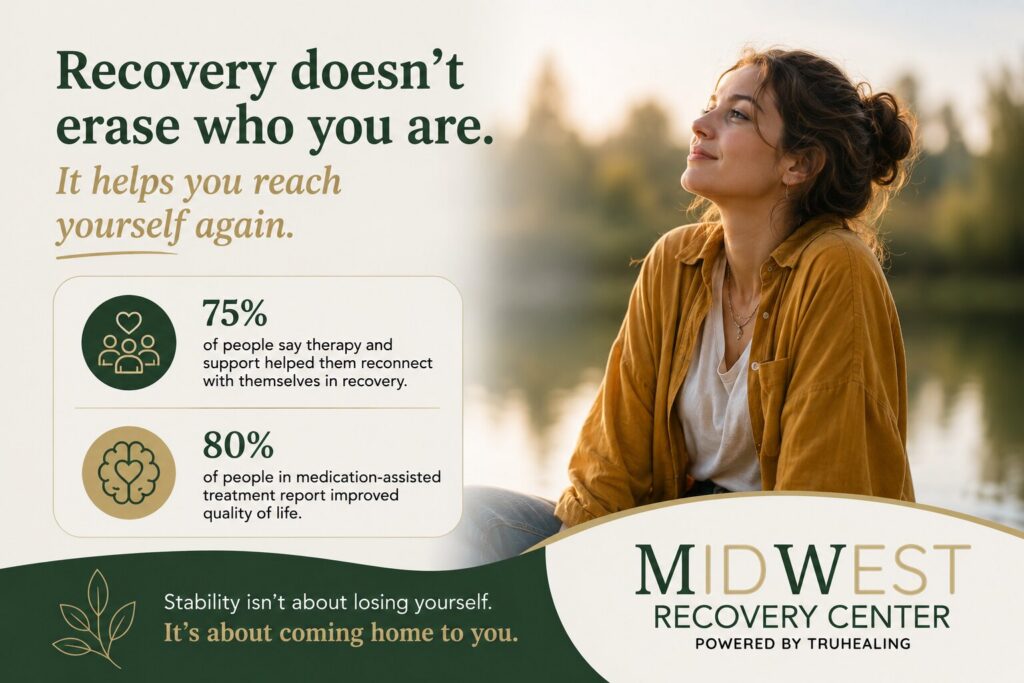
Recovery is not about becoming less yourself.
It’s often about becoming reachable to yourself again.
FAQ: Identity, Creativity, and Medication-Assisted Treatment
Will medication-assisted treatment change my personality?
Treatment medications are intended to support stability and reduce cravings or relapse risk—not erase personality, creativity, or emotional depth.
Is it normal to fear losing yourself in recovery?
Yes. Many people worry sobriety or medication will disconnect them from parts of their identity or emotional experience.
Do Vivitrol and Suboxone feel emotionally different?
Some people report different emotional experiences depending on medication type, body chemistry, treatment goals, and recovery history.
Can creative people still feel inspired in recovery?
Absolutely. Many people find recovery improves focus, consistency, emotional clarity, and sustainable creativity over time.
Why can calmness feel uncomfortable during recovery?
People accustomed to emotional chaos or constant stimulation may initially experience stability as unfamiliar or emotionally strange.
Does medication-assisted treatment make people emotionally numb?
Not necessarily. Treatment plans are individualized and monitored carefully to support emotional stability, not emotional shutdown.
How do I know which medication option is right for me?
Treatment professionals evaluate medical history, substance use patterns, physical health, emotional concerns, and recovery goals to recommend appropriate options.
Is medication-assisted treatment still considered recovery?
Yes. Many people use medication-assisted treatment as part of a medically supported recovery plan focused on safety, stability, and long-term healing.
You Do Not Have to Choose Between Recovery and Being Yourself
A lot of people delay treatment because they think healing means becoming emotionally smaller somehow.
Less creative.
Less interesting.
Less alive.
Less themselves.
But many eventually discover the opposite is true.
Recovery did not erase them.
It helped them stop disappearing.
If you’re considering medication-assisted treatment, Midwest Recovery Center offers compassionate, individualized support designed to help people stabilize without losing sight of who they are.
Call (833) 657-0858 or visit our Medication-Assisted Treatment services to learn more about our Medication-Assisted Treatment services Maumee, Ohio.