

If you’ve left an intensive outpatient program (IOP)—whether it was after the first week or months in—you’re not alone. Maybe something came up. Maybe it got too hard. Maybe you just didn’t feel ready.
Here’s what we want you to hear: you don’t have to stay gone.
At Midwest Recovery Center, we see people pause treatment all the time. It’s more common than you think. And it doesn’t mean you failed or burned a bridge. It means you’re human.
Re-entering IOP doesn’t have to be overwhelming, and you don’t have to prove anything. You can return gently, honestly, and at your own pace.
Why People Leave IOP (And Why That’s Okay)
There are so many reasons people pause treatment—and most have nothing to do with “giving up.” Maybe your work schedule changed. Maybe a personal crisis hit. Maybe you just started feeling numb or disconnected and couldn’t bring yourself to show up. Maybe you didn’t feel ready.
And sometimes, people ghost. Not because they don’t care—but because shame tells them they can’t go back.
That shame? It lies.
Treatment isn’t a test you either pass or fail. It’s support you can come back to when you’re ready.
You’re Not the Only One Who Left—and Came Back
We’ve had clients rejoin after a weekend away. Others come back months later. A few take years. What they all have in common? At some point, they realized they still deserved support.
Here’s how one returning client put it:
“I thought I’d be judged for leaving. But when I came back, the first thing they said was, ‘We’re glad you’re here.’ That changed everything.”
— IOP Client, 2023
You don’t have to explain everything. You don’t have to restart from square one. You just have to show up.
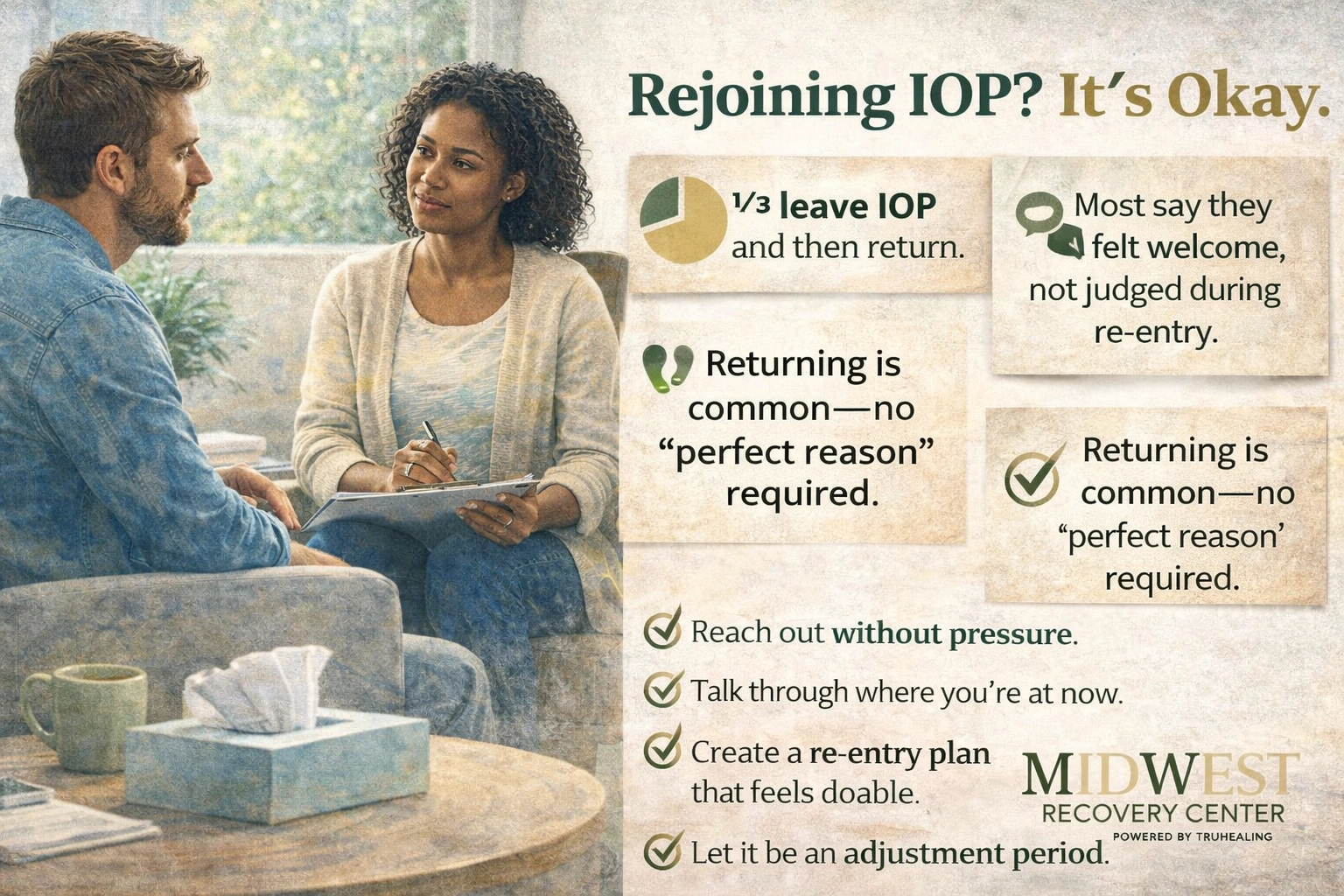
How to Re-Enter an Intensive Outpatient Program
Returning to IOP doesn’t have to look the same for everyone. In fact, the most successful re-entries often happen when they’re flexible, client-centered, and collaborative.
Here’s what that might look like:
1. Reach Out Without Pressure
This might mean calling the front desk, texting a case manager, or emailing a familiar clinician. Just a simple, “Can we talk about returning?” is enough. You don’t need to justify your absence. Just let us know you’re thinking about coming back.
2. Talk Through Where You’re At Now
When you’re ready, we’ll talk with you—no pressure, no judgment. We want to understand what you’re carrying and what would feel supportive now. That conversation might include questions like:
- What worked for you before?
- What didn’t?
- What’s your energy level like right now?
- What kind of support do you want?
3. Create a Re-Entry Plan That Feels Doable
This could mean starting with one group per week, or one-on-one sessions at first. You might rejoin the same IOP schedule, or try a modified version. The plan is yours. You get to co-create it with your care team.
4. Let It Be an Adjustment Period
You don’t need to be “all in” on day one. It’s okay to feel unsure, awkward, or even resistant. Returning is a big step—and it can take time to feel steady again. Give yourself permission to move slowly.
You’re Not Starting Over—You’re Continuing Differently
This is one of the most important things to understand about re-entering IOP:
You are not starting over. You are continuing differently.
Every insight you gained the first time counts. Every time you opened up, tried a new coping skill, or even just showed up—that still matters. Treatment doesn’t erase just because it paused.
Sometimes, leaving gave you perspective. Sometimes, it made you realize what you were missing. Sometimes, it just reminded you that you do want help—even if it’s still hard.
All of that belongs in your story.
What Returning Might Actually Look Like
Every re-entry is different, but here are some common examples from real clients:
- Jen left IOP after two weeks, overwhelmed by personal grief. Six weeks later, she called her old therapist, rejoined with just one group a week, and gradually built back to full participation.
- Luis stopped attending after missing three sessions in a row, too ashamed to come back. He started with a one-on-one appointment to talk through that shame and was met with compassion—not criticism.
- Sam relapsed after leaving, spent a few months in self-blame, and then walked into a new intake appointment. Instead of treating it like a restart, their care team helped them pick up where they were—with new boundaries and more support.
These aren’t exceptions. They’re examples of how flexible, human-centered treatment works.
FAQs About Rejoining IOP After Leaving
Can I come back if I ghosted?
Yes. You don’t need a perfect explanation. Whether you missed a few sessions or disappeared completely, you’re welcome to reach out. We won’t judge. We’ll meet you where you are.
Will I have to start over?
Not unless you want to. Many clients continue from where they left off, especially if their goals or progress are still relevant. We may suggest a re-orientation or support plan, but you don’t have to redo everything.
What if I’m using again?
You’re still welcome. We may adjust your treatment plan to reflect where you are now—including offering additional support if needed—but relapse doesn’t exclude you. In fact, it’s a very common reason people re-enter IOP.
What if I feel embarrassed or ashamed?
That’s normal. Shame is a common part of returning—and it’s also something we can help with. You don’t have to carry it alone. One of the most healing parts of returning to IOP is realizing you’re still worthy of care.
Do I have to tell the group why I left?
Nope. You can share what you’re comfortable with—or nothing at all. Your story belongs to you, and your privacy will always be respected.
What if my schedule changed?
That’s something we talk through together. We’ll help you figure out if a new group time, fewer sessions, or other adjustments would make it easier to stay connected.
A Gentle Reminder: You Can Come Back Without Drama
You don’t need to “earn” your return. You don’t need to wait until everything is falling apart. You can come back just because you want to try again.
That alone is enough.
Treatment isn’t a finish line. It’s a place to find support when you need it. Whether you’re returning after days, months, or years—it’s okay.
We’ll greet you with curiosity, not interrogation. With compassion, not comparison.
If You’re Ready—Or Even Just Considering It
You don’t have to be sure. You just have to be curious enough to reach out. We can help you explore what rejoining might look like, with no obligation or pressure.
If you live nearby, you can also explore the broader treatment options in locations we serve.
When you’re ready, we’re ready.
Thinking About Coming Back?
Call (888) 657-0858 to learn more about our intensive outpatient program services in Toledo, OH.