According to SAMHSA’s 2022 National Survey on Drug Use and Health, which sampled over 58,000 adults nationwide, roughly 21.5 million Americans live with both a substance use disorder and a mental health condition at the same time. If you are searching for dual diagnosis rehab in Youngstown, Ohio, understanding how to separate genuinely integrated programs from those that simply use the phrase as a marketing term will determine whether treatment actually works for you.
What dual diagnosis actually means (and why it changes everything)
SAMHSA’s 2022 survey found that among adults with any substance use disorder, approximately 50 percent also met criteria for at least one mental health condition. The number is not a coincidence. Dual diagnosis describes the simultaneous presence of a substance use disorder and a mental health condition, such as depression, anxiety, PTSD, or bipolar disorder. These conditions do not take turns. They feed each other in real time: anxiety drives drinking to manage dread, alcohol disrupts sleep and worsens anxiety, and the cycle tightens.
What this means in practice is that treating only the addiction while leaving the mental health condition unaddressed produces predictably poor outcomes. A person who leaves a 30-day program sober but still experiencing untreated PTSD flashbacks faces a relapse risk that no amount of willpower offsets. The same is true in reverse: stabilizing psychiatric symptoms without addressing substance use leaves the primary coping mechanism intact.
Before you call a single facility, confirm they treat both conditions under one roof, with one coordinated clinical team, not two separate departments that occasionally share a chart.
Why youngstown’s mental health landscape makes this harder
The Ohio Department of Mental Health and Addiction Services reported in its 2023 statewide needs assessment that Mahoning County, which includes Youngstown and Austintown, faces significant behavioral health workforce shortages relative to the density of need. Overdose mortality in the Youngstown metropolitan area has consistently tracked above the state average, driven in large part by fentanyl and polysubstance use, yet the number of licensed integrated treatment facilities in the region remains thin compared to larger Ohio metros.
What this translates to on the ground: when you search for help locally, you will encounter programs that treat addiction competently but have no licensed mental health clinicians embedded in the treatment team. You will also find outpatient mental health practices that are not equipped to manage active substance use. The gap between those two categories is where people fall through.
If you are also navigating anxiety alongside a substance use disorder, understanding how integrated care works for those two conditions specifically gives you a clearer baseline before you start calling facilities.
Use SAMHSA’s treatment locator at findtreatment.gov, filtered specifically for “co-occurring disorders,” as your first search step rather than a general Google search. The filter eliminates programs that handle only one side of the picture.
The core question every facility must answer before you enroll
A 2019 study published in the Journal of Substance Abuse Treatment, examining 962 adults in dual diagnosis programs, found that integrated treatment, defined as addiction and mental health services delivered by the same clinical team, produced significantly better outcomes at 12 months than parallel treatment, where separate providers manage each condition independently. The mechanism is not mysterious: when your addiction counselor and your psychiatrist share the same case notes, attend the same team meetings, and communicate daily, your care does not fall into the space between two separate systems.
The single question to ask every facility before you enroll is this: “Do your licensed mental health clinicians and addiction counselors share the same treatment team and meet together about my care?” A satisfactory answer is specific. The admissions person can name who is on the team, describe how often they meet, and explain what shared documentation looks like. An unsatisfactory answer sounds like: “We have mental health services available” or “We can refer you to a therapist.” Availability and referral are not integration.
Write that question down and ask it on every facility call this week. The answer alone will eliminate a significant number of programs from your list.
How to read a facility’s credentials and licensing
A 2017 analysis published in Psychiatric Services found that patients treated at Joint Commission-accredited behavioral health facilities had measurably better outcomes on standardized clinical measures than those treated at non-accredited programs. Accreditation signals that an external body has reviewed staffing, clinical protocols, safety practices, and documentation against published standards.
In Ohio, facilities treating co-occurring disorders should carry licensure from the Ohio Department of Mental Health and Addiction Services (ODMHAS). CARF accreditation and Joint Commission accreditation are the two national benchmarks worth looking for. Neither guarantees quality, but the absence of both is a meaningful warning sign.
There is an important distinction to understand here: a facility that employs a psychiatrist full-time is different from one that offers a “mental health assessment” on intake. The assessment tells you what conditions are present. The psychiatrist manages them throughout treatment, adjusting medications, monitoring side effects, and responding when symptoms shift. Before your first tour, pull the facility’s Ohio licensure status from the ODMHAS public provider database at mha.ohio.gov to confirm it is current and active.
What staffing ratios tell you
A 2020 study in Health Affairs examining 241 residential behavioral health programs found that client-to-clinician ratios below 1:8 were associated with significantly higher completion rates and lower 90-day readmission rates. Dual diagnosis care is clinically complex. A person managing both opioid withdrawal and major depressive disorder requires more contact hours than someone with a single diagnosis.
Ask any facility you are considering what their licensed clinician-to-client ratio is across the program, not just in group therapy sessions. A ratio above 1:12 in a residential dual diagnosis program signals that the level of individualized attention you need is not structurally possible regardless of how good the individual clinicians are.
Psychiatrist on staff vs. psychiatric referrals
The difference matters more than most admissions staff will volunteer. A 2021 study in the American Journal of Psychiatry found that integrated psychiatric prescribing within addiction programs reduced early treatment dropout by 34 percent compared to programs relying on external psychiatric referrals. When psychiatric medication management sits outside the facility, delays in communication create gaps in care that can destabilize recovery during the first weeks.
The practical test is a specific question: “If my psychiatric symptoms change during residential treatment, how quickly can a psychiatrist adjust my medications?” If the answer involves scheduling an outside appointment or waiting for a consulting psychiatrist’s next visit, you are not looking at true integration.
Levels of care and which one fits your situation
The American Society of Addiction Medicine’s Patient Placement Criteria, now in their third edition, define five primary levels of care: medically managed intensive inpatient (detox), residential treatment, partial hospitalization (PHP), intensive outpatient (IOP), and standard outpatient. ASAM designed these criteria specifically so that placement decisions are driven by clinical need, not by what a facility has available or what insurance defaults to.
For dual diagnosis, the decision about which level fits your situation depends on the severity of both conditions simultaneously. Severe active suicidality, psychotic symptoms, or high medical risk from withdrawal requires residential or inpatient placement. Stable psychiatric symptoms with moderate substance use severity may be appropriately managed at the PHP or IOP level. Before accepting any placement recommendation, ask the admissions counselor to explain specifically which ASAM criteria your situation meets and why the recommended level matches that picture.
Residential vs. intensive outpatient for co-occurring disorders
A 2018 study in Drug and Alcohol Dependence following 1,200 adults with co-occurring disorders found that residential treatment produced superior outcomes at six months for individuals with active psychiatric instability, housing insecurity, or a history of multiple failed outpatient attempts. IOP produced comparable outcomes at 12 months for individuals with stable housing, strong social support, and psychiatric symptoms that were controlled at treatment entry.
The clinical signals that indicate residential care is non-negotiable include: active suicidal ideation or recent self-harm, a living environment actively hostile to recovery, and psychiatric symptoms severe enough to impair daily functioning. If any of those apply to your situation, do not accept an IOP recommendation as the starting point without a clinical explanation for why residential is not indicated.
What to expect from detox when a mental health condition is present
A 2016 study in the Journal of Clinical Psychiatry found that individuals with co-occurring psychiatric disorders experienced significantly more complicated alcohol and opioid withdrawal trajectories, including higher rates of severe anxiety, perceptual disturbances, and dysphoria, compared to those without psychiatric comorbidities. Detox is already physically demanding. When psychiatric conditions are present, it is also psychiatrically demanding in ways that require active clinical management, not just medical monitoring.
Medically monitored detox relies primarily on nursing observation and vital sign tracking. Medically managed detox involves physician-directed pharmacological intervention on an as-needed basis. For dual diagnosis, medically managed is the appropriate standard. If you are currently prescribed psychiatric medications, confirm before admission that the detox unit can continue managing them without interruption. Discontinuing antidepressants, mood stabilizers, or antipsychotics at detox entry compounds an already difficult process unnecessarily.
Insurance, medicaid, and what youngstown-area coverage actually pays for
A 2023 KFF analysis of behavioral health parity enforcement found that despite the Mental Health Parity and Addiction Equity Act, insurers continue to apply more restrictive prior authorization requirements to behavioral health services than to comparable medical services at rates that significantly exceed compliance benchmarks. This is not an abstract regulatory concern. It means that even when you have coverage, a prior authorization denial can delay residential dual diagnosis admission by days or weeks.
The Youngstown and Mahoning County payer landscape is broad. Commercial plans active in this market include Aetna, Anthem BCBS, Cigna, and Optum. Veterans and their dependents may carry Tricare. Ohio Medicaid managed-care plans covering Mahoning County members include CareSource, Buckeye, Molina, Anthem, Aetna, AmeriHealth Caritas, and Humana. Each plan manages behavioral health benefits differently, and “in-network” for addiction treatment does not automatically mean in-network for psychiatric services delivered at the same facility.
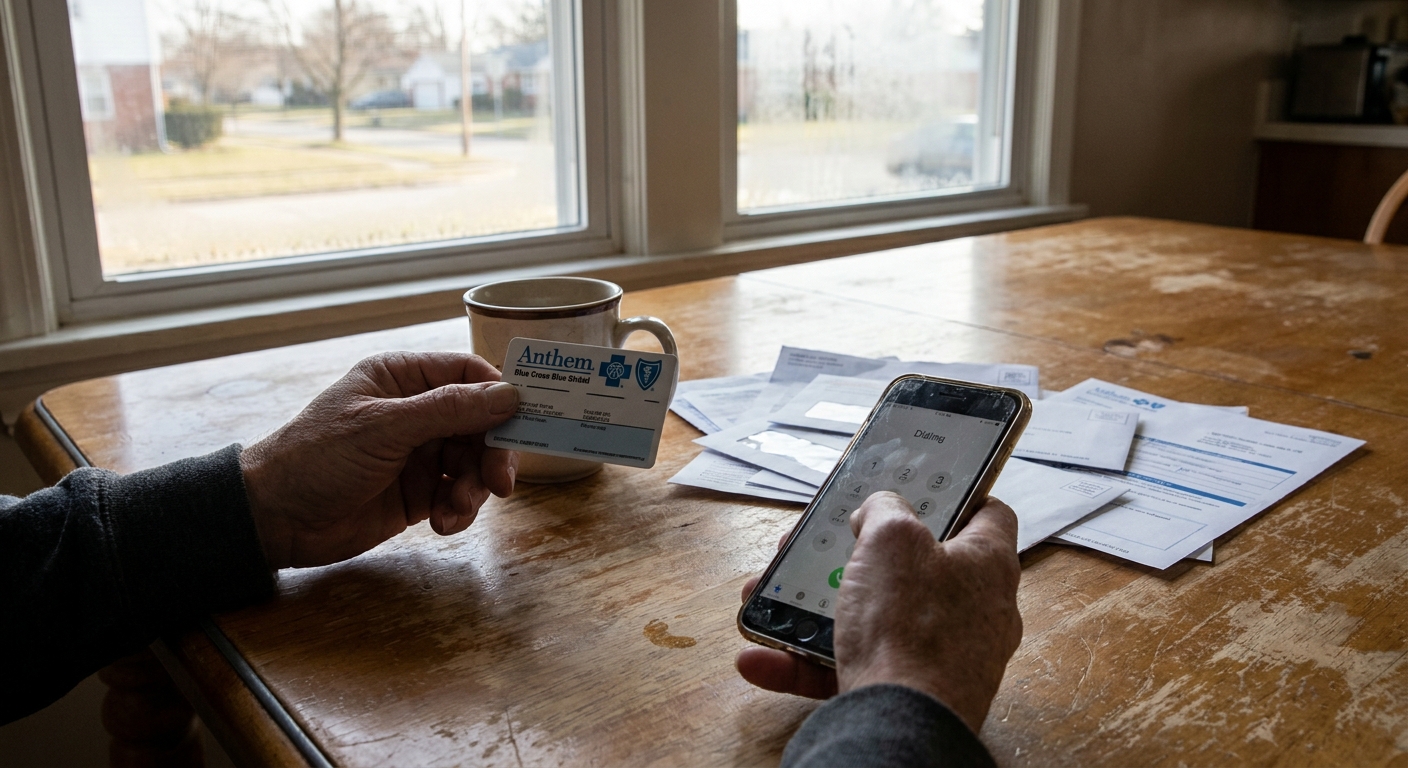
The action to take now: call the member services number on your insurance card and ask specifically whether the facility is in-network for both the behavioral health and psychiatric components of care. Not just addiction treatment. Both components.
How to push back on a denial
A 2022 CMS report on behavioral health parity compliance found that when enrollees filed formal appeals for denied behavioral health services, nearly 40 percent of internal appeals resulted in a reversal of the original denial. The appeals process has real teeth when used correctly.
The sequence is: request the denial in writing first, then ask the facility’s utilization review team to file a peer-to-peer review, where a physician at the facility speaks directly with the insurance company’s medical reviewer, before you file anything independently. The language that strengthens an appeal is specific: “medical necessity for co-occurring disorder treatment under the Mental Health Parity and Addiction Equity Act.” If the internal appeal fails, you have the right to request an independent external review through the Ohio Department of Insurance, and filing a parity complaint with that office creates a formal record that insurers take seriously.
Medication-assisted treatment and psychiatric medication: what good integration looks like
A 2021 NIDA-funded clinical trial following 874 adults with opioid use disorder and co-occurring depression found that participants receiving both buprenorphine and antidepressant therapy within the same prescribing relationship achieved significantly higher treatment retention and lower rates of opioid relapse at 12 months than those receiving either treatment alone or through separate providers. Medication-assisted treatment works. Psychiatric medication works. The combination, when managed coherently, works better than either in isolation.
Buprenorphine, naltrexone, and methadone each carry specific interaction profiles with common psychiatric medications. A program without prescribing authority for both categories is managing only half the pharmacological picture. The red flag to watch for: facilities that require patients to discontinue psychiatric medications before admission. This is not a clinical standard. It is an operational preference that puts patients at risk. Ask directly whether the prescribing physician can manage both psychiatric and MAT medications, or whether two separate providers will be involved. If the answer is two separate providers, ask how they communicate and how quickly.
Evidence-based therapies to look for (and one red flag)
A 2020 meta-analysis published in JAMA Psychiatry, reviewing 43 randomized controlled trials and over 6,000 participants with co-occurring substance use and psychiatric disorders, found that Cognitive Behavioral Therapy and Dialectical Behavior Therapy produced the strongest and most consistent outcomes across diagnostic combinations. CBT teaches you to identify and restructure the thought patterns that sustain both addiction and conditions like depression or anxiety. DBT was specifically developed for individuals with difficulty regulating intense emotions, which describes a significant portion of the dual diagnosis population. Motivational Interviewing meets ambivalence about change directly, without confrontation, and consistently improves treatment engagement. Seeking Safety, a structured curriculum developed specifically for co-occurring trauma and substance use, addresses both simultaneously without requiring clients to be abstinent before trauma work begins.
The red flag is a program built entirely around 12-step participation with no licensed clinical therapy component. Peer support is valuable. It is not a clinical intervention. Ask the admissions team to name the licensed therapies used in the program and how often individual therapy sessions occur per week. Once per week is a minimum. Twice or more per week indicates a program taking the clinical work seriously.
How family involvement affects outcomes
A 2019 study from the Betty Ford Institute, following 1,847 individuals in residential dual diagnosis treatment over 24 months, found that active family participation in structured psychoeducation programming was associated with a 28 percent reduction in relapse rates at 18 months compared to treatment without family involvement. Family members are not bystanders in dual diagnosis treatment. They are clinical assets when engaged properly and, without structured support, can inadvertently reinforce the patterns that sustain both the addiction and the mental health condition.
Good family programming is led by a licensed clinician, follows a structured psychoeducation curriculum that addresses co-occurring disorders specifically, includes sessions on boundary-setting, and occurs on a scheduled rather than ad hoc basis. If you are exploring how depression and co-occurring substance use are treated in an integrated setting, the family component looks similar across these conditions because the dynamics between family stress and psychiatric relapse follow consistent patterns. Ask whether family sessions are led by a licensed clinician and how frequently they occur during treatment. “We welcome family visits” is not the same as structured family clinical programming.
Aftercare planning: the decision that happens before discharge
A 2020 SAMHSA report tracking 3,400 adults following discharge from dual diagnosis residential programs found that individuals who left treatment with confirmed outpatient appointments already scheduled were 60 percent less likely to relapse within 90 days than those who left with only referral lists. The critical word is “confirmed.” A list of phone numbers is not aftercare planning. Confirmed appointments, an assigned outpatient therapist, active medication management continuity, and a peer support connection that begins before discharge: those are the components of a plan that actually reduces relapse.
For dual diagnosis specifically, aftercare must address both conditions in parallel. Stopping psychiatric medication management at discharge because it was handled inside a residential program, and assuming the outpatient provider will pick it up eventually, creates a dangerous gap. During your facility tour or intake call, ask what the average time gap is between discharge and a client’s first outpatient appointment. Anything beyond one week is a structural problem worth pressing on.
Red flags that signal the wrong facility
A 2019 joint patient safety report from the Substance Abuse and Mental Health Services Administration and the National Council for Mental Wellbeing identified program characteristics most strongly associated with poor dual diagnosis outcomes and patient safety concerns. The warning signs are not subtle when you know what to look for.
No licensed psychiatrist on staff means psychiatric symptoms will be managed reactively, if at all. Programming built entirely on 12-step participation with no licensed clinical therapy is not dual diagnosis treatment. No structured family involvement component signals the program does not take the relational drivers of addiction seriously. Vague, non-specific answers about how co-occurring disorders are treated indicate the staff cannot describe their own clinical model. Pressure to enroll before a clinical assessment has occurred is a financial signal, not a clinical one. Inability to name specific therapy modalities means the program is not delivering evidence-based care. For those also dealing with trauma alongside substance use, understanding how PTSD and addiction are treated in an integrated program gives you a concrete clinical baseline to compare any facility’s answer against.
If a facility cannot clearly answer the question “How do you treat both conditions simultaneously?”, cross it off the list.
What to do this week
The sequence is straightforward. Go to findtreatment.gov and use the co-occurring disorders filter to identify three ODMHAS-licensed facilities with CARF or Joint Commission accreditation in or near Mahoning County. Call each one and ask the core integration question: “Do your licensed mental health clinicians and addiction counselors share the same treatment team and meet together about my care?” Listen for specificity in the answer. Before you end each call, call your insurance member services number and confirm the facility is in-network for both the behavioral health and the psychiatric components, not just one of them. Those two steps, completed this week, will tell you more about which programs are genuinely equipped to help than any website review or rankings list.
Frequently asked questions
What is dual diagnosis treatment and how is it different from standard addiction rehab?
Dual diagnosis treatment addresses a substance use disorder and a co-occurring mental health condition simultaneously, using the same integrated clinical team. Standard addiction rehab focuses on the substance use alone. The difference in outcomes is significant: treating only the addiction while leaving conditions like depression, anxiety, or PTSD unaddressed is a primary driver of relapse, because the underlying condition continues to fuel the behavior that led to substance use.
How do I know if I need dual diagnosis treatment versus standard addiction treatment?
If you have been diagnosed with a mental health condition, have experienced symptoms of depression, anxiety, trauma responses, or mood instability that existed before or alongside your substance use, or have completed addiction treatment before and relapsed without understanding why, dual diagnosis evaluation is appropriate. A thorough clinical assessment at admission, not just a screening questionnaire, should determine the answer for your specific situation.
Will ohio medicaid cover dual diagnosis residential treatment in youngstown?
Ohio Medicaid managed-care plans covering Mahoning County, including CareSource, Buckeye, Molina, and others, are required to cover behavioral health services including residential dual diagnosis treatment under parity law. Prior authorization is typically required, and coverage levels vary by plan and facility network status. Call your plan’s member services number and ask specifically about coverage for both the addiction and psychiatric components of care at any facility you are considering.
What mental health conditions are most commonly treated alongside addiction in dual diagnosis programs?
The most frequently co-occurring conditions in dual diagnosis programs are major depressive disorder, generalized anxiety disorder, PTSD, bipolar disorder, and ADHD. Programs equipped for dual diagnosis treatment should have clinical competency across this range, not just experience with one or two conditions alongside addiction.
How long does dual diagnosis treatment typically last?
The length of treatment depends on the severity of both the substance use disorder and the mental health condition, your living situation, and prior treatment history. Residential dual diagnosis programs typically range from 30 to 90 days, followed by PHP or IOP step-down care. Attempting to compress dual diagnosis treatment into a timeline driven by insurance authorization rather than clinical need significantly increases relapse risk. Push back on any facility that cannot explain the clinical rationale for the duration they recommend.
What should I ask about aftercare before enrolling in a dual diagnosis program?
Ask two questions directly: what is the average time between discharge and a client’s first outpatient appointment, and who manages psychiatric medications after residential treatment ends. A strong program will have confirmed outpatient referrals in place before discharge, not a list of providers to call on your own. For dual diagnosis specifically, continuity of psychiatric care after residential treatment is as clinically important as the residential program itself.