According to SAMHSA’s 2023 National Survey on Drug Use and Health, fewer than 20% of people with a substance use disorder receive any form of treatment in a given year. For Toledo-area residents on CareSource, the barrier is rarely lack of coverage. More often, it is not knowing what that coverage includes or how to confirm it before calling a facility. This guide walks through what CareSource rehab coverage in Toledo, Ohio actually looks like, what to verify before you start making calls, and where most people trip up in the process.
What CareSource actually covers for rehab in ohio
CareSource is one of Ohio’s largest Medicaid managed-care organizations, and its behavioral health benefits are more extensive than most members realize. Under Ohio Medicaid, CareSource covers the full spectrum of substance use disorder (SUD) treatment: medically managed detox, residential inpatient, partial hospitalization (PHP), intensive outpatient (IOP), standard outpatient, and medication-assisted treatment (MAT). Co-occurring mental health conditions, including depression, anxiety, PTSD, and trauma, are also covered. For Toledo-area members in Lucas County, these benefits are active from enrollment, not after a waiting period.
Medicaid managed care vs. marketplace CareSource plans
CareSource offers two fundamentally different product lines, and confusing them leads to real problems. CareSource Medicaid, the plan most Toledo-area members hold, is administered on behalf of the Ohio Department of Medicaid. Its behavioral health benefits follow Ohio Medicaid’s coverage rules. CareSource Marketplace plans, available through the federal exchange, operate under different formularies, different networks, and different prior authorization rules. The insurer is the same; the rulebook is not. Before you do anything else, confirm which type of CareSource plan you carry, because the authorization requirements, in-network providers, and covered services differ meaningfully between the two.
What “behavioral health parity” means for your benefits
The Mental Health Parity and Addiction Equity Act (MHPAEA), enforced in Ohio through the Department of Insurance, prohibits CareSource from applying stricter limits to behavioral health benefits than to comparable medical or surgical benefits. In plain terms: CareSource cannot cap inpatient rehab days at 30 if it covers 60 days of inpatient medical care. It cannot require more frequent prior authorization check-ins for SUD treatment than for cancer treatment. This matters because it gives you a legal foundation to push back if CareSource applies a restriction that seems inconsistent with your other benefits. The most common parity violation to watch for is a day limit on residential treatment that does not have an equivalent cap on medical hospital stays.
How to confirm your CareSource benefits before you call a facility
A 2021 study published in Health Affairs analyzing 1.6 million Medicaid beneficiaries found that coverage confusion, specifically uncertainty about what was covered and at what cost, was one of the top reasons people delayed seeking mental health and SUD treatment. The way to close that gap is to verify before you commit to anything.
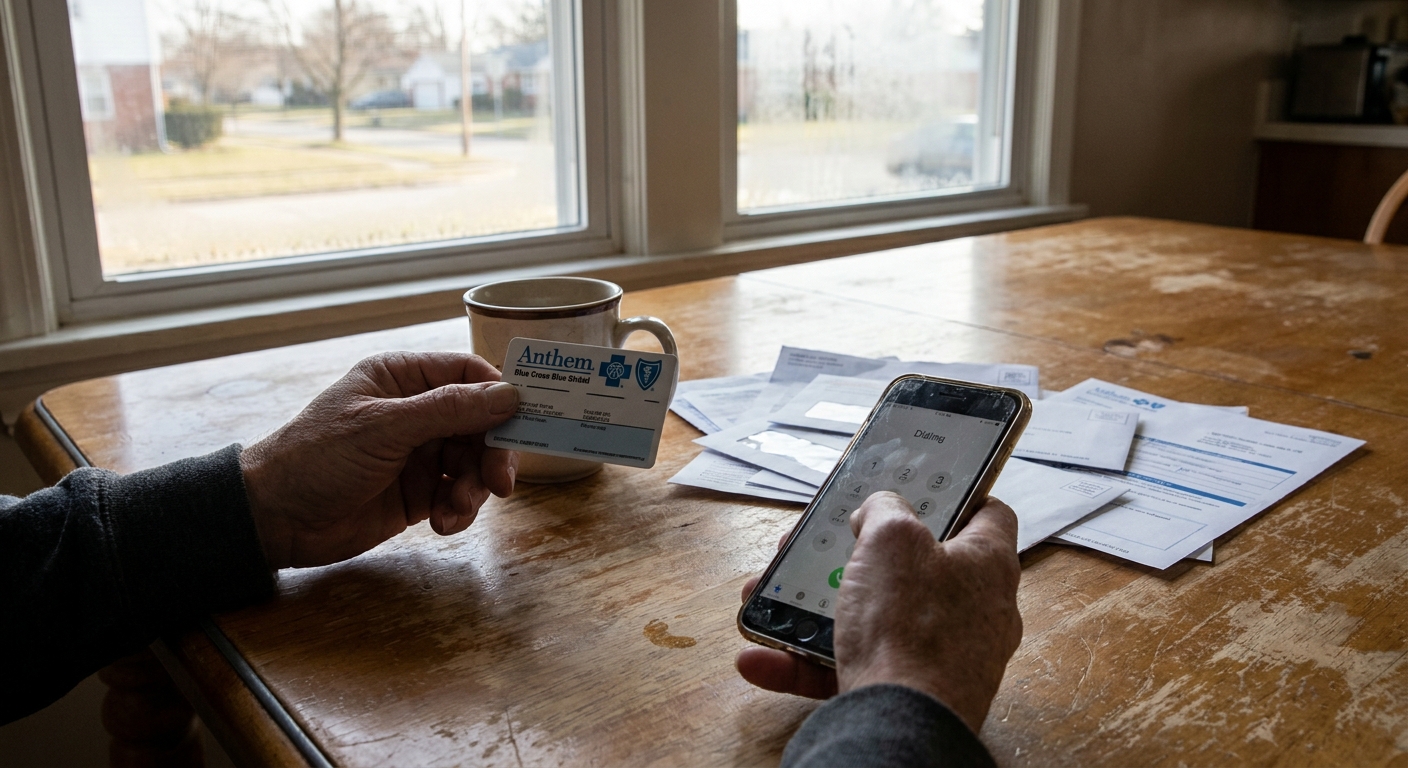
The most direct path is the member services number on the back of your CareSource card. When you call, ask three questions: Is residential or IOP treatment covered under my current plan? Does the facility I am considering require prior authorization? Is that facility in-network in Lucas County? These three questions will tell you what you need to know before engaging any treatment program. The CareSource member portal at caresource.com also allows you to search in-network providers, view your benefit summary, and check authorization status, but a live call remains the fastest way to get plan-specific answers.
For a broader picture of how Ohio Medicaid covers rehab services across different managed-care plans, that breakdown is worth reviewing alongside your CareSource-specific benefits.
The prior authorization requirement to catch early
Most CareSource rehab levels, especially inpatient, residential, and PHP, require prior authorization before admission. The facility’s admissions or utilization management team is responsible for requesting this authorization from CareSource, not you. But the consequence of skipping it falls on the claim: CareSource can deny payment for services delivered without an approved authorization. The action is simple. Ask any facility you contact whether they handle prior authorization for CareSource before you agree to an admission date. A facility that hesitates on this question or tells you to sort it out later is a red flag.
In-network vs. out-of-network: the toledo provider landscape
Going out-of-network with CareSource Medicaid does not mean reduced benefits. It often means no coverage at all, with full cost exposure on the member. Lucas County has a range of behavioral health providers, including community-based programs, hospital-affiliated facilities, and private outpatient practices. Network status varies across all of them. SAMHSA’s treatment locator (findtreatment.gov) is a useful starting point, but it does not confirm CareSource network participation. Verify network status directly with CareSource member services, not with the facility’s billing staff. Billing teams confirm that they submit to CareSource. That is not the same as being in-network.
Levels of care and which ones CareSource covers
Treatment works best when the level of care matches the clinical need. According to the American Society of Addiction Medicine (ASAM), patients placed at the appropriate level of care based on standardized assessment have significantly better 90-day outcomes than those placed based on preference or availability alone. CareSource Medicaid covers the full ASAM continuum in Ohio: Level 3.7 (medically managed inpatient detox), Level 3.5 (clinically managed residential), PHP (partial hospitalization), IOP (intensive outpatient), and standard outpatient. What drives the authorization decision at each level is medical necessity, not what the member requests. A clinical assessment determines the appropriate level, and CareSource approves based on that documentation.
Medical detox: the level most often misunderstood
Detox is stabilization, not treatment. CareSource covers medically managed detox when it is clinically indicated, which means when the withdrawal risk requires medical supervision, not simply because someone wants a managed come-down. Authorization is required. The risk most people do not account for is leaving detox without a confirmed step-down plan. Detox alone does not address the behavioral, psychological, or social factors driving substance use. Before agreeing to a detox admission, ask the admissions team what level of care follows and whether CareSource has already authorized it. A good facility will not answer that question vaguely.
IOP and outpatient: the levels toledo members use most
IOP is the most utilized rehab level among Medicaid members nationally. A 2022 report from the Medicaid and CHIP Payment and Access Commission (MACPAC) found that outpatient and IOP settings account for the large majority of SUD treatment episodes funded by Medicaid, due to both clinical appropriateness and member preference. CareSource requires a clinical assessment, a documented diagnosis, and a treatment plan to authorize IOP. Outpatient is also covered and is frequently used for co-occurring mental health conditions where weekly therapy is the primary intervention. Before committing to an IOP program, get the full weekly schedule and confirm it works with your work or family obligations. Non-attendance is the most common reason IOP fails, and a schedule mismatch is preventable.
If you are also looking at how other insurers approach addiction treatment in the Toledo area, the rules around IOP authorization are similar across Ohio Medicaid managed-care plans, though timelines and network rosters differ.
Medication-assisted treatment (MAT) coverage under CareSource
MAT is among the most evidence-supported interventions in addiction medicine. According to NIDA, patients receiving buprenorphine or methadone for opioid use disorder are significantly more likely to remain in treatment and less likely to relapse or overdose than patients receiving no medication. CareSource Ohio Medicaid covers buprenorphine (Suboxone and generics), naltrexone (Vivitrol), and methadone through licensed opioid treatment programs (OTPs). The prescriber component runs through the medical benefit; the pharmacy component runs through the pharmacy benefit. These are sometimes authorized separately. Ask the prescribing provider whether they prescribe MAT in-house or require a referral to an outside prescriber. The answer affects how quickly you start.
What CareSource won’t cover (and what to do about it)
Ohio Medicaid excludes several categories of services regardless of which managed-care plan you are enrolled in. Luxury residential amenities, out-of-state facilities without explicit prior approval, experimental or unlicensed treatments, and services provided by non-licensed practitioners are not covered. Some facilities market amenities like equine therapy, private rooms, or spa services as part of their program. CareSource will not pay for those components, even if the underlying clinical treatment is covered.
When CareSource denies a claim or a prior authorization request, you receive a written explanation called an Adverse Benefit Determination (ABD). Request it in writing within 24 hours of receiving the verbal denial. The ABD specifies the reason for denial and the clinical criteria CareSource applied. That document is the foundation of your appeal.
How to file an appeal if CareSource denies coverage
Ohio Medicaid requires CareSource to process expedited appeals within 72 hours when the member’s health is at risk. Standard appeals must be resolved within 30 days. Call CareSource member services the same day you receive a denial. The expedited appeal clock starts from when you request it, not from when the denial was issued. Documentation that strengthens an appeal includes clinical notes from your treatment provider, a letter of medical necessity from a licensed clinician, and the specific parity comparison if the denial appears to apply a stricter standard to your SUD benefit than to a comparable medical benefit. If CareSource denies the appeal, you have the right to request a State Fair Hearing through the Ohio Department of Medicaid. That hearing gives you an independent review outside of CareSource’s process.
Toledo-specific factors that affect your coverage experience
Lucas County’s behavioral health infrastructure is organized in part through the Lucas County Alcohol, Drug Addiction, and Mental Health Services (ADAMHS) Board, which funds and coordinates local treatment providers. The ADAMHS Board maintains a current list of providers serving Lucas County residents, including those who accept CareSource. Calling the ADAMHS Board before contacting facilities directly is a practical shortcut. They know which programs have current capacity, which accept which Medicaid plans, and whether transport assistance is available for residents in Maumee or other parts of the metro area who need help reaching treatment sites.
Provider network availability in Toledo spans community-based outpatient programs, hospital-affiliated partial hospitalization programs, and both public and private residential options. Network status varies by facility and changes when contracts lapse or renew. Confirming network status directly with CareSource, rather than relying on a facility’s billing staff, remains the most reliable approach.
One practical access point worth knowing: Midwest Recovery Center accepts Ohio Medicaid through most of the state’s managed-care plans, including CareSource, Buckeye, Molina, Anthem, Aetna, AmeriHealth Caritas, and Humana. That breadth of Medicaid acceptance is not standard across Ohio treatment facilities, many of which accept only one or two plans or focus primarily on commercial insurance. For Lucas County residents navigating how Medicaid covers drug rehab in Toledo, confirming that a facility accepts your specific plan before the first call saves time.
Co-occurring mental health coverage: what to verify separately
SAMHSA’s 2023 National Survey on Drug Use and Health found that approximately 21.5 million adults in the United States had a co-occurring mental health and substance use disorder. In Toledo, as in most urban Ohio markets, a significant share of rehab patients carry dual diagnoses. Depression, anxiety, PTSD, and trauma-related conditions frequently co-occur with opioid use disorder and alcohol use disorder. CareSource covers co-occurring mental health treatment, but the SUD and mental health benefits are sometimes authorized separately, through different departments, with different criteria. When you call CareSource to verify your benefits, ask specifically about the mental health benefit and whether a separate authorization is required for co-occurring treatment. Do not assume that one authorization covers both. If you are also reviewing coverage options in nearby markets, the breakdown of Medicaid rehab coverage in Youngstown follows a similar structure and is worth comparing.
The one step to take before the end of this week
Everything in this guide comes down to one call. Find the CareSource member services number on the back of your insurance card. Call it, and ask three specific questions: Is residential or IOP treatment covered under my current plan? Does the facility require prior authorization, and who submits it? Is the facility I am considering in-network in Lucas County? That conversation takes about 15 minutes. It eliminates the most common reasons people start treatment only to face unexpected billing or coverage denials partway through.
If you are calling on behalf of a family member, CareSource member services can confirm benefits with the member’s consent or with a documented representative authorization. You do not have to navigate this alone, and you do not have to wait until a crisis forces the question. Make the call this week.
Frequently asked questions
Does CareSource cover inpatient rehab in toledo?
Yes. CareSource Ohio Medicaid covers inpatient and residential treatment for substance use disorder when it is medically necessary and when prior authorization is obtained by the treating facility before admission. The clinical assessment at intake determines whether the level of care meets CareSource’s medical necessity criteria.
Do I need a referral from my primary care doctor to start rehab with CareSource?
For most behavioral health services, CareSource Medicaid does not require a referral from a primary care provider. However, prior authorization from CareSource is required for higher levels of care, including inpatient, residential, and PHP. The treatment facility handles the authorization request directly with CareSource.
What if CareSource denies my prior authorization for rehab?
Request a written Adverse Benefit Determination immediately. Call CareSource member services the same day to request an expedited appeal if your situation is urgent. Expedited appeals must be resolved within 72 hours under Ohio Medicaid rules. Your treatment provider can submit additional clinical documentation to support the appeal.
Does CareSource cover medication-assisted treatment (MAT) for opioid use disorder?
Yes. CareSource Ohio Medicaid covers buprenorphine, naltrexone, and methadone (through licensed OTPs) for opioid use disorder. The medical and pharmacy components may be processed separately. Confirm with your prescribing provider whether MAT is available in-house or requires a separate referral.
How do I know if a toledo-area rehab facility is in-network with CareSource?
Call CareSource member services directly and ask them to confirm the network status of any specific facility by name and NPI number. Do not rely on the facility’s billing staff to confirm network participation. The CareSource member portal also includes a provider search tool, though calling member services gives you documented confirmation.
Can CareSource be used for co-occurring mental health treatment at the same time as rehab?
Yes, but verify separately. CareSource covers co-occurring mental health treatment, and authorization for the mental health benefit is often handled through a different process than the SUD authorization. When verifying your benefits, ask CareSource explicitly whether a separate authorization is required for co-occurring mental health services during a rehab episode.