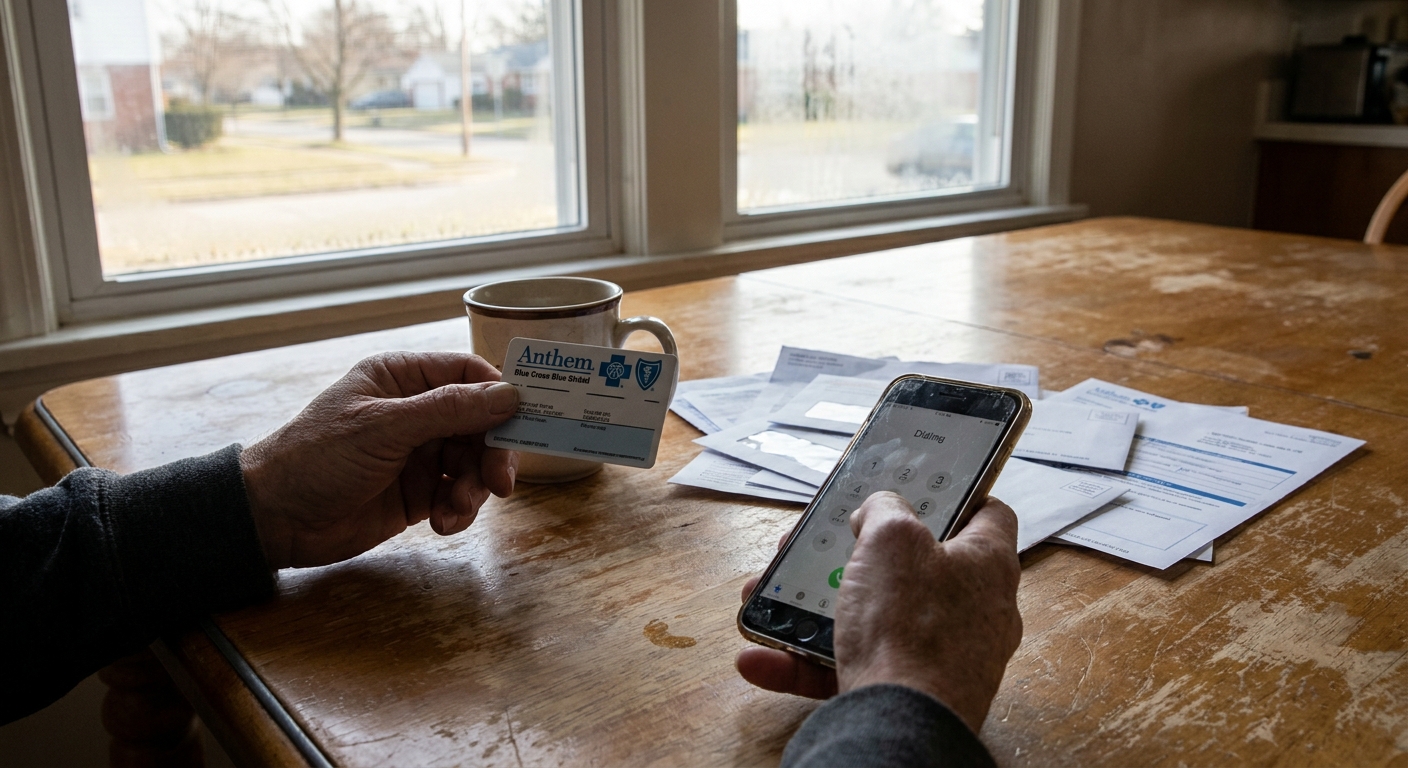
According to SAMHSA’s 2023 National Survey on Drug Use and Health, roughly 20 million Americans needed substance use treatment but did not receive it, with insurance confusion ranking among the top barriers. If you’re searching for buckeye medicaid rehab youngstown ohio, the coverage exists, the path to treatment is navigable, and this guide walks you through exactly how it works.
What buckeye health plan covers for rehab in youngstown
Ohio’s Medicaid program contracts with several managed-care organizations to deliver benefits to enrolled members, and Buckeye Health Plan is one of them. For Youngstown and Mahoning County residents, that means Buckeye acts as your insurance carrier, processing claims and authorizing services within the rules Ohio Medicaid sets. Substance use disorder (SUD) treatment is not optional coverage under this arrangement. Federal parity law and Ohio’s Medicaid benefit design require that SUD services be covered at the same level as comparable medical benefits.
SAMHSA’s 2022 Treatment Episode Data Set found that only 11% of people who needed SUD treatment in the previous year actually received it, with insurance navigation cited as a primary obstacle. Understanding what Buckeye specifically covers removes that obstacle before it costs you time.
Inpatient vs. outpatient: what the plan actually pays for
Buckeye covers the full continuum of SUD care, meaning you are not limited to a single type of treatment. Medically supervised detoxification handles the physical withdrawal process and is covered as an inpatient or residential service when clinically warranted. Residential treatment provides 24-hour structured care for people who need an immersive environment. Partial hospitalization (PHP) runs roughly five to six hours per day and does not require an overnight stay. Intensive outpatient (IOP) typically means nine or more hours of treatment per week, spread across several days. Standard outpatient covers individual and group counseling at lower weekly frequencies.
The ASAM Patient Placement Criteria, used by Ohio Medicaid and its managed-care plans as the standard for level-of-care decisions, found that matching patients to the appropriate level reduces both relapse and unnecessary hospitalization. In practice, this means the facility conducts a clinical assessment, determines which level fits your clinical picture, and submits that recommendation to Buckeye. Your job is to show up for that assessment and be honest about your history.
Medication-assisted treatment (MAT) under buckeye
Buckeye covers FDA-approved MAT medications under Ohio Medicaid’s SUD benefit. Buprenorphine (Suboxone and its generics), naltrexone (Vivitrol), and methadone dispensed through licensed opioid treatment programs are all covered. A 2021 New England Journal of Medicine analysis of over 40,000 patients found that buprenorphine and naltrexone reduced opioid-related overdose deaths by 38% compared to no medication, making MAT one of the highest-impact interventions available.
Before your first appointment, call Buckeye’s member services line and ask two specific questions: whether the facility you are considering is authorized to prescribe or dispense MAT under your plan, and whether any prior authorization is required for your specific medication. Getting that answer in advance prevents a delay after intake.
How prior authorization works and how to move through it fast
A 2023 American Medical Association survey of 1,000 physicians found that prior authorization requirements delayed care for 93% of patients at least some of the time, and that 34% of delays led to serious adverse events. Buckeye requires prior authorization for inpatient detox, residential treatment, and PHP. The authorization is not your responsibility to initiate, but you have a direct role in making it happen quickly.
The provider initiates the prior authorization request. When you call a facility, the admissions team submits clinical documentation to Buckeye, which then reviews it against medical necessity criteria. The most common reason for delay is incomplete documentation at submission. The practical move: on your first call to any facility, ask directly whether their admissions team submits prior authorization requests the same day as the intake assessment. If the answer is no, ask what their typical turnaround is. A well-organized admissions department in Mahoning County will have a clear answer. If they do not, that tells you something about how organized the rest of the process will be.
What “medical necessity” means in practice
Buckeye uses ASAM criteria to evaluate medical necessity, which means six dimensions drive the determination: acute intoxication and withdrawal potential, biomedical conditions, emotional and behavioral conditions, readiness to change, relapse potential, and recovery environment. ASAM’s own outcome research, published in the Journal of Addiction Medicine in 2020, found that facilities using structured ASAM-based assessments achieved 27% better treatment retention rates than those using informal clinical judgment.
In plain terms: Buckeye is asking whether the level of care requested is the right fit for your clinical situation, not whether you deserve treatment. The concrete action here is to ask the admissions coordinator, before intake, whether their initial assessment documents all six ASAM dimensions. That documentation is what drives the authorization approval, and a facility that does this routinely will not need to resubmit.
In-network facilities in the youngstown area: how to find and verify one
A 2023 Kaiser Family Foundation report found that 1 in 7 Medicaid patients received surprise bills tied to out-of-network providers they did not knowingly choose. For SUD treatment, where placement decisions often happen quickly during a crisis, verifying network status before intake is not a formality. It is financial protection.
Buckeye’s online provider directory at buckeyehealthplan.com lets you search for SUD treatment facilities by ZIP code and county. Filter for Mahoning County and look specifically for providers listed under behavioral health or substance use disorder treatment. For context on how Medicaid-covered rehab works across Ohio more broadly, the framework is consistent across managed-care plans, though network composition varies.
What to ask during the verification call
A 2020 Commonwealth Fund report on insurance verification found that patients who asked specific questions during pre-intake calls reduced unexpected billing by 61% compared to those who relied solely on directory listings. Network status in directories is not always current.
Call the facility’s admissions or billing department directly, before any intake paperwork, and ask these questions: Is your facility currently in-network with Buckeye Health Plan for Mahoning County Medicaid members? Does your in-network status cover the specific level of care I am being assessed for (inpatient, PHP, IOP)? Are there any services at your facility that are billed separately and may be out-of-network? What does your billing team need from me to verify my coverage before the assessment? Make this call before the intake assessment, not after your first session, because out-of-network determinations made retroactively are far harder to dispute.
Co-pays, cost-sharing, and what youngstown members actually owe
Ohio Administrative Code and CMS Medicaid regulations cap cost-sharing for full Medicaid members at nominal amounts for most services. For SUD treatment covered under Buckeye, full Medicaid members typically owe no co-pay for covered inpatient services and minimal co-pays (often $3 or less) for outpatient visits. Ohio Medicaid does not allow cost-sharing that creates a barrier to medically necessary treatment.
If you carry both Medicaid and another insurance policy, such as a spouse’s commercial plan, coordination of benefits rules apply. Buckeye generally pays as the secondary insurer in that scenario, which means the primary insurer processes the claim first. Understanding how Medicaid drug rehab coverage interacts with other payers is worth clarifying with Buckeye’s member services before treatment starts. The concrete step: call Buckeye before your intake appointment and ask for a written or verbal confirmation of your cost-sharing obligation for the specific level of care being recommended.
Mental health coverage alongside rehab: the co-occurring condition piece
SAMHSA’s 2023 National Survey on Drug Use and Health found that 21.5 million adults in the United States had both a substance use disorder and a co-occurring mental health condition in the past year, representing over half of all people with SUD. Depression, anxiety, and PTSD are the most common co-occurring conditions among people seeking addiction treatment in Ohio.
Buckeye covers co-occurring mental health treatment under the same benefit structure as SUD care. Treatment for both conditions simultaneously, which the field calls integrated treatment, is covered when documented as clinically necessary. The key is documentation. If the facility screens you for mental health conditions at intake and records those findings in the clinical record, that documentation supports the authorization for both SUD and mental health services. Ask the admissions coordinator specifically whether their intake process includes a standardized mental health screening. Facilities that skip this step often create coverage gaps later.
Continuing care and what buckeye covers after discharge
A 2021 Journal of Substance Abuse Treatment study tracking 1,200 patients over 18 months found that those who engaged in a formal continuing-care plan after residential treatment had a 40% lower relapse rate than those discharged without a structured step-down. Continuing care is not optional support. It is where treatment outcomes are actually determined.
Buckeye covers the full step-down continuum: IOP following residential treatment, standard outpatient counseling, case management, and peer support services. For Mahoning County members curious about how similar post-discharge coverage works in other Ohio plans, the structure is comparable, though specific authorization requirements differ. The authorization for the next level of care does not automatically transfer from inpatient to outpatient. Before discharge, confirm with the facility’s utilization review team that the outpatient level of care has been authorized and that the first outpatient appointment is scheduled. Leaving that to arrange on your own after discharge is one of the most common ways continuing care gets skipped.
What to do this week
Call Buckeye’s member services line at 1-866-246-4358, identify yourself as a Mahoning County member, and ask two things: whether a specific Youngstown-area facility is currently in-network for SUD treatment under your plan, and what your cost-sharing is for inpatient and outpatient rehab services. That call takes five minutes and removes the two biggest unknowns standing between you and starting treatment.
Midwest Recovery Center accepts Ohio Medicaid through Buckeye Health Plan along with CareSource, Molina, Anthem, Aetna, AmeriHealth Caritas, and Humana. That breadth of Medicaid acceptance is not standard across all Ohio facilities. Many providers accept only one or two plans, or limit Medicaid admissions entirely. If you want to confirm whether your specific plan covers treatment at a facility that works with the full range of Ohio’s managed-care plans, that verification call is the only step left.
Frequently asked questions
Does buckeye health plan cover residential rehab in youngstown, ohio?
Yes. Buckeye covers residential SUD treatment for members in Mahoning County when the level of care is medically necessary and the facility is in-network. Prior authorization is required, and the facility initiates that process using ASAM criteria documented during your intake assessment.
How do I find out if a specific rehab facility accepts buckeye medicaid?
Start with Buckeye’s provider directory at buckeyehealthplan.com, then call the facility directly to confirm current in-network status. Directory listings can be outdated, so a direct call to the billing or admissions team before your intake appointment is the reliable verification method.
Does buckeye cover medication-assisted treatment (MAT) for opioid use disorder?
Yes. Buprenorphine, naltrexone, and methadone through licensed opioid treatment programs are all covered under Buckeye’s Medicaid benefit. Some medications require prior authorization, so confirm with member services and the prescribing facility before your first appointment.
What co-pays do buckeye medicaid members owe for rehab in ohio?
Full Medicaid members enrolled in Buckeye typically owe no co-pay for covered inpatient SUD services and nominal co-pays for outpatient visits. Ohio Medicaid rules prohibit cost-sharing that creates a barrier to necessary treatment. Call member services to confirm your specific cost-sharing before treatment begins.
Does buckeye cover mental health treatment alongside addiction rehab?
Yes. Co-occurring mental health conditions such as depression, anxiety, and PTSD are covered under the same benefit structure as SUD treatment when documented as clinically necessary. Make sure the facility you choose conducts a standardized mental health screening at intake, since that documentation supports the coverage for both conditions.
What happens to my buckeye coverage after I leave residential treatment?
Buckeye covers step-down services including intensive outpatient, standard outpatient counseling, case management, and peer support. The authorization for outpatient care does not transfer automatically from inpatient. Before discharge, confirm with the facility’s utilization review team that the next level of care is authorized and that your first outpatient appointment is already scheduled.