
Choosing a rehab center usually means picking between two things: the program that can start right away and the one that has proven it is legitimate. The two are not always the same, and when someone you love is in danger, speed can look like safety when it isn’t. A few checks on licensing, accreditation, and staff credentials will tell you which one you are dealing with, and a real program will wait while you run them.
How to evaluate a rehab center: start by checking whether a program is legitimate
A legitimate rehab program lets you confirm its accreditation, state license, costs, and referral sources before you commit. If a center pushes you past any of those checks, the push itself tells you something.
SAMHSA’s guidance on finding quality treatment asks families to look at accreditation, evidence-based practices, and family involvement. You can confirm these signs on your own:
- A written cost estimate before admission, including what it leaves out
- An assessment by a licensed professional before any program is recommended
- No pressure to decide today, and no request for payment before your questions are answered
- A clear answer to “Who pays for this referral?”
- A privacy notice provided when you ask for one
The rest of this guide turns those signs into four tests: an accreditation lookup, an Ohio license check, fee and insurance questions, and a referral source test. Each one takes a few minutes. Together they can make it harder for a sales operation to pass as a real program.
Midwest Recovery Center lists “transparent, forthright communication paired with compassion” among its core values. Hold every center you call to that standard, Midwest Recovery Center included. Along the way, this guide shows what to ask Midwest Recovery Center at each step and where you can confirm what any center tells you.
Is the facility accredited by The Joint Commission or CARF, and how do I verify it?
Accreditation means an outside group has reviewed a program against set standards for safety and quality. The Joint Commission and CARF International are two widely recognized accreditors for addiction treatment. Verify either one with the accreditor directly, not through the facility’s website or a directory page.
Accreditation is voluntary, so a program without it is not automatically unsafe. Anyone can copy a logo onto a website, but only the accreditor controls its own records.
- Write down the facility’s exact legal name and street address. Ask for both if the caller is vague.
- Search The Joint Commission’s Quality Check tool by facility name, city, or ZIP code.
- Search CARF’s provider search by name and location.
- Confirm the result shows the same address and the same services, such as detox or residential care. Accreditation for one site or program does not extend to every site or program.
Ask Midwest Recovery Center which accreditations it holds, the same way you would ask any center, and then run steps 2 through 4 yourself. The NIAAA Alcohol Treatment Navigator also counts accreditation among the signs to check when you choose care.
How do I check an Ohio license for a treatment provider in Toledo, OH?
Make sure the name, address, and type of service on any state record match what the center told you.
Accreditation is optional, but state licensure and certification are how Ohio oversees who can deliver certain addiction and mental health services. On the OhioMHAS website, find the licensure and certification section and search for the center by legal name, then by city. A valid record should match the center’s paperwork on name and address. It should also include the services your loved one needs, whether that is medical detox, residential care, or outpatient treatment.
The address check matters more than most families expect. Some call centers use a name that sounds local while routing callers to a facility in another state. Midwest Recovery Center is based in Toledo, OH 43617, and serves Toledo, Maumee, and Lucas County. Ask for its full street address, then compare it with any state record, accreditation result, or document the center gives you.
If any center cannot tell you which agency issued its license, or if the name on the state record differs from the name you heard on the phone, stop before you go further.
What are the red flags of a rehab scam?
The clearest red flags are pressure, requests for payment before your questions are answered, and vague answers about money or referrals. A single sign does not prove fraud, but each one is a reason to stop and verify before you share a card number or insurance details.
Patient brokering happens when someone is paid to steer a person into a specific program, whether or not it fits. Insurance fraud can follow, including billing for services that were never needed or never delivered. Families in crisis can become targets because fear makes speed feel like safety. You may be worried that if you pause, you will lose your only chance. That worry is exactly what these operations count on. Watch for:
- Pressure to decide today, such as “this bed will be gone in an hour”
- Unsolicited calls, texts, or social media messages offering treatment
- A request for a card number or insurance ID before any assessment
- Fees that are vague, change between calls, or appear only after admission
- Offers to waive copays, pay for travel, or provide free housing that sound too good to be true
- No way to verify accreditation or a state license at the issuer
- Refusal to say who pays for the referral or which centers the caller works with
Real programs do get busy, and beds do fill. The difference is that a legitimate center explains its timeline, tells you what happens if you need an hour to check, and points you elsewhere if it cannot help. If a call leaves you feeling rushed, you can end it and call back once you have checked.
How do I know if a rehab referral hotline or directory is legitimate?
A legitimate referral line should tell you who pays for it, give you real facility phone numbers, and name the centers that pay it. If it cannot answer those three things, treat it as advertising, not advice.
Marketing companies run many hotlines and directory sites. That is not always a problem, but you have a right to know. Run three quick tests. First, search the facility’s name on its own and compare the number on the directory with the number on the facility’s website and state record. Second, ask whoever answers, “Who pays for this call, and which centers do you send people to?” Third, get the facility’s name and address before you share anything personal.
For a neutral option, SAMHSA runs the National Helpline, a free, confidential referral service open 24 hours a day, 7 days a week, at 1-800-662-4357. It refers callers to local treatment and support. Confirm the number on SAMHSA’s own website before you call.
Once you reach a center directly, ask this exact question: “Do you pay for referrals or work with any call centers or directories?” A good answer is specific and calm. Ask Midwest Recovery Center the same question and expect a direct reply.
How do I evaluate a rehab center’s staff credentials, treatment methods, and assessment process?
Ask who handles each part of care, what license each person holds, and how the plan is matched to your loved one. Good programs assess first and recommend second. This is the part of how to evaluate a rehab center that can tell you the most about the care itself.
| What to evaluate | What to ask | What a good answer sounds like |
|---|---|---|
| Staff credentials | Who will treat my loved one, and what licenses do they hold? | Specific roles and license types you can verify with the state |
| Assessment process | Who does the assessment, and what license does that person hold? | A licensed clinician completes it before any program is recommended |
| Treatment methods | Which therapies do you use, and why? | Evidence-based therapies such as CBT or DBT, with a reason they may fit |
| Mental health care | Do you treat mental health conditions alongside substance use? | Dual diagnosis care within the same plan |
| Levels of care | What happens after detox? | A step-down path matched to the person’s needs |
| Medication | Do you offer medication-assisted treatment? | A clear explanation of when MAT may fit, especially for opioid use |
Midwest Recovery Center’s confirmed levels of care are medical detox, residential treatment, partial hospitalization (PHP), intensive outpatient (IOP), outpatient care, and medication-assisted treatment (MAT). Its services include Cognitive Behavioral Therapy, Dialectical Behavioral Therapy, Dual Diagnosis treatment, Mental Health Treatment, and Opioid Addiction treatment. That range means a person who starts in medical detox may be able to move into the next level of addiction treatment with the same provider, on one connected path, instead of starting over somewhere new. Midwest Recovery Center does not provide sober living, so raise that need separately if it applies.
Ask every center the same thing. A program that cannot name its assessor’s role or license has not passed this test.
What should I ask about cost and insurance before I commit?
Ask for a benefits check and a written cost estimate before admission, and ask what the estimate leaves out. A center that will not put costs in writing has failed a basic legitimacy test.
Federal law gives you some leverage. Under the Mental Health Parity and Addiction Equity Act, health plans that offer substance use disorder benefits generally cannot apply stricter limits to them than to comparable medical benefits. The U.S. Department of Labor explains how parity applies to employer plans. Parity does not mean every stay will be approved, but you can ask your plan how it applies parity to the care that was recommended.
Midwest Recovery Center states its payer facts plainly. It is in-network with:
- Aetna (commercial and Medicaid plans)
- AmeriHealth Caritas (Medicaid plans only)
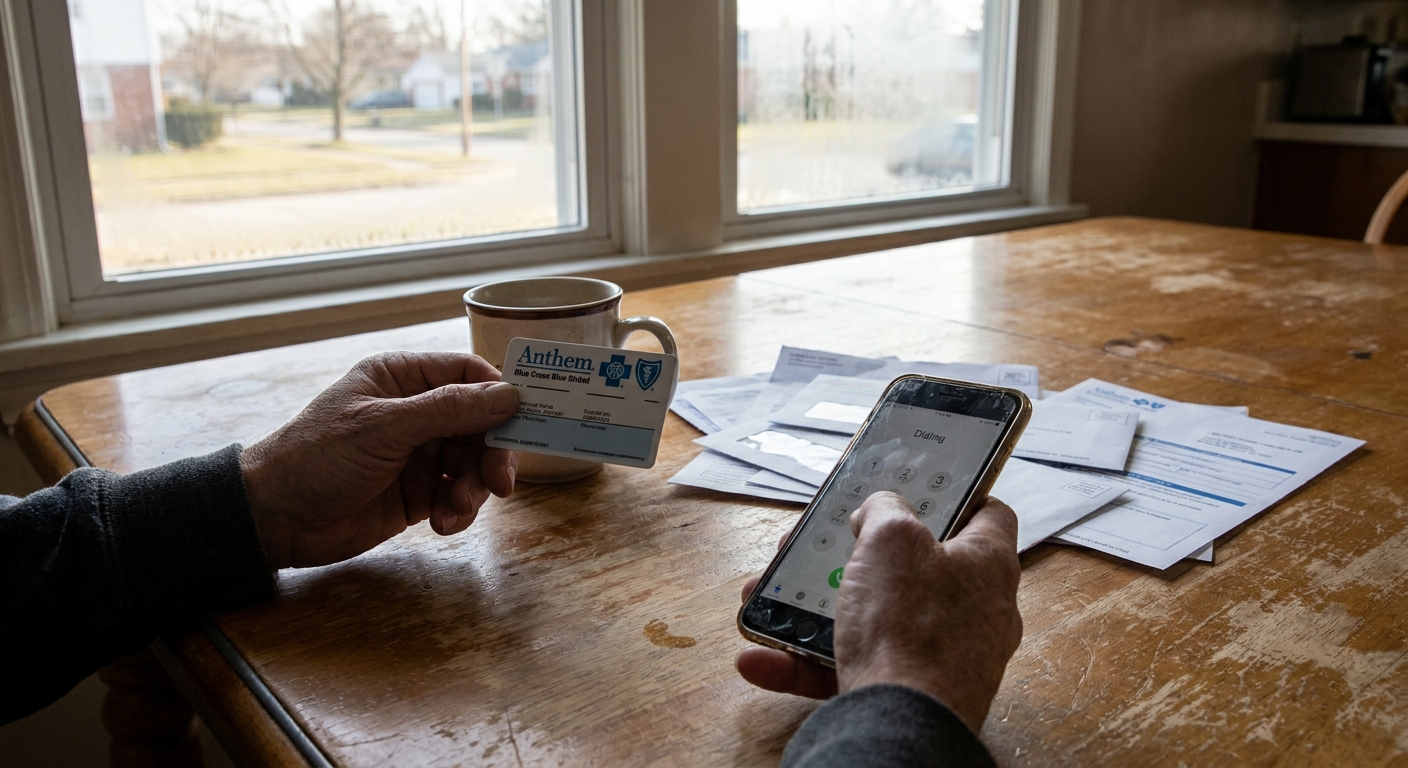
- Blue Cross Blue Shield through Anthem (commercial and Medicaid plans)
- Buckeye (Medicaid plans only)
- Cigna, Curative Health, Frontpath, Medical Cost Containment, Multiplan, and TRICARE
- Humana (Medicaid plans only)
- Medical Mutual (Medicaid plans only)
- UnitedHealthcare (commercial, exchange, and Medicaid plans)
Midwest Recovery Center also accepts CareSource and Molina (commercial and Medicaid plans) but is not in-network with them, which can change what you pay. It accepts Ohio Medicaid, and it does not accept Medicare. In every case, deductibles, prior authorization, and plan rules still apply. Get the estimate in writing, including the level of care it covers, before admission.
What can I say on the phone? A word-for-word question script
Read these questions aloud in order and write down each answer. A legitimate center should answer every one without hurrying you and should expect you to check its answers with the issuer.
- “What is your facility’s exact legal name and street address?” Reassuring: a full name and address that match the state record. Pause if: you get only a city, or a name different from the one you called.
- “Who accredits you, and how can I verify it?” Reassuring: the accreditor’s name and an invitation to search its records. Pause if: “We’re fully accredited,” with no name given.
- “What is your Ohio license or certification number, and who issued it?” Reassuring: a number and the issuing agency. Pause if: “We’ll send it after admission.”
- “Who does the assessment, and what license does that person hold?” Reassuring: a role and a license type you can look up. Pause if: a recommendation comes before any assessment.
- “What is the total cost, what is not included, and can I get that in writing?” Reassuring: a written estimate before admission. Pause if: “Don’t worry about the cost.”
- “Will you verify our insurance benefits and explain them?” Reassuring: a benefits check with plain-language results. Pause if: a promise that insurance will pay for everything.
- “Do you pay for referrals or work with any call centers or directories?” Reassuring: a direct answer with details. Pause if: the subject changes.
- “How do you plan discharge and aftercare?” Reassuring: a written plan with next steps and local supports. Pause if: no plan beyond the stay.
Use this script with Midwest Recovery Center exactly as you would with any other center, because legitimate programs expect these questions.
If you are calling about a spouse, parent, or adult child, you may hear, “We can only discuss that with the patient.” That usually reflects real privacy practice, not a dodge.
Will rehab show up on my record or a background check?
Generally, no. Addiction treatment is a health matter, not a criminal record. Federal privacy rules generally require written consent before a program shares substance use disorder treatment records, with limited exceptions.
Standard criminal background checks search court records, not medical care. Substance use disorder treatment records also have extra federal protection under 42 CFR Part 2, beyond general health privacy law. That is why legitimate programs ask you to sign specific consent forms before they speak with family, an employer, or a court. The exceptions are narrow, such as a genuine medical emergency or certain court orders. The rules can change, so the center’s privacy notice is your best guide.
The treatment records stay protected, but you may agree to some reporting as part of that process. For your specific situation, talk with your employer’s HR office, your licensing board, or an attorney. Ask any center, including Midwest Recovery Center, for its privacy notice and read it before admission.
Short answers to the questions families ask before they call
How long does it take to check whether a rehab center is legitimate?
For many families, about 10 minutes. Look up accreditation and Ohio licensure with the issuers, ask for a written cost estimate, and ask who pays for the referral.
Does Midwest Recovery Center accept Medicare?
No. Midwest Recovery Center does not accept Medicare. It accepts the commercial and Medicaid plans named above, including Ohio Medicaid. Request a benefits check and a written estimate.
Can a rehab center be legitimate if it will not give me a price over the phone?
Yes, if it needs to check your benefits first. It should still commit to a written estimate before admission, and refusing to provide one is a reason to pause.
Is calling the SAMHSA National Helpline free?
Yes. SAMHSA describes it as a free, confidential, 24/7 referral service. Confirm the number on SAMHSA’s website before you call.
Can my employer find out I went to rehab?
Usually not without your written consent. Federal rules generally protect treatment records, with limited exceptions.
What if a rehab will not show me its license or accreditation?
Treat that as a reason to pause. Check with the issuer yourself, and consider another program or call the SAMHSA Helpline.
How do I take the next step once a program passes the checks?
Request three documents, confirm each one with the issuer, and then schedule the assessment. Following that order keeps you in control while moving toward care for your loved one.
- License and accreditation documents, which you verify with OhioMHAS and the accreditor
- A written cost estimate after a benefits check
- The center’s privacy notice
For many people in Toledo, Maumee, and Lucas County, the first step at Midwest Recovery Center is medical detox, so withdrawal happens under medical supervision instead of alone at home. Evidence-based therapies may follow in residential care, PHP, IOP, outpatient care, or MAT, depending on what the assessment finds. You can read more about addiction treatment at Midwest Recovery Center. If you are not ready to choose a program yet, SAMHSA’s National Helpline is a neutral place to start.
Knowing how to evaluate a rehab center can give you something steady to hold onto when everything else feels urgent. Before you decide on any program, run the 10-minute check from this guide. When you are ready, call Midwest Recovery Center in Toledo, OH at 833-657-0858. Ask for its license and accreditation documents, a benefits check with a written cost estimate, and its privacy notice, and confirm each one with the issuer. One practical tip: write the facility’s exact legal name and street address at the top of your notes before you ask anything else. Every other check depends on matching that line, and a center that will not give it to you has already told you something important.
Ask Your Questions Before You Commit
Choosing a rehab center can feel overwhelming, especially when you are worried about picking the wrong program. You do not have to sort through it alone. Midwest Recovery Center in Toledo, OH is happy to talk through how our medical detox works and answer the legitimacy questions from this guide, so you can decide with clear information. Call the office when you are ready to start that conversation.
This guide offers general information and is not legal, medical, or insurance advice. Benefits, privacy rules, and treatment needs vary by person and plan.