
Cocaine withdrawal can feel overwhelming, especially if you’re trying to stop using after a period of heavy or frequent use. You may feel exhausted, anxious, depressed, restless, or unable to focus. You may also experience intense cocaine cravings that make it difficult to stay away from the drug, even when you know you want to quit.
These symptoms are not a sign of weakness. They happen because cocaine changes the way your brain responds to pleasure, energy, motivation, and stress. When cocaine use stops, your brain and body need time to adjust.
At Midwest Recovery Center, we help people understand what’s happening during withdrawal and what level of support may be right for them. For some people, cocaine withdrawal can be managed with outpatient care and strong support. For others, professional cocaine detox may provide the structure, monitoring, and safety needed to get through the first stage of recovery.
If you’re worried about cocaine withdrawal symptoms, you don’t have to figure it out alone. Reach out to Midwest Recovery Center today.
Cocaine withdrawal is the physical, emotional, and mental reaction that can happen when someone stops using cocaine or sharply reduces their use. Unlike alcohol or some opioids, cocaine withdrawal may not always cause severe physical sickness. However, it can cause powerful psychological symptoms that make quitting extremely difficult.
Cocaine affects dopamine, a brain chemical involved in reward, pleasure, energy, and motivation. When cocaine is used repeatedly, the brain becomes used to the drug’s intense dopamine effects. Over time, normal activities may feel less rewarding, and the brain may rely on cocaine to feel energy, confidence, or pleasure.
When cocaine use stops, dopamine levels can drop. This can lead to:
Some people describe this period as feeling emotionally empty or mentally drained.
Cocaine withdrawal can involve both physical dependence and psychological dependence. Physical dependence means your body has adapted to cocaine use. Psychological dependence means your thoughts, emotions, habits, or routines are strongly connected to cocaine use. Both can make quitting difficult without support.
Cocaine withdrawal happens because cocaine changes the brain’s reward system. The drug causes a quick surge of dopamine, a brain chemical tied to pleasure, energy, motivation, and focus. This is part of why cocaine can create short-lived feelings of confidence, alertness, or euphoria.
When cocaine wears off, dopamine levels can drop sharply. This drop can lead to the cocaine crash and symptoms like fatigue, anxiety, irritability, low mood, and cravings. With repeated use, the brain may start to rely on cocaine to regulate mood and motivation. When you stop using, your brain needs time to rebalance, which can make normal life feel flat, stressful, or hard to enjoy for a while.
Cocaine withdrawal symptoms can vary from person to person. The severity of cocaine withdrawal symptoms can depend on several factors, including how often you used cocaine, how much you used, whether you used other substances, and whether you have anxiety, depression, trauma, or another mental health concern.
Common cocaine withdrawal symptoms can include emotional, mental, and physical effects.
Emotional symptoms are often the most difficult part of cocaine withdrawal. Many people feel like their mood changes quickly or that they can’t feel normal without cocaine.
Emotional symptoms may include:
Cocaine withdrawal depression can feel especially heavy. If depression becomes severe or you have thoughts of harming yourself, call 911 or seek emergency help right away.
Cocaine withdrawal can also affect thinking, focus, and decision-making. This can make work, school, relationships, and daily responsibilities feel harder than usual.
Mental symptoms may include:
Cravings can be one of the strongest symptoms. They may come in waves and can be triggered by stress, people, places, money, parties, certain neighborhoods, or even boredom. A professional treatment plan can help you identify these triggers and build a safer response.
Cocaine withdrawal can also affect the body. While symptoms may not look like alcohol or opioid withdrawal, they can still be uncomfortable and disruptive.
Physical symptoms may include:
Some people feel like they can barely get out of bed. Others feel physically restless but mentally exhausted. If symptoms are making it hard to function or stay safe, a medical detox program may help you stabilize and plan your next step.
A cocaine crash and cocaine withdrawal are connected, but they are not the same thing.
A cocaine crash usually happens soon after cocaine wears off, especially after heavy use or a binge. It is the short-term drop that follows the drug’s intense stimulant effects. During a crash, you may feel exhausted, sad, anxious, irritable, hungry, restless, or desperate to sleep. Strong cravings can also happen during this stage.
Cocaine withdrawal is the longer adjustment period that can follow the crash. It may last for days or weeks as the brain works to rebalance dopamine and restore normal mood, sleep, energy, and motivation. Withdrawal may include ongoing cravings, fatigue, depression, sleep problems, brain fog, and trouble feeling pleasure. Both the crash and withdrawal can raise relapse risk, especially when someone uses cocaine again to feel normal or escape discomfort.
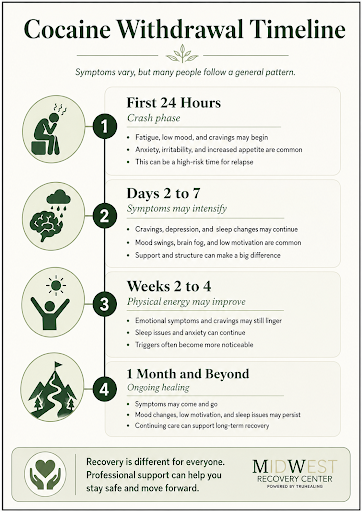
The cocaine withdrawal timeline is not the same for everyone. Some people feel better after several days. Others continue to experience cravings, low mood, or sleep problems for weeks or longer.
Still, cocaine withdrawal often follows a general pattern.
During the first 24 hours, you may experience the cocaine crash. This is when the effects of cocaine wear off, and the brain begins reacting to the sudden drop in stimulation.
Symptoms during the first 24 hours may include:
Some people feel emotionally raw during this period. Others feel numb, flat, or disconnected. This stage can be a vulnerable time for relapse because the urge to use may feel intense.
During the first week, withdrawal symptoms may become more noticeable. Fatigue, sleep changes, depression, and cravings can continue. Some people sleep a lot, while others struggle with insomnia or vivid dreams.
You may also notice mood swings, trouble concentrating, or a lack of motivation. Things that used to feel enjoyable may feel dull. This is related to dopamine disruption and the brain’s effort to rebalance itself.
Days 2 to 7 can be difficult because the initial decision to quit may start to feel harder to maintain. Professional support, structure, and accountability can make a major difference during this stage.
For many people, physical exhaustion begins to improve during weeks 2 to 4. However, emotional symptoms and cravings may continue. Some people feel better during the day but still struggle with sleep, anxiety, or sudden urges to use.
This is also when triggers can become more obvious. You may feel cravings when you pass certain places, talk to certain people, receive a paycheck, feel stressed, or have free time.
Therapy and relapse prevention planning can help during this period. At Midwest Recovery Center, treatment may include evidence-based therapies, group support, family involvement, and skill-building to help you manage real-world triggers.
Some people continue to experience post-acute symptoms after the first month. These symptoms may come and go. They can include mood changes, cravings, low motivation, sleep issues, and trouble feeling pleasure.
This does not mean recovery is failing. It means the brain is still healing. Long-term recovery often requires ongoing support, especially if cocaine use was connected to stress, trauma, depression, anxiety, or social pressure.
Continuing care, outpatient treatment, alumni support, and relapse prevention planning can help you stay grounded after the most intense withdrawal symptoms pass.
Many people want to know, “How long does cocaine withdrawal last?”
The answer depends on the person.
The most intense cocaine withdrawal symptoms often last several days to a few weeks. For some people, the acute phase improves within 1 to 2 weeks. For others, mood symptoms, cravings, and sleep problems may last longer.
Factors that can affect the withdrawal timeline include:
Occasional use may lead to a shorter withdrawal period. Heavy or long-term use may lead to more intense symptoms and a longer recovery process.
If withdrawal symptoms are severe, persistent, or causing you to return to cocaine use, it may be time to consider professional treatment.
Cocaine withdrawal depression is one of the most important symptoms to take seriously. Cocaine creates powerful changes in dopamine, which helps regulate pleasure, motivation, and reward. When cocaine use stops, the brain may struggle to produce or respond to dopamine normally.
This can cause anhedonia, which means you have trouble feeling pleasure. Activities that once felt meaningful may feel empty. You may not enjoy food, music, relationships, hobbies, work, or rest. This can be confusing and painful, especially if you expected to feel better right away after quitting.
Depression during withdrawal may also be linked to exhaustion, shame, disrupted sleep, relationship stress, financial problems, or the emotional impact of addiction. If you used cocaine to cope with sadness, trauma, anxiety, or loneliness, those feelings may become stronger when use stops.
Mild to moderate mood changes can be part of withdrawal. However, severe depression needs immediate support. If you or someone you love is talking about suicide, feeling unsafe, or showing signs of self-harm, call 911 or go to the nearest emergency room.
You can also call or text 988 for immediate mental health crisis support.
Cocaine cravings can be intense during withdrawal. A craving is more than just wanting the drug. It can feel like a powerful urge in your mind and body. You may start bargaining with yourself, remembering the high, minimizing the risks, or thinking one more time won’t matter.
Cravings happen because the brain has learned to connect cocaine with reward, relief, confidence, energy, or escape. Even after you stop using, the brain may still react strongly to reminders of cocaine.
Common cocaine craving triggers include:
Cravings usually rise, peak, and pass. The problem is that they can feel urgent in the moment. Professional treatment can help you build a plan for cravings before they hit. This may include coping skills, therapy, support groups, accountability, and changes to your daily routine.
At Midwest Recovery Center, we help you understand your triggers and practice healthier ways to respond. The goal is not just to stop using cocaine. The goal is to build a life where cocaine no longer controls your choices.
Cocaine withdrawal does not usually carry the same medical risks as withdrawal from alcohol or benzodiazepines, but it can still become dangerous. The greatest concerns are severe depression, relapse, overdose risk, and withdrawal from other substances used at the same time.
After a period without cocaine, tolerance may be lower, which can make relapse more dangerous, especially if cocaine contains fentanyl or is used with alcohol, opioids, or benzodiazepines.
Seek emergency help right away if you or someone else has thoughts of suicide or self-harm, chest pain, trouble breathing, seizures, confusion, extreme agitation, paranoia, hallucinations, loss of consciousness, or signs of overdose.
Even when symptoms do not feel like an emergency, professional help may be needed if you feel unable to stay safe, stop using, or manage withdrawal on your own.
Some people try to detox from cocaine at home. For someone with mild symptoms, strong support, and no major mental health concerns, this may feel manageable. However, home detox can be risky if symptoms become severe or cravings lead to relapse.
At home, you may not have medical monitoring, clinical guidance, or immediate support during intense cravings or depression. You may also still have access to people, places, or routines connected to cocaine use.
Professional cocaine detox offers a more structured setting. It can help you get through the earliest stage of withdrawal with support and a plan. Detox can also help identify whether you need ongoing treatment, mental health care, or a step-down level of support.
Home detox may seem easier at first, but it can be harder to sustain if you’re isolated, overwhelmed, or surrounded by triggers. If you’ve tried to quit before and returned to use, professional support may give you a better foundation.
Medical detox for cocaine withdrawal provides support during the first stage of stopping cocaine use. The goal is to help you stabilize, manage symptoms, reduce risk, and prepare for continued treatment.
Medical detox may include:
There is no single medication that cures cocaine withdrawal. However, medical and clinical support can still make a meaningful difference. Detox professionals can monitor your symptoms, help you stay safe, and support you through the emotional crash that can follow cocaine use.
Detox is not the same as full addiction treatment. It is often the first step. After detox, many people benefit from ongoing care such as PHP, IOP, outpatient treatment, therapy, community housing, or alumni support.
At Midwest Recovery Center, we can help you understand whether medical detox is the right first step and how to transition into continued cocaine addiction treatment.
You do not have to wait until withdrawal becomes unbearable to ask for help. In fact, reaching out early can prevent symptoms from getting worse and reduce the risk of relapse.
You should consider professional help if:
Midwest Recovery Center offers personalized addiction treatment programs designed to meet you where you are. Our care team can help you understand your options, verify insurance, and begin the admissions process with compassion and clarity.
Cocaine withdrawal can make recovery feel impossible, but the symptoms you’re feeling are treatable. You don’t have to keep cycling through crashes, cravings, and attempts to quit on your own.
At Midwest Recovery Center, we offer compassionate support for people facing cocaine withdrawal, cocaine cravings, and cocaine addiction. Our team can help you understand whether medical detox is the right first step, then connect you with ongoing addiction treatment that supports long-term healing.
If cocaine withdrawal is keeping you stuck, help is available. Call Midwest Recovery Center today at (833) 657-0858, or reach out online to learn more about medical detox, admissions, and cocaine addiction treatment in Toledo, Ohio.
The first signs of cocaine withdrawal often include fatigue, low mood, irritability, anxiety, increased appetite, sleep changes, and cocaine cravings. Some people also experience a cocaine crash within the first 24 hours after use stops.
Cocaine withdrawal symptoms often last several days to a few weeks. Some people feel better within 1 to 2 weeks, while others continue to experience cravings, depression, sleep problems, or low motivation for a month or longer.
Cocaine withdrawal can be dangerous when it causes severe depression, suicidal thoughts, intense cravings, relapse, or overdose risk. It can also be more complicated if you use cocaine with alcohol, opioids, benzodiazepines, or other substances.
Yes. Cocaine withdrawal can cause depression because cocaine disrupts dopamine, which affects pleasure, reward, and motivation. When cocaine use stops, the brain needs time to rebalance. If depression becomes severe or you feel unsafe, seek emergency help right away.
Some people attempt to detox from cocaine at home, but it is not always the safest choice. Home detox can be difficult if you have strong cravings, depression, multiple substance use, or past relapse. Professional detox can provide monitoring, structure, and support.
Cocaine cravings can be managed with support, structure, therapy, trigger planning, healthy routines, and relapse prevention skills. Cravings often pass with time, but they can feel intense in the moment. Professional treatment can help you build a plan before cravings become overwhelming.
PHP (Partial Hospitalization Program)
Daytime treatment with structure, therapy, and support—return home each night.
IOP (Intensive Outpatient Program)
Flexible therapy a few days a week to balance life and recovery.
OP (Outpatient Program)
Ongoing therapy and support to maintain progress.
MAT (Medication-Assisted Treatment)
Evidence-based care using medication and counseling to reduce cravings.
Ready to Start?
Call (833) 657-0858: to learn which program fits your recovery goals.
We’re here to listen and help you find the right path forward. Please tell us who needs care so we can match you with the best program and support.
💬 Your responses are 100% confidential and never shared outside our admissions team.
At Ohio Treatment Center in Toledo, Ohio, we make it simple to take that first step toward healing. Our streamlined admissions process can often lead to same-day placement in treatment for MAT, PHP, IOP and more..
Call today for a free, confidential consultation with our caring admissions team — we’ll walk you through every step with compassion and clarity.
Call (833) 657-0858
Why call us?
We’ll handle the insurance details — so you can focus on getting better.
At Ohio Treatment Center, we work with most major private insurance providers to make treatment affordable and accessible. Complete our quick, confidential form below, and we’ll let you know if your plan is in-network — without contacting your insurance company.
Commonly accepted providers include:
Blue Cross Blue Shield (BCBS) • Aetna • Cigna • UnitedHealthcare • Humana • Anthem • Tricare
What Happens Next
Getting help shouldn’t be stressful. Let’s find out what your insurance can cover today.








Detox
Begin recovery safely with 24/7 medical support. Our detox program helps you manage withdrawal comfortably and prepares you for the next step.
Residential Treatment
Continue healing in a supportive, structured setting with daily therapy, wellness activities, and round-the-clock care.
Aftercare
Before you leave, we’ll help you create a plan for ongoing support and lasting recovery.
Ready to Start?
Call (833) 657-0858: to learn which program fits your recovery goals.
We’re here to listen and help you find the right path forward. Please tell us who needs care so we can match you with the best program and support.
💬 Your responses are 100% confidential and never shared outside our admissions team.
At Midwest Detox Center in Maumee, Ohio, we make it simple to take that first step toward healing. Our streamlined admissions process can often lead to same-day placement in treatment for medically supervised detox and residential treatment programs.
Call today for a free, confidential consultation with our caring admissions team — we’ll walk you through every step with compassion and clarity.
Call (833) 657-0858
Why call us?
We’ll handle the insurance details — so you can focus on getting better.
At Midwest Detox, we work with most major private insurance providers to make treatment affordable and accessible. Complete our quick, confidential form below, and we’ll let you know if your plan is in-network — without contacting your insurance company.
Commonly accepted providers include:
Blue Cross Blue Shield (BCBS) • Aetna • Cigna • UnitedHealthcare • Humana • Anthem • Tricare
What Happens Next
Getting help shouldn’t be stressful. Let’s find out what your insurance can cover today.
Medical Detox
24/7 medically supervised detox to help you safely withdraw from drugs or alcohol while managing symptoms and preventing complications.
Inpatient Treatment
A structured, residential setting that provides continuous medical care, counseling, and therapeutic support to build a foundation for long-term recovery.
Residential Program
Comfortable, home-like housing where you can focus fully on healing with daily therapy, peer support, and holistic recovery services.
Ready to Start?
Call (833) 657-0858: to learn which program fits your recovery goals.
We’re here to listen and help you find the right path forward. Please tell us who needs care so we can match you with the best program and support.
💬 Your responses are 100% confidential and never shared outside our admissions team.
At Ohio Detox Center in Maumee, Ohio, we make it simple to take that first step toward healing. Our streamlined admissions process can often lead to same-day placement in detox or inpatient treatment for substance use and co-occurring mental health conditions.
Call today for a free, confidential consultation with our caring admissions team — we’ll walk you through every step with compassion and clarity.
Call (833) 657-0858
Why call us?
We’ll handle the insurance details — so you can focus on getting better.
We’ll take care of the details — so you can focus on getting better.
At Ohio Detox Center, we work with Ohio Medicaid and most major insurance providers to make treatment affordable and accessible.
Here’s how it works:
Getting help shouldn’t be stressful. Let’s find out what your insurance can cover today.
Detox
We understand that taking the first step can feel overwhelming. Our detox program offers a compassionate, medically supported environment where you can rest, heal, and begin recovery safely. You’ll never go through it alone — our team is with you every step of the way.
IOP (Intensive Outpatient Program)
A flexible treatment option that lets you maintain work, school, or family responsibilities while attending therapy several days a week. IOP focuses on relapse prevention, coping skills, and long-term recovery through group and individual sessions.
Residential
Residential care gives you the time and space to focus fully on healing. Surrounded by supportive staff and peers, you’ll work through underlying causes of addiction, rebuild healthy routines, and rediscover confidence in your recovery journey.
MAT (Medication-Assisted Treatment)
Combining FDA-approved medications with counseling and behavioral therapy, MAT helps reduce cravings and withdrawal symptoms related to opioid or alcohol use. Each treatment plan is closely monitored to ensure comfort, safety, and lasting recovery.
Ready to Start?
Call (833) 657-0858: to learn which program fits your recovery goals.
We’re here to listen and help you find the right path forward. Please tell us who needs care so we can match you with the best program and support.
💬 Your responses are 100% confidential and never shared outside our admissions team.
We’ll handle the insurance details — so you can focus on getting better.
At Midwest Centers at Youngstown, we work with most major private insurance providers to make treatment affordable and accessible. Complete our quick, confidential form below, and we’ll let you know if your plan is in-network — without contacting your insurance company.
Commonly accepted providers include:
Blue Cross Blue Shield (BCBS) • Aetna • Cigna • UnitedHealthcare • Humana • Anthem • Tricare
What Happens Next
Getting help shouldn’t be stressful. Let’s find out what your insurance can cover today.









At Midwest Centers at Youngstown in Ohio, we make it simple to take that first step toward healing. Our streamlined admissions process can often lead to same-day placement in treatment for substance use or co-occurring mental health disorders.
Call today for a free, confidential consultation with our caring admissions team — we’ll walk you through every step with compassion and clarity.
Partial Hospitalization Program (PHP)
Our PHP offers a highly structured, supportive environment where you can focus on recovery during the day and return home at night. It’s an ideal step between inpatient and outpatient care, providing daily therapy, accountability, and a strong recovery routine.
Intensive Outpatient Program (IOP)
Our IOP gives you the flexibility to continue work, school, or family life while receiving evidence-based treatment several days a week. You’ll participate in group and individual therapy focused on relapse prevention, coping skills, and long-term healing.
Outpatient Program (OP)
For those transitioning from a higher level of care or seeking ongoing support, our outpatient program offers continued therapy at a pace that fits your lifestyle. It’s a supportive bridge that helps you maintain recovery and stay connected to care.
Medication-Assisted Treatment (MAT)
MAT combines FDA-approved medications with therapy and counseling to reduce cravings and support long-term recovery from opioid or alcohol addiction. Our team monitors each plan closely to ensure safety, comfort, and effectiveness.
Ready to Start?
Call (833) 657-0858: to learn which program fits your recovery goals.
We’re here to listen and help you find the right path forward. Please tell us who needs care so we can match you with the best program and support.
💬 Your responses are 100% confidential and never shared outside our admissions team.
At Midwest Recovery Center in Toledo, Ohio, we make it simple to take that first step toward healing. Our streamlined admissions process can often lead to same-day placement in treatment for substance use or co-occurring mental health disorders.
Call today for a free, confidential consultation with our caring admissions team — we’ll walk you through every step with compassion and clarity.
We’ll handle the insurance details — so you can focus on getting better.
At Midwest Recovery Center, we work with most major private insurance providers to make treatment affordable and accessible. Complete our quick, confidential form below, and we’ll let you know if your plan is in-network — without contacting your insurance company.
Commonly accepted providers include:
Blue Cross Blue Shield (BCBS) • Aetna • Cigna • UnitedHealthcare • Humana • Anthem • Tricare
What Happens Next
Getting help shouldn’t be stressful. Let’s find out what your insurance can cover today.