

There’s a specific kind of fear that parents rarely talk about out loud.
It’s the fear of not knowing which version of your child you’re going to wake up to.
Maybe they’re angry one day and emotionally shut down the next. Maybe the house feels tense all the time now. Maybe everyone has started walking on eggshells without even realizing it. Conversations turn into arguments quickly. Sleep becomes difficult. Small moments feel emotionally loaded.
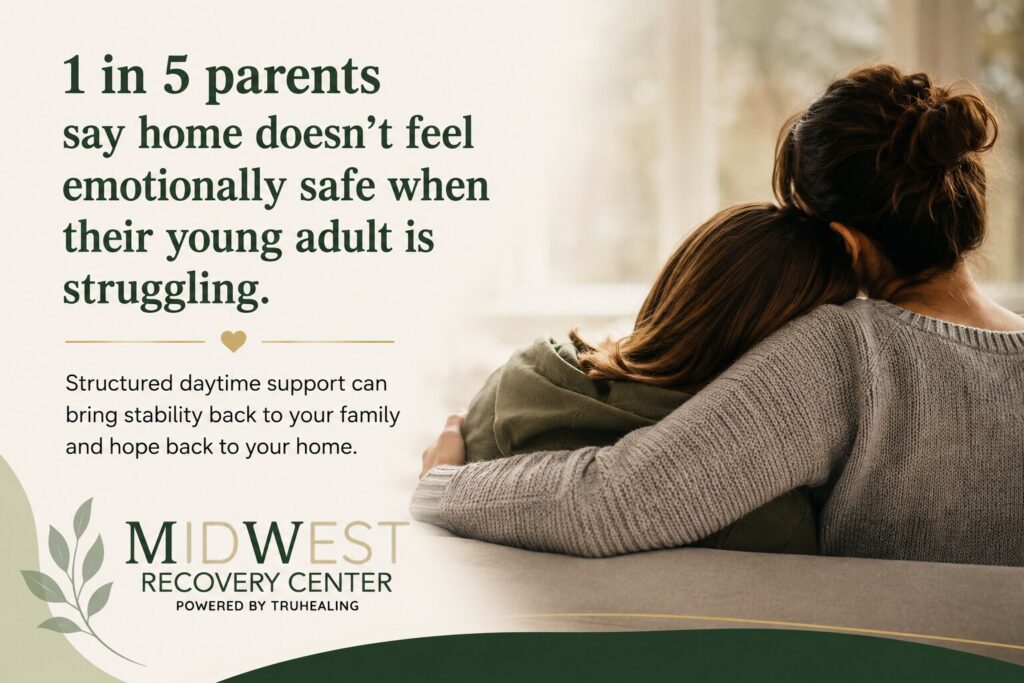
And somewhere along the way, home stops feeling peaceful.
If you’ve been searching for structured daytime support because your family feels emotionally overwhelmed, you are not alone.
A lot of parents quietly reach a point where they realize:
“This is bigger than what we can manage by ourselves.”
That realization can feel heartbreaking.
But it can also become the beginning of real support.
A Lot of Parents Stay in Survival Mode Longer Than They Realize
When a young adult is struggling emotionally, many parents slowly shift into crisis management without noticing how much pressure they’re carrying.
They become hyperaware of:
- Mood changes
- Sleeping patterns
- Isolation
- Emotional outbursts
- Substance use concerns
- Unpredictable behavior
- Safety worries
- Tension inside the home
Over time, the entire household often adjusts around the instability.
Parents stop fully relaxing. Siblings become quieter. Conversations become careful. Everyone starts trying to avoid conflict, emotional explosions, or shutdowns.
One parent once described it this way:
“It felt like our whole house was holding its breath.”
That feeling is more common than people realize.
Emotional Crises Rarely Look the Way People Expect
A lot of families wait too long to seek support because they expect crisis to look dramatic.
But emotional instability often appears gradually:
- Increased withdrawal
- Irritability
- Isolation
- Emotional numbness
- Sudden anger
- Anxiety
- Risky behavior
- Substance use escalation
- Difficulty functioning daily
- Hopelessness
- Family conflict becoming constant
Sometimes the biggest sign is not one catastrophic moment.
It’s the growing realization that everyone inside the home feels emotionally exhausted all the time.
Especially for parents searching phrases like day treatment program near me, the deeper need is often not simply information.
It’s relief.
Structure.
Stability.
Breathing room.
Parents Often Blame Themselves First
This happens constantly.
Parents replay conversations endlessly:
- “Did I miss something?”
- “Was I too strict?”
- “Too soft?”
- “Should I have acted sooner?”
- “Did I somehow cause this?”
Those thoughts can become relentless.
But emotional crises, mental health struggles, and addiction are rarely caused by one parenting mistake or one missed moment.
Many families carrying deep love still reach seasons where outside support becomes necessary.
And needing additional help does not mean you failed your child.
Sometimes it means the situation became bigger than what one family can safely carry alone.
Structured Daytime Support Gives Families a Different Rhythm Again
One thing many parents notice after their loved one enters structured daytime care is this:
The house starts breathing differently.
Not because everything becomes perfect overnight. But because the constant emotional unpredictability begins shifting.
Daily structure matters more than many people realize.
When someone struggling emotionally receives consistent daytime support, families often regain:
- Predictability
- Emotional pauses
- Professional guidance
- Accountability
- Healthier routines
- Communication support
- Reduced crisis intensity
And importantly, parents stop feeling solely responsible for stabilizing every emotional moment themselves.
That relief matters.
A Young Adult Can Need Support Without Being “Completely Out of Control”
This is important to say clearly.
A lot of parents delay treatment because their child is still technically functioning in some ways:
- Maybe they still work occasionally
- Maybe they still socialize
- Maybe they still live at home
- Maybe they still have moments where they seem okay
But functioning sometimes hides how overwhelmed someone actually feels internally.
One former client explained it this way:
“I looked functional because I knew how to fake normal for short periods of time.”
That sentence hits hard for many parents.
Because emotional suffering does not always look dramatic externally.
Sometimes it looks like quiet deterioration.
Families Often Become Emotionally Isolated Too
Parents caring for a struggling young adult frequently stop talking honestly about what’s happening.
Some feel embarrassed. Others fear judgment. Some are simply exhausted.
Over time, isolation grows:
- Friends stop asking questions
- Families avoid difficult conversations
- Parents hide how bad things feel at home
- Everyone quietly tries to survive the stress privately
That emotional isolation can become overwhelming.
Especially because many parents feel pressure to “hold it together” for everyone else.
But caregivers need support too.
Even strong families can become emotionally depleted during prolonged crises.
The Goal Isn’t Punishment—It’s Stabilization
This matters deeply.
Some parents fear structured treatment will feel cold, punitive, or emotionally harsh for their child.
But supportive daytime care is not designed to punish people for struggling.
It’s designed to create:
- Safety
- Stability
- Emotional regulation
- Structure
- Consistency
- Supportive accountability
- Coping skill development
- Therapeutic connection
For many young adults, emotional chaos becomes exhausting too. They may not know how to communicate that clearly, but underneath the anger, withdrawal, or instability is often someone who feels overwhelmed by their own mind.
One parent once shared:
“I realized my child wasn’t trying to destroy our family. They were drowning emotionally and didn’t know how to stop.”
That perspective changes how many families approach support.
Healing Usually Starts Smaller Than Families Expect
A lot of parents hope for dramatic breakthroughs immediately.
Sometimes progress is quieter than that.
Healing often begins with:
- Better sleep
- More emotional consistency
- Fewer explosive arguments
- Honest conversations
- Increased accountability
- Reduced isolation
- Small moments of connection returning
- Someone beginning to talk instead of shutting down
Those moments can feel enormous after months or years of tension.
Especially when home has felt emotionally unstable for a long time.
Parents Are Allowed to Feel Exhausted Too
This is something many caregivers need permission to hear.
Loving someone in crisis can slowly consume your nervous system too.
Parents often become:
- Hypervigilant
- Sleep-deprived
- Emotionally drained
- Constantly anxious
- Focused on preventing worst-case scenarios
- Afraid to fully relax
Over time, survival mode becomes normal for the entire household.
And many parents carry guilt for even admitting they’re tired because they feel their child is “the one really struggling.”
But caregivers matter too.
You are allowed to feel overwhelmed by the weight of trying to hold everything together.
The Earlier Families Reach Out, the More Options Usually Exist
One difficult truth is that many families wait until situations become catastrophic before seeking help.
Not because they don’t care. Usually because they hope things will improve on their own.
But early intervention often creates more flexibility, more support options, and more opportunities for stabilization before crisis escalates further.
One therapist once explained it this way:
“Families often wait for certainty before asking for help. Most people reach out because they already know something feels unsustainable.”
That’s important.
You do not need to wait until everyone is completely falling apart before exploring support.
Structured Support Can Help Families Rebuild Trust Slowly
One of the hardest parts of ongoing emotional crises is the way trust slowly erodes inside families.
People stop believing conversations will stay calm. Parents become fearful of emotional reactions. Young adults feel misunderstood or controlled. Everyone becomes defensive.
Structured support can help interrupt those cycles.
Not instantly. Not perfectly.
But gradually.
Families often begin learning:
- Healthier communication
- Emotional regulation
- Boundaries
- Accountability
- Coping strategies
- Ways to reduce constant conflict
And sometimes, for the first time in a long time, home starts feeling emotionally safer again.
FAQ: Partial Hospitalization Programs and Family Crisis
What is a partial hospitalization program?
A partial hospitalization program provides structured daytime mental health and addiction support while allowing someone to return home in the evenings.
Is PHP only for severe situations?
No. Many people enter structured daytime care before situations become catastrophic, especially when emotional instability or substance use begins disrupting daily life.
Can families still be involved during treatment?
Often, yes. Many programs include family communication, education, or therapeutic support depending on individual needs.
What if my child refuses help?
Parents cannot always force readiness, but professional guidance can help families navigate difficult conversations and next steps.
Does needing treatment mean we failed as parents?
No. Mental health struggles and addiction are complex, and many deeply loving families still need outside support during difficult seasons.
How can I tell if home has become emotionally unsafe?
Constant tension, fear, emotional volatility, isolation, aggression, instability, or chronic crisis management can all signal the need for additional support.
Will treatment immediately fix family conflict?
Healing usually happens gradually. Structured support often helps improve communication, stability, accountability, and emotional regulation over time.
Is it normal to feel emotionally exhausted as a parent?
Very normal. Caring for someone in crisis can create chronic stress, hypervigilance, anxiety, and emotional burnout for caregivers too.
You Are Allowed to Want Peace for Your Family Again
A lot of parents quietly carry the belief that asking for outside help somehow means they failed.
But sometimes reaching for support is exactly what allows a family to stop surviving and start healing again.
You are allowed to want stability.
You are allowed to want safety.
And you are allowed to admit that carrying this alone has become too heavy.
If you’re considering structured support for a loved one, Midwest Recovery Center offers compassionate care designed to help individuals and families rebuild stability during difficult seasons.
Call (833) 657-0858 or visit our partial hospitalization program services to learn more about our partial hospitalization program services Toledo, Ohio.