
For a lot of alumni, relapse doesn’t begin with chaos.
It begins quietly.
A skipped meeting. A stressful week. Emotional exhaustion that slowly builds in the background. The feeling that maybe you’re okay now. Maybe you don’t need as much support anymore. Maybe you can handle things on your own this time.
Then something happens — grief, burnout, loneliness, anger, overconfidence, numbness — and suddenly you’re sitting with the crushing realization that you used again after months of doing well.
And honestly? The emotional fallout afterward is often worse than the relapse itself.
Because now there’s comparison attached to it.
You remember what stability felt like. You remember sleeping normally again. Laughing without forcing it. Feeling trusted. Feeling proud of yourself. And that memory can make relapse feel deeply personal, like you somehow destroyed everything you worked for.
But if you’ve been searching for structured daytime support after returning to use, there’s something important you deserve to hear clearly:
Relapse does not erase recovery experience.
You did not suddenly become someone who learned nothing.
You did not lose every coping skill overnight.
And you are not back at the beginning emotionally just because you’re struggling again.
Relapse After Real Sobriety Time Hits Differently
People who relapse after 90 days, six months, or a year sober often carry a very specific kind of shame.
It’s not just:
“I messed up.”
It becomes:
“I should’ve known better.”
That thought alone keeps many alumni isolated far longer than necessary.
They think:
- “Everyone’s going to be disappointed in me.”
- “I already had my chance.”
- “I’m embarrassed to come back.”
- “Maybe I’m one of the people recovery just doesn’t work for.”
Those thoughts are incredibly common after relapse.
And they usually ignore something important:
The fact that recovery worked before means your brain and body already know what healing feels like.
That memory matters.
One former client explained it this way:
“The hardest part wasn’t relapsing. It was realizing I remembered exactly how much better life felt sober.”
That realization hurts. But it also means hope still exists underneath the shame.
Most Alumni Don’t Relapse Because They Forgot Everything
This surprises families sometimes.
A lot of alumni can still explain relapse prevention strategies perfectly even while struggling again. They know coping skills. They know warning signs. They know the importance of sleep, accountability, structure, meetings, boundaries, honesty, and emotional regulation.
The problem usually isn’t lack of knowledge.
It’s gradual disconnection from the things that once supported recovery.
One former client said:
“I didn’t lose the map. I just stopped looking at it.”
That’s a much more accurate description of relapse than people realize.
Recovery skills are not magic objects someone permanently carries effortlessly forever. They require maintenance. Repetition. Support. Reinforcement.
And when life becomes emotionally overwhelming, people sometimes stop using the very tools that helped them survive before.
The Drift Back Into Old Patterns Usually Happens Quietly
Very few alumni wake up one day and consciously decide:
“I want to lose my sobriety.”
The shift is usually gradual.
Meetings become less frequent.
Stress starts piling up.
Routines slip.
Isolation increases.
Honesty decreases.
Emotions stay unspoken longer.
Exhaustion gets normalized.
Then one difficult moment collides with an already vulnerable nervous system.
And suddenly someone who once felt stable is using again.
This is one reason relapse can feel so disorienting for alumni. It rarely feels logical in hindsight. People replay the moment repeatedly trying to figure out exactly where things changed.
But recovery often weakens slowly before the relapse itself happens.
The substance use is usually the symptom of disconnection that already existed underneath it.
Returning to Higher Support Can Feel Humiliating at First
This part deserves honesty.
Many alumni feel emotionally wrecked walking back into treatment after relapse.
Especially if they once believed:
“I’ll never need this level of support again.”
People worry about being judged by staff, peers, or even themselves. Some delay returning for weeks or months because shame convinces them they need to “fix things alone” before coming back.
But isolation after relapse often creates far more damage than the relapse itself.
At Midwest Recovery Center, many alumni who return after relapse initially arrive carrying enormous embarrassment. Then something surprising happens:
They realize nobody is shocked they came back.
Because recovery professionals understand something many alumni forget during relapse:
Healing is rarely linear.
Some people require multiple periods of structured support throughout recovery. That does not mean treatment failed. It means recovery needed reinforcement again.
Why Structured Daytime Care Helps Alumni Rebuild Momentum
There’s a reason many alumni benefit from returning to more intensive daytime support after relapse.
Not because they forgot everything.
Because structure helps reconnect behavior to intention again.
During relapse, people often lose:
- Routine
- Accountability
- Sleep stability
- Emotional regulation
- Honest communication
- Connection
- Healthy daily habits
Returning to structured care can help rebuild those things before relapse deepens further.
For many alumni, re-entering support creates:
- Predictability
- Community
- Emotional safety
- Reinforced coping skills
- Daily accountability
- Space away from isolation
- A chance to interrupt shame before it grows
And importantly, it helps people stop trying to recover entirely inside their own head again.
That internal isolation becomes dangerous fast.
For people searching phrases like day treatment addiction Toledo after relapse, what they often need most is not punishment.
It’s reconnection.
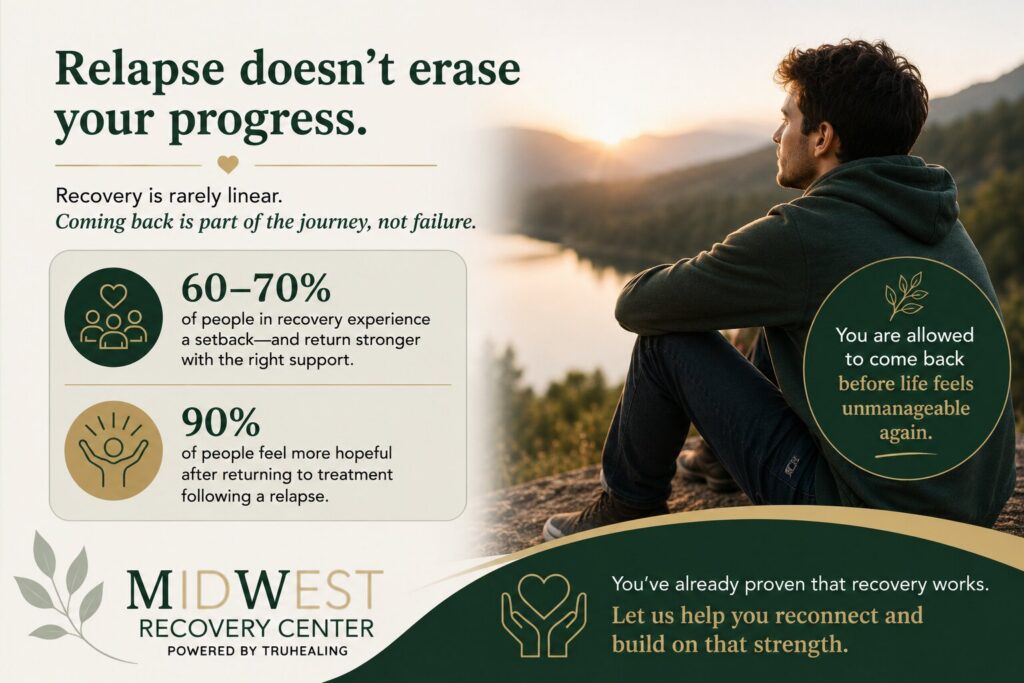
You Are Not Starting From Zero
This part matters deeply.
Relapse can make people feel like they erased every good thing recovery ever gave them.
But previous recovery experience still exists inside you.
You still know what clarity feels like.
You still know what emotional honesty feels like.
You still know what routines helped.
You still know what connection felt like before isolation returned.
Someone returning to treatment after relapse is emotionally different from someone entering recovery for the very first time.
Alumni often return with:
- More insight
- Greater self-awareness
- Stronger emotional vocabulary
- Better understanding of triggers
- More honesty about what doesn’t work
- A clearer sense of what recovery actually requires
That matters.
You are not rebuilding from scratch. You are rebuilding from experience.
The Silence After Relapse Is Often the Most Dangerous Part
A lot of alumni relapse once and immediately disappear emotionally afterward.
They stop answering texts. Avoid meetings. Ignore sponsors. Withdraw from supportive people. Convince themselves they’ll “figure it out” before asking for help again.
This is where shame becomes incredibly dangerous.
Because one lapse can quickly become weeks or months of isolation simply because someone feels too embarrassed to reconnect.
One client once described it this way:
“I thought if I came back too soon everyone would know I failed. So I stayed away until things got much worse.”
That pattern is painfully common.
And it’s one reason returning early matters so much.
Not because treatment expects perfection — but because support interrupts shame before shame fully takes over.
Returning to Care Can Feel Surprisingly Familiar
Many alumni expect re-entering treatment to feel unbearable.
Instead, a lot of people report something unexpected:
Relief.
Not instant comfort. Not magical healing overnight. But familiarity.
The routines return faster. The emotional language feels familiar. Coping skills make more sense because they’ve already worked before. The nervous system often remembers recovery faster than shame wants people to believe.
And sometimes the second experience in treatment becomes more emotionally honest than the first.
Why?
Because denial is thinner now.
People stop trying so hard to look okay.
That honesty can become powerful.
Recovery Is Maintenance, Not Graduation
A lot of people secretly believe recovery should eventually become automatic forever.
That if someone “really got it,” they would never struggle again.
But recovery is not graduation from being human.
Stress still happens. Grief still happens. Burnout still happens. Mental health struggles still happen. Emotional exhaustion still happens.
And sometimes people need more support during certain seasons of life.
That does not erase previous healing.
Many alumni return to treatment after:
- Divorce
- Job loss
- Family conflict
- Grief
- Trauma resurfacing
- Chronic stress
- Emotional isolation
- Burnout
- Quietly drifting away from recovery routines
Those experiences are not evidence someone is hopeless.
They are evidence that recovery sometimes requires recalibration.
One Honest Conversation Can Change the Entire Direction Again
A lot of people expect recovery to restart with some dramatic breakthrough.
Usually, it begins smaller than that.
Someone answering the phone.
Someone admitting the relapse happened.
Someone walking back into a group.
Someone saying, “I need support again.”
Someone deciding not to disappear emotionally this time.
Those moments may look small from the outside.
Inside recovery, they often change everything.
For alumni exploring care in locations or searching for support near Toledo, Ohio, it’s important to remember this:
Returning to treatment is not proof you failed.
Sometimes it’s proof you still believe your life is worth fighting for.
FAQ: Relapse and Returning to PHP
Does relapse erase my recovery progress?
No. Relapse does not erase the emotional growth, coping skills, self-awareness, or healing you experienced during sobriety.
Is it common for alumni to return to treatment?
Yes. Many people return to structured support after relapse, emotional overwhelm, or major life stressors. Recovery often involves periods of re-engagement.
Why do people relapse after months sober?
Relapse often happens after gradual emotional disconnection, isolation, stress buildup, burnout, or stopping recovery routines—not because someone forgot everything they learned.
Will people judge me for coming back?
Most recovery professionals understand relapse as part of many people’s recovery process. Treatment staff are usually more focused on helping than judging.
Am I starting over completely after relapse?
Not emotionally. You still carry recovery experience, insight, and knowledge from your previous sobriety.
Why is returning after relapse so emotionally hard?
Shame, embarrassment, fear of disappointing others, and self-judgment often make re-entry emotionally overwhelming for alumni.
Can PHP help after relapse?
Structured daytime support can help many alumni rebuild routines, accountability, emotional regulation, coping skills, and connection after relapse.
What if I waited too long to ask for help again?
It is never “too late” to reconnect with support. Many people return after weeks, months, or longer periods of struggling again.
You Didn’t Lose Everything Because You Struggled Again
Relapse can make people feel like strangers to themselves.
But the version of you that existed during sobriety did not disappear forever because you had a painful season.
That person is still there.
Maybe exhausted.
Maybe disconnected.
Maybe ashamed.
But still there.
And sometimes returning to structured support is not about becoming someone new.
It’s about reconnecting with the person recovery already showed you was possible.
If you’re considering treatment support in Ohio, Midwest Recovery Center offers compassionate, structured care for alumni navigating relapse, shame, and recovery re-entry.
Call (888) 657-0858 or visit our PHP services in Toledo, Ohio to learn more about our PHP services in Toledo, Ohio.