
When I Realized Sobriety Wasn’t the Same as Living

When I Realized Sobriety Wasn’t the Same as Living

I remember the exact day I completed treatment.

I hugged people. I took pictures. I said all the right things about gratitude and second chances. I truly believed I had crossed the hardest stretch of my life.

And in many ways, I had.

The structure of live-in care — the intensity, the accountability, the late-night conversations — changed me. If you’ve been through it at Midwest Recovery Center, you know what I mean. That season of round-the-clock support built a foundation I desperately needed.

But what I didn’t expect was what came after.

I thought finishing meant I was done.

It didn’t.

The High of Completion

When you leave treatment, there’s momentum.

You feel sharp. Clear. Committed. People tell you how proud they are. You tell yourself you’ll never go back to who you were.

There’s a kind of adrenaline to early sobriety. Every day feels like proof. Every milestone feels earned.

I mistook that energy for arrival.

I thought, This is it. I made it.

But recovery isn’t a graduation ceremony. It’s a practice.

And practices get quiet.

When Stability Starts Feeling Flat

About a year into sobriety, nothing was wrong.

I wasn’t drinking.
I wasn’t using.
I wasn’t in crisis.

From the outside, I was a success story.

Inside, something felt muted.

I went to work. Paid bills. Showed up. Said the right recovery language in meetings. But I felt disconnected from myself in a way I couldn’t quite explain.

It wasn’t chaos. It was numbness.

That’s harder to talk about.
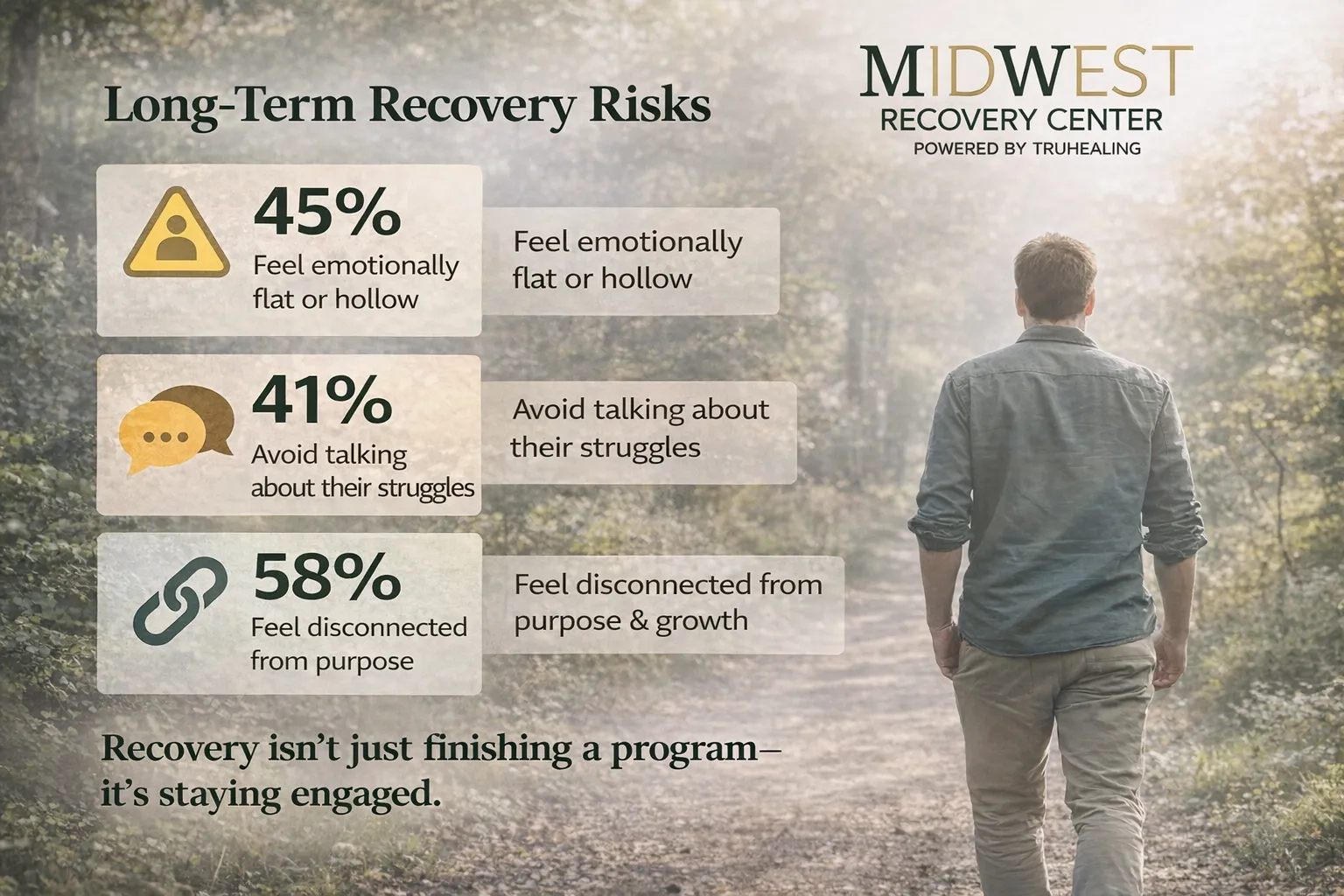
Recovery Plateau Shift

The Version of Me That Just Maintained

I started noticing patterns.

I stayed busy to avoid reflection.
I avoided deeper emotional work.
I stopped reaching out unless someone reached out first.
I told myself adulthood just feels boring sometimes.

I wasn’t spiraling. I was plateauing.

And plateauing can be deceptive. There’s no alarm. No dramatic warning.

Just a slow settling into “fine.”

But I didn’t get sober to feel fine.

The Myth of “You’re Good Now”

There’s pressure in long-term recovery to look solid.

You don’t want to scare your family.
You don’t want people wondering if you’re slipping.
You don’t want to sound ungrateful.

So when things feel off, you minimize them.

You tell yourself:
“This is normal.”
“This is just life.”
“Don’t be dramatic.”

But here’s what I learned the hard way: stagnation is a warning light.

Not of relapse — of disconnection.

The same way addiction slowly numbed me, complacency was quietly numbing me again.

Why Going Back Felt Embarrassing

The thought crossed my mind more than once.

What if I need more support?

Immediately, shame followed.

“I already did that.”
“I graduated.”
“People look up to me now.”

I confused re-engaging with failure.

But growth doesn’t stop because you completed a residential treatment program. In fact, sometimes finishing exposes the deeper work you avoided in survival mode.

Early recovery is about staying sober.

Long-term recovery is about becoming whole.

That’s a different level of courage.

The Difference Between Surviving and Expanding

In early sobriety, the mission is simple:

Don’t use.
Stay alive.
Follow structure.

In long-term sobriety, the mission shifts.

Who are you becoming?

Are you building relationships that stretch you?
Are you allowing joy — not just safety?
Are you addressing the trauma, the grief, the identity shifts underneath the addiction?

I realized I had built a safe life.

But I hadn’t built a meaningful one.

And that scared me more than detox ever did.

The Quiet Risk of Long-Term Alumni

Here’s what no one tells you: relapse doesn’t always start with chaos.

Sometimes it starts with boredom.

Or resentment.

Or emotional isolation.

You stop doing the small things.
You stop telling the truth about how you feel.
You convince yourself you’re fine because nothing is actively burning.

If you’re reading this and you’ve been sober a while, ask yourself honestly:

Are you connected?

Or just compliant?

There’s a difference.

Why Returning Isn’t Regressing

Eventually, I did what my pride resisted.

I reached back out.

Not because I was using.

Not because I had crashed.

Because I felt stuck.

The same place that once gave me safety could now give me depth. The clinicians understood my history. The language was familiar. But I was showing up differently — not as someone desperate to survive, but as someone ready to expand.

For alumni living in Toledo, Ohio, and those in Austintown, Ohio, having access to familiar support without starting from scratch can make re-engaging feel less intimidating.

Going back didn’t mean I erased progress.

It meant I respected it enough to protect it.

What Changed the Second Time Around

The second time, I wasn’t trying to prove anything.

I wasn’t trying to be the model client. I wasn’t performing gratitude.

I was honest.

About the numbness.
About the pressure to look strong.
About the fear that sobriety was as good as it was going to get.

And that honesty reopened something.

I began doing deeper trauma work I had skimmed over before. I allowed grief I hadn’t fully processed. I started rebuilding identity — not as “the recovered one,” but as a human still evolving.

Recovery became less about avoiding relapse and more about building aliveness.

If You’re Feeling Hollow but Not in Crisis

This might be you if:

  • You’ve been sober for a while but feel emotionally flat.
  • You’re tired of telling people you’re “great.”
  • You’re avoiding deeper conversations.
  • You feel disconnected from purpose.
  • You’re scared to admit you need more.

You don’t need to relapse to deserve support.

You don’t need to implode to qualify for growth.

Sometimes the bravest move is admitting that maintenance isn’t enough anymore.

Frequently Asked Questions

Is it normal to feel stuck years after treatment?

Yes. Many long-term alumni experience plateaus. Early sobriety is intense and structured. Later stages require new forms of growth and engagement.

Does feeling disconnected mean I’m about to relapse?

Not necessarily. Disconnection is a risk factor, not a prediction. Addressing it early often prevents relapse.

Would I have to start over if I re-engage care?

No. Re-engaging isn’t starting from scratch. It’s building on the foundation you already created.

What if my family thinks I’m overreacting?

Explain that recovery evolves. Just as physical health requires ongoing maintenance, emotional health requires continued attention.

Is it dramatic to seek more support when I’m technically “fine”?

Not at all. Proactive care is strength. Waiting until crisis often causes more disruption.

How do I know if I need something structured again?

Ask yourself: Am I growing? Or am I just staying sober? If the answer feels uncomfortable, it may be worth exploring support.

The Honest Conversation I Wish I Had Sooner

I used to think finishing treatment meant I had arrived.

Now I understand something deeper:

Recovery isn’t a destination. It’s a relationship with growth.

And relationships require attention.

If you’ve been sober a long time and something feels flat, don’t shame yourself. Don’t minimize it. Don’t wait for it to escalate.

You are allowed to want more than “not using.”

You’re allowed to want connection, depth, and expansion.

And sometimes that means revisiting the same door — not because you failed, but because you’re ready for the next layer.

Call (888) 657-0858 to learn more about our Residential Treatment Program in Toledo, Ohio.

*The stories shared in this blog are meant to illustrate personal experiences and offer hope. Unless otherwise stated, any first-person narratives are fictional or blended accounts of others’ personal experiences. Everyone’s journey is unique, and this post does not replace medical advice or guarantee outcomes. Please speak with a licensed provider for help.

Level Of Care

PHP (Partial Hospitalization Program)
Daytime treatment with structure, therapy, and support—return home each night.

IOP (Intensive Outpatient Program)
Flexible therapy a few days a week to balance life and recovery.

OP (Outpatient Program)
Ongoing therapy and support to maintain progress.

MAT (Medication-Assisted Treatment)
Evidence-based care using medication and counseling to reduce cravings.

Ready to Start?
Call (833) 657-0858: to learn which program fits your recovery goals.

Who are you seeking help for? *

We’re here to listen and help you find the right path forward. Please tell us who needs care so we can match you with the best program and support.

💬 Your responses are 100% confidential and never shared outside our admissions team.

Recovery Shouldn’t Have to Wait — Begin Treatment Today.

At Ohio Treatment Center in Toledo, Ohio, we make it simple to take that first step toward healing. Our streamlined admissions process can often lead to same-day placement in treatment for MAT, PHP, IOP and more..

Call today for a free, confidential consultation with our caring admissions team — we’ll walk you through every step with compassion and clarity.

Call (833) 657-0858
Why call us?

Check Your Insurance Coverage in Minutes

We’ll handle the insurance details — so you can focus on getting better.

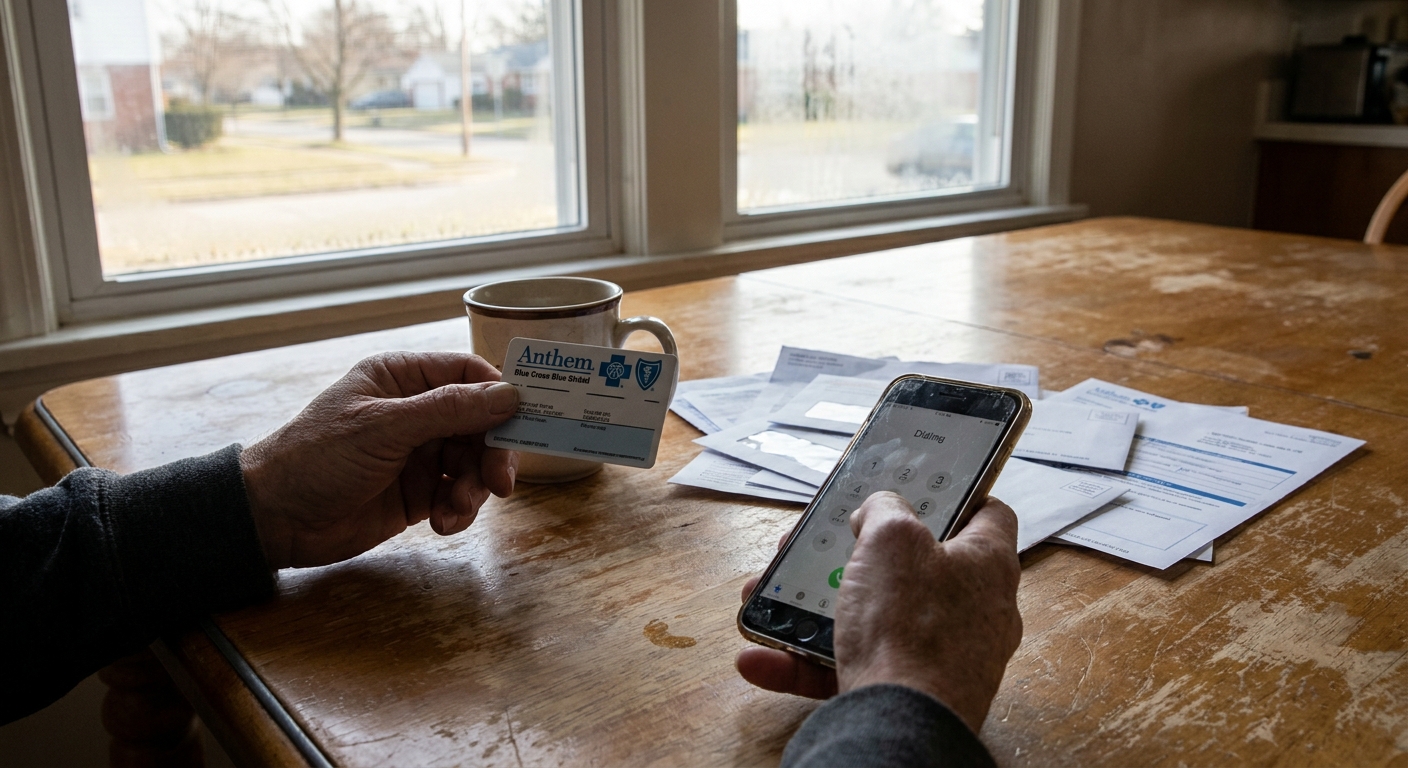
At Ohio Treatment Center, we work with most major private insurance providers to make treatment affordable and accessible. Complete our quick, confidential form below, and we’ll let you know if your plan is in-network — without contacting your insurance company.

Commonly accepted providers include:
Blue Cross Blue Shield (BCBS) • Aetna • Cigna • UnitedHealthcare • Humana • Anthem • Tricare

What Happens Next

  • Fill out the short form below
  • Our team reviews your benefits
  • We’ll contact you with your coverage details

Getting help shouldn’t be stressful. Let’s find out what your insurance can cover today.

Level Of Care

Detox
Begin recovery safely with 24/7 medical support. Our detox program helps you manage withdrawal comfortably and prepares you for the next step.

Residential Treatment
Continue healing in a supportive, structured setting with daily therapy, wellness activities, and round-the-clock care.

Aftercare
Before you leave, we’ll help you create a plan for ongoing support and lasting recovery.

Ready to Start?
Call (833) 657-0858: to learn which program fits your recovery goals.

Who are you seeking help for? *

We’re here to listen and help you find the right path forward. Please tell us who needs care so we can match you with the best program and support.

💬 Your responses are 100% confidential and never shared outside our admissions team.

Recovery Shouldn’t Have to Wait — Begin Treatment Today.

At Midwest Detox Center in Maumee, Ohio, we make it simple to take that first step toward healing. Our streamlined admissions process can often lead to same-day placement in treatment for medically supervised detox and residential treatment programs.

Call today for a free, confidential consultation with our caring admissions team — we’ll walk you through every step with compassion and clarity.

Call (833) 657-0858
Why call us?

Check Your Insurance Coverage in Minutes

We’ll handle the insurance details — so you can focus on getting better.

At Midwest Detox, we work with most major private insurance providers to make treatment affordable and accessible. Complete our quick, confidential form below, and we’ll let you know if your plan is in-network — without contacting your insurance company.

Commonly accepted providers include:
Blue Cross Blue Shield (BCBS) • Aetna • Cigna • UnitedHealthcare • Humana • Anthem • Tricare

What Happens Next

  • Fill out the short form below
  • Our team reviews your benefits
  • We’ll contact you with your coverage details

Getting help shouldn’t be stressful. Let’s find out what your insurance can cover today.

Level Of Care

Medical Detox
24/7 medically supervised detox to help you safely withdraw from drugs or alcohol while managing symptoms and preventing complications.

Inpatient Treatment
A structured, residential setting that provides continuous medical care, counseling, and therapeutic support to build a foundation for long-term recovery.

Residential Program
Comfortable, home-like housing where you can focus fully on healing with daily therapy, peer support, and holistic recovery services.

Ready to Start?
Call (833) 657-0858: to learn which program fits your recovery goals.

Who are you seeking help for? *

We’re here to listen and help you find the right path forward. Please tell us who needs care so we can match you with the best program and support.

💬 Your responses are 100% confidential and never shared outside our admissions team.

Recovery Shouldn’t Have to Wait — Begin Detox Today

At Ohio Detox Center in Maumee, Ohio, we make it simple to take that first step toward healing. Our streamlined admissions process can often lead to same-day placement in detox or inpatient treatment for substance use and co-occurring mental health conditions.

Call today for a free, confidential consultation with our caring admissions team — we’ll walk you through every step with compassion and clarity.

Call (833) 657-0858
Why call us?

Check Your Insurance Coverage in Minutes

We’ll handle the insurance details — so you can focus on getting better.

We’ll take care of the details — so you can focus on getting better.
At Ohio Detox Center, we work with Ohio Medicaid and most major insurance providers to make treatment affordable and accessible.

Here’s how it works:

  1. Fill out the short form below
  2. Our team reviews your benefits
  3. We’ll contact you with your coverage details

Getting help shouldn’t be stressful. Let’s find out what your insurance can cover today.

Levels of Care

Detox
We understand that taking the first step can feel overwhelming. Our detox program offers a compassionate, medically supported environment where you can rest, heal, and begin recovery safely. You’ll never go through it alone — our team is with you every step of the way.

IOP (Intensive Outpatient Program)
A flexible treatment option that lets you maintain work, school, or family responsibilities while attending therapy several days a week. IOP focuses on relapse prevention, coping skills, and long-term recovery through group and individual sessions.

Residential
Residential care gives you the time and space to focus fully on healing. Surrounded by supportive staff and peers, you’ll work through underlying causes of addiction, rebuild healthy routines, and rediscover confidence in your recovery journey.

MAT (Medication-Assisted Treatment)
Combining FDA-approved medications with counseling and behavioral therapy, MAT helps reduce cravings and withdrawal symptoms related to opioid or alcohol use. Each treatment plan is closely monitored to ensure comfort, safety, and lasting recovery.

Ready to Start?
Call (833) 657-0858: to learn which program fits your recovery goals.

Who are you seeking help for? *

We’re here to listen and help you find the right path forward. Please tell us who needs care so we can match you with the best program and support.

Myself

A loved one or family member

💬 Your responses are 100% confidential and never shared outside our admissions team.

Check Your Insurance Coverage in Minutes

We’ll handle the insurance details — so you can focus on getting better.

At Midwest Centers at Youngstown, we work with most major private insurance providers to make treatment affordable and accessible. Complete our quick, confidential form below, and we’ll let you know if your plan is in-network — without contacting your insurance company.

Commonly accepted providers include:
Blue Cross Blue Shield (BCBS) • Aetna • Cigna • UnitedHealthcare • Humana • Anthem • Tricare

What Happens Next

  • Fill out the short form below
  • Our team reviews your benefits
  • We’ll contact you with your coverage details

Getting help shouldn’t be stressful. Let’s find out what your insurance can cover today.

Recovery Shouldn’t Have to Wait — Begin Treatment Today.

At Midwest Centers at Youngstown in Ohio, we make it simple to take that first step toward healing. Our streamlined admissions process can often lead to same-day placement in treatment for substance use or co-occurring mental health disorders.

Call today for a free, confidential consultation with our caring admissions team — we’ll walk you through every step with compassion and clarity.

Level Of Care

Partial Hospitalization Program (PHP)
Our PHP offers a highly structured, supportive environment where you can focus on recovery during the day and return home at night. It’s an ideal step between inpatient and outpatient care, providing daily therapy, accountability, and a strong recovery routine.

Intensive Outpatient Program (IOP)
Our IOP gives you the flexibility to continue work, school, or family life while receiving evidence-based treatment several days a week. You’ll participate in group and individual therapy focused on relapse prevention, coping skills, and long-term healing.

Outpatient Program (OP)
For those transitioning from a higher level of care or seeking ongoing support, our outpatient program offers continued therapy at a pace that fits your lifestyle. It’s a supportive bridge that helps you maintain recovery and stay connected to care.

Medication-Assisted Treatment (MAT)
MAT combines FDA-approved medications with therapy and counseling to reduce cravings and support long-term recovery from opioid or alcohol addiction. Our team monitors each plan closely to ensure safety, comfort, and effectiveness.

Ready to Start?
Call (833) 657-0858: to learn which program fits your recovery goals.

Who are you seeking help for? *

We’re here to listen and help you find the right path forward. Please tell us who needs care so we can match you with the best program and support.

Myself

A loved one or family member

💬 Your responses are 100% confidential and never shared outside our admissions team.

Recovery Shouldn’t Have to Wait — Begin Treatment Today.

At Midwest Recovery Center in Toledo, Ohio, we make it simple to take that first step toward healing. Our streamlined admissions process can often lead to same-day placement in treatment for substance use or co-occurring mental health disorders.

Call today for a free, confidential consultation with our caring admissions team — we’ll walk you through every step with compassion and clarity.

Check Your Insurance Coverage in Minutes

We’ll handle the insurance details — so you can focus on getting better.

At Midwest Recovery Center, we work with most major private insurance providers to make treatment affordable and accessible. Complete our quick, confidential form below, and we’ll let you know if your plan is in-network — without contacting your insurance company.

Commonly accepted providers include:
Blue Cross Blue Shield (BCBS) • Aetna • Cigna • UnitedHealthcare • Humana • Anthem • Tricare

What Happens Next

  • Fill out the short form below
  • Our team reviews your benefits
  • We’ll contact you with your coverage details

Getting help shouldn’t be stressful. Let’s find out what your insurance can cover today.