
When I Relapsed After 90 Days — The Hard Walk Back

When I Relapsed After 90 Days — The Hard Walk Back

I didn’t relapse because I stopped caring about recovery.

That’s the part people don’t talk about enough.

When I used again after 90 days sober, it wasn’t because I forgot what addiction did to my life. I remembered everything—every withdrawal, every broken promise, every exhausted morning where I swore never again.

But addiction doesn’t always come back with chaos.

Sometimes it comes back quietly.

A week after my relapse, I found myself staring at the same building I had once walked into full of fear—considering whether to return for withdrawal support.

I sat in the parking lot for twenty minutes wondering if I deserved to go back.

The Moment I Realized I Had Slipped

Relapse rarely happens in a single moment.

It’s more like drifting.

For me, the first shift happened weeks earlier. Life started getting busy. I was working again. People trusted me again. On the outside, things looked good.

Inside, something else was happening.

I stopped checking in with people.
I skipped a meeting here and there.
I started thinking I had it under control.

That’s when the quiet voice showed up.

You’re probably fine now.

Addiction doesn’t always shout. Sometimes it whispers.

And that whisper gets louder the longer you ignore it.

The Shame That Came After

The morning after I used again felt heavier than any hangover.

It wasn’t just physical. It was emotional.

I kept replaying the same thought:

You knew better.

I had listened to the relapse prevention talks. I had heard people share their stories. I knew the warning signs.

Which somehow made it worse.

Because if I knew better… why did I still relapse?

Shame started writing the story in my head.

It told me I had failed.
It told me people would be disappointed.
It told me I had thrown away everything I worked for.

And for a few days, I believed it.

Why Walking Back Felt Harder Than Walking In

The first time I went to treatment, I was desperate.

Everything in my life had collapsed. I didn’t have much pride left to protect.

But walking back after a relapse felt different.

This time I had something to lose.

I worried people would look at me differently. I imagined the staff thinking, “Here we go again.”

That’s the thing about relapse—it attacks your confidence.

You start questioning whether recovery is even possible for you.

I remember sitting in the parking lot before going back inside, staring at the building like it was a mirror reflecting all my mistakes.

But eventually I walked in.

And the first thing someone said was:

“We’re glad you came back.”

No disappointment. No lectures.

Just relief that I showed up.

What I Learned the Second Time

The first time I got sober, I thought recovery was about stopping substances.

The second time I realized it was about staying connected.

During my relapse, the biggest shift wasn’t drinking or using again.

It was isolation.

I stopped telling people how I was really doing.
I stopped admitting when I felt overwhelmed.
I started believing I could manage everything on my own.

That kind of thinking is dangerous for people like us.

Because addiction loves isolation.

The second time around, I started paying attention to the small cracks that appear before things break.

Recovery became less about perfection and more about honesty.
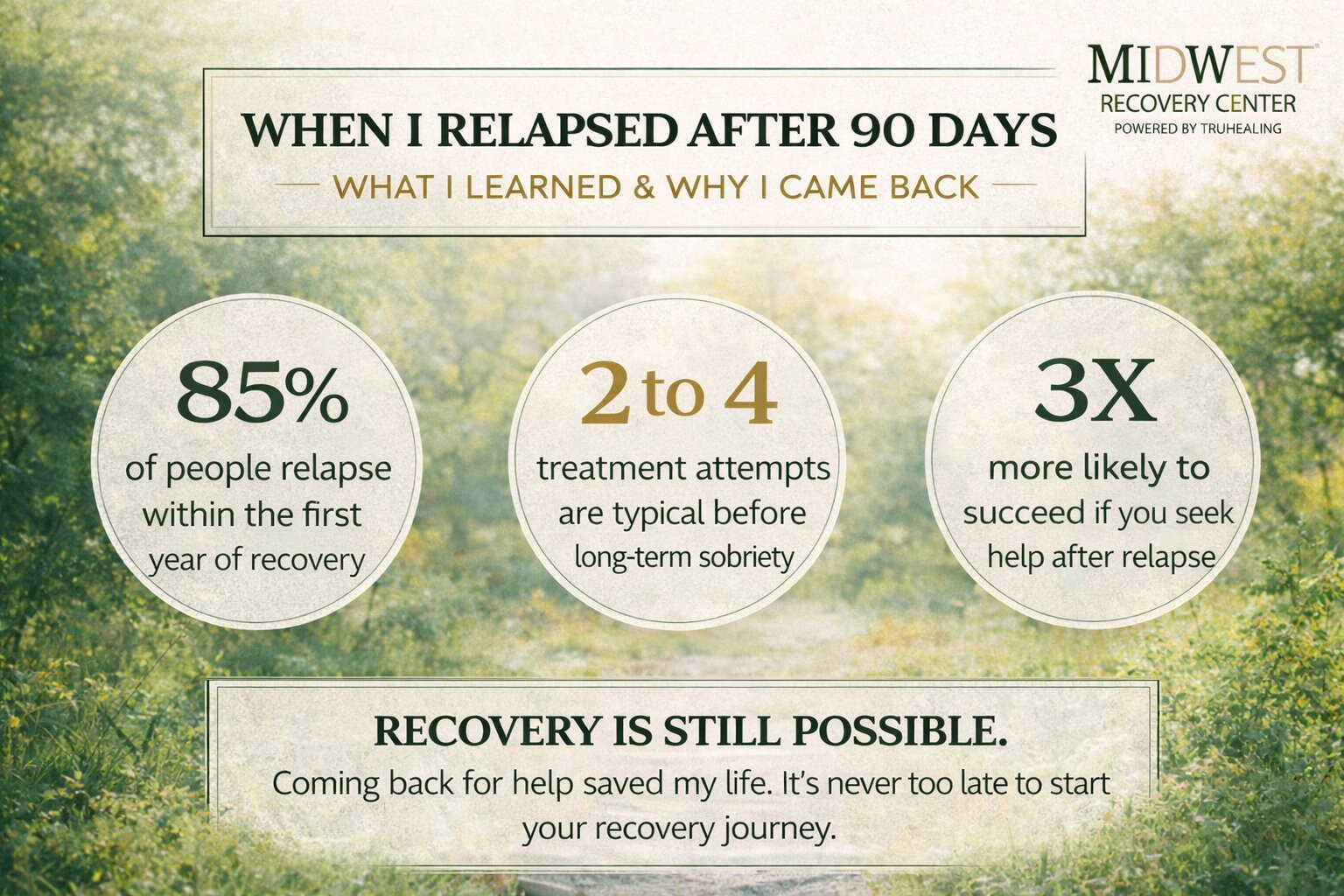
Relapse and Coming Back to Treatment

The Lie That Relapse Tells

Relapse comes with a powerful lie.

It tells you that everything you learned in recovery is gone.

That you’re back at the beginning.

But that’s not how it works.

I still remembered the tools.
I still remembered what helped me stay grounded.
I still had people who cared about whether I made it through.

Recovery isn’t erased by a relapse.

It’s tested by it.

And sometimes the lessons hit harder the second time.

Stories I Heard That Changed My Perspective

During my return, I started hearing stories from other people who had relapsed before finding lasting recovery.

One guy had relapsed after six months sober.
Another woman relapsed twice before finally finding stability.

They weren’t weak.

They were still learning.

One thing a peer said stuck with me:

“Relapse doesn’t mean recovery failed. It means something needed more attention.”

That changed how I looked at my own experience.

Instead of seeing relapse as proof I couldn’t recover, I started seeing it as information.

Something in my recovery needed strengthening.

The Turning Point I Didn’t Expect

The biggest shift didn’t happen during group therapy or counseling.

It happened during a quiet conversation with someone who had been sober for years.

I asked them if relapse meant I had ruined my chances.

They shook their head and said something simple:

“The only relapse that ends recovery is the one you don’t come back from.”

That line stayed with me.

Because walking back into treatment wasn’t proof I failed.

It was proof I was still fighting.

Recovery Looked Different the Second Time

The second time I approached recovery differently.

I stopped trying to look like I had everything figured out.

Instead, I started being honest about when things felt shaky.

I called people when I didn’t want to.
I showed up even when I felt embarrassed.
I admitted when my thoughts were drifting back toward old habits.

Recovery stopped being something I performed.

It became something I practiced.

Quietly. Imperfectly. One day at a time.

If You’re an Alum Who Relapsed

If you’re reading this and you slipped after 30 days… 90 days… even a year…

I want you to hear this from someone who’s been there.

Relapse does not erase the work you’ve done.

It doesn’t erase the days you stayed sober when it felt impossible.

And it definitely doesn’t mean you can’t recover.

The hardest part of relapse isn’t the substance.

It’s the shame that tells you to disappear.

But the truth is this:

The people who stay in recovery long term are usually the ones who kept coming back when things got hard.

Not the ones who never struggled.

FAQ: Relapse and Coming Back to Treatment

Does relapse mean recovery didn’t work?

No. Many people experience relapse before finding stable recovery. It often highlights areas where more support or structure is needed.

Why does relapse happen even when someone knows the risks?

Addiction affects decision-making, stress response, and impulse control. Even when someone understands the risks, emotional or environmental triggers can still lead to relapse.

Should someone return for professional support after relapse?

Many people benefit from returning for withdrawal support after relapse, especially if substances have been used heavily or withdrawal symptoms may occur.

How can alumni rebuild confidence after relapse?

Rebuilding confidence often comes from reconnecting with recovery supports, being honest about struggles, and remembering that recovery is a long-term process.

Is it common for people to return to treatment more than once?

Yes. Many people with long-term recovery histories had more than one treatment experience. Each return can strengthen recovery skills and support systems.

If you’re looking for help in Youngstown, Maumee, to Austintown or nearby communities, reaching out again can be the step that turns things around. Many alumni return for support during difficult moments—and that decision often becomes the start of a stronger recovery chapter.

Call (888) 657-0858 or visit our medical detox program services to learn more about our medical detox program services in Toledo, Ohio.

*The stories shared in this blog are meant to illustrate personal experiences and offer hope. Unless otherwise stated, any first-person narratives are fictional or blended accounts of others’ personal experiences. Everyone’s journey is unique, and this post does not replace medical advice or guarantee outcomes. Please speak with a licensed provider for help.

Level Of Care

PHP (Partial Hospitalization Program)
Daytime treatment with structure, therapy, and support—return home each night.

IOP (Intensive Outpatient Program)
Flexible therapy a few days a week to balance life and recovery.

OP (Outpatient Program)
Ongoing therapy and support to maintain progress.

MAT (Medication-Assisted Treatment)
Evidence-based care using medication and counseling to reduce cravings.

Ready to Start?
Call (833) 657-0858: to learn which program fits your recovery goals.

Who are you seeking help for? *

We’re here to listen and help you find the right path forward. Please tell us who needs care so we can match you with the best program and support.

💬 Your responses are 100% confidential and never shared outside our admissions team.

Recovery Shouldn’t Have to Wait — Begin Treatment Today.

At Ohio Treatment Center in Toledo, Ohio, we make it simple to take that first step toward healing. Our streamlined admissions process can often lead to same-day placement in treatment for MAT, PHP, IOP and more..

Call today for a free, confidential consultation with our caring admissions team — we’ll walk you through every step with compassion and clarity.

Call (833) 657-0858
Why call us?

Check Your Insurance Coverage in Minutes

We’ll handle the insurance details — so you can focus on getting better.

At Ohio Treatment Center, we work with most major private insurance providers to make treatment affordable and accessible. Complete our quick, confidential form below, and we’ll let you know if your plan is in-network — without contacting your insurance company.

Commonly accepted providers include:
Blue Cross Blue Shield (BCBS) • Aetna • Cigna • UnitedHealthcare • Humana • Anthem • Tricare

What Happens Next

  • Fill out the short form below
  • Our team reviews your benefits
  • We’ll contact you with your coverage details

Getting help shouldn’t be stressful. Let’s find out what your insurance can cover today.

Level Of Care

Detox
Begin recovery safely with 24/7 medical support. Our detox program helps you manage withdrawal comfortably and prepares you for the next step.

Residential Treatment
Continue healing in a supportive, structured setting with daily therapy, wellness activities, and round-the-clock care.

Aftercare
Before you leave, we’ll help you create a plan for ongoing support and lasting recovery.

Ready to Start?
Call (833) 657-0858: to learn which program fits your recovery goals.

Who are you seeking help for? *

We’re here to listen and help you find the right path forward. Please tell us who needs care so we can match you with the best program and support.

💬 Your responses are 100% confidential and never shared outside our admissions team.

Recovery Shouldn’t Have to Wait — Begin Treatment Today.

At Midwest Detox Center in Maumee, Ohio, we make it simple to take that first step toward healing. Our streamlined admissions process can often lead to same-day placement in treatment for medically supervised detox and residential treatment programs.

Call today for a free, confidential consultation with our caring admissions team — we’ll walk you through every step with compassion and clarity.

Call (833) 657-0858
Why call us?

Check Your Insurance Coverage in Minutes

We’ll handle the insurance details — so you can focus on getting better.

At Midwest Detox, we work with most major private insurance providers to make treatment affordable and accessible. Complete our quick, confidential form below, and we’ll let you know if your plan is in-network — without contacting your insurance company.

Commonly accepted providers include:
Blue Cross Blue Shield (BCBS) • Aetna • Cigna • UnitedHealthcare • Humana • Anthem • Tricare

What Happens Next

  • Fill out the short form below
  • Our team reviews your benefits
  • We’ll contact you with your coverage details

Getting help shouldn’t be stressful. Let’s find out what your insurance can cover today.

Level Of Care

Medical Detox
24/7 medically supervised detox to help you safely withdraw from drugs or alcohol while managing symptoms and preventing complications.

Inpatient Treatment
A structured, residential setting that provides continuous medical care, counseling, and therapeutic support to build a foundation for long-term recovery.

Residential Program
Comfortable, home-like housing where you can focus fully on healing with daily therapy, peer support, and holistic recovery services.

Ready to Start?
Call (833) 657-0858: to learn which program fits your recovery goals.

Who are you seeking help for? *

We’re here to listen and help you find the right path forward. Please tell us who needs care so we can match you with the best program and support.

💬 Your responses are 100% confidential and never shared outside our admissions team.

Recovery Shouldn’t Have to Wait — Begin Detox Today

At Ohio Detox Center in Maumee, Ohio, we make it simple to take that first step toward healing. Our streamlined admissions process can often lead to same-day placement in detox or inpatient treatment for substance use and co-occurring mental health conditions.

Call today for a free, confidential consultation with our caring admissions team — we’ll walk you through every step with compassion and clarity.

Call (833) 657-0858
Why call us?

Check Your Insurance Coverage in Minutes

We’ll handle the insurance details — so you can focus on getting better.

We’ll take care of the details — so you can focus on getting better.
At Ohio Detox Center, we work with Ohio Medicaid and most major insurance providers to make treatment affordable and accessible.

Here’s how it works:

  1. Fill out the short form below
  2. Our team reviews your benefits
  3. We’ll contact you with your coverage details

Getting help shouldn’t be stressful. Let’s find out what your insurance can cover today.

Levels of Care

Detox
We understand that taking the first step can feel overwhelming. Our detox program offers a compassionate, medically supported environment where you can rest, heal, and begin recovery safely. You’ll never go through it alone — our team is with you every step of the way.

IOP (Intensive Outpatient Program)
A flexible treatment option that lets you maintain work, school, or family responsibilities while attending therapy several days a week. IOP focuses on relapse prevention, coping skills, and long-term recovery through group and individual sessions.

Residential
Residential care gives you the time and space to focus fully on healing. Surrounded by supportive staff and peers, you’ll work through underlying causes of addiction, rebuild healthy routines, and rediscover confidence in your recovery journey.

MAT (Medication-Assisted Treatment)
Combining FDA-approved medications with counseling and behavioral therapy, MAT helps reduce cravings and withdrawal symptoms related to opioid or alcohol use. Each treatment plan is closely monitored to ensure comfort, safety, and lasting recovery.

Ready to Start?
Call (833) 657-0858: to learn which program fits your recovery goals.

Who are you seeking help for? *

We’re here to listen and help you find the right path forward. Please tell us who needs care so we can match you with the best program and support.

Myself

A loved one or family member

💬 Your responses are 100% confidential and never shared outside our admissions team.

Check Your Insurance Coverage in Minutes

We’ll handle the insurance details — so you can focus on getting better.

At Midwest Centers at Youngstown, we work with most major private insurance providers to make treatment affordable and accessible. Complete our quick, confidential form below, and we’ll let you know if your plan is in-network — without contacting your insurance company.

Commonly accepted providers include:
Blue Cross Blue Shield (BCBS) • Aetna • Cigna • UnitedHealthcare • Humana • Anthem • Tricare

What Happens Next

  • Fill out the short form below
  • Our team reviews your benefits
  • We’ll contact you with your coverage details

Getting help shouldn’t be stressful. Let’s find out what your insurance can cover today.

Recovery Shouldn’t Have to Wait — Begin Treatment Today.

At Midwest Centers at Youngstown in Ohio, we make it simple to take that first step toward healing. Our streamlined admissions process can often lead to same-day placement in treatment for substance use or co-occurring mental health disorders.

Call today for a free, confidential consultation with our caring admissions team — we’ll walk you through every step with compassion and clarity.

Level Of Care

Partial Hospitalization Program (PHP)
Our PHP offers a highly structured, supportive environment where you can focus on recovery during the day and return home at night. It’s an ideal step between inpatient and outpatient care, providing daily therapy, accountability, and a strong recovery routine.

Intensive Outpatient Program (IOP)
Our IOP gives you the flexibility to continue work, school, or family life while receiving evidence-based treatment several days a week. You’ll participate in group and individual therapy focused on relapse prevention, coping skills, and long-term healing.

Outpatient Program (OP)
For those transitioning from a higher level of care or seeking ongoing support, our outpatient program offers continued therapy at a pace that fits your lifestyle. It’s a supportive bridge that helps you maintain recovery and stay connected to care.

Medication-Assisted Treatment (MAT)
MAT combines FDA-approved medications with therapy and counseling to reduce cravings and support long-term recovery from opioid or alcohol addiction. Our team monitors each plan closely to ensure safety, comfort, and effectiveness.

Ready to Start?
Call (833) 657-0858: to learn which program fits your recovery goals.

Who are you seeking help for? *

We’re here to listen and help you find the right path forward. Please tell us who needs care so we can match you with the best program and support.

Myself

A loved one or family member

💬 Your responses are 100% confidential and never shared outside our admissions team.

Recovery Shouldn’t Have to Wait — Begin Treatment Today.

At Midwest Recovery Center in Toledo, Ohio, we make it simple to take that first step toward healing. Our streamlined admissions process can often lead to same-day placement in treatment for substance use or co-occurring mental health disorders.

Call today for a free, confidential consultation with our caring admissions team — we’ll walk you through every step with compassion and clarity.

Check Your Insurance Coverage in Minutes

We’ll handle the insurance details — so you can focus on getting better.

At Midwest Recovery Center, we work with most major private insurance providers to make treatment affordable and accessible. Complete our quick, confidential form below, and we’ll let you know if your plan is in-network — without contacting your insurance company.

Commonly accepted providers include:
Blue Cross Blue Shield (BCBS) • Aetna • Cigna • UnitedHealthcare • Humana • Anthem • Tricare

What Happens Next

  • Fill out the short form below
  • Our team reviews your benefits
  • We’ll contact you with your coverage details

Getting help shouldn’t be stressful. Let’s find out what your insurance can cover today.