
I used to say I gave treatment a shot.
But if I’m honest? I barely cracked the door open.
I showed up to my first program angry, exhausted, and already convinced it wouldn’t work. I went because I had to—because my partner was done, my job was on the line, and I was starting to scare myself. I figured I’d sit through the sessions, check the boxes, and walk away with a gold star and the same drinking habits hidden behind a cleaner front.
When it didn’t “fix me,” I blamed the program.
It was too basic. Too slow. Too soft. Too generic.
But now I can say what I couldn’t admit back then: treatment didn’t fail me—I never really let it in.
I Showed Up—but I Didn’t Let Myself Be Seen
Physically, I was there. But emotionally? Nowhere close.
I went through the motions like I was performing a play: check in, nod, share just enough to avoid being called on again. I didn’t challenge myself. I didn’t speak the truth. I didn’t even stay sober the whole time.
Because here’s the thing: I was still trying to control the outcome.
I wanted the results without the risk. Healing without discomfort. Change without honesty.
Alcohol addiction treatment can only meet you where you are—but you have to be there too.
That’s something I didn’t get until I tried again at Midwest Recovery Center in Toledo, Ohio. It was different. Not because the program was magic—but because this time, I showed up as the real me.
I Thought Needing Help Made Me Weak
I hated admitting I couldn’t figure it out alone.
To me, asking for help felt like failure. I saw myself as someone who always “bounced back,” even if bouncing back meant hiding my hangovers behind sunglasses and overcompensating at work.
But underneath that front was someone scared and tired.
Someone who didn’t know how to stop.
Someone who didn’t want to drink—but didn’t know how not to.
It took me a long time to understand this:
Asking for help isn’t weakness—it’s strength in its rawest, most human form.
And when you ask the right people? You get help that actually fits your life, your identity, and your reality.
If you live near Perrysburg or Maumee, Ohio, that help is closer than you think. Midwest Recovery doesn’t ask you to be perfect. They just ask you to be honest.
I Confused Discomfort with Failure
The second week into my first program, a guy in group shared something that hit too close to home. I got defensive. I shut down. That night, I left and didn’t come back.
I told myself the program “wasn’t for me.”
What I meant was: I wasn’t ready to feel the things I’d been avoiding.
Recovery brings discomfort. It stirs up guilt, shame, fear, memories you’d rather stay buried. And I wasn’t prepared for that. I mistook that discomfort as a sign it wasn’t working, when really—it was the first crack in the wall I’d built.
Discomfort isn’t failure. It’s feedback. It means something real is happening.
I Wanted Instant Results
I thought I could walk into treatment, stay for 30 days, and leave “fixed.” That’s what movies show, right? A dramatic bottom, a powerful epiphany, a clean exit.
But real recovery is slower. Messier.
It doesn’t follow a script. It doesn’t give you instant clarity.
What it gives you—if you let it—is a structure to fall apart safely, and tools to rebuild without the bottle.
It wasn’t until my second round of treatment that I understood this. Midwest Recovery’s outpatient program gave me enough structure to feel supported, but enough flexibility to practice living in the real world, sober.
The difference wasn’t the setting. It was me.
I Didn’t Let People Get Close
During my first program, I kept people at arm’s length.
I smiled. I shared just enough. I stayed “likable” and low-maintenance. I thought if I got too real, I’d scare people off—or worse, be seen for who I really was.
But healing doesn’t happen in hiding. It happens in connection.
The turning point for me came when I finally said something real in group. I said, “I’m scared. I’ve failed at this before. And I don’t know if I can do it.”
Nobody flinched. Nobody rolled their eyes.
Instead, they nodded. One guy said, “Same here.”
That’s when it hit me: I don’t have to do this alone. I never did.
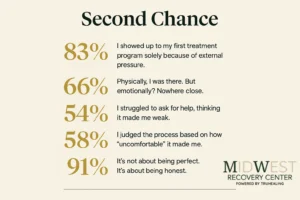
Recovery Isn’t About Being Perfect. It’s About Being Honest.
If you’ve been through a program and it didn’t work, that doesn’t mean you’re hopeless. It means that something about that attempt wasn’t aligned. That could be the timing, the approach, the support—or your own willingness to let it in.
Recovery doesn’t care how many times you’ve tried.
It cares that you try again—with more truth and less shame.
If you’re considering alcohol addiction treatment in Oregon, Ohio, or nearby, and you’re carrying the weight of “it didn’t work before,” take a breath. There’s still time. You’re still worth the effort.
FAQ: If You Think Treatment Didn’t Work
What if I went through treatment and relapsed?
Relapse doesn’t mean failure. It means something didn’t click. Recovery is not linear—it’s layered. Each attempt can teach you something if you’re open to learning from it.
Should I go back to the same place or try somewhere new?
That depends on your experience. If the staff felt supportive and you felt safe, it may be worth returning. Midwest Recovery often works with clients who return after time away—and they’re welcomed back without judgment.
What if I didn’t finish the program?
You’re still allowed to come back. Whether you walked out halfway or disappeared entirely, your seat isn’t gone. Most places—including Midwest—will meet you with openness, not blame.
Can I trust myself to do it differently this time?
Trust doesn’t come all at once. But even considering trying again is a sign of growth. You’re not the same person you were during the first attempt. And you don’t have to do it the same way.
Looking for Alcohol Addiction Treatment in Toledo or Nearby?
Midwest Recovery Center serves people throughout Toledo, Maumee, Perrysburg, Oregon, and beyond. If you’ve tried treatment before—or even if you ghosted mid-program—you’re still welcome here.
What you’ll find is:
- A team that doesn’t shame or pressure
- Flexible options like outpatient and intensive outpatient
- Clinicians who get the fear of trying again
- Peers who understand that “failure” is part of the path
And most importantly, a space to be honest without judgment.
Still Not Sure? That’s Okay. Let’s Talk.
If you’re scared to try again, I get it.
If you’re holding onto the belief that “treatment just isn’t for me,” I’ve been there.
But I’ll tell you what someone told me once—and it stuck:
“Maybe it didn’t fail. Maybe you were never given the chance to do it fully.”
This time, give yourself that chance.
Call (888) 657-0858 or visit Midwest Recovery Center’s Alcohol Addiction Treatment page to learn more about our services in Toledo, Ohio.