
Loving someone who’s actively using is one of the hardest, most complicated things a person can go through.
You probably didn’t fall in love with someone “in addiction.” You fell in love with the whole person—their humor, their intelligence, their softness, their spark. But lately, that part of them feels farther away. Sometimes, barely visible.
And no one sees what you’re holding. The emotional acrobatics. The constant worry. The cover-ups. The confusion about what’s “support” and what’s “enabling.” The ache of wondering: Are they going to be okay? Am I?
If you’ve landed here, maybe you’ve been thinking about treatment. Maybe you’ve googled it late at night, just trying to understand what hope even looks like.
This isn’t a pitch. This is a calm explanation of what a residential treatment program actually is—and how it might help both of you.
Whether your partner is ready or not, you’re allowed to understand what’s possible.
Learn more about our residential treatment program in Toledo, Ohio.
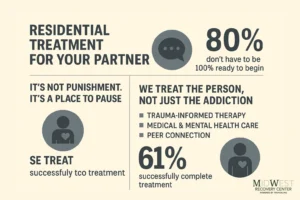
It’s Not Punishment. It’s a Place to Pause.
One of the biggest myths about residential treatment is that it’s harsh, clinical, or like jail.
It’s not.
A well-designed residential program is structured, yes—but in the way that a hospital is structured. Not to control, but to stabilize. At Midwest Recovery Center, clients stay on-site in a supportive, substance-free environment where their basic needs are met:
- Healthy meals and hydration
- Medication management if needed
- A calm physical space with consistent routines
- Access to individual therapy, group support, and wellness activities
In early recovery, small things like sleeping through the night, eating balanced meals, and not waking up to crisis can be life-changing. Structure brings down anxiety, gives the brain space to recalibrate, and helps people move from chaos to clarity.
Residential care isn’t about locking someone up. It’s about giving them back to themselves.
They Don’t Have to Be 100% Ready to Begin
This might be the part that gives you pause. You’ve heard it before: “They have to want it.” Or: “They have to hit bottom.”
That’s only half true.
We’ve seen many clients arrive unsure. Angry. Numb. Not sure if they belong. Not sure if they want help. Some come because their partner begged. Some because a boss gave an ultimatum. Some because it was the only option left.
What matters more than motivation is engagement once inside. And the right environment—with safety, compassion, and non-shaming support—can ignite that spark.
At Midwest Recovery Center, we know how to meet people in ambivalence. And we know how to build trust that doesn’t demand perfection.
So if your loved one isn’t ready yet? That’s okay. You’re still allowed to gather information. To ask questions. To prepare for the moment when “maybe” becomes “yes.”
We Treat the Person, Not Just the Addiction
Substance use is rarely the root problem. More often, it’s a response to something deeper—trauma, grief, depression, anxiety, untreated mental illness, or chronic stress.
That’s why treatment that only focuses on the substance often fails.
In our residential program, we address the full picture:
- Trauma-informed therapy to work through pain that fuels use
- Medical care to manage physical health and withdrawal safely
- Mental health support for co-occurring diagnoses like depression, PTSD, or anxiety
- Peer connection that reduces isolation and shame
- Skill-building for managing emotions, stress, and triggers
And this matters because when your loved one begins healing, they’re not just less likely to use—they’re more emotionally available, more stable, more able to love in return.
While They’re in Treatment, You Can Finally Breathe
This isn’t just about their recovery. It’s about your survival.
When someone you love is using, you often become the manager of their moods, their crises, their messes. You might not realize how much of your own energy is going toward their survival.
Residential treatment gives you space, too.
For the first time in a long time, you won’t have to:
- Monitor their drinking or using
- Worry about them driving under the influence
- Pick up the pieces after a bad night
- Feel scared to say the wrong thing
While they’re in care, you get to rest. And that rest is necessary—not selfish.
We also offer support for partners and loved ones:
- Family therapy, when appropriate
- Education about addiction and recovery dynamics
- Resources for boundary-setting, grief, and codependency patterns
You are part of this process—not as the cause of their addiction, but as someone affected by it. And you deserve healing, too.
Success Isn’t a Perfect Story. It’s a Willingness to Return.
If your loved one has tried treatment before and relapsed, you may wonder if it’s even worth trying again.
It is.
Recovery is not a straight line. In fact, many people who are now years sober went through multiple rounds of treatment before it clicked.
A client once said, “I didn’t leave my first treatment stay sober. But it planted the seed that one day helped me come back—and stay.”
Every attempt counts. Every return builds insight. And every step forward—even a small one—means something.
Whether they stay 30 days or leave early, you will have learned something. And so will they.
You Can Ask for Help Even if They Haven’t
If you’re searching for a residential treatment program in Perrysburg, Ohio or exploring options near Maumee or Oregon, Ohio, you don’t have to wait for your loved one to agree before reaching out.
You’re allowed to gather information. To talk to our admissions team. To ask, “What would this look like for us?”
You can make a plan now, even if nothing happens for weeks. That plan becomes your emotional safety net. And when your person does reach that moment of willingness, you’ll know what to do.
FAQ: Residential Treatment and Loving Someone Who’s Still Using
Can I call Midwest Recovery Center even if my partner hasn’t agreed to anything?
Yes. We talk to spouses, partners, and loved ones every day. You can ask questions, get information, and explore options without making any commitments.
What if they leave treatment early?
It happens. But even short stays can be valuable. We treat people who’ve relapsed or left early with compassion—not judgment. And we keep the door open for re-entry.
Will they be forced to do anything?
No. Treatment is voluntary. But once inside, many clients choose to stay because they feel seen and supported. Our team works with, not against, each person’s readiness.
What if I’m unsure I want to stay in the relationship?
You’re not alone. Many partners are navigating deep questions. We can help you explore those with clarity and without pressure—through family sessions or referrals for your own support.
Is there a way to prepare them for treatment?
Yes. We can help you plan how to talk to them—using non-confrontational, hope-centered language. We also support interventions when appropriate.
You’re Allowed to Hope—And You’re Allowed to Let Go
You didn’t cause their addiction. You can’t control it. But you can still care deeply—and get support for yourself while holding that love.
Whether you stay or step back, whether they say yes today or next year—you deserve clarity. You deserve peace. And you deserve to know you’re not alone in this.
Call (888) 657-0858 or visit our residential treatment program page to learn how Midwest Recovery Center supports both clients and the people who love them. We’ll meet you with real answers—and no judgment.