
When your child is in crisis, the world shrinks. Time stretches and contracts. Logic slips. You’re in fight-or-flight, and the only thing that matters is: What do I do next?
If your son or daughter has been using—and you know they need to stop—it’s easy to believe that keeping them close and safe at home is the best move. Especially if they’re scared of going to a facility. Especially if you’re scared of letting go.
But detox is not just a rough few days of discomfort. It’s a medical event. A psychiatric event. A moment when the body and mind are under stress—and where the difference between home and clinical support can be life-altering.
This isn’t said to scare you. It’s said to protect both of you.
Here’s what a medical detox program can do that home detox cannot—and why it matters so much when your child is vulnerable, scared, and trying to quit.
Medical Detox Keeps Watch So You Don’t Have To
Withdrawal from substances isn’t linear. It comes in waves. The physical side effects—nausea, tremors, high blood pressure, heart palpitations—can seem manageable one hour and escalate the next.
A professional detox unit doesn’t just react to emergencies. It monitors for them before they happen.
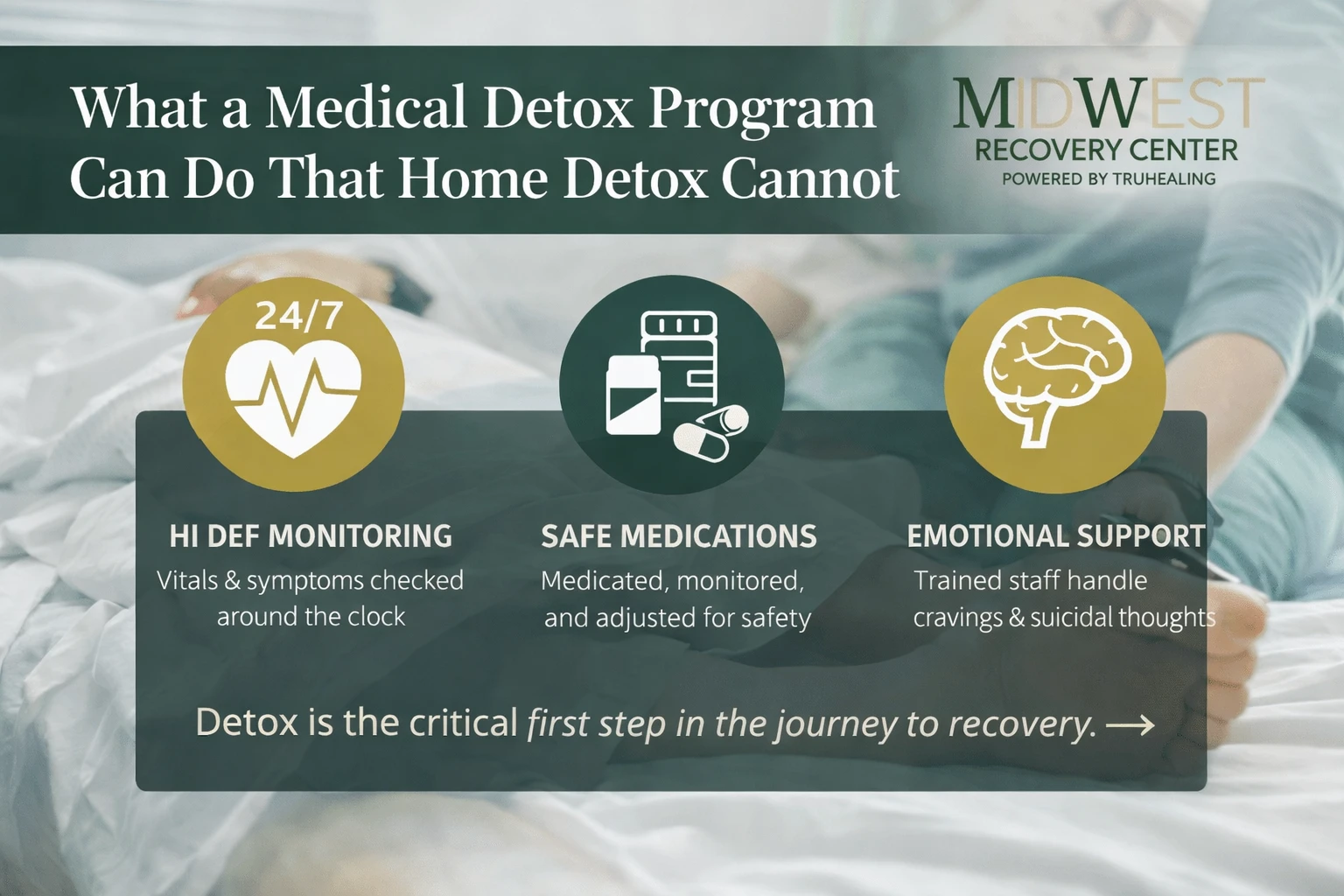
Nurses and clinicians check vitals around the clock. They notice if something looks off before it turns dangerous. They’re trained to interpret symptoms parents might miss—symptoms that, left unmanaged, can lead to seizures or worse.
At home, even if you’re sleeping in shifts or watching them constantly, you are still one person. You’re not meant to be the only line of defense.
Emotional Volatility Isn’t a Parenting Problem—It’s a Neurological One
Detox doesn’t just trigger physical symptoms. It unleashes emotional chaos. Cravings that feel like life-or-death. Hallucinations. Rage. Despair. Confusion. Sometimes even suicidal thoughts.
In a medical detox program, these emotional swings are expected—and held with calm, clinical steadiness. There’s no panic. No overreaction. No family rupture.
At home, even with the best intentions, things can spiral. You’re watching your child scream at you, or curl into a ball, or say things they don’t mean—and you’re trying to stay calm while your heart is breaking.
This isn’t just painful. It’s risky.
Detox at home often becomes traumatic for everyone involved. Detox in a facility gives everyone—especially you—emotional breathing room.
Medications Are Used Responsibly and With Precision
There is no honor in white-knuckling withdrawal.
A medical detox program uses medications as tools—not crutches—to reduce suffering, lower medical risk, and help clients get through the worst with dignity.
We use evidence-based protocols, adjust medications based on individual reactions, and always prioritize long-term safety.
In a home setting, trying to manage detox with over-the-counter remedies, leftover prescriptions, or internet advice can be dangerous—or deadly. Sedating someone the wrong way, mixing substances, or underestimating symptoms can create harm even when your intention is love.
Medical detox allows your child to be medically stabilized—not sedated, not doped—so they’re strong enough to take the next step in care.
It’s a Bridge to What Comes Next
One of the biggest misunderstandings about detox is thinking it’s the end goal.
It’s not.
Detox is the first, non-negotiable step toward something bigger. What happens after detox is where real healing begins: therapy, skill-building, family involvement, psychiatric support, relapse prevention.
In a medical detox setting, the discharge plan is baked into the care from the very beginning. Our team starts building a roadmap before your child walks out the door. That might include outpatient treatment, residential options, or even support groups in your area like those available near Maumee, Ohio.
A home detox? At best, it ends with exhaustion. At worst, it ends with relapse—because there’s no path forward. Just a void.
It Creates the One Thing Everyone in a Crisis Needs: Space
This one matters more than you think.
Medical detox creates space between your child and their using environment.
It removes access. It reduces temptation. It stops the late-night phone calls from friends who still use. It disconnects them—gently, but clearly—from whatever kept them stuck.
It also gives you, as a parent, space to breathe. Space to cry. Space to sleep for a full night without listening for a thud or a whisper in the hallway.
You get to be their parent again—not their ER nurse, not their warden, not their emotional punching bag.
You Can Still Be Involved—Without Being the One Holding the Line
A lot of parents fear that if their child goes into detox, they’ll be cut off. That they won’t know what’s happening. That they’ll lose control of the process.
That’s not how we operate.
In our medical detox program, families are involved as appropriate. You’ll know what medications are being used. You’ll know what the plan is. You’ll be updated—respectfully and within privacy guidelines. You’ll be heard.
Your role matters. But it’s not all on you anymore.
And that shift—from sole caretaker to supported parent—is often what makes long-term healing more sustainable.
We’ve seen it happen in many families, including those who began care through our treatment options in Youngstown, Ohio, and found the strength to stay the course.
Frequently Asked Questions
Can detox really be dangerous?
Yes. Depending on the substance and length of use, withdrawal can trigger seizures, cardiac events, or psychosis. Medical detox is designed to prevent and respond to these risks.
Will they be heavily medicated or sedated?
No. The goal of medical detox isn’t to knock someone out. It’s to stabilize their physical and mental state using as little medication as necessary for comfort and safety.
What if they refuse to go?
We can support you in that conversation. Often, just explaining what detox really looks like (not a locked room or cold hospital bed) can reduce fear. The sooner we talk, the more options we have.
Can I stay with them?
Medical detox isn’t a live-in family model—but you’ll be involved. We provide regular updates, and in many cases, you can talk with your child or meet with the care team during their stay.
How long does medical detox last?
Typically, 3–7 days. The length depends on the substance, how long your child has been using, and their overall health. After that, next steps are coordinated immediately.
You don’t have to handle this alone—and you shouldn’t.
Call (888) 657-0858 to learn more about our medical detox program in Toledo, Ohio.