
You already know something’s not right. Maybe you’ve known for a while. The anxiety. The exhaustion. The drinking that went from casual to constant. But you’re still showing up—for work, for family, for life. You’re still functioning, which makes the idea of “treatment” feel confusing.
You don’t want to disappear into a hospital. You just want something to shift—something real, something helpful.
If that’s where you are, a partial hospitalization program might be the level of care that finally makes sense. It’s a structured program where you go home every night. You get support daily, but you stay connected to your real life.
Let’s take a clear, honest look at what that actually means—day by day.
Walking Through the Door: The First Step Is the Hardest
Your first day in a PHP isn’t a test. It’s a welcome. You’re not expected to be “fixed.” You’re just expected to show up. That’s all.
You’ll meet with a clinician who helps you orient. There’s paperwork, sure—but there’s also kindness. You’ll tour the space, maybe meet others in the program, and start to get a sense that this might not be as scary as you thought.
Many people come in holding their breath—unsure if they belong. But very quickly, most realize: this is where people finally get to tell the truth.
Mornings Begin with Grounding and Check-Ins
Most PHP days start around 9:00 AM. You begin with a small group check-in. This is where clients share how they’re feeling, what came up overnight, and what kind of support they need today.
You’re not required to spill your deepest truth right away. But each time you speak, you build a little more trust—in others and in yourself.
Many programs integrate grounding techniques into the morning, like breathwork or mindfulness. These aren’t fluffy or forced. They’re the opposite of chaos. For many, they’re the first time the nervous system has felt safe in a long time.
Group Therapy Offers Connection and Insight
Group therapy is the heart of most PHP programs. Each session is led by a trained therapist and focused on topics that matter:
- Learning to manage anxiety without shutting down
- Understanding how trauma shapes relationships
- Recognizing addiction as a pattern—not a moral failure
- Building emotional regulation when anger or sadness feels overwhelming
What surprises most people is how relatable it all feels. You start to hear your own thoughts in someone else’s voice. And slowly, the shame begins to ease.
Group is never about performance. It’s about practice—learning to be seen without pretending.
Individual Therapy Gives You Space for Personal Work
Alongside group, you’ll also meet regularly with your assigned therapist. These sessions are private, one-on-one, and centered on you: your story, your fears, your hopes.
Together, you might explore:
- Why certain patterns keep repeating
- Where the fear of feeling started
- How to build healthy boundaries
- What sobriety (or emotional stability) could realistically look like
This is where deeper shifts begin to take root. You get to untangle old narratives and start building something that feels more like you.
Skills Training Builds Tools That Stick
Healing is more than talking. PHP includes evidence-based workshops that equip you to handle daily life with new tools. These sessions cover things like:
- Identifying triggers before they take over
- Coping strategies for cravings or panic
- Communication skills for hard conversations
- Setting routines when motivation is low
- Creating safety plans for relapse prevention
This isn’t abstract theory. It’s applied learning. What you gain here follows you outside the program—and that’s the point.
Breaks, Meals, and Moments to Breathe
A PHP day isn’t nonstop therapy. There are built-in breaks, often including lunch on-site. Some people talk, others journal, and many simply rest. These in-between spaces matter.
They give your brain time to absorb. They give your body permission to relax. They remind you: healing can be slow. And that’s not just okay—it’s necessary.
You Go Home Each Evening
One of the core benefits of PHP is that you return home every night. You’re not cut off from your life—you’re supported in learning how to live it differently.
This makes it possible to:
- Care for kids or loved ones
- Practice new skills in real time
- Slowly reintegrate while still getting intensive support
And if your home isn’t supportive or feels triggering, that’s okay to name. Your team can help create a plan—or explore temporary housing options—if needed.
For those near Toledo, Ohio, this daily structure can be a lifeline. It’s treatment that respects your responsibilities while offering something most people have never truly experienced: uninterrupted support.
How Long Does It Last?
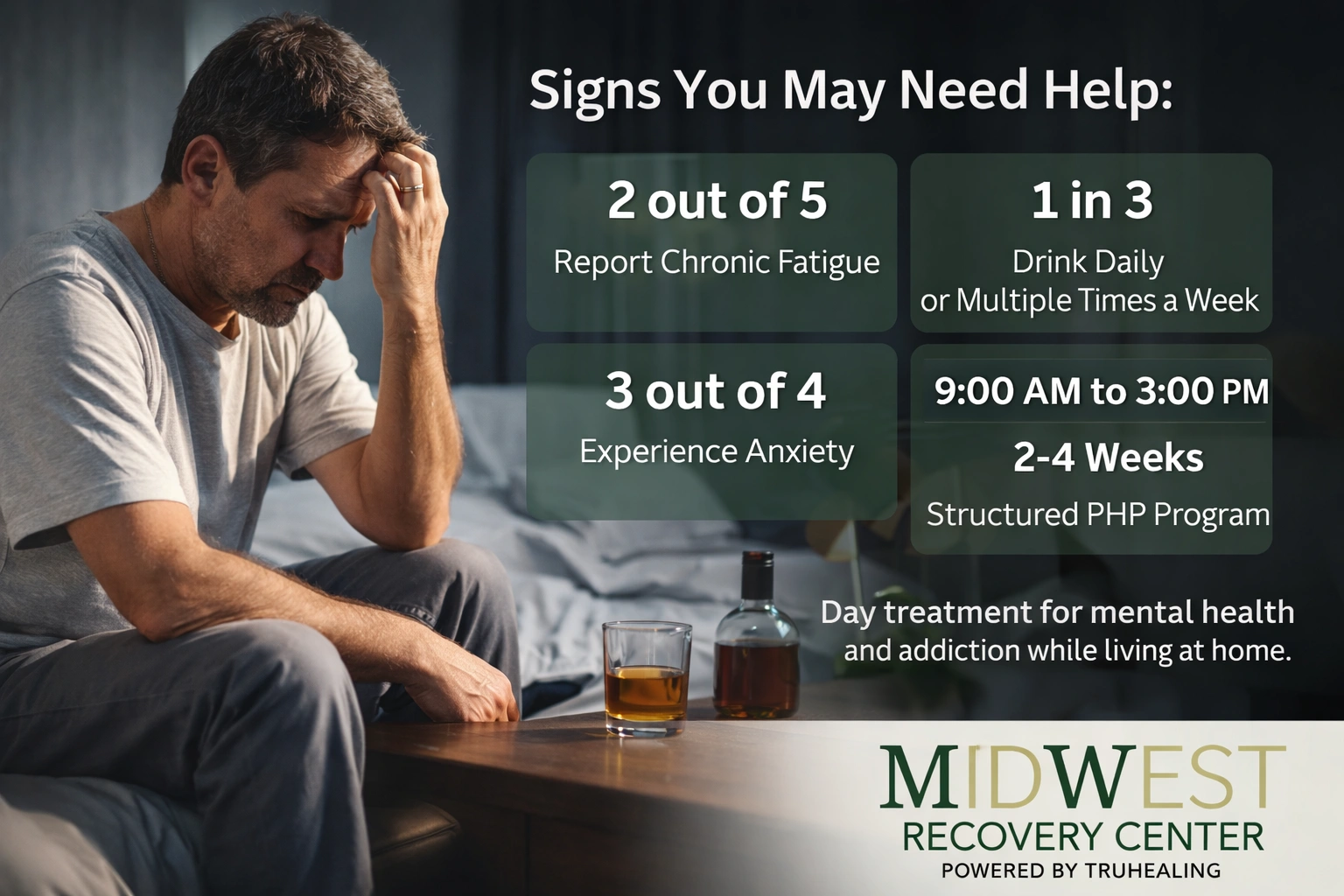
Most PHP programs run 5 days a week, typically from 9:00 AM to 3:00 PM. The average stay is around 2–4 weeks, but it varies depending on your needs and progress.
After PHP, many people step down into an intensive outpatient program (IOP) or traditional weekly therapy. Others return to their therapist with new tools and a stronger foundation.
The goal isn’t perfection. It’s momentum—forward, steady, human momentum.
You Start to Feel Something Different
Many clients describe an early shift not as joy, but as relief.
Relief from hiding. From pretending. From carrying everything alone.
Some say things like:
“I finally feel like I’m allowed to not be okay.”
“This is the first place I’ve told the truth and didn’t get judged.”
“I didn’t know I could feel this… calm.”
And while every day isn’t easy, the momentum builds. Not just in mood—but in confidence, clarity, and care.
For individuals in Youngstown, Ohio, these programs aren’t far away. And more importantly, they’re made for people who’ve waited too long to ask for help.
Frequently Asked Questions
Is PHP inpatient or outpatient?
It’s outpatient—but intensive. You don’t stay overnight. You attend structured treatment during the day and return home at night.
Is PHP only for addiction?
No. PHP supports people dealing with anxiety, depression, trauma, emotional dysregulation, or any combination of mental health and substance use.
What if I’m nervous about group therapy?
That’s completely normal. You’ll never be forced to speak before you’re ready. And most people find it becomes one of the most helpful parts of the program.
Can I work during PHP?
Some clients continue part-time work. Others take a temporary leave. Your team can help you figure out what’s realistic—and sustainable—for your recovery.
Will I still see my own therapist or doctor?
Sometimes, yes. But often, you’ll work with an on-site care team during PHP, then return to your previous providers after discharge. Coordination is key.
What happens after PHP?
You and your team will build a plan. That might include stepping down to IOP, attending support groups, or continuing individual therapy.
If You’re Still Wondering—That’s Okay
Starting something new is hard. Especially when it means facing yourself. But there’s no shame in needing support. In fact, it’s one of the most courageous decisions you can make.
If you’ve been asking quietly, “Could I really do this?”—then you’re already closer than you think.
Call (888) 657-0858 to learn more about our Partial Hospitalization Program in Toledo, Ohio.