
There’s a moment during detox that most people don’t talk about. Not the shaking. Not the sleepless nights. Not even the sweats. It’s quieter than that. More disorienting.
It’s the part where your body’s stabilized… but your soul feels blank. Not in crisis. Just empty.
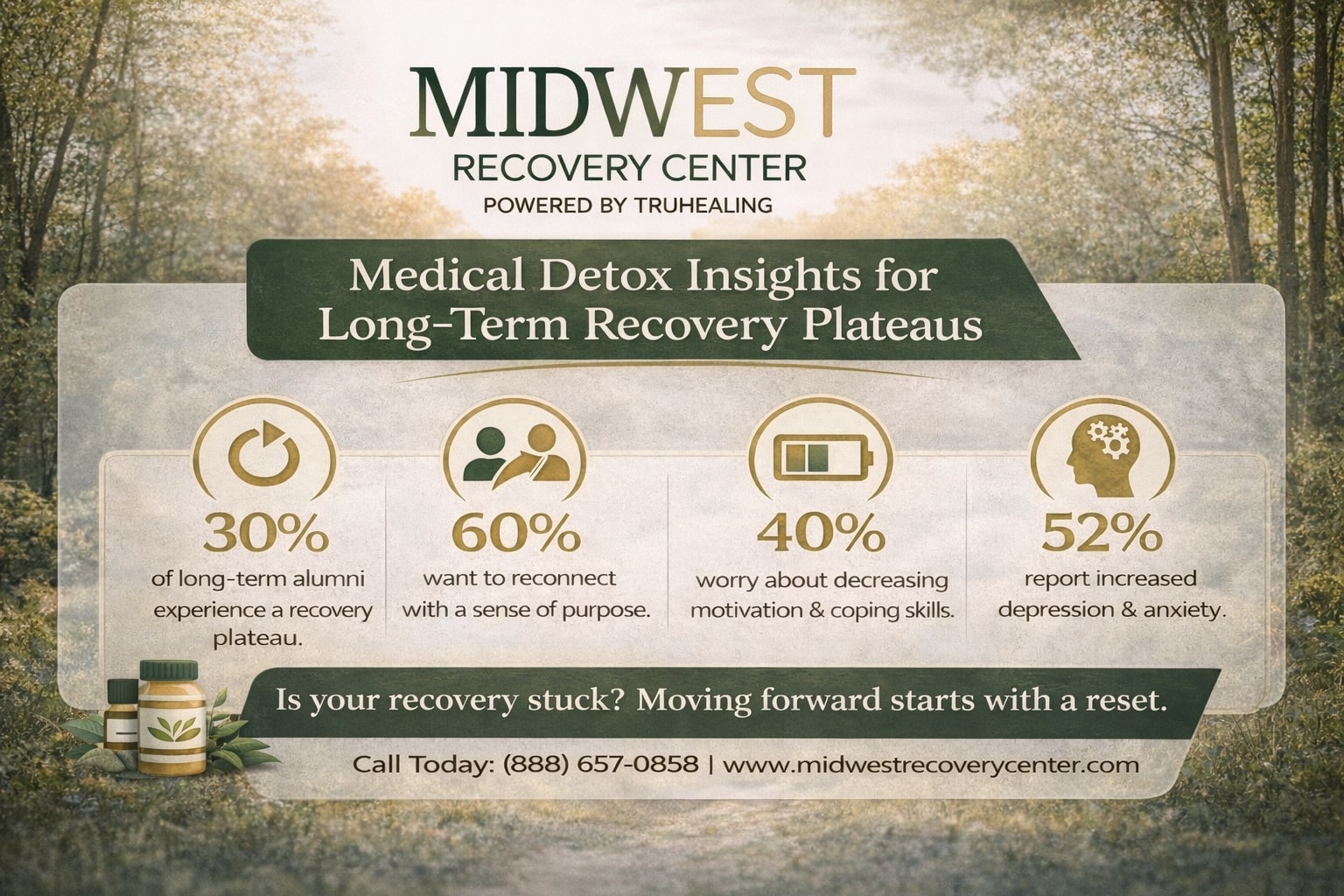
That’s the plateau. And it doesn’t just happen in detox—it sneaks up in long-term recovery too.
For those of us who’ve been sober a year, two, five—it’s easy to wonder: Why do I feel so off? You’re doing the right things. You’re showing up. You’re not using. But it all feels… flat.
Here’s what our Medical Detox Program in Toledo reminded us: sometimes the biggest breakthroughs come when nothing seems to be happening. And sometimes, we need to intentionally restart even when everything looks fine on paper.
The Plateau Isn’t a Problem—It’s a Phase
Let’s be clear: emotional flatness doesn’t mean you’re failing.
In fact, if you’re noticing the numbness, the distance, the boredom—it means you’re awake enough to name it. And that’s huge.
Plateaus happen after big growth. After trauma healing. After chaos settles. They don’t mean you’re backsliding. They mean you’ve stabilized. But stabilization isn’t the end goal.
Sustained recovery is more than sobriety. It’s about connection, expansion, depth. And if you’re missing that right now, you’re not alone.
Detox Reminded Us: Boredom Is a Signal, Not a Sin
In early detox, every moment is intense. Pain, emotion, restlessness—it all hits hard. But eventually, there’s quiet.
And for many, that quiet is worse than the pain. Because it reveals the truth: we used to fill every silence with something—dopamine, drama, distraction. And now we’re just… here.
Long-term sobriety has its own version of that silence. Maybe you’ve got your job back. Your routine’s solid. But your soul feels stuck on mute.
What detox taught us is that silence is not failure. Boredom is not a red flag. It’s a check engine light. An invitation to listen. What’s underneath the flatness? Is it grief? Loneliness? Growth trying to happen?
Resetting Doesn’t Mean Starting Over
Here’s a myth: that detox is only for people who relapsed.
Not true. We’ve seen long-term alumni come back into detox—not because they were using again, but because they were emotionally spinning out. Sleepless. Burned out. Spiritually foggy.
And guess what? They left with clarity, not shame. Sometimes you need a space to reset—not because you’re broken, but because you’ve outgrown the life you built sober. That’s not relapse. That’s evolution.
Think of it like an emotional cleanse. A reset for your nervous system. A safe place to exhale and ask, What do I need next?
There’s No Medal for Pushing Through Alone
Somewhere along the line, we made long-term recovery a performance. We celebrate milestones, post medallions, and start to feel like we’re not allowed to struggle anymore.
But you are. You’re allowed to need help. Again. Differently.
The Medical Detox Program doesn’t just offer medical stabilization—it gives people permission to pause. To say, “I don’t feel right,” and not be interrogated or judged for it.
If you’re walking around spiritually jet-lagged and emotionally disconnected, don’t white-knuckle it because you’ve got a few years under your belt. That kind of pride keeps people stuck.
Your Recovery Is Not a Resume
Let go of the idea that you have to be the “good alumni.” That person who never faltered, who always shares at group, who checks all the boxes. It’s a myth. No one’s living it.
You don’t need to justify your fatigue. You don’t need to explain why you feel distant from your sponsor, your group, your Higher Power. You’re human. You’re evolving. And your sobriety is allowed to evolve with you.
The Next Chapter Might Not Look Like the Last
Maybe you’re not sure what to do next. That’s okay.
Sometimes, the answer isn’t to add more therapy, or switch sponsors, or force gratitude. Sometimes, it’s to re-center. To get quiet in a supported space and ask your body what it needs.
That’s what detox gave us—a full stop. Not a breakdown. A pause. A deliberate, structured way to come back to ourselves.
And if you’re near Perrysburg or Oregon, Ohio, and you’re feeling the drift? We’re here. Even if all you need is to sit still, breathe, and remember who you are.
FAQ: Medical Detox and Long-Term Recovery
Is medical detox only for people currently using drugs or alcohol?
No. While medical detox often supports physical withdrawal, it can also offer structured respite and emotional stabilization for people navigating burnout, emotional relapse, or mental health symptoms.
I haven’t relapsed—would I even qualify for detox?
Yes. We evaluate each person individually. If you’re dealing with severe anxiety, emotional dysregulation, or sleep disturbance that puts your sobriety at risk, our team can help you assess whether detox is a helpful next step.
How long is the detox program at Midwest Recovery Center?
It varies. Medical detox typically lasts from 3–7 days, depending on your needs. Some people stay longer for stabilization. Our team works with you to create a plan that supports both your body and your goals.
What’s different about your detox program in Toledo?
At Midwest Recovery, we don’t treat detox like a revolving door. We see it as a healing space—whether it’s your first time or your fourth. Our team combines medical support with emotional insight, so you can use this time to recover, reconnect, and reset with intention.
You’re Allowed to Begin Again—Without Starting Over
Stuck isn’t the end. It’s just a signal. And you don’t need to wait until things fall apart to seek clarity.
If you’re quietly wondering, Is this it?, we want you to know: there’s more. More connection. More growth. More ways to feel alive in recovery.
Call us at (888) 657-0858 or visit to learn more about how our Medical Detox Program in Toledo, Ohio, can support you—wherever you are in your story.