

At some point, it stops being only about alcohol.
The drinking is still there, yes. The promises to stop are still there too. But underneath it all, there’s often something quieter and harder to explain: exhaustion so deep it starts feeling physical.
Not “I need a vacation” tired.
More like, “I don’t know how much longer I can carry my own life like this.”
A lot of people who relapse after a few sober days aren’t weak or careless. Many are emotionally depleted long before they ever pick up another drink. They’ve spent months — sometimes years — trying to manage stress, shame, anxiety, loneliness, grief, family pressure, work responsibilities, and internal chaos all at once.
Eventually, their nervous system stops feeling like a safe place to live.
If you’ve been searching for live-in recovery support, you may not actually be looking to “escape reality.” You may simply be looking for one place where your body and mind can stop bracing for impact every second.
That’s a very human thing to want.
Relapse Often Happens in the Quietest Moments
People sometimes imagine relapse as dramatic.
But many relapses happen quietly.
A person sits in their car after work for twenty extra minutes because they can’t emotionally handle walking back into the house yet. Someone lies awake at 2 a.m. bargaining with themselves. Someone makes it through four sober days, then suddenly feels emotionally flattened by one stressful conversation.
And in that moment, alcohol doesn’t feel exciting anymore.
It feels like relief.
Temporary relief, yes. Harmful relief, often. But relief all the same.
One former client once described it this way:
“I wasn’t drinking because I wanted to party anymore. I was drinking because being inside my own head felt unbearable.”
That sentence lands hard for a lot of people because they recognize themselves in it immediately.
Especially people who keep relapsing shortly after trying to quit.
Home Doesn’t Always Feel Safe During Early Recovery
This can be difficult to admit out loud.
Sometimes the environment someone returns to every night makes healing almost impossible.
Not always because it’s abusive or dangerous. Sometimes it’s simply emotionally overwhelming.
The same routines.
The same stressors.
The same loneliness.
The same hiding places.
The same habits tied to drinking.
When someone tries to get sober while still drowning in emotional pressure, cravings often become louder. The brain starts associating alcohol with escape, comfort, quiet, numbness, or survival.
That’s one reason some people begin considering round-the-clock support after repeated relapse cycles. Not because they’ve “given up,” but because they’ve realized they need breathing room.
At Midwest Recovery Center, many clients describe their first days in care in surprisingly similar ways:
- “I finally slept.”
- “It was the first time I stopped pretending I was okay.”
- “My body finally relaxed.”
- “I didn’t realize how tense I’d been for years.”
Sometimes healing starts with safety before it starts with motivation.
The People Who Look “Fine” Are Often the Most Burned Out
One painful truth about emotional exhaustion is that it often hides behind functioning.
A lot of people seeking treatment still have jobs. Relationships. Responsibilities. They pay bills. Answer emails. Smile in public. Maybe they even take care of other people while quietly falling apart themselves.
Outward functionality can make people minimize their own suffering.
They think:
- “It’s not bad enough yet.”
- “Other people have it worse.”
- “I should be able to handle this.”
- “I’m still getting things done.”
But surviving isn’t the same thing as living well.
And constantly forcing yourself through emotional pain eventually catches up to the body.
Many people struggling with relapse aren’t lacking discipline. They’re emotionally overextended in ways nobody around them fully sees.
Why Distance Can Sometimes Change Everything
There’s something powerful about stepping outside the cycle long enough to hear your own thoughts again.
Not forever.
Not to abandon your life.
Just long enough to stop reacting to crisis after crisis.
In supportive residential environments, many people experience something unfamiliar at first:
Silence.
Not awkward silence. Nervous-system silence.
Meals become regular. Sleep slowly returns. Conversations stop revolving around hiding, apologizing, or managing damage. For some people, it’s the first time in years they aren’t waking up already overwhelmed.
And that shift matters more than people realize.
A dysregulated nervous system struggles to heal while constantly under pressure. Emotional exhaustion affects sleep, concentration, mood, cravings, decision-making, and physical health. Recovery becomes much harder when someone is trying to stabilize emotionally while still surrounded by the exact conditions keeping them depleted.
Temporary separation from chaos can create enough stability for healing to finally begin.
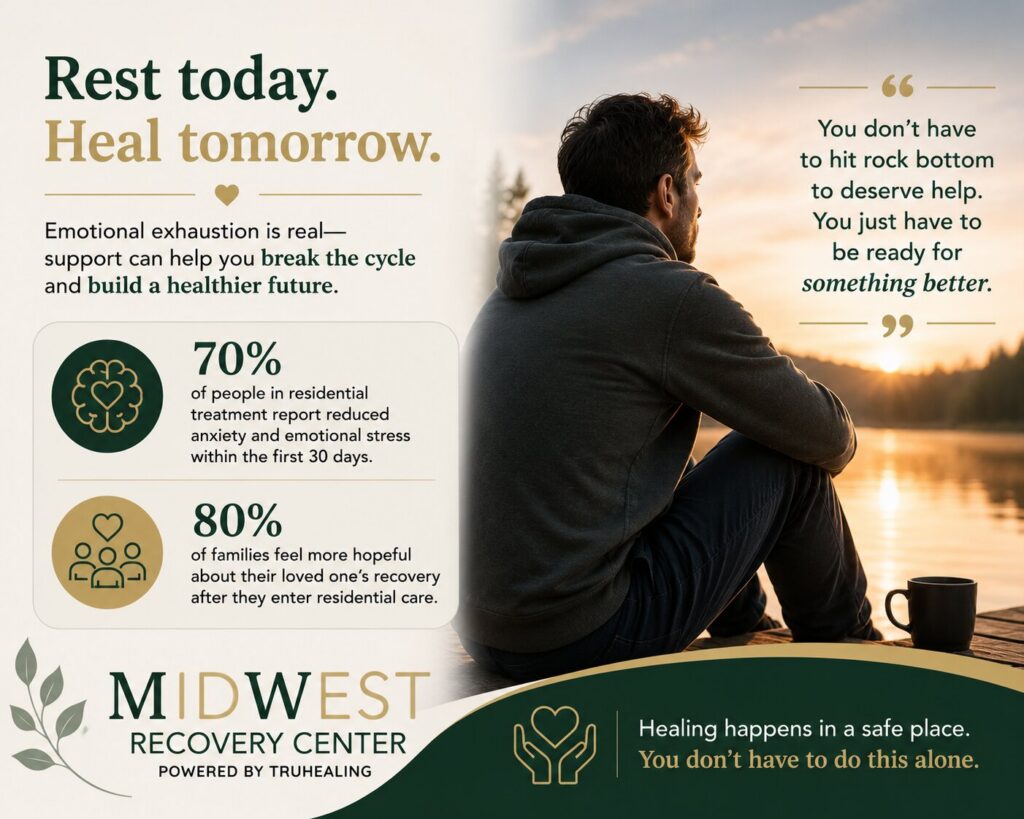
You Don’t Need to Earn Rest Through Collapse
A lot of emotionally exhausted people wait until things become catastrophic before asking for help.
They keep telling themselves:
- “I can push through.”
- “I just need more willpower.”
- “I’ll get help if it gets worse.”
But burnout has a way of slowly shrinking someone’s life before it fully breaks them.
Joy disappears first. Then energy. Then hope. Then concentration. Then connection.
Eventually, even small tasks feel emotionally expensive.
And still, many people convince themselves they haven’t “earned” support yet because they’re technically still functioning.
This matters deeply for people searching for alcohol relapse help while quietly drowning emotionally. Repeated relapse is often less about weakness and more about the fact that the person underneath the drinking is exhausted beyond words.
You should not have to completely collapse before someone tells you it’s okay to rest.
Early Recovery Is Often More Emotional Than People Expect
Many people enter treatment expecting physical withdrawal to be the hardest part.
Sometimes the emotional side surprises them more.
Once alcohol is removed, emotions that were muted for years can suddenly become louder:
- Grief
- Anxiety
- Shame
- Anger
- Loneliness
- Fear
- Emotional numbness
- Exhaustion
Some people cry constantly at first. Others feel strangely disconnected. Some sleep for days because their bodies are finally no longer running on adrenaline and survival mode.
None of this means treatment isn’t working.
In many cases, it means the nervous system is finally slowing down enough to feel what it has been carrying.
That process can feel vulnerable. But it can also become the beginning of something gentler.
One Client Said Something We Never Forgot
A former client once explained their relapse pattern like this:
“Every time I went home after getting sober for a few days, it felt like walking back into the exact life that made me want to escape in the first place.”
That sentence captures something many emotionally exhausted people struggle to explain.
Sometimes relapse isn’t only about alcohol. Sometimes it’s about returning to an environment where someone still feels emotionally trapped, unseen, overstimulated, or deeply alone.
That doesn’t mean home or family are “bad.” It means recovery may require more support than someone can realistically create for themselves in isolation.
And there is no shame in that.
Small Changes Often Matter First
Recovery doesn’t usually begin with dramatic breakthroughs.
It often begins quietly:
- Sleeping through the night
- Eating regularly
- Laughing naturally again
- Having one honest conversation
- Feeling safe enough to exhale
- Realizing you don’t have to perform strength constantly
These moments can feel tiny to outsiders.
To someone emotionally exhausted, they can feel life-changing.
At Midwest Recovery Center, many people arrive believing they are “too far gone” emotionally to feel better. Then slowly, often gently, their bodies begin responding to consistency, support, structure, and rest.
Not overnight.
Not perfectly.
But gradually.
That gradual return to stability matters.
You Are Allowed to Need More Support Than You Thought
There’s a quiet grief some people experience when they realize they cannot heal alone anymore.
Especially people who are used to taking care of everyone else.
Admitting you need support can feel vulnerable. It can feel like losing control. Some people even worry stepping away for treatment means they’re failing their families, jobs, or responsibilities.
But constantly relapsing while emotionally drowning carries consequences too.
You deserve support before your exhaustion turns into complete emotional collapse.
And needing distance from daily stress for a while does not make you weak. It makes you human.
For people exploring care in locations or looking into treatment options near Toledo, Ohio, it can help to remember this:
Choosing healing is not abandoning your life.
Sometimes it’s how you begin returning to it.
FAQ: Emotional Exhaustion, Relapse, and Residential Care
Why do I keep relapsing after a few sober days?
Many people relapse because the emotional stress underneath the drinking hasn’t been addressed yet. Anxiety, burnout, loneliness, trauma, or overwhelming environments can make early sobriety feel emotionally exhausting.
Does needing residential treatment mean my addiction is severe?
Not necessarily. Some people choose live-in care because they need emotional stability, distance from triggers, or consistent support—not because their situation looks extreme from the outside.
Is emotional exhaustion common in recovery?
Very common. Many people entering treatment feel physically and emotionally drained after long periods of stress, relapse cycles, or trying to manage everything alone.
What if I feel guilty about leaving home for treatment?
Guilt is common, especially for people with families or work responsibilities. But seeking support can help prevent continued emotional and physical burnout that affects every area of life.
Can residential treatment help with mental health too?
Many treatment programs help people address both substance use and emotional struggles like anxiety, depression, trauma, or chronic stress patterns.
What if I’ve already relapsed multiple times?
Repeated relapse does not mean recovery is impossible. Many people need different levels of support, structure, or environmental change before lasting healing begins.
Will treatment feel isolating?
Many people actually report feeling less alone in treatment because they are surrounded by people who understand emotional exhaustion, relapse, and recovery struggles firsthand.
Do I need to be completely sure before reaching out?
No. A lot of people contact treatment centers while still uncertain, overwhelmed, or scared. You do not need perfect clarity before asking questions or exploring support.
You Don’t Have to Keep Carrying This Alone
Emotional exhaustion has a way of convincing people they just need to try harder.
But sometimes healing starts when someone finally stops forcing themselves to survive unsupported.
If you’re tired of relapsing, tired of pretending you’re okay, or tired of feeling emotionally trapped inside the same painful cycle, you are not weak for needing help.
And you are not failing because home no longer feels like enough support right now.
If you’re considering treatment options in Ohio, Midwest Recovery Center offers compassionate, structured care for people struggling with relapse, burnout, and emotional exhaustion.
Call (888) 657-0858 or visit our residential treatment program services in Toledo, Ohio to learn more about our residential treatment program services in Toledo, Ohio.