

The Biggest Mistake People Make After Leaving Treatment Is Thinking They Have to Figure It Out Alone

The Biggest Mistake People Make After Leaving Treatment Is Thinking They Have to Figure It Out Alone

Most people who leave treatment midway do not leave because they suddenly stop caring about recovery.

They leave because life gets loud again.

Work pressure builds. Shame creeps in after a relapse. Mental health symptoms return. Schedules become overwhelming. Emotions get heavier than expected. Sometimes people simply get tired of trying to hold recovery together while still managing everything else in their lives.

And then something subtle happens.

One missed session becomes two. A few unanswered calls turn into silence. Days pass. Then weeks. And eventually, coming back starts feeling emotionally harder than staying away.

If you’ve been searching for structured recovery support after stepping away from treatment, there’s something important you deserve to hear clearly:

You are not the only person this has happened to.

At Midwest Recovery Center, we’ve worked with many people who quietly disappeared from care before eventually returning. Some came back after relapse. Others came back because they realized they were emotionally exhausted again. Some returned because they were technically functioning but internally unraveling.

Almost all of them carried shame when they walked back through the door.

Most later admitted something surprising:
Coming back felt less humiliating than continuing to struggle alone.

A Lot of People Leave Treatment Right Before They Actually Need It Most

This part is more common than people realize.

Early recovery can feel emotionally intense. Once substances are removed or reduced, emotions often get louder:

  • Anxiety
  • Irritability
  • Loneliness
  • Restlessness
  • Shame
  • Exhaustion
  • Emotional numbness

Some people leave treatment because they think:
“This should feel easier by now.”

Others convince themselves they’re doing “good enough” and no longer need support. High-functioning people especially struggle here. If they’re still working, parenting, paying bills, or maintaining routines, they often minimize what’s happening internally.

But functioning and emotionally healthy are not the same thing.

One former client once explained it this way:

“I wasn’t okay. I was just really good at staying busy.”

That distinction matters.

The Slide Away From Recovery Usually Happens Quietly

Very few people consciously decide:
“I want to lose my progress.”

Usually, the drift happens gradually.

Meetings stop feeling urgent. Coping tools get used less often. Work stress increases. Sleep gets worse. Isolation grows. People stop talking honestly about how overwhelmed they feel.

Then eventually, the emotional pressure becomes difficult to carry alone again.

One client described it perfectly:

“Nothing dramatic happened at first. My world just started getting smaller again.”

That’s often how relapse or emotional collapse begins — not with catastrophe, but with quiet disconnection.

People stop:

  • Reaching out
  • Talking honestly
  • Prioritizing recovery routines
  • Noticing their emotional exhaustion
  • Asking for help before things become unmanageable

And because the process happens slowly, many people don’t realize how much they’re struggling until they already feel overwhelmed again.

If You’re Constantly “Managing,” Pay Attention to That

This is one of the clearest signs someone may need support again.

A lot of people returning to treatment say some version of:
“I was technically functioning, but everything felt heavy.”

That heaviness matters.

Maybe you’re:

  • Mentally exhausted all the time
  • Constantly irritable
  • Thinking about substances more often
  • Bargaining with yourself again
  • Hiding things
  • Isolating
  • Struggling to regulate emotions
  • Losing structure and routines
  • Feeling emotionally numb
  • Using work or busyness to avoid yourself

Those signs are easy to dismiss because they don’t always look dramatic externally.

But emotional deterioration often starts internally long before visible crisis happens.

Especially for people balancing rehab while working, maintaining outward stability can actually delay seeking help because there’s always another responsibility distracting them from how bad things feel underneath it all.

Shame Keeps More People Stuck Than Relapse Does

This part deserves honesty.

A lot of treatment dropouts don’t stay away because they stopped wanting recovery.

They stay away because they’re embarrassed.

They think:

  • “Everyone’s going to judge me.”
  • “I already messed this up once.”
  • “I should’ve handled this better.”
  • “I don’t want to explain where I’ve been.”
  • “I need to get myself together before I come back.”

That last one keeps people isolated for months sometimes.

But waiting to become emotionally stable before reconnecting with support is a little like waiting to become physically healthy before seeing a doctor.

Support exists because people are struggling — not because they’ve already solved everything alone.

One therapist once explained it this way:

“People often disappear because they think treatment expects perfection. Real recovery usually expects honesty instead.”

That difference matters deeply.

Work Stress Quietly Pulls Many People Away From Recovery

A surprising number of people leave treatment because work becomes emotionally consuming again.

At first, it even sounds responsible:

  • “I can’t miss shifts.”
  • “My job needs me.”
  • “I’ll come back once things calm down.”
  • “I just need to focus on work for a while.”

But eventually, many people realize they’re functioning professionally while emotionally deteriorating privately.

Especially high-functioning people.

Work can become a socially acceptable form of avoidance. Staying productive creates the illusion of control even while someone’s nervous system is quietly overwhelmed underneath it all.

That’s why flexible recovery support matters.

Many people exploring treatment are not trying to abandon their responsibilities. They’re trying to survive emotionally while still managing them.

And honestly? That’s a difficult balance to carry alone.

You Don’t Need Another Crisis Before You “Qualify” for Help Again

This is one of the biggest myths people believe after leaving treatment.

They think:
“If things get really bad again, then I’ll come back.”

But support does not need to wait for catastrophe.

Sometimes the healthiest thing someone can do is recognize the early warning signs before relapse deepens or emotional collapse fully takes over.

Those signs might include:

  • Constant exhaustion
  • Emotional numbness
  • Growing cravings
  • Loss of structure
  • Increased isolation
  • Secretive behavior
  • Anxiety becoming harder to manage
  • Feeling emotionally disconnected from yourself
  • Thinking about treatment often

One former client once said:

“I kept waiting for a bigger disaster to prove I needed help again. Meanwhile, I was already drowning emotionally.”

That realization comes late for many people.

You do not need to completely implode before reconnecting with support becomes valid.
Returning to Intensive Outpatient Support

Returning to Treatment Is Not Starting Over

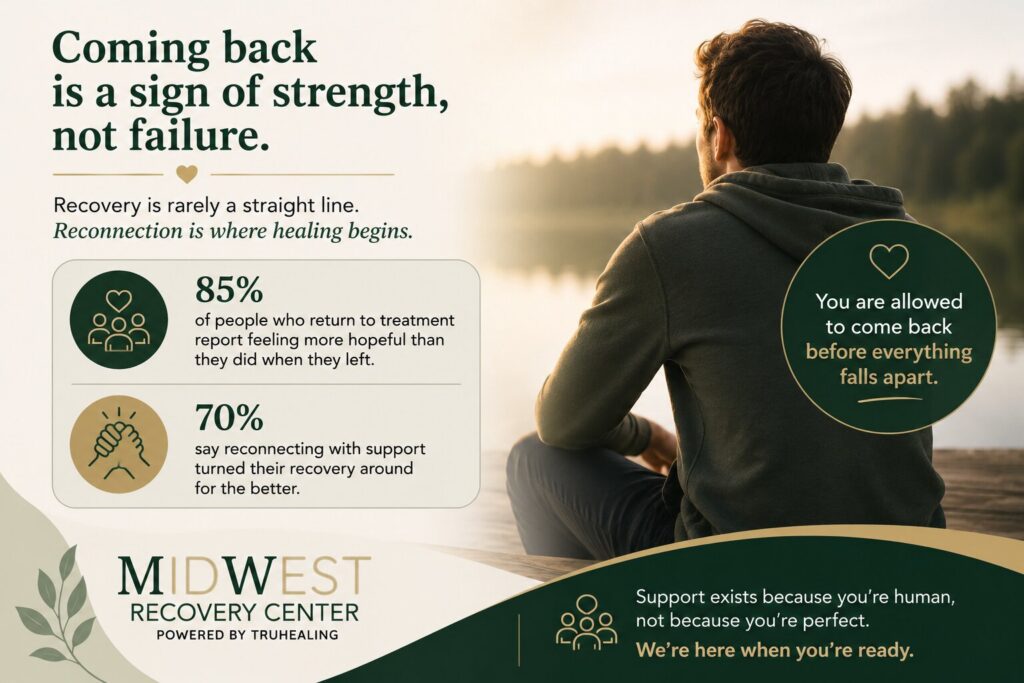
This may be the most important thing in this entire conversation.

A lot of people believe leaving treatment or relapsing erased all their progress.

It didn’t.

You still carry:

  • Recovery knowledge
  • Emotional awareness
  • Insight into your patterns
  • Understanding of what helps you
  • Experience with honesty
  • Memory of what stability felt like

Someone returning to treatment after struggling is not emotionally identical to someone entering for the first time.

You are not back at zero.

In fact, many returning clients become more emotionally open during their second treatment experience because denial is thinner now. The performance of “I’m fine” starts cracking. People become more honest about burnout, stress, shame, loneliness, or emotional overwhelm.

And that honesty often creates stronger recovery momentum than perfection ever did.

Sometimes the Biggest Sign Is That You’re Tired of Pretending

A lot of people know they need support again long before they say it out loud.

They feel it in:

  • The anxiety
  • The emotional exhaustion
  • The isolation
  • The constant mental negotiations
  • The pressure of pretending everything is okay
  • The fear of becoming honest again

But shame convinces them to wait longer.

Long enough for life to get smaller again. Long enough for routines to disappear. Long enough for emotional numbness to start feeling normal.

You do not need to suffer longer before asking for help again.

And you do not need to become completely hopeless before support becomes appropriate.

Recovery Is Usually About Reconnection, Not Perfection

One of the most damaging beliefs people carry is that recovery should look perfectly linear.

Real life rarely works that way.

People relapse.
People isolate.
People disappear emotionally.
People stop using coping skills for a while.
People drift away from support.
People come back.

That does not make recovery fake.

It makes recovery human.

The goal is not flawless behavior forever. The goal is learning how to reconnect before isolation fully takes over.

For people exploring treatment options in locations or looking into support near Toledo, Ohio, this matters deeply:

You are allowed to come back before everything completely falls apart again.

Signs It May Be Time to Reconnect With Treatment

Sometimes clarity helps more than inspiration.

It may be time to reconnect with support if:

  • You feel emotionally exhausted constantly
  • Cravings are becoming harder to manage
  • You’re hiding substance use or thoughts again
  • Isolation is increasing
  • You’ve stopped using recovery tools entirely
  • Work stress feels emotionally unmanageable
  • You miss feeling emotionally stable
  • You think about treatment often
  • You’re spending more energy managing appearances than actually feeling okay
  • Your world feels smaller than it used to

None of those signs make you weak.

They make you human.

FAQ: Returning to Intensive Outpatient Support

Is it normal to leave treatment and later come back?

Yes. Many people step away from treatment temporarily and later reconnect with support. Recovery is rarely perfectly linear.

How do I know if I need treatment again?

Increasing isolation, emotional exhaustion, cravings, relapse, anxiety, or difficulty coping with stress may all signal a need for additional support.

What if I’m embarrassed about ghosting treatment?

That feeling is extremely common. Many people delay returning because they fear awkwardness or judgment after disappearing.

Will treatment staff judge me for coming back?

Most clinicians understand that people sometimes struggle, relapse, or disengage temporarily. Staff are usually more focused on helping than judging.

Can I return even if I relapsed?

Yes. Many people reconnect with treatment after relapse or emotional setbacks.

What if I’m still working full-time?

Many outpatient programs are designed to support people balancing work, family, or daily responsibilities while receiving care.

Does returning mean treatment failed before?

No. Recovery often involves periods of re-engagement, especially during stressful or emotionally overwhelming seasons of life.

Am I starting over emotionally if I return?

Not at all. You still carry insight, recovery experience, emotional awareness, and knowledge from your previous treatment experience.

You Are Allowed to Come Back Before Everything Gets Worse

A lot of people wait too long because they think needing support again means they failed.

But sometimes returning to treatment is not evidence of weakness.

Sometimes it’s evidence that a part of you still believes your life deserves care before everything completely unravels again.

And honestly? That part deserves to be listened to.

If you’re considering reconnecting with support, Midwest Recovery Center offers compassionate care designed to help people rebuild stability while balancing work, responsibilities, and recovery.

Call (888) 657-0858 or visit our intensive outpatient program services in Toledo, Ohio to learn more about our intensive outpatient program services in Toledo, Ohio.

*The stories shared in this blog are meant to illustrate personal experiences and offer hope. Unless otherwise stated, any first-person narratives are fictional or blended accounts of others’ personal experiences. Everyone’s journey is unique, and this post does not replace medical advice or guarantee outcomes. Please speak with a licensed provider for help.

Level Of Care

PHP (Partial Hospitalization Program)
Daytime treatment with structure, therapy, and support—return home each night.

IOP (Intensive Outpatient Program)
Flexible therapy a few days a week to balance life and recovery.

OP (Outpatient Program)
Ongoing therapy and support to maintain progress.

MAT (Medication-Assisted Treatment)
Evidence-based care using medication and counseling to reduce cravings.

Ready to Start?
Call (833) 657-0858: to learn which program fits your recovery goals.

Who are you seeking help for? *

We’re here to listen and help you find the right path forward. Please tell us who needs care so we can match you with the best program and support.

💬 Your responses are 100% confidential and never shared outside our admissions team.

Recovery Shouldn’t Have to Wait — Begin Treatment Today.

At Ohio Treatment Center in Toledo, Ohio, we make it simple to take that first step toward healing. Our streamlined admissions process can often lead to same-day placement in treatment for MAT, PHP, IOP and more..

Call today for a free, confidential consultation with our caring admissions team — we’ll walk you through every step with compassion and clarity.

Call (833) 657-0858
Why call us?

Check Your Insurance Coverage in Minutes

We’ll handle the insurance details — so you can focus on getting better.

At Ohio Treatment Center, we work with most major private insurance providers to make treatment affordable and accessible. Complete our quick, confidential form below, and we’ll let you know if your plan is in-network — without contacting your insurance company.

Commonly accepted providers include:
Blue Cross Blue Shield (BCBS) • Aetna • Cigna • UnitedHealthcare • Humana • Anthem • Tricare

What Happens Next

  • Fill out the short form below
  • Our team reviews your benefits
  • We’ll contact you with your coverage details

Getting help shouldn’t be stressful. Let’s find out what your insurance can cover today.

Level Of Care

Detox
Begin recovery safely with 24/7 medical support. Our detox program helps you manage withdrawal comfortably and prepares you for the next step.

Residential Treatment
Continue healing in a supportive, structured setting with daily therapy, wellness activities, and round-the-clock care.

Aftercare
Before you leave, we’ll help you create a plan for ongoing support and lasting recovery.

Ready to Start?
Call (833) 657-0858: to learn which program fits your recovery goals.

Who are you seeking help for? *

We’re here to listen and help you find the right path forward. Please tell us who needs care so we can match you with the best program and support.

💬 Your responses are 100% confidential and never shared outside our admissions team.

Recovery Shouldn’t Have to Wait — Begin Treatment Today.

At Midwest Detox Center in Maumee, Ohio, we make it simple to take that first step toward healing. Our streamlined admissions process can often lead to same-day placement in treatment for medically supervised detox and residential treatment programs.

Call today for a free, confidential consultation with our caring admissions team — we’ll walk you through every step with compassion and clarity.

Call (833) 657-0858
Why call us?

Check Your Insurance Coverage in Minutes

We’ll handle the insurance details — so you can focus on getting better.

At Midwest Detox, we work with most major private insurance providers to make treatment affordable and accessible. Complete our quick, confidential form below, and we’ll let you know if your plan is in-network — without contacting your insurance company.

Commonly accepted providers include:
Blue Cross Blue Shield (BCBS) • Aetna • Cigna • UnitedHealthcare • Humana • Anthem • Tricare

What Happens Next

  • Fill out the short form below
  • Our team reviews your benefits
  • We’ll contact you with your coverage details

Getting help shouldn’t be stressful. Let’s find out what your insurance can cover today.

Level Of Care

Medical Detox
24/7 medically supervised detox to help you safely withdraw from drugs or alcohol while managing symptoms and preventing complications.

Inpatient Treatment
A structured, residential setting that provides continuous medical care, counseling, and therapeutic support to build a foundation for long-term recovery.

Residential Program
Comfortable, home-like housing where you can focus fully on healing with daily therapy, peer support, and holistic recovery services.

Ready to Start?
Call (833) 657-0858: to learn which program fits your recovery goals.

Who are you seeking help for? *

We’re here to listen and help you find the right path forward. Please tell us who needs care so we can match you with the best program and support.

💬 Your responses are 100% confidential and never shared outside our admissions team.

Recovery Shouldn’t Have to Wait — Begin Detox Today

At Ohio Detox Center in Maumee, Ohio, we make it simple to take that first step toward healing. Our streamlined admissions process can often lead to same-day placement in detox or inpatient treatment for substance use and co-occurring mental health conditions.

Call today for a free, confidential consultation with our caring admissions team — we’ll walk you through every step with compassion and clarity.

Call (833) 657-0858
Why call us?

Check Your Insurance Coverage in Minutes

We’ll handle the insurance details — so you can focus on getting better.

We’ll take care of the details — so you can focus on getting better.
At Ohio Detox Center, we work with Ohio Medicaid and most major insurance providers to make treatment affordable and accessible.

Here’s how it works:

  1. Fill out the short form below
  2. Our team reviews your benefits
  3. We’ll contact you with your coverage details

Getting help shouldn’t be stressful. Let’s find out what your insurance can cover today.

Levels of Care

Detox
We understand that taking the first step can feel overwhelming. Our detox program offers a compassionate, medically supported environment where you can rest, heal, and begin recovery safely. You’ll never go through it alone — our team is with you every step of the way.

IOP (Intensive Outpatient Program)
A flexible treatment option that lets you maintain work, school, or family responsibilities while attending therapy several days a week. IOP focuses on relapse prevention, coping skills, and long-term recovery through group and individual sessions.

Residential
Residential care gives you the time and space to focus fully on healing. Surrounded by supportive staff and peers, you’ll work through underlying causes of addiction, rebuild healthy routines, and rediscover confidence in your recovery journey.

MAT (Medication-Assisted Treatment)
Combining FDA-approved medications with counseling and behavioral therapy, MAT helps reduce cravings and withdrawal symptoms related to opioid or alcohol use. Each treatment plan is closely monitored to ensure comfort, safety, and lasting recovery.

Ready to Start?
Call (833) 657-0858: to learn which program fits your recovery goals.

Who are you seeking help for? *

We’re here to listen and help you find the right path forward. Please tell us who needs care so we can match you with the best program and support.

Myself

A loved one or family member

💬 Your responses are 100% confidential and never shared outside our admissions team.

Check Your Insurance Coverage in Minutes

We’ll handle the insurance details — so you can focus on getting better.

At Midwest Centers at Youngstown, we work with most major private insurance providers to make treatment affordable and accessible. Complete our quick, confidential form below, and we’ll let you know if your plan is in-network — without contacting your insurance company.

Commonly accepted providers include:
Blue Cross Blue Shield (BCBS) • Aetna • Cigna • UnitedHealthcare • Humana • Anthem • Tricare

What Happens Next

  • Fill out the short form below
  • Our team reviews your benefits
  • We’ll contact you with your coverage details

Getting help shouldn’t be stressful. Let’s find out what your insurance can cover today.

Recovery Shouldn’t Have to Wait — Begin Treatment Today.

At Midwest Centers at Youngstown in Ohio, we make it simple to take that first step toward healing. Our streamlined admissions process can often lead to same-day placement in treatment for substance use or co-occurring mental health disorders.

Call today for a free, confidential consultation with our caring admissions team — we’ll walk you through every step with compassion and clarity.

Level Of Care

Partial Hospitalization Program (PHP)
Our PHP offers a highly structured, supportive environment where you can focus on recovery during the day and return home at night. It’s an ideal step between inpatient and outpatient care, providing daily therapy, accountability, and a strong recovery routine.

Intensive Outpatient Program (IOP)
Our IOP gives you the flexibility to continue work, school, or family life while receiving evidence-based treatment several days a week. You’ll participate in group and individual therapy focused on relapse prevention, coping skills, and long-term healing.

Outpatient Program (OP)
For those transitioning from a higher level of care or seeking ongoing support, our outpatient program offers continued therapy at a pace that fits your lifestyle. It’s a supportive bridge that helps you maintain recovery and stay connected to care.

Medication-Assisted Treatment (MAT)
MAT combines FDA-approved medications with therapy and counseling to reduce cravings and support long-term recovery from opioid or alcohol addiction. Our team monitors each plan closely to ensure safety, comfort, and effectiveness.

Ready to Start?
Call (833) 657-0858: to learn which program fits your recovery goals.

Who are you seeking help for? *

We’re here to listen and help you find the right path forward. Please tell us who needs care so we can match you with the best program and support.

Myself

A loved one or family member

💬 Your responses are 100% confidential and never shared outside our admissions team.

Recovery Shouldn’t Have to Wait — Begin Treatment Today.

At Midwest Recovery Center in Toledo, Ohio, we make it simple to take that first step toward healing. Our streamlined admissions process can often lead to same-day placement in treatment for substance use or co-occurring mental health disorders.

Call today for a free, confidential consultation with our caring admissions team — we’ll walk you through every step with compassion and clarity.

Check Your Insurance Coverage in Minutes

We’ll handle the insurance details — so you can focus on getting better.

At Midwest Recovery Center, we work with most major private insurance providers to make treatment affordable and accessible. Complete our quick, confidential form below, and we’ll let you know if your plan is in-network — without contacting your insurance company.

Commonly accepted providers include:
Blue Cross Blue Shield (BCBS) • Aetna • Cigna • UnitedHealthcare • Humana • Anthem • Tricare

What Happens Next

  • Fill out the short form below
  • Our team reviews your benefits
  • We’ll contact you with your coverage details

Getting help shouldn’t be stressful. Let’s find out what your insurance can cover today.