
A new diagnosis can feel like the floor shifting under your feet.
One moment, you were managing. The next, you’re holding words you didn’t ask for—names, explanations, possibilities that feel too big to absorb all at once. If medication was mentioned, that weight can double. Questions start looping. Will this change me? Will I lose myself? What if I do this wrong?
At Midwest Recovery Center, we meet people right here—newly diagnosed, overwhelmed, and trying to be brave while quietly terrified. This is a look inside a Residential Treatment Program designed specifically for that moment. Not to rush you. Not to label you. But to give you a safe place to understand what’s happening and decide what comes next.
When a Diagnosis Feels Louder Than Your Own Voice
A diagnosis has a way of hijacking your internal dialogue.
Suddenly, every emotion feels suspect. Every bad day feels permanent. You may start scanning yourself constantly—Is this the diagnosis? Is this me? That hyper-awareness is exhausting, and it often pushes people to withdraw or shut down.
Residential treatment is built to quiet that noise. Not by ignoring the diagnosis, but by putting it back into proportion. You’re not reduced to symptoms here. You’re treated as a whole person whose nervous system has been through a shock.
Think of it like turning down the volume so you can hear yourself again.
The First Priority Is Safety, Not Certainty
When you arrive in a residential setting after a new diagnosis, the goal is not to decide everything. It’s to stabilize.
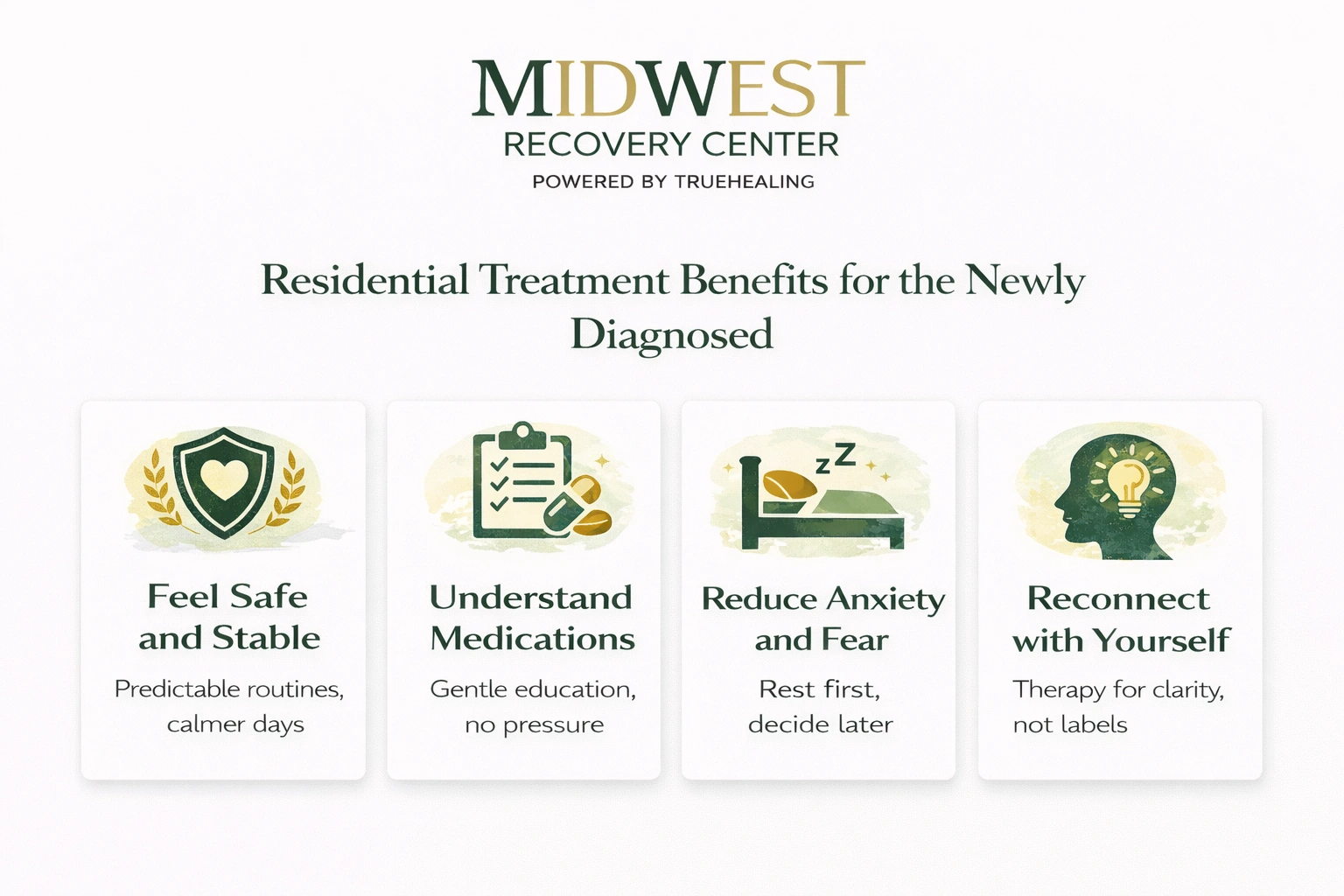
That means creating emotional safety first. Predictable routines. Calm environments. Support that doesn’t require you to explain yourself perfectly. You’re not asked to make long-term commitments in the beginning. You’re given permission to rest.
For many people, this is the first time since their diagnosis that they’re not being asked to “figure it out.” The relief in that alone can be profound.
Medication Is Discussed Slowly, Respectfully, and With Choice
If you’re newly diagnosed, fear around medication is common—and reasonable.
Many people worry about being numbed, changed, or losing something essential about themselves. In a Residential Treatment Program, those fears are taken seriously. Medication conversations happen with you, not to you.
Clinicians explain what medications do and don’t do, in plain language. You’re encouraged to ask hard questions. Hesitation isn’t treated as resistance—it’s treated as self-protection. Nothing moves forward without your informed consent.
You’re not expected to trust blindly. You’re invited to understand.
Why Structure Matters When Everything Feels Unsteady
After a diagnosis, even small decisions can feel overwhelming. What to eat. When to sleep. Who to talk to. Your brain is already working overtime.
Residential treatment reduces that cognitive load through structure. Days have a rhythm. Meals are predictable. Support is available without you having to ask at exactly the right moment.
This kind of structure doesn’t limit you—it frees you. When your nervous system isn’t constantly scanning for what comes next, you have space to process what you’re going through.
You Are More Than a Diagnosis Here
One of the quiet fears newly diagnosed people carry is, Is this all anyone will see now?
In residential care, diagnosis is context—not identity. Therapy focuses on your story, your stressors, your relationships, and the ways you’ve coped up to this point. The diagnosis helps guide care, but it doesn’t define who you are or who you’ll become.
A Residential Treatment Program is designed to expand your sense of self, not shrink it.
Why Being Close to Home Can Matter Early On
Starting treatment can feel less intimidating when it doesn’t require complete disconnection from everything familiar.
For some, proximity offers comfort. Familiar geography. Easier transitions. A sense that treatment is part of life—not a disappearance from it. That’s why some people begin exploring care while Looking for Residential Treatment Program in Youngstown, Ohio, where staying close can help the first step feel possible.
There’s no “right” distance. There’s only what helps you feel safe enough to begin.
Progress Looks Quiet at First—and That’s Normal
Early healing after a diagnosis doesn’t usually look dramatic.
It looks like sleeping through the night for the first time in weeks. Feeling less afraid of your own thoughts. Being able to ask questions without spiraling. Laughing once and noticing it didn’t feel forced.
Residential treatment honors these small shifts. They’re not minimized. They’re signs your system is settling and that deeper understanding is possible.
Healing doesn’t rush. It unfolds.
Learning to Trust Your Experience Again
A diagnosis can make you doubt your own perceptions. You may start wondering whether your feelings are “real” or just symptoms.
In residential care, you relearn how to trust yourself. Through therapy, reflection, and supported experiences, you begin to separate who you are from what you’re experiencing.
That distinction matters. It restores agency. It helps you make decisions from clarity instead of fear.
Preparing for What Comes After—Without Pressure
As residential treatment progresses, conversations naturally turn toward next steps. But there’s no rush to decide everything at once.
Plans are built collaboratively. Continued support, routines, and resources are discussed in the context of what you’ve learned about yourself. The goal isn’t independence overnight—it’s confidence and continuity.
You leave with a clearer sense of your options and a plan that feels like yours, not something handed to you.
Frequently Asked Questions From the Newly Diagnosed
Do I have to accept medication to be in a residential treatment program?
No. Medication is discussed, not mandated. Decisions are made collaboratively and respect your comfort level and consent.
Is residential treatment only for severe cases?
No. Many people enter residential care early—before symptoms escalate—because they want support and understanding during a vulnerable time.
What if I’m afraid treatment will change who I am?
That fear is common. Quality residential care aims to help you reconnect with yourself, not erase you.
How long does it take to feel better?
There’s no fixed timeline. Early improvement often comes from rest, safety, and reduced anxiety—not from rushing insight.
Will I be judged for being scared or unsure?
No. Fear and uncertainty are expected responses to a new diagnosis. They’re met with compassion, not judgment.
Is everything I share confidential?
Yes. Confidentiality is a core part of ethical care and especially important when you’re feeling exposed or uncertain.
What if I’m not sure residential treatment is right for me?
That’s okay. Treatment can help you explore that question safely. Clarity itself is a valid outcome.
A Final, Gentle Word
If you’ve been newly diagnosed and feel overwhelmed, you don’t need to have all the answers. You don’t need to be certain about medication, treatment length, or the future.
A Residential Treatment Program can offer something simpler and more important: a pause. A place where fear is allowed, questions are welcome, and your pace is respected.
You don’t have to do this alone, and you don’t have to rush.
Call (888) 657-0858 to learn more about our Residential Treatment Program services in Toledo, Ohio.