
Early recovery isn’t all bright mornings and relief. Sometimes, it’s a whole new kind of hard.
You did the thing. You stopped drinking. You stopped using. You even showed up to some meetings, maybe therapy. But now you’re here—sober, clear-eyed, and aching in ways you didn’t expect.
This is the part no one prepares you for: when the fog lifts, and what’s underneath is loneliness, shame, and a hundred feelings that hit all at once. And the question starts to creep in: Now what?
A partial hospitalization program might not have been on your radar before—but if recovery feels heavier than you imagined, it might be exactly what you need next.
Let’s answer the real questions—the ones people don’t always ask out loud.
What even is a partial hospitalization program?
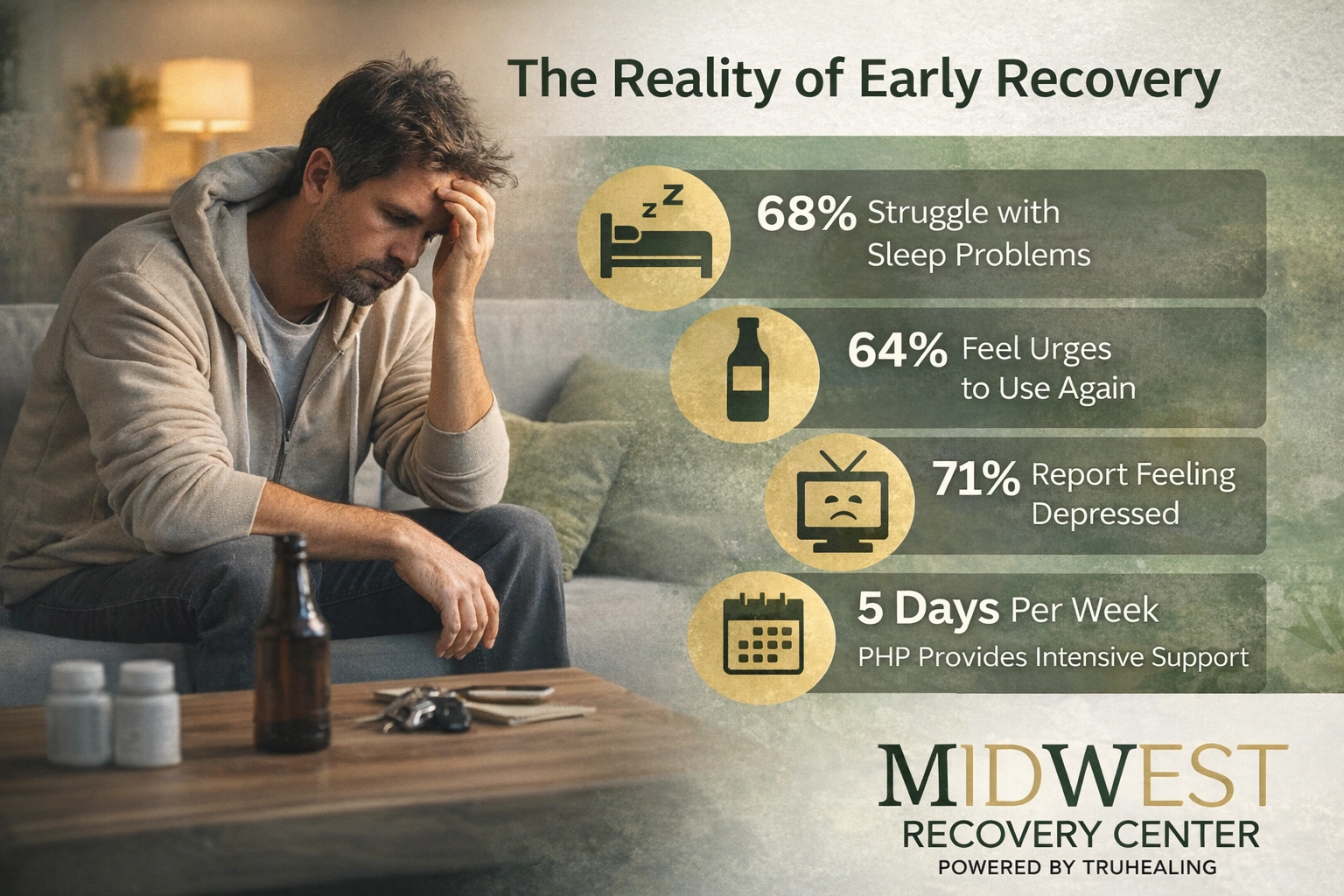
A partial hospitalization program (PHP) is structured mental health and recovery care that runs during the day—usually 5 to 6 hours a day, 5 days a week. It’s intensive support with a clinical team, group and individual therapy, and practical tools for recovery and emotional regulation.
You don’t live there. You go home at night. It’s a middle path between inpatient care and outpatient therapy—perfect for people who need more than a weekly session but don’t need 24/7 supervision.
Think of it as a daily anchor when life still feels wobbly.
Is this for people who are still using?
Not necessarily. Many people in PHP are sober—but not stable. You might not be picking up your substance of choice anymore, but emotionally? You still feel triggered, flat, anxious, or on edge all the time.
In early recovery, the body detoxes faster than the emotions. PHP helps you catch up emotionally, spiritually, mentally. It’s where healing goes deeper than just “not using.”
I already did inpatient. Shouldn’t I be fine now?
Not everyone walks out of inpatient with all the tools they need. And even if you did get great treatment—life outside the bubble is different.
It’s in the real world that grief shows up. Triggers. Guilt. Relationships that are still a mess. Loneliness that makes you want to crawl out of your skin.
PHP is where you can work on all that—with people who get it and professionals who won’t judge you for still struggling.
And if you’re trying to stabilize in a place like Toledo, Ohio, you’re not alone. There are local options for support that meet you exactly where you are, without sending you backward.
What happens in a typical PHP day?
You’ll usually start in the morning—around 9 AM—with a group check-in. These aren’t performance circles. You’ll say how you’re feeling. You’ll hear others do the same. And over time, this daily ritual becomes grounding.
Then there are structured groups throughout the day. They might focus on:
- Coping skills for stress and emotional triggers
- Identifying relapse warning signs early
- Understanding how trauma affects recovery
- Learning to manage relationships and boundaries
You’ll also meet one-on-one with a therapist regularly. That’s where you go deeper—into the stuff you don’t want to say out loud yet. You’ll build goals, safety plans, and figure out what’s really under the surface.
There’s usually a lunch break, and time to reflect or journal between sessions.
The day wraps up in the afternoon. You go home. And you carry the work into the evening—not perfectly, but intentionally.
What if I feel like I don’t belong there?
That feeling is more common than you think.
Many people show up to PHP feeling unsure. They think, “I’m not that bad” or “Other people need this more than I do.”
But here’s the truth: if early recovery feels like too much to handle alone—and it often does—then you do belong.
You belong if:
- You’re sober but still thinking about using
- You’re waking up every day in emotional pain
- You feel like you’re “barely hanging on”
- You’re tired of pretending things are fine when they’re not
Belonging isn’t about severity. It’s about honesty. And showing up for help? That’s as honest as it gets.
Will this feel like school or lectures?
Not at all.
PHP isn’t a classroom. It’s a conversation. You’ll learn, sure—but not by being talked at. You’ll participate. You’ll listen. You’ll connect. And you’ll find out that healing isn’t about information—it’s about transformation.
The therapists leading groups are trained, experienced, and know how to work with people in early recovery—people like you, who are raw, unsure, and trying their best.
Is this just for addiction? What about my depression, my anxiety?
Most PHPs (including ours) treat co-occurring disorders—which means they’re designed for people dealing with both substance use and mental health.
You don’t have to pick one. You don’t have to pretend you’re only struggling with addiction when it’s really also about grief, trauma, or a diagnosis you’re still trying to understand.
And for people dealing with this kind of layered pain in Maumee, Ohio, it can be hard to find care that looks at the full picture. PHP fills that gap.
What happens when PHP ends?
Most people step down into a lower level of care—like an intensive outpatient program (IOP) or regular therapy. Some join sober living. Some go back to work with new tools. Some reconnect with family they hadn’t spoken to in months.
PHP isn’t the end of the road. It’s the bridge between surviving and actually living.
Your care team helps you create a plan that fits your real life—one that honors your progress and supports your ongoing healing.
What if I’m already in a program, but it’s not working?
That happens.
Sometimes, the outpatient group you joined doesn’t go deep enough. Or the therapist isn’t trauma-informed. Or you’re in a space that just doesn’t feel safe.
PHP can offer a reset. A restart. A more immersive space to find your footing again.
There’s no shame in saying, “I need more.” In fact, that might be the most important sentence you speak in your recovery.
Will I feel better right away?
Maybe. Maybe not.
Some people feel relief in the first few days—just from being in a room where they don’t have to pretend. Others take longer. That’s okay.
This is real work. And it’s not always easy. But it’s worth it.
You’ll probably cry in group. You might laugh unexpectedly. You’ll hear yourself say something honest for the first time in years.
And slowly—sometimes quietly—you’ll start to feel like yourself again.
One more thing…
Early recovery can feel like walking through fog in shoes that don’t fit. It’s clunky. It’s uncertain. It’s lonely as hell.
If you’re sober but still suffering, please know this: you haven’t failed. You’re just in the part of the process no one talks enough about.
And you don’t have to go through it alone.
Call (888) 657-0858 to learn more about our Partial Hospitalization Program in Toledo, Ohio.