Ohio Medicaid covers the full continuum of addiction treatment, from medical detox through outpatient counseling and medication-assisted treatment, and understanding exactly what that means for your situation can be the difference between starting recovery this week or waiting months in confusion. If you’re in Toledo, Youngstown, Maumee, Austintown, or anywhere in Northwest Ohio or Mahoning County, this is what Ohio Medicaid rehab actually pays for.
What ohio medicaid is (and who qualifies)
Ohio Medicaid is a joint federal-state health insurance program administered through seven managed care organizations: CareSource, Buckeye Health Plan, Molina Healthcare, Anthem, Aetna, AmeriHealth Caritas, and Humana. Rather than running a single government plan, Ohio contracts with these private managed care plans to deliver benefits, which means your specific experience with coverage depends in part on which of these plans you’re enrolled in.
Eligibility is primarily income-based. Adults with household income at or below 138% of the federal poverty level qualify, which works out to roughly $20,783 per year for a single adult as of 2025. Ohio also covers pregnant women, children, people with disabilities, and adults in certain care situations through separate eligibility categories. The fastest way to confirm whether you qualify is to check your household income against current thresholds at Benefits.ohio.gov before assuming you’re out of the running.
How ohio medicaid expansion changed rehab access
Before the Affordable Care Act’s Medicaid expansion, Ohio’s Medicaid program covered very few non-disabled working-age adults, regardless of income. Expansion changed that. According to a 2020 analysis by the Kaiser Family Foundation examining data from 34 expansion states, Medicaid expansion was associated with a 26% reduction in unmet need for substance use treatment among low-income adults. In practical terms, that means hundreds of thousands of Ohioans who previously had no way to pay for rehab gained access to a fully covered benefit.
For a reader in Toledo or Youngstown who previously couldn’t afford treatment, the before/after is concrete: pre-expansion, a medically necessary detox could generate thousands of dollars in debt or simply go untreated. Post-expansion, the same care is a covered benefit with no premium and minimal cost-sharing for qualifying members. If you haven’t checked eligibility recently, or if you checked years ago and didn’t qualify, check again now at Benefits.ohio.gov. Income thresholds and household circumstances change, and so does eligibility.
What ohio medicaid actually pays for in rehab
The Centers for Medicare and Medicaid Services (CMS) requires that Ohio Medicaid managed care plans cover substance use disorder treatment across the full continuum of care, meaning coverage doesn’t stop at one level and restart at another. The Mental Health Parity and Addiction Equity Act reinforces this by requiring that SUD treatment cannot face more restrictive benefit limits than physical health treatment. Here’s what each level of care looks like in practice.
Medical detox
Medically supervised detox is a covered benefit under Ohio Medicaid when a physician documents medical necessity, which is the standard threshold for any covered inpatient service. Detox takes place in a 24-hour monitored setting where clinical staff manage withdrawal symptoms, administer medications as needed, and stabilize the patient before the next level of care begins. Medicaid does not treat detox as an elective or optional service in these circumstances. When a clinician determines that unsupervised withdrawal poses a health risk, which is true for alcohol, benzodiazepines, and opioids in many cases, that documentation makes detox a billable, covered service.
Residential inpatient treatment
Residential treatment under Ohio Medicaid provides 24-hour structured programming, typically ranging from 28 to 90 days depending on clinical need and treatment plan. One important structural limit applies here: the IMD exclusion, which stands for Institutions for Mental Disease. Under federal Medicaid rules, facilities with more than 16 beds that primarily treat mental illness or substance use disorders face restrictions on federal reimbursement for adults between ages 21 and 64. In plain terms, this means some larger residential facilities cannot bill Medicaid for your stay, which limits the pool of residential options available to Medicaid members. Smaller licensed residential programs and those that have structured around this limit remain viable options.
Partial hospitalization programs (PHP)
Partial hospitalization sits between inpatient and outpatient on the treatment continuum. PHP typically involves 20 or more hours of structured clinical programming per week, without an overnight stay. It functions as both a step-down from residential treatment and a step-up from standard outpatient when someone needs more intensity without 24-hour placement. For readers in Lucas County or Mahoning County who need intensive support but can return home or to a sober living environment each night, PHP is often the level of care that makes sustained recovery possible without interrupting family or work obligations entirely.
Intensive outpatient programs (IOP) and standard outpatient
IOP requires a minimum of 9 hours of clinical programming per week, usually spread across three to five days. Standard outpatient is less intensive, typically one to three sessions per week, and works best for people with stable living situations who have already completed a higher level of care. Both levels are among the most commonly used covered benefits under Ohio Medicaid. At either level, covered services include individual counseling, group therapy, and family therapy. For many people in recovery, outpatient is where the long-term work of building a sustainable life happens, and Medicaid covers it.
Medication-assisted treatment (MAT)
Buprenorphine, methadone, and naltrexone are all covered under Ohio Medicaid as FDA-approved treatments for opioid use disorder. According to SAMHSA, MAT reduces opioid use, overdose deaths, criminal activity, and the transmission of infectious disease, and it is considered the standard of care for opioid use disorder by every major medical organization. Prior authorization requirements vary by managed care plan, so the specific step to take before your first MAT appointment is to call your plan’s member services line and ask whether your prescribing provider requires prior auth and what documentation they need. Knowing this before you arrive at intake saves days of delay.
Mental health services covered alongside SUD treatment
SAMHSA’s 2023 National Survey on Drug Use and Health found that approximately 21.5 million adults in the U.S. had both a substance use disorder and a mental illness in the past year. Co-occurring disorders are not a complication; they’re the norm. Ohio Medicaid covers psychiatric evaluation, medication management, individual therapy, group therapy, and crisis intervention for mental health conditions alongside SUD treatment. The Mental Health Parity and Addiction Equity Act means these services cannot be treated as secondary or subordinate to physical health coverage. When both a mental health and a substance use diagnosis are present, both are covered, and the plan cannot apply stricter limits to the behavioral health side than it does to medical care.
For readers navigating coverage in Youngstown or the surrounding Mahoning County area, understanding what Medicaid actually covers for addiction treatment in your specific region helps clarify which services are immediately accessible.
How federal parity law strengthens your coverage
The Mental Health Parity and Addiction Equity Act, enacted in 2008 and extended to Medicaid managed care plans through subsequent CMS rulemaking, prohibits health plans from placing more restrictive limits on mental health and SUD benefits than on comparable medical or surgical benefits. This is not a suggestion; it is a federal requirement. In 2024, CMS issued updated final rules strengthening parity enforcement, specifically targeting how plans apply prior authorization, treatment limitations, and network adequacy to behavioral health services.
What this means practically: if your Ohio Medicaid managed care plan approves a 30-day inpatient stay for a physical health condition without requiring extensive prior authorization, it cannot hold SUD residential treatment to a stricter standard. If a coverage decision is denied, parity law is the legal basis for your appeal. Request the denial in writing, identify which medical benefit is treated more favorably, and bring that comparison to the appeals process.
Which ohio medicaid plan you’re on matters
Ohio’s managed care structure means that two people with Ohio Medicaid can have meaningfully different experiences accessing the same level of care. A CareSource member in Lucas County and a Molina member in Mahoning County may face different prior authorization timelines, different in-network provider lists, and different formularies for MAT medications. The benefit categories are the same; the administrative experience is not.
Midwest Recovery Center accepts Ohio Medicaid through CareSource, Buckeye, Molina, Anthem, Aetna, AmeriHealth Caritas, and Humana, which covers the majority of Ohio’s managed care plans. That breadth of acceptance matters because most private-pay and commercial-only facilities don’t take Medicaid at all. For Toledo and Northwest Ohio residents exploring options through CareSource rehab coverage in Toledo or reviewing Aetna Medicaid benefits in the Toledo area, confirming that your specific managed care plan is accepted by the facility is the first practical step.
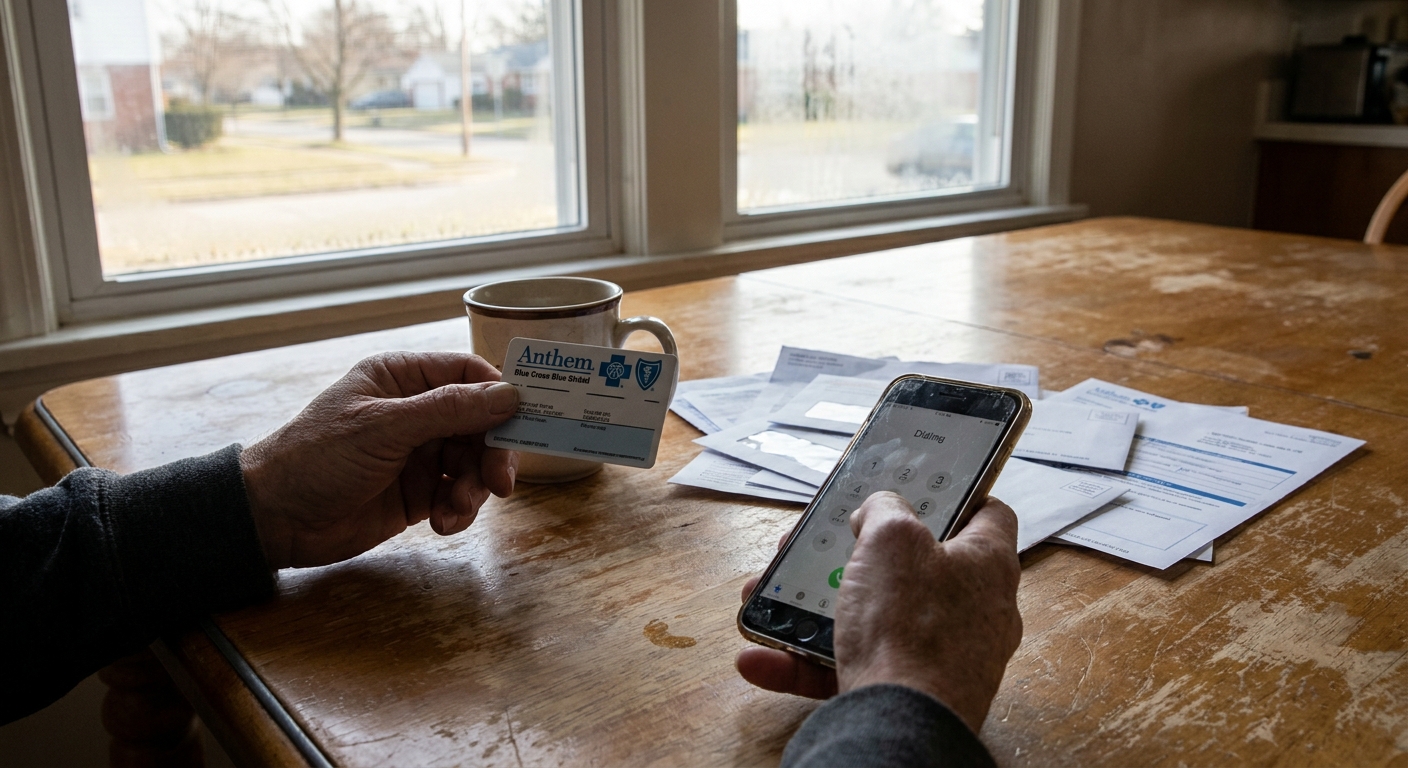
The simplest version of this: look at the back of your Medicaid card, find the member services number, and call before you show up anywhere.
How to actually use ohio medicaid to start rehab
Knowing you have coverage and knowing how to activate it are different things. Here is the process in sequence. First, confirm which managed care plan you’re enrolled in. Second, contact that plan’s member services line and ask three questions: is this provider in-network, is this level of care covered, and is prior authorization required. Write down the answers along with the name of the representative you spoke with and the date. Third, bring your Medicaid card, a photo ID, and any documentation of current medications or medical conditions to your intake assessment.
SAMHSA’s National Helpline at 1-800-662-4357 is a free, confidential resource available 24 hours a day that can help identify treatment options in your area and explain what to expect from the intake process. The Ohio Department of Mental Health and Addiction Services (OhioMHAS) maintains a state-level directory of licensed providers and can connect you with local resources in Lucas County and Mahoning County specifically.
Prior authorization: what it is and how to move through it faster
Prior authorization is a plan’s approval process that must be completed before treatment begins at certain levels of care. Most residential and PHP placements require it; standard outpatient and IOP often do not, though this varies by plan. The fastest path through prior auth is not to navigate it yourself. When you contact an admissions team at a licensed treatment facility, their job includes submitting the clinical documentation that supports your level-of-care placement directly to your managed care plan. A facility with experienced admissions staff can compress a prior auth process that might take days if done independently into something that resolves within 24 to 48 hours.
What to do if coverage is denied
A denial is not the end of the process. Ohio Medicaid members have the legal right to appeal any adverse coverage decision. The Ohio Department of Medicaid’s appeals process allows for a standard review and, for urgent medical situations, a 15-day expedited review. The single most useful action after receiving a denial: request it in writing, then ask the treatment program’s clinical team to initiate a peer-to-peer review, where their clinician speaks directly with the plan’s medical reviewer. This step alone reverses a significant number of initial denials, particularly for residential and PHP levels of care.
Common misconceptions about ohio medicaid rehab coverage
The first misconception is that Medicaid only pays for low-level or short-term care. That’s false. The full continuum from detox through residential, PHP, IOP, and outpatient is covered when clinical documentation supports medical necessity. Length of stay is determined by clinical need, not by a fixed Medicaid limit.
The second misconception is that you have to be in active crisis to qualify for treatment. That’s also false. Ohio Medicaid covers early intervention, assessment, and outpatient treatment for people who recognize a problem and want to address it before it escalates. Waiting for a crisis is not a coverage requirement.
The third misconception is that Medicaid rehab means lower-quality care. Ohio’s licensed addiction treatment providers must meet the same accreditation standards, clinical staffing requirements, and state licensing criteria regardless of which payers they accept. Accreditation through bodies like the Commission on Accreditation of Rehabilitation Facilities (CARF) or The Joint Commission applies to the facility, not to the funding source. For Toledo residents specifically, understanding what Medicaid drug rehab in Toledo actually covers dispels the idea that Medicaid acceptance signals anything about program quality.
What to do this week
Call the member services number on your Ohio Medicaid card today. Ask those three questions: is the provider in-network, is your level of care covered, and is prior authorization required. Write down the answers. That single call converts what you now understand about your coverage into an actual next step toward an appointment.
Frequently asked questions
Does ohio medicaid cover inpatient drug and alcohol rehab?
Yes. Ohio Medicaid covers inpatient residential treatment when a clinician documents medical necessity. Length of stay typically ranges from 28 to 90 days depending on the treatment plan. The IMD exclusion limits which facilities can bill Medicaid for residential stays, so confirming that a specific facility accepts your Medicaid managed care plan is an important first step.
How do I find out which ohio medicaid managed care plan i’m enrolled in?
Your managed care plan name is printed on your Medicaid card. If you don’t have your card, call the Ohio Medicaid Consumer Hotline at 800-324-8680 or log in to your account at Benefits.ohio.gov to confirm which plan you’re assigned to.
Does ohio medicaid cover medication-assisted treatment (MAT) for opioid use disorder?
Yes. Buprenorphine, methadone, and naltrexone are all covered under Ohio Medicaid. Prior authorization requirements vary by managed care plan, so call your plan’s member services line to confirm the authorization process before your first MAT appointment.
What happens if ohio medicaid denies my rehab claim?
You have the right to appeal. Request the denial in writing from your managed care plan, then ask the treatment facility’s clinical team to request a peer-to-peer review with the plan’s medical reviewer. For urgent situations, Ohio Medicaid offers a 15-day expedited appeals review.
Do I need a referral to start addiction treatment under ohio medicaid?
Not always. Many outpatient and IOP programs accept self-referrals from Medicaid members. Residential and PHP placements typically require prior authorization, but the admissions team at a licensed facility handles that process on your behalf. You don’t need to coordinate prior auth independently.
Can ohio medicaid cover both addiction treatment and mental health care at the same time?
Yes. Federal parity law requires Ohio Medicaid managed care plans to cover co-occurring mental health and substance use treatment without applying stricter limits to behavioral health benefits than to physical health benefits. If you have both diagnoses, both are covered, and coverage for one cannot be used as a reason to restrict the other.