According to SAMHSA’s 2023 National Survey on Drug Use and Health, fewer than 1 in 5 Ohioans who needed substance use treatment in the past year actually received it, and cost or insurance confusion was the most commonly cited barrier. If you’re enrolled in Ohio Medicaid through Molina Healthcare and living in Austintown, that barrier is smaller than you think. This guide walks through exactly what Molina covers for addiction treatment, how the authorization process works, and what to do today to get started.
What molina medicaid covers for addiction treatment in ohio
Molina Healthcare is one of Ohio’s contracted managed Medicaid plans, which means it operates under both state and federal rules about what benefits it must provide. Substance use disorder treatment is not optional coverage under Molina Ohio Medicaid. It is a mandated benefit, and the scope of that mandate is broader than most people realize.
The federal parity rule and what it forces molina to cover
A 2023 Milliman analysis of parity compliance across major Medicaid managed-care plans found that the Mental Health Parity and Addiction Equity Act (MHPAEA) legally prohibits insurers from applying stricter treatment limitations to behavioral health conditions than to comparable medical or surgical conditions. For Molina members in Ohio, what this means in practice is straightforward: Molina cannot cap your addiction treatment visits at 30 per year if it would cover 60 physical therapy visits for a comparable condition. The law equalizes the floor.
The practical takeaway is that Molina must cover medically necessary addiction treatment. Before your first call, verify your specific plan type, because MyCare Ohio (for dual Medicare-Medicaid members) and standard Ohio Medicaid through Molina have slightly different administrative structures, even though core SUD benefits apply to both.
Levels of care molina covers
Ohio’s Medicaid SUD benefit framework follows the ASAM (American Society of Addiction Medicine) continuum, and Molina covers all major levels within it. Standard outpatient services typically involve fewer than 9 hours of treatment per week. Intensive outpatient programs (IOP) run 9 to 19 hours per week and allow you to live at home while receiving structured care. Partial hospitalization programs (PHP) provide 20 or more hours of weekly treatment without overnight stays. Residential treatment involves 24-hour care in a non-hospital setting. Medically managed withdrawal, commonly called detox, covers supervised stabilization before the next level of care begins.
Level of care is not self-selected. A clinician conducts an ASAM-level assessment at intake, and placement follows that clinical determination. The action that matters here: request an ASAM-level assessment explicitly at intake so the recommendation reflects your actual clinical picture, not a default placement.
Medication-assisted treatment (MAT) under molina in austintown
A 2022 study published in the New England Journal of Medicine found that patients receiving buprenorphine or naltrexone for opioid use disorder had a 24% to 32% reduction in opioid-related mortality compared to those receiving no medication. NIDA has consistently documented that MAT combined with counseling produces the strongest long-term retention rates of any treatment modality. Molina Ohio Medicaid covers all three FDA-approved MAT medications: buprenorphine, naltrexone (including injectable Vivitrol), and methadone through licensed Opioid Treatment Programs (OTPs).
Austintown sits in Mahoning County, where the Ohio Department of Health reported an overdose death rate of 47.2 per 100,000 residents in 2022, one of the highest in the state. Access to MAT in this area is not a secondary concern. It is the primary clinical lever available.
For context on how Medicaid coverage for addiction treatment works across Ohio’s managed-care landscape, the full picture of what Ohio Medicaid rehab pays for is worth reviewing before you start comparing plans.
Prior authorization requirements for MAT
Some MAT medications under Molina require prior authorization before coverage activates. Extended-release naltrexone (Vivitrol) and higher-dose buprenorphine formulations are the most common triggers for a PA review. A 2024 report from the American Society of Addiction Medicine found that prior authorization delays were the leading cause of treatment abandonment in the first 72 hours after an initial evaluation.
The move that eliminates this delay is simple: ask the prescribing provider to submit the prior authorization request on the same day as the initial evaluation, not after a follow-up appointment. Same-day submission cuts the wait window by two to three days in most cases.
Methadone vs. buprenorphine coverage differences
Molina covers methadone for opioid use disorder only when dispensed through a licensed OTP, which requires daily in-person visits for dosing, at least in the early phases of treatment. According to 2023 SAMHSA OTP data, geographic access to licensed OTPs in rural and suburban Ohio counties remains a documented gap, with Mahoning County having limited OTP sites relative to demand.
Buprenorphine, by contrast, is covered as an office-based prescription that you fill at a pharmacy. If daily travel to an OTP is a logistical barrier, ask your provider specifically about office-based buprenorphine. It is not a clinically inferior option. For many patients, it is the more sustainable one.
Mental health and co-occurring disorder coverage
A 2022 SAMHSA report found that 9.2 million adults in the U.S. had both a substance use disorder and a co-occurring mental health condition in the past year. Among people seeking addiction treatment, the co-occurrence rate exceeds 50% in most clinical samples. Molina Ohio Medicaid covers integrated mental health treatment alongside SUD services, including psychiatric evaluation, individual and group therapy, and medication management for mental health diagnoses.
For Austintown residents, the practical advantage of integrated coverage under one Molina authorization is speed. Co-occurring care handled through a single plan of care moves faster than sequential referrals, where a SUD authorization comes first and mental health gets addressed weeks later.
If you’re also exploring how other Ohio Medicaid plans handle co-occurring conditions and rehab access, how Buckeye Medicaid handles rehab coverage in the Youngstown area follows a similar authorization structure and is worth comparing.
What “integrated treatment” means for your authorization
Molina allows co-occurring SUD and mental health conditions to be treated simultaneously under a single plan of care, without requiring a separate referral for the mental health component. The mechanism that makes this work is documentation at intake: both diagnoses must appear on the intake paperwork before it is submitted to Molina.
The action here is specific. Before the admitting provider finalizes intake paperwork, confirm that both the SUD diagnosis and any mental health diagnosis are coded and included. A missing code at intake means a separate referral later, which adds time you do not need to spend waiting.
How to verify your molina coverage before starting treatment
A 2023 Kaiser Family Foundation analysis of Medicaid managed-care navigation found that 38% of members who experienced a coverage denial reported they had never called their plan to verify benefits before accessing services. Verification is not a bureaucratic formality. It is the step that protects you from a bill.
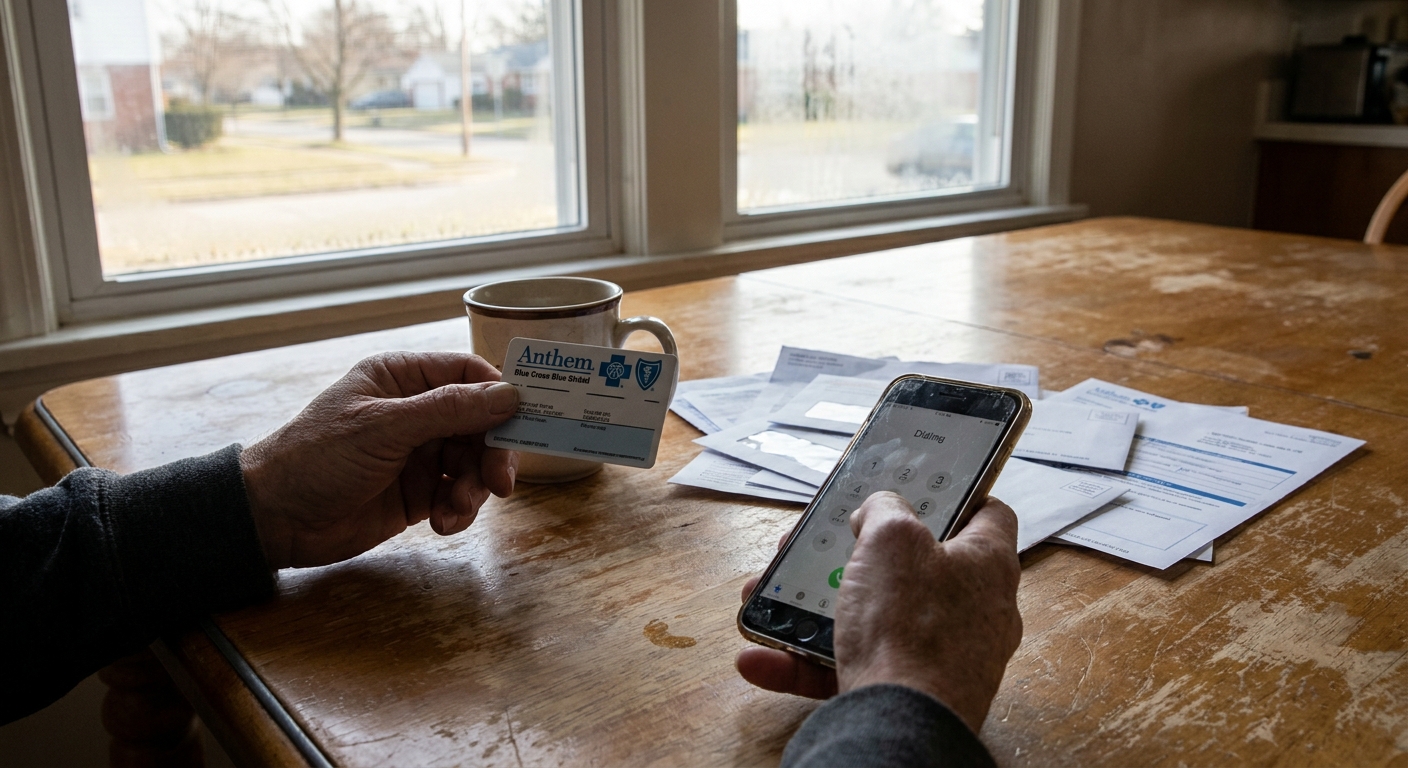
To verify your Molina SUD benefits, call Molina Ohio member services at the number on the back of your member ID card. Ask for a benefits verification specific to behavioral health and substance use disorder services. Request the name of the representative you speak with and the reference number for the call. Verbal verification without a documented reference number does not protect against a claim denial.
In-network vs. out-of-network providers in mahoning county
Molina Ohio Medicaid covers addiction treatment at in-network facilities. Out-of-network treatment is not covered except in documented emergencies. Mahoning County has a defined set of in-network behavioral health providers under Molina, and the provider directory on Molina’s website is the starting point for identifying them. That said, directories are sometimes outdated by 60 to 90 days.
The most reliable verification step is calling the treatment facility directly and asking the admissions team to confirm they hold an active Molina Ohio Medicaid contract. This call takes five minutes and eliminates the risk of a coverage dispute after treatment begins. Facilities that accept broad Medicaid coverage, including Molina, are a genuine access point that many private-pay or commercial-only programs do not offer.
For a comparison of how another major plan handles network access in a neighboring market, Anthem Medicaid’s coverage structure for Lucas County rehab follows a similar in-network logic and highlights what to look for across plans.
What to ask when you call molina
When you call Molina member services, the questions that matter most are: Is this specific facility in-network under my plan? What levels of care are covered and at what authorization limits? Is MAT covered, and which medications require prior authorization? Is mental health treatment covered concurrently with SUD treatment under a single authorization?
According to 2024 CMS guidance on Medicaid beneficiary rights, you have the right to receive clear, complete answers to all of these questions before beginning treatment. Write down every answer and the call reference number before hanging up. That documentation is your first line of defense if a claim is later disputed.
The intake and authorization process at a molina-covered facility
A 2022 study in JAMA Psychiatry found that each 24-hour delay between a person’s decision to seek treatment and their first clinical contact increased the likelihood of dropout by 11%. The good news about the Molina authorization process is that the facility handles the authorization work, not you.
The typical sequence runs as follows: you contact the facility and schedule an intake assessment, the clinician conducts the ASAM-level evaluation, the facility submits an authorization request to Molina, and Molina either approves it or sends it to peer review. The one thing that speeds this process is arriving at intake with your Molina member ID and a complete list of current medications. That information allows the facility’s admissions team to submit a clean, complete authorization request the same day.
What happens if molina denies coverage
A denial from Molina is not a final answer. Under the 2023 CMS Medicaid managed care final rule, members have the right to a first-level internal appeal, followed by a state fair hearing through the Ohio Department of Medicaid if the internal appeal is unsuccessful. Timelines for appeals are strict, and the process moves faster when you act quickly.
Within 24 hours of receiving a denial, request the denial in writing. Then ask the treating provider to request a peer-to-peer review call with Molina’s medical director. Peer-to-peer calls, where your provider directly presents the clinical case to Molina’s physician reviewer, reverse denials in a significant portion of cases. A denial is a negotiation step, not a closed door.
Getting started with addiction treatment in austintown
SAMHSA’s National Helpline received more than 833,000 calls in 2022, a number that reflects how many people reach a decision point and act on it. Calling to verify your benefits and ask about intake availability is the highest-leverage move available to you right now.
The process is a two-call sequence, not a long one. Call Molina member services first to confirm your SUD and behavioral health benefits are active and to document the reference number. Then call the treatment facility’s admissions team directly. Facilities that accept Molina Ohio Medicaid, along with other managed-care plans like CareSource, Buckeye, Anthem, Aetna, AmeriHealth Caritas, and Humana, handle the authorization process from intake forward. You do not manage that paperwork yourself.
If you want to understand how Medicaid rehab coverage works more broadly before making that first call, a plain-language breakdown of what Medicaid covers for rehab in the Youngstown area covers the common questions that come up before intake.
Frequently asked questions
Does molina medicaid cover inpatient rehab in austintown, ohio?
Yes. Molina Ohio Medicaid covers residential (inpatient) treatment when it is clinically indicated based on an ASAM-level assessment. The facility submits an authorization request to Molina, and approval is based on medical necessity documentation, not a fixed benefit cap.
Do I need a referral from a doctor to start addiction treatment under molina?
No referral is required to begin the intake process at a Molina-covered facility. You can self-refer by calling a treatment program directly. The facility’s admissions team will conduct the clinical assessment and handle authorization from there.
Will molina cover both my addiction treatment and my mental health care at the same time?
Yes. Molina Ohio Medicaid covers co-occurring SUD and mental health conditions under an integrated plan of care. Both diagnoses need to be documented at intake so that authorization covers both treatment components simultaneously.
How long does molina take to approve addiction treatment authorization?
Standard authorizations are typically processed within one to three business days. Urgent or emergency authorizations move faster. If your case goes to peer review, the timeline extends, which is why same-day submission of the authorization request at intake is the move that reduces wait time.
What if the treatment facility I want is not in molina’s network?
Out-of-network treatment is generally not covered under Molina Ohio Medicaid except in documented emergencies. Call the facility before your intake appointment to confirm they hold an active Molina contract. If they do not, ask Molina member services for a list of in-network facilities in Mahoning County.
Does molina medicaid cover suboxone or buprenorphine for opioid treatment?
Yes. Buprenorphine, including Suboxone, is covered under Molina Ohio Medicaid as an office-based prescription filled at a pharmacy. Some formulations or dosages may require prior authorization. Ask the prescribing provider to submit the PA request on the same day as the initial evaluation to avoid delays.