
If you’re creative, expressive, or deeply identity-driven, the idea of sobriety can feel like a threat.
Not to your habits—but to you.
Many people don’t say this fear out loud. They say they’re worried about withdrawal, or timing, or whether treatment will work. But underneath, the question is quieter and heavier: What if the part of me that feels alive disappears?
At Midwest Recovery Center, we hear this fear often—especially from artists, performers, thinkers, and people whose inner world feels like their most valuable possession. This is a deeper look at what actually happens inside a Medical Detox Program when identity feels fragile, and why the self you’re protecting may be closer than you think.
This Fear Is About Identity, Not Willpower
For many creative or identity-focused people, substances weren’t just coping tools. They were companions.
They helped ideas arrive faster. They softened self-doubt. They made emotion feel accessible or manageable. Over time, they became woven into the story of who you are.
So when detox is mentioned, the fear isn’t about getting sick or being uncomfortable. It’s about erasure.
Will I still feel deeply? Will I still create? Will I still recognize myself?
That fear isn’t resistance. It’s grief in advance. And it deserves respect.
What a Medical Detox Program Is Actually Designed to Do
A Medical Detox Program is not designed to flatten personality, mute emotion, or strip away creativity. Its primary purpose is stabilization.
When substances are used regularly, the nervous system is forced into constant adaptation—up, down, alert, sedated, anxious, numb. Over time, that instability becomes the baseline. Detox interrupts that cycle safely, with medical oversight and emotional support.
The goal isn’t to change who you are. It’s to give your body a chance to remember what steady feels like.
Think of it less like erasing a sketch and more like removing smudges from the page so the lines underneath can be seen again.
Substances Often Narrow What They Promise to Expand
Many people associate substances with openness, depth, or intensity. At first, that can feel true.
But over time, substances tend to narrow emotional range rather than expand it. Feelings become louder but less precise. Creativity comes in bursts followed by crashes. Expression depends on chemistry instead of choice.
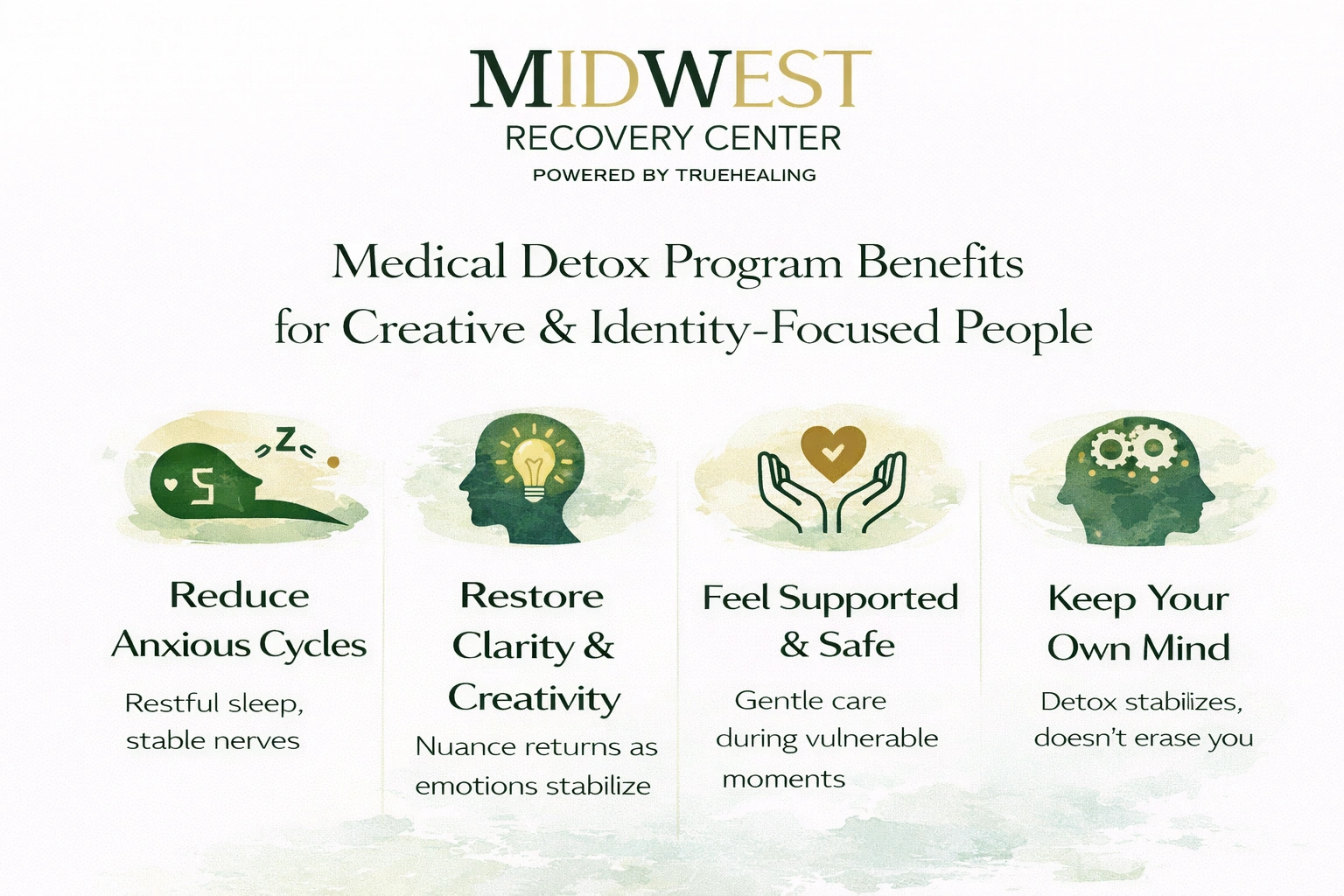
In detox, as the body stabilizes, people often notice something unexpected: nuance returns. Emotions have edges again. Thoughts slow down enough to be shaped.
A Medical Detox Program doesn’t remove depth. It often restores it.
Creativity Needs a Body That Can Hold It
Creativity doesn’t live only in the mind. It relies on sleep, nutrition, oxygen, and rhythm.
Substances can feel like accelerants, but they often disrupt the very conditions creativity depends on. Sleep fractures. Anxiety spikes. Focus scatters. Over time, the body becomes less able to support sustained creation.
In detox, as sleep normalizes and anxiety softens, many people rediscover patience with their own ideas. Inspiration becomes less frantic and more usable.
Creativity survives when the body is steady enough to hold it.
Feeling More Doesn’t Mean Losing Control
Another common fear is emotional overwhelm.
If I detox, won’t everything hit me at once?
Medical detox is structured specifically to prevent that. Symptoms are monitored. Support is present. You’re not left alone with intensity.
As substances clear, emotions may return—but they’re held in a container designed for safety. Feeling more doesn’t mean drowning. It means having enough support to stay present with what’s real.
A Medical Detox Program gives your nervous system guardrails while it relearns balance.
Detox Is a Pause, Not a Verdict
One of the most misunderstood aspects of detox is the belief that it locks you into an identity or future you’re not ready to accept.
Detox is not a lifetime decision. It’s a pause.
You’re not asked to decide who you’ll be forever. You’re asked to let your body recover enough to make decisions with clarity instead of fear.
That distinction matters—especially for people who value autonomy and self-expression.
Why Environment Matters When Identity Feels Fragile
When identity feels at risk, environment becomes especially important.
A calm, predictable setting reduces sensory overload. Clear routines reduce decision fatigue. Gentle human presence reduces the urge to perform or defend who you are.
For some people, staying close to familiar places helps preserve a sense of self. That’s why some begin exploring care while Looking for Medical Detox Program in Perrysburg, Ohio, where proximity can make the process feel grounded instead of disorienting.
You don’t have to disappear to begin healing.
The Self That Emerges Is Often More Honest
Clinicians see this pattern repeatedly: detox doesn’t remove the self—it removes the distortion around it.
People often rediscover:
- Emotions that are complex, not chaotic
- Focus without panic
- Creativity without crash cycles
- Sensitivity without overwhelm
The self that emerges is often quieter, but truer. Less performative. More grounded. And often closer to the person you were trying to protect all along.
Why This Process Can Feel Scary—and Why That’s Okay
Fear doesn’t mean you’re wrong to consider detox. It means something important is at stake.
Identity-focused people are often deeply attuned to internal shifts. The idea of changing chemistry can feel like changing essence. But essence isn’t stored in substances—it’s stored in patterns of thought, feeling, and meaning.
A Medical Detox Program doesn’t rewrite those patterns. It gives them room to breathe.
What Clinicians Pay Attention To During Detox
During detox, clinicians aren’t watching for compliance. They’re watching for stability.
Sleep patterns. Mood shifts. Anxiety levels. How you respond to support. These signals guide care moment by moment.
You’re not rushed toward insight. You’re allowed to simply be while your system recalibrates.
For many people, that non-demanding presence is what allows identity to re-emerge naturally.
What Happens After Detox Matters, Too
Detox is a beginning, not a standalone solution.
Conversations about next steps happen with care. Therapy, continued treatment, or outpatient support are discussed as options—not mandates.
The goal is continuity without coercion. Support without erasure. A path forward that respects who you are.
Frequently Asked Questions From Creative and Identity-Focused People
Will detox change my personality?
No. Detox addresses physical dependence and nervous system instability. Personality and creativity are not removed—they’re often clarified.
What if substances are part of my creative process?
Many people discover their creativity becomes more sustainable without chemical crashes. Detox allows you to explore that without long-term commitment.
Will I feel numb or flat?
Temporary emotional shifts can happen, but medical detox is designed to support balance, not numbness. Many people report greater emotional range over time.
What if I’m afraid to feel everything again?
That fear is common. Detox provides medical and emotional support so feelings return safely, not all at once.
Is medical detox only for severe addiction?
No. Detox is appropriate whenever physical dependence or withdrawal risk exists. It’s about safety, not labels.
Can I leave if I decide it’s not right?
Yes. Ethical programs prioritize consent and collaboration. You’re not trapped or forced.
Is everything confidential?
Yes. Confidentiality is a core part of ethical care—especially important when identity feels exposed.
A Closing Thought for the Creative and Afraid
If you’re afraid sobriety will erase who you are, listen closely to that fear. It’s pointing to something precious.
The self you’re protecting doesn’t live in a substance. It lives in your capacity to feel, imagine, and connect.
A Medical Detox Program can be the place where that self isn’t lost—but recovered, with care and respect.
Call (888) 657-0858 to learn more about our Medical Detox Program services in Toledo, Ohio.