
When your child is struggling with addiction, you live on high alert. Every late text, every silence, every “I’m fine” feels loaded. You want to believe them—but your gut knows better. And when you finally work up the courage to say, “Please, get help,” and they respond with “No,” it cuts like nothing else.
If you’re reading this, you’ve likely already tried to talk to your son or daughter about detox. Maybe more than once. Maybe too many times to count.
Their refusal doesn’t mean they’re beyond help. It doesn’t mean you failed.
Refusing a medical detox program is part of many people’s story before they eventually say yes. At Midwest Recovery Center’s medical detox program in Toledo, we’ve seen that truth unfold in dozens of families: resistance today often becomes readiness tomorrow.
Why Do Young Adults Refuse Detox?
Let’s start here: refusal isn’t always about rebellion. Sometimes, it’s about fear. About shame. About control.
Many young adults fear what detox will feel like—especially if they’ve tried before and remember the pain. Others fear judgment or being labeled “an addict.” And some believe, wholeheartedly, that they can fix it themselves.
You might hear phrases like:
- “I’m not like those people.”
- “I can stop whenever I want.”
- “I’ll just cut back.”
This isn’t denial in the classic sense. It’s a psychological coping strategy—a way to protect themselves from the vulnerability that recovery demands. And while it can be incredibly frustrating, it’s also human.
Is Refusing a Medical Detox Program Common?
Yes. More common than you’d think.
It’s one of the most heartbreaking realities for parents: many young adults say no to help multiple times before saying yes. That “no” might feel like a wall, but it’s often just a pause—a moment where they’re not ready to face what recovery will require.
The truth? We’ve seen people walk into our detox program after their fifth, sixth, even tenth refusal. And those are some of the strongest recoveries we’ve witnessed—because they walked in when they were finally ready to hold the process with both hands.
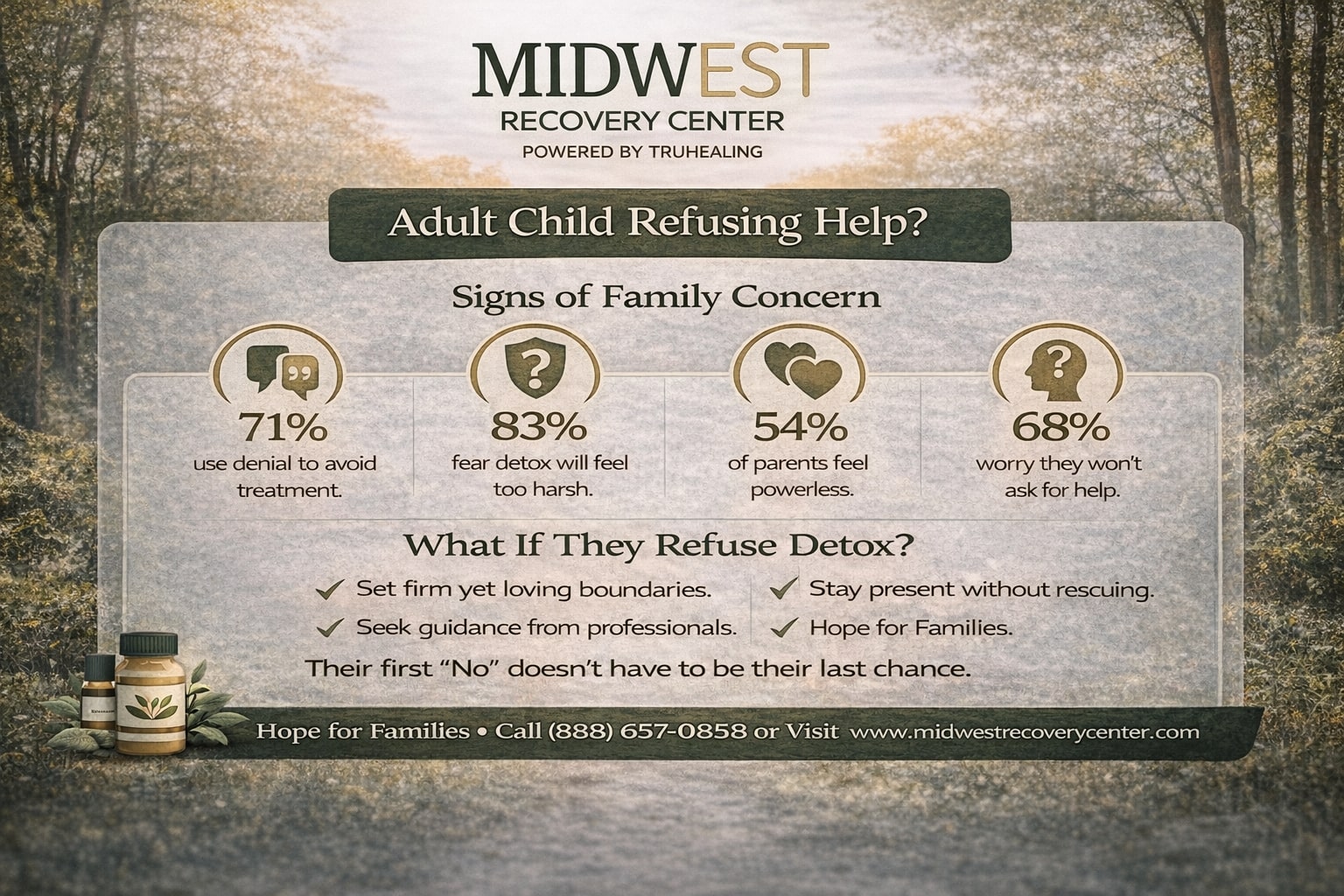
What Are My Options If They Refuse Help?
You may feel helpless—but you are not powerless.
Here’s what we often guide parents to focus on when a son or daughter refuses detox:
1. Set and hold clear boundaries.
Boundaries aren’t punishments. They’re signals of love and self-respect. It might mean no more financial support unless they’re in treatment. It might mean not letting them stay in your home if they’re using. These are gut-wrenching decisions—but they also clarify what you will and won’t accept.
2. Avoid enabling patterns.
Rescuing, making excuses, or covering up consequences may feel loving in the moment—but it often delays the very crisis that pushes someone to seek help.
3. Choose your moments to talk.
Don’t start the conversation when they’re intoxicated. Wait until they’re sober or calm. Keep it brief. Keep it loving. Keep it open-ended.
4. Stay connected to professional support.
You don’t have to do this alone. Family therapists, interventionists, and addiction specialists can help you build a strategic, emotionally grounded approach. Sometimes, just having a plan reduces the emotional chaos dramatically.
Can I Force My Child into Detox?
In Ohio, involuntary commitment laws (like Casey’s Law) may allow for court-ordered treatment—but it’s a complicated and emotionally heavy road. These legal tools are typically used in extreme situations, and they carry no guarantee of success.
What matters more than coercion is what happens after detox. If a person is forced into care without emotional buy-in, they’re less likely to engage in continued treatment. Lasting recovery requires more than detox—it requires willingness.
What If They Never Say Yes?
It’s the fear you can’t shake. That this is the best they’ll ever be. That your hope is naïve.
But here’s what we want you to remember: refusal isn’t forever.
We’ve had clients who refused detox for years—then showed up one day and said, “I’m ready.” And we’ve had parents who thought they were making the last call they’d ever make—only to end up attending their child’s one-year sobriety milestone.
People change. Pain teaches. Hope reopens.
And often, what makes the difference is that someone kept believing in them. Not rescuing. Not chasing. Just staying present, clear, and emotionally available.
You Are Not Alone in This
Parents of 20-somethings caught in addiction often feel invisible. You’re grieving a version of your child who’s not here right now—but you’re still expected to work, show up, smile.
You matter. Your grief is real. Your exhaustion is valid.
At Midwest Recovery Center, we don’t just treat individuals—we support families. We’ve walked with parents through the worst moments of their lives and helped them find footing again. Whether your child is ready or not, you deserve support now.
Looking for medical detox program support in Perrysburg or Maumee, Ohio? We serve families across the region, with flexible, compassionate care that meets people where they are.
Frequently Asked Questions About Medical Detox and Family Refusal
What happens during a medical detox program?
Medical detox is a short-term, medically supervised process that helps individuals safely withdraw from drugs or alcohol. At Midwest Recovery Center, we monitor vital signs, manage withdrawal symptoms, and provide 24/7 care to ensure physical safety and emotional support.
Is detox the same as rehab?
No. Detox is just the first step. Rehab or continued treatment (like PHP or IOP) builds on detox by helping individuals understand and change the patterns behind their substance use.
How long does detox take?
It varies, but most detox stays last between 5–10 days, depending on the substance and individual health factors.
Can I visit or call my child during detox?
In most cases, yes—with structured communication. We encourage healthy involvement, but also protect the client’s focus and privacy during this critical stage.
What if they leave detox early?
It happens—and it’s not the end. Leaving early doesn’t erase the impact of starting. Many return to complete care within days or weeks. That door is never closed.
📞 You’re Not Alone. We’re Here to Help.
If your son or daughter is struggling—and you’re out of words, options, or energy—we see you.
Call (888) 657-0858 or visit to learn more about our Medical Detox Program services in Toledo, Ohio. You don’t have to figure this out alone.