Ohio Medicaid covers drug rehab, and for Toledo-area residents navigating a substance use crisis, that single fact can change everything. Here is exactly what that coverage includes, how it works in Lucas County, and what steps to take today.
What medicaid actually is
Medicaid is a joint federal and state health insurance program for people with low or limited income. The federal government sets the baseline rules; each state administers its own version within those rules. In Ohio, the state does not run Medicaid benefits directly. Instead, the Ohio Department of Medicaid contracts with seven managed-care organizations to deliver benefits to most members: CareSource, Buckeye Health Plan, Molina Healthcare, Anthem, Aetna, AmeriHealth Caritas, and Humana.
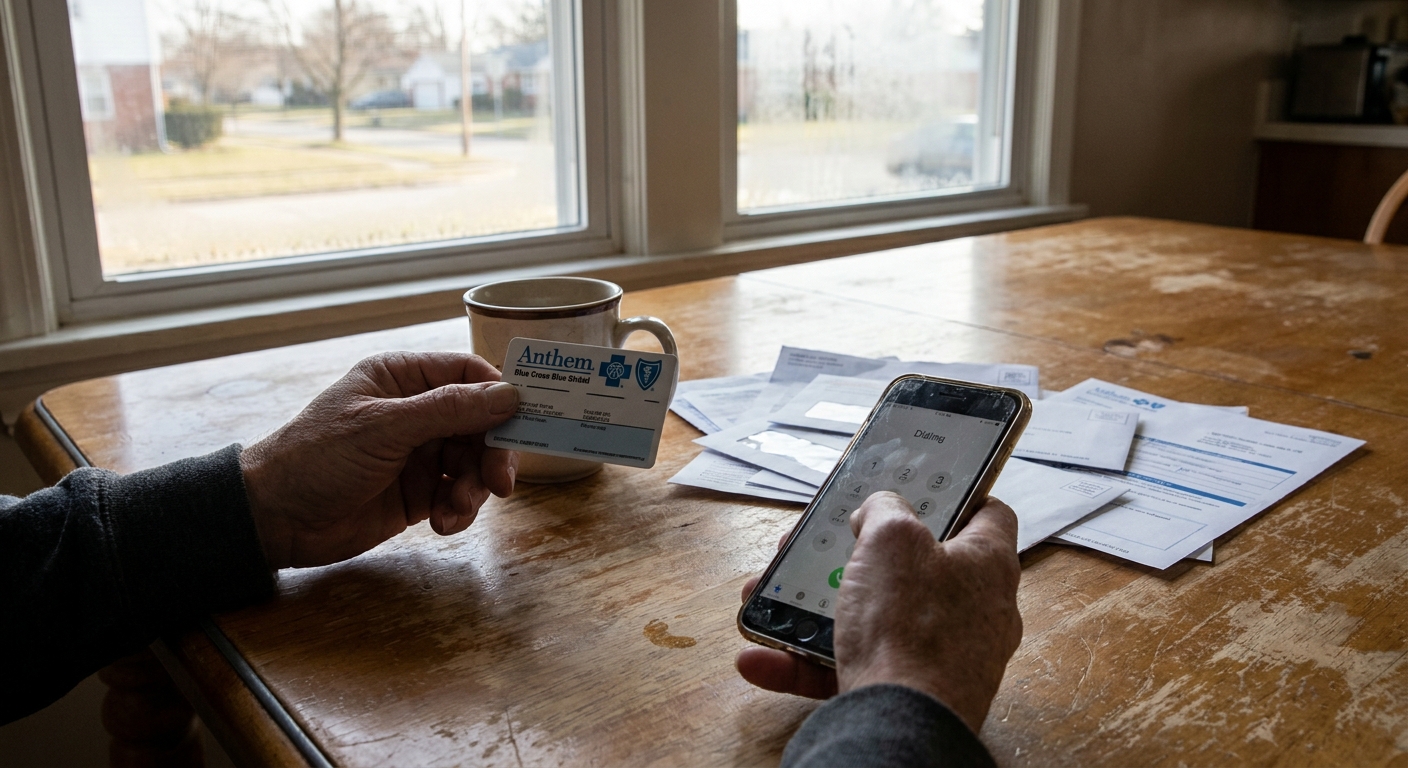
What this means in practice: your Medicaid card is issued by one of those seven plans, not by the state itself. That plan determines which providers are in your network and what steps are needed to approve specific services. According to the Ohio Department of Medicaid, more than 3.4 million Ohioans were enrolled in managed-care Medicaid as of 2024, making it the state’s largest single health coverage program. For substance use disorder (SUD) treatment specifically, a 2023 KFF analysis found that Medicaid is the largest payer of addiction treatment services in the United States, covering more enrollees in SUD care than any private insurer.
The direct answer: yes, medicaid covers drug rehab in toledo
Ohio Medicaid covers substance use disorder treatment as an essential health benefit under the Affordable Care Act. That coverage applies at licensed treatment facilities in Toledo and throughout Lucas County that participate in the Medicaid managed-care network. There are no asterisks on that statement.
SAMHSA’s 2023 National Survey on Drug Use and Health reported that of the estimated 46 million Americans with a substance use disorder, fewer than 13 percent received any treatment in the past year. One of the most common reasons cited: belief that treatment was unaffordable. Medicaid directly removes that barrier for eligible Ohioans. Midwest Recovery Center accepts Ohio Medicaid through most of the state’s managed-care plans, including CareSource, Buckeye, Molina, Anthem, Aetna, AmeriHealth Caritas, and Humana, which means the majority of Toledo-area Medicaid members can access treatment without an insurance gap standing in the way.
What types of treatment medicaid covers
Ohio Medicaid covers the full continuum of addiction care, not just outpatient counseling. The specific levels below are the names you will hear when you call a facility or your plan’s member services line.
Medical detox
Medical detoxification is supervised withdrawal management provided by licensed clinical staff. For alcohol, benzodiazepines, and opioids, unsupervised withdrawal carries real medical risk, and detox is the first clinical threshold that needs to be cleared before residential or outpatient treatment begins. Ohio Medicaid covers medically supervised detox at approved facilities. Coverage requires documentation of medical necessity, meaning the clinical team must show that your withdrawal requires monitoring and intervention, which is standard for most individuals presenting with physical dependence.
Inpatient and residential rehab
Short-term residential treatment typically runs 28 to 30 days; long-term residential can extend to 90 days or beyond. Both are covered under Ohio Medicaid at licensed facilities. Prior authorization is required for inpatient and residential levels of care, meaning the managed-care plan reviews clinical documentation before approving placement. “Medical necessity” here means the clinical record demonstrates that your condition requires 24-hour structured supervision to be treated safely and effectively. The facility’s admissions team handles the documentation; your job is to be honest and thorough during the intake assessment so the record accurately reflects your situation.
Partial hospitalization (PHP) and intensive outpatient (IOP)
Partial hospitalization programs run 20 or more clinical hours per week, typically five days a week. Intensive outpatient programs provide 9 to 19 hours per week. Both serve as structured step-down levels after residential care or as primary treatment for people who do not require 24-hour supervision. SAMHSA’s Treatment Episode Data Set consistently shows that structured outpatient programming at the PHP and IOP level produces outcomes comparable to inpatient care for individuals who have stable housing and social support. Ohio Medicaid covers both levels, and managed-care plans frequently approve PHP or IOP as an initial level of care, particularly when residential treatment has not yet been attempted.
Standard outpatient and medication-assisted treatment (MAT)
Standard outpatient treatment involves individual and group counseling sessions, typically one to three times per week. Medication-assisted treatment combines FDA-approved medications with counseling to treat opioid and alcohol use disorders. Ohio Medicaid covers all three FDA-approved MAT medications: buprenorphine (Suboxone), methadone (through opioid treatment programs), and naltrexone (Vivitrol). A 2019 study published in JAMA Psychiatry, analyzing data from more than 40,000 patients, found that buprenorphine and methadone reduced opioid overdose mortality by approximately 50 percent compared to no treatment. That is not a modest benefit. If opioid use disorder is part of the picture, MAT is a clinically supported option that Ohio Medicaid will cover.
Mental health and co-occurring disorder treatment
Ohio Medicaid covers co-occurring mental health treatment alongside SUD services. For many people in treatment, anxiety, depression, PTSD, or trauma histories are not separate from the addiction; they are woven into it. The clinical term is a co-occurring disorder, and effective treatment addresses both simultaneously. Ohio’s Medicaid behavioral health benefit explicitly includes psychiatric evaluation, individual therapy, and medication management for mental health conditions when they are treated in conjunction with or alongside SUD care.
Why two medicaid members can get different coverage answers
Here is the source of most confusion people experience when calling treatment facilities about Medicaid: the plan you are assigned to matters as much as the fact that you have Medicaid at all.
Coverage is not delivered by “Medicaid” as a single entity. It is delivered by your specific managed-care plan, and each plan maintains its own provider network and prior authorization criteria. A facility that is in-network for CareSource may be out-of-network for Molina. The prior authorization process for residential treatment at Buckeye may differ from the same process at Anthem. Ohio adopted the American Society of Addiction Medicine (ASAM) criteria as the clinical standard for determining appropriate levels of care, and all managed-care plans must use those criteria, but how quickly they process authorizations and which facilities they have contracted with varies by plan.
If you are curious how your specific plan handles rehab benefits, checking what your plan covers before your first call saves time and prevents surprises. The plan name is printed on your Medicaid card and is your starting point for everything else.
How much drug rehab costs with medicaid in toledo
For covered services at in-network facilities, out-of-pocket cost is zero or minimal for most Medicaid members. Ohio Medicaid does not charge premiums for most enrollees, and cost-sharing for SUD services is tightly capped.
To put that in context: SAMHSA’s 2023 national survey on treatment costs found that residential addiction treatment without insurance averages between $6,000 and $20,000 per month depending on facility type and level of care. Medically supervised detox can add several thousand dollars more. For someone paying out of pocket, a single month of residential treatment can exceed a year’s rent. Medicaid eliminates that cost entirely for eligible members accessing in-network care.
For Toledo-area residents who do not yet have active Medicaid coverage, sliding-scale and no-cost community programs exist as a bridge while enrollment is processed. The Lucas County Alcohol, Drug Addiction and Mental Health Services (ADAMHS) board coordinates publicly funded treatment options for residents who are uninsured or underinsured.
Ohio medicaid eligibility requirements
Ohio expanded Medicaid under the ACA in 2014, which is the policy change that made broad SUD treatment coverage possible for low-income adults without dependent children. Before expansion, many single adults did not qualify regardless of income.
Today, eligibility is based primarily on income: adults with household income up to 138 percent of the federal poverty level qualify. For a single adult in 2024, that threshold is approximately $20,120 per year. You must be an Ohio resident and a U.S. citizen or qualified immigrant. There is no asset test for adults under the expansion.
According to KFF, Ohio’s Medicaid expansion added approximately 700,000 adults to coverage, with a disproportionate share of expansion enrollees using behavioral health services, including SUD treatment. A 2020 study in Health Affairs found that Medicaid expansion states saw a 26 percent greater increase in SUD treatment admissions compared to non-expansion states in the years following the ACA’s implementation. The expansion did not just add coverage on paper; it moved people into actual treatment.
How to use medicaid to get into rehab in toledo
The process is more straightforward than most people expect. Four steps cover the full path from your current situation to an intake appointment.
Step 1: confirm your plan and find an in-network provider
Look at your Medicaid card. The name printed on it (CareSource, Buckeye, Molina, Anthem, Aetna, AmeriHealth Caritas, or Humana) is your managed-care plan. Call the member services number on the back and ask two questions: what behavioral health benefits do I have, and can you give me a list of in-network SUD treatment providers in Toledo or Lucas County? Midwest Recovery Center accepts most of Ohio’s Medicaid managed-care plans, so it is worth asking whether it appears on the list your plan provides. Unison Health in Toledo is another well-known local facility that accepts Medicaid and appears frequently in provider directories.
Step 2: get an assessment and establish medical necessity
Once you identify a facility, call their admissions line. The intake assessment, which often begins by phone, is how the clinical team documents your history, substance use patterns, mental health history, and current level of risk. This documentation becomes the basis for establishing medical necessity, the clinical threshold that must be met before the plan approves a level of care. Be direct and thorough during this call. The clinical team is not judging you; they are building the record that gets you authorized for care.
Step 3: understand prior authorization
Prior authorization means the managed-care plan reviews the clinical documentation and approves the recommended level of care before treatment begins at certain levels, typically residential and PHP. Most licensed treatment facilities handle prior authorization on your behalf. When you call admissions, ask directly: do you manage the prior authorization process for patients? A competent facility will say yes and walk you through the expected timeline. For Buckeye members in the broader Ohio network, prior auth timelines are typically 24 to 72 hours for standard requests.
Step 4: enroll in medicaid if you’re not yet covered
If you are not currently enrolled, apply through Ohio Benefits at benefits.ohio.gov or in person at the Lucas County Department of Job and Family Services (1 Warehouse Drive, Toledo). Ohio’s online application takes approximately 20 to 30 minutes. In crisis situations, county ADAMHS boards and treatment facilities can help expedite the process. Coverage does not begin instantaneously, but standard processing takes 15 to 45 days, and some providers will begin a clinical assessment before coverage is confirmed.
What to do if medicaid denies coverage
A denial is not a final answer. Every Medicaid managed-care plan is required by Ohio law to provide a written explanation for any coverage denial, along with instructions for filing an appeal. You have the right to appeal, and the plan must respond within a defined timeline, typically 30 days for standard appeals and 72 hours for expedited appeals when your health is at immediate risk.
The most effective first step after a denial is requesting a peer-to-peer review. This is a direct clinical conversation between the treating provider and the plan’s medical reviewer. A 2022 analysis published in JAMA Network Open found that peer-to-peer reviews reversed prior authorization denials in approximately 75 percent of cases across multiple specialties. The facility’s utilization review team typically manages this call, so ask them to initiate it immediately. Ohio also provides access to an external review process through the Ohio Department of Insurance, which allows an independent organization to evaluate whether the denial was clinically appropriate. A denial at the first pass is a routine administrative hurdle, not a reason to stop pursuing treatment.
Free and low-cost rehab options in toledo when you need a bridge
For Toledo residents who are uninsured or waiting for Medicaid to activate, several options can provide immediate support. The Lucas County ADAMHS board funds publicly available treatment services and can connect uninsured residents to providers who accept no-cost placements or sliding-scale fees based on income. Their website at lcadamhs.org lists current provider options.
SAMHSA’s 988 Suicide and Crisis Lifeline accepts calls and texts for substance use crises as well as mental health emergencies and connects callers to local resources. For veterans and active-duty military in the Toledo area, TRICARE covers SUD treatment including residential care, and coverage does not require a referral for most levels. Understanding how Medicaid works across the broader Ohio system is also useful context if you are helping a family member who lives outside Lucas County.
Toledo drug and alcohol use: why this coverage matters locally
According to the Ohio Department of Health, Ohio recorded 4,210 unintentional drug overdose deaths in 2022, an average of more than 11 deaths per day. Lucas County, which includes Toledo, has consistently ranked among the Ohio counties with higher-than-average overdose rates relative to population. The Ohio Department of Health’s 2022 county-level data show Lucas County’s drug overdose mortality rate exceeded the state average, driven primarily by fentanyl-involved deaths.
These are not abstract statistics. They reflect a local reality where knowing how to access covered treatment quickly has direct, measurable consequences. Medicaid coverage of the full treatment continuum, from detox through residential through outpatient MAT, means that cost is not a legitimate reason for a Toledo-area resident to delay seeking care. The mechanism exists. The coverage is real. The question is only whether you use it.
Questions to ask before starting treatment
Before committing to a facility, ask these questions directly on the first admissions call. No good treatment center will be caught off guard by any of them.
Does your facility accept my specific Medicaid plan? (Name the plan, not just “Medicaid.”) Do you handle prior authorization on behalf of patients, and what is your typical turnaround time? What level of care will you recommend after my intake assessment, and what is the clinical rationale? If my needs change mid-treatment and I require a higher level of care, can that be managed within your facility or through a direct referral? Are co-occurring mental health conditions treated alongside SUD services here, or separately?
These questions take five minutes and eliminate the most common sources of confusion and delays before they happen.
What to do this week
Call the member services number on the back of your Medicaid card today. Ask for two things: the name of your managed-care plan and a behavioral health provider list for Toledo. That single call establishes your network, identifies which facilities are covered, and removes the most common barrier people face before their first admissions call. If you do not have your card, benefits.ohio.gov allows you to look up your coverage status and plan assignment online with your Social Security number and date of birth.
Everything else follows from knowing your plan. The coverage is there. The facilities are there. That call is the step that makes both of them accessible.
Frequently asked questions
Does ohio medicaid cover detox and residential rehab, or just outpatient?
Ohio Medicaid covers the full continuum of care, including medically supervised detox, short-term and long-term residential treatment, partial hospitalization, intensive outpatient, standard outpatient, and medication-assisted treatment. Residential and inpatient levels require prior authorization and documentation of medical necessity, but coverage is not limited to outpatient services.
Which medicaid plans are accepted at midwest recovery center?
Midwest Recovery Center accepts Ohio Medicaid through most of the state’s managed-care plans, including CareSource, Buckeye, Molina, Anthem, Aetna, AmeriHealth Caritas, and Humana. If you are unsure which plan you are enrolled in, the plan name is printed on your Medicaid card, and member services can confirm your benefits by phone.
What does “prior authorization” mean and do I have to handle it myself?
Prior authorization is the process by which your Medicaid managed-care plan reviews clinical documentation and approves a recommended level of care before services begin. Licensed treatment facilities manage this process on your behalf. You do not need to submit paperwork or make calls to your plan; your job is to be thorough during the intake assessment so the clinical record accurately reflects your needs.
What if I have medicaid but the facility says i’m out of network?
Not every facility that accepts Medicaid is in-network for every managed-care plan. Ask the facility specifically whether they accept your named plan (CareSource, Buckeye, Molina, etc.), not just whether they take Medicaid generally. If they are out of network, call your plan’s member services line and ask for in-network SUD treatment providers in Lucas County. You can also request an exception for out-of-network care if no in-network provider can meet your clinical needs.
Can I get medicaid if I am currently in a substance use crisis and not yet enrolled?
Yes. Apply through benefits.ohio.gov or at the Lucas County Department of Job and Family Services. In a crisis, let the admissions team at the treatment facility know you are pending enrollment. Many facilities will conduct an intake assessment before coverage is confirmed. The Lucas County ADAMHS board can also help connect uninsured residents to immediate support while Medicaid is being processed.
Does medicaid cover medication-assisted treatment (MAT) like suboxone or vivitrol?
Ohio Medicaid covers all three FDA-approved MAT medications: buprenorphine (Suboxone), methadone delivered through opioid treatment programs, and naltrexone (Vivitrol). MAT is covered as a standard medical benefit, not a special exception, and is available in combination with outpatient counseling services.