

Loving Someone Through Addiction Can Feel Like Waiting for the Ground to Shift

Loving Someone Through Addiction Can Feel Like Waiting for the Ground to Shift

There’s a kind of exhaustion that happens when you love someone who keeps struggling with alcohol.

Not just worry. Not just frustration. Something deeper than that.

You begin monitoring the atmosphere in your own home without even realizing it. Listening to the way they close a door. Watching how they move through a room. Trying to tell whether tonight will end peacefully or painfully. You become hyperaware of mood changes, excuses, silence, tension, and broken promises.

And somewhere along the way, your nervous system starts living in survival mode too.

A lot of partners searching for live-in recovery support are not simply looking for treatment information. They’re looking for relief from the constant uncertainty that addiction creates inside a relationship.

They want to know:

  • Will treatment actually help?
  • What happens inside a residential program?
  • Will the person I love feel abandoned?
  • Is more support really necessary?
  • What if things still don’t change?

Those questions come from love.
And usually, from exhaustion too.

Most People Imagine Treatment Wrong at First

Many spouses picture residential care as something cold or impersonal.

They imagine locked doors, punishment, confrontation, or their loved one being stripped of comfort and dignity. Some fear treatment will feel like abandonment. Others worry the person they love will feel ashamed, angry, or emotionally shut down.

But supportive treatment environments are often much more human than people expect.

At Midwest Recovery Center, many families are surprised to learn that early recovery often looks less dramatic than movies portray. In reality, the first phase of care is frequently about stabilization.

Rest.
Consistency.
Food.
Sleep.
Emotional safety.
Structure.

Sometimes the most important thing that happens during the first few days is simply that someone finally stops living in constant chaos.

That matters more than many families realize.

Repeated Relapse Usually Has Deeper Roots

Partners often blame themselves for not saying the “right” thing sooner.

They wonder:

  • “Was I too soft?”
  • “Was I too angry?”
  • “Did I make things worse?”
  • “Should I have pushed harder for help?”

Those thoughts are incredibly common.

But addiction is rarely caused — or solved — by one conversation, one ultimatum, or one act of love.

People who relapse repeatedly are often struggling with more than alcohol itself. Underneath the drinking, there may be:

  • Anxiety
  • Depression
  • Trauma
  • Emotional burnout
  • Shame
  • Isolation
  • Chronic stress
  • Difficulty regulating emotions
  • Fear of vulnerability

Alcohol can become less about partying and more about escape.

One spouse once described it this way:

“It stopped feeling like they wanted to drink. It started feeling like they didn’t know how to cope without it.”

That distinction matters deeply.

Why Some People Need More Than Outpatient Support

This is one of the hardest decisions families face.

Many couples try outpatient care first because it feels less disruptive. Someone attends appointments, therapy sessions, or recovery groups while continuing to live at home and maintain daily responsibilities.

For some people, that works well.

But for others, home remains emotionally overwhelming enough that recovery struggles to take root. Triggers stay constant. Stress stays high. Old patterns remain uninterrupted. Cravings become harder to manage while still surrounded by the same routines tied to drinking.

This is why discussions around inpatient vs outpatient alcohol treatment become emotionally loaded for families after repeated relapse cycles.

Partners often reach a point where they quietly wonder:
“Maybe love alone isn’t enough support anymore.”

That realization can feel heartbreaking.

But it is not hopeless.

Sometimes someone needs more structure, more distance from daily chaos, and more consistent support than home can realistically provide right now.

What Daily Life in Residential Care Usually Looks Like

One thing many spouses find reassuring is understanding what treatment days actually look like.

Most residential programs follow a structured rhythm. While every facility is different, daily life often includes:

  • Consistent wake-up and sleep schedules
  • Nutritious meals
  • Individual therapy
  • Group counseling
  • Recovery education
  • Emotional support
  • Time for reflection and rest
  • Medical monitoring when needed

That structure itself becomes healing for many people.

Alcohol addiction often creates emotional unpredictability. Sleep patterns become unstable. Daily routines disappear. Relationships become reactive rather than grounded.

Inside a supportive environment, the nervous system finally begins experiencing consistency again.

And consistency matters more than people realize.

One former client described their first week this way:

“I forgot what it felt like to wake up without immediately panicking.”

That kind of stabilization can become the beginning of deeper healing.

Treatment Is Often More Emotional Than Families Expect

Many spouses assume treatment is mainly focused on stopping drinking.

But recovery work often becomes deeply emotional too.

Once alcohol is removed, many people begin feeling emotions they’ve spent years numbing:

  • Grief
  • Fear
  • Shame
  • Loneliness
  • Anger
  • Exhaustion
  • Emotional numbness
  • Anxiety

This can surprise families at first. Some people entering treatment sleep constantly during early recovery because their bodies are finally slowing down after years of emotional stress. Others become tearful or emotionally raw in ways loved ones haven’t seen before.

That does not mean treatment is making things worse.

Often, it means the person has stopped surviving long enough to actually feel what they’ve been carrying.

Healing rarely begins with perfect emotional control. More often, it begins with safety.
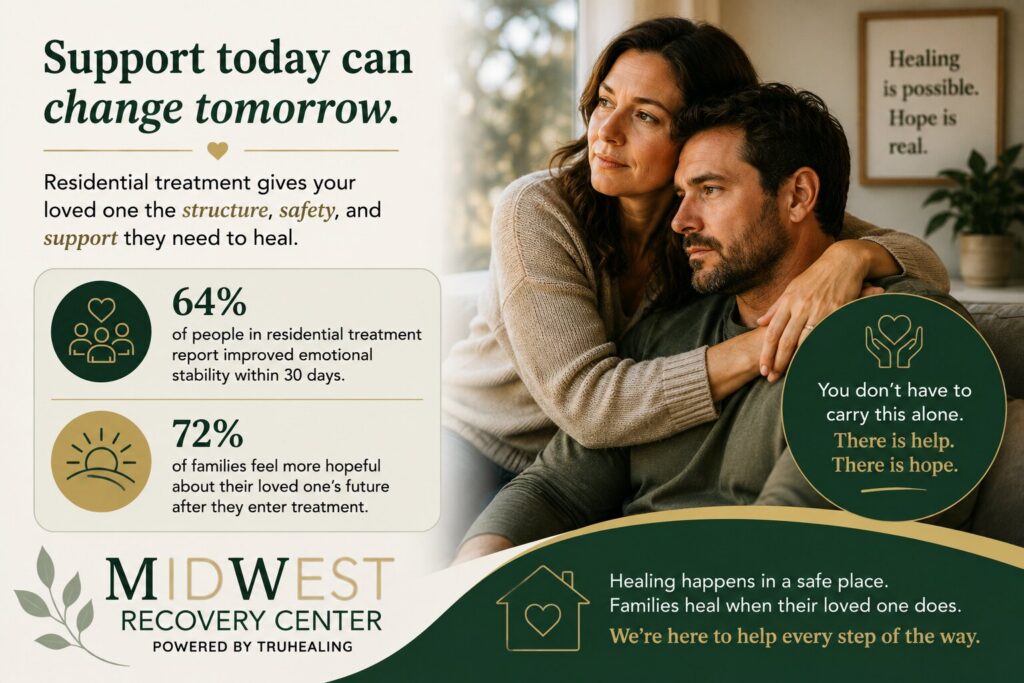
Residential Treatment for Someone You Love

Partners Carry More Than Most People See

Loving someone actively struggling with addiction changes the emotional atmosphere of everyday life.

Partners often begin:

  • Monitoring drinking secretly
  • Searching for hidden alcohol
  • Managing crises quietly
  • Covering for missed responsibilities
  • Losing sleep
  • Walking on eggshells
  • Constantly preparing for emotional fallout

Over time, many spouses stop noticing how much anxiety they’re carrying because it becomes normal.

One partner once explained:

“I realized I hadn’t relaxed in years. I was always waiting for something bad to happen.”

That chronic hypervigilance takes a real emotional toll.

Which is why treatment can sometimes help families breathe again too — not because they stop loving the person, but because the constant state of emergency finally pauses for a while.

Residential Care Is Not About Punishment

This is one of the most important things families need to hear.

Treatment is not meant to punish someone for struggling.

It is not about locking people away because they’ve failed morally.

Supportive residential care exists because addiction can overwhelm someone’s ability to stabilize alone, especially after repeated relapse cycles.

Some people need:

  • Distance from triggers
  • Medical support
  • Emotional stabilization
  • Daily accountability
  • A safer environment
  • Time away from overwhelming stress

Those needs are human.

And stepping into more structured care does not mean someone is beyond hope. In many cases, it means they’re finally receiving enough support to interrupt a dangerous cycle.

Recovery Usually Begins in Smaller Ways Than People Expect

Most recovery stories do not begin with dramatic transformation.

They begin quietly.

Someone sleeping through the night.
Someone eating regularly again.
Someone admitting they’re scared.
Someone laughing naturally for the first time in months.
Someone realizing they no longer have to hide every emotion.

These moments can seem small from the outside.

Inside recovery, they can feel enormous.

Especially after years of chaos.

You Are Allowed to Feel Conflicted

Many spouses feel guilty for wanting treatment.

Part of them wants their loved one home. Another part knows home may not currently be enough support. Some feel resentment they’re ashamed to admit. Others fear getting hopeful again because relapse has hurt so many times before.

All of those emotions can exist together.

You do not need to become endlessly patient or emotionally perfect to love someone through addiction.

You are allowed to feel exhausted too.

And you are allowed to hope for a version of life where both of you can finally breathe again.

One of the Biggest Myths About Treatment

Many people assume residential care only happens after someone “hits rock bottom.”

That’s not always true.

Some people enter treatment while still working, parenting, maintaining relationships, or appearing outwardly functional. Addiction doesn’t always look catastrophic from the outside. Sometimes it looks like someone slowly disappearing emotionally while trying very hard to appear okay.

And sometimes seeking help earlier prevents things from becoming even more painful later.

For families exploring help in locations or looking into treatment support near Toledo, Ohio, understanding this can make reaching out feel less frightening.

Treatment is not about giving up on someone.
It’s often about finally giving them enough support to heal.

FAQ: Residential Treatment for Someone You Love

What is residential treatment like day to day?

Most residential programs follow structured schedules that include therapy, meals, group support, recovery education, and time for rest and stabilization in a supportive environment.

Is residential care only for severe addiction?

No. Some people enter residential care because repeated relapse, emotional instability, or overwhelming stress suggests they need more support than outpatient care currently provides.

Can families communicate during treatment?

Many treatment programs allow family communication and involvement when appropriate. Policies vary by program and treatment stage.

What if my partner keeps relapsing after outpatient care?

Repeated relapse can sometimes indicate that someone needs more structure, accountability, and separation from environmental triggers during early recovery.

Will treatment automatically fix our relationship?

Treatment can create space for healing, honesty, and healthier communication, but rebuilding trust usually takes time for both people.

Is it normal to feel relieved when someone enters treatment?

Yes. Many partners feel relief alongside fear, guilt, sadness, or exhaustion after living through chronic stress related to addiction.

How long does residential treatment usually last?

Length of stay varies depending on medical needs, emotional stabilization, treatment progress, and individual circumstances.

What if my loved one doesn’t want treatment?

You cannot force readiness, but supportive conversations, boundaries, and professional guidance can sometimes help someone become more open to care.

You Are Not Wrong for Wanting More Stability

Loving someone through addiction can slowly turn daily life into emotional survival mode.

And while treatment cannot erase pain overnight, it can create something many families desperately need: breathing room.

Breathing room for honesty.
Breathing room for rest.
Breathing room for healing to begin.

If you’re considering support for someone you love, Midwest Recovery Center offers compassionate, structured care for people struggling with alcohol use and repeated relapse.

Call (888) 657-0858 or visit our residential treatment program services in Toledo, Ohio to learn more about our residential treatment program services in Toledo, Ohio.

*The stories shared in this blog are meant to illustrate personal experiences and offer hope. Unless otherwise stated, any first-person narratives are fictional or blended accounts of others’ personal experiences. Everyone’s journey is unique, and this post does not replace medical advice or guarantee outcomes. Please speak with a licensed provider for help.

Level Of Care

PHP (Partial Hospitalization Program)
Daytime treatment with structure, therapy, and support—return home each night.

IOP (Intensive Outpatient Program)
Flexible therapy a few days a week to balance life and recovery.

OP (Outpatient Program)
Ongoing therapy and support to maintain progress.

MAT (Medication-Assisted Treatment)
Evidence-based care using medication and counseling to reduce cravings.

Ready to Start?
Call (833) 657-0858: to learn which program fits your recovery goals.

Who are you seeking help for? *

We’re here to listen and help you find the right path forward. Please tell us who needs care so we can match you with the best program and support.

💬 Your responses are 100% confidential and never shared outside our admissions team.

Recovery Shouldn’t Have to Wait — Begin Treatment Today.

At Ohio Treatment Center in Toledo, Ohio, we make it simple to take that first step toward healing. Our streamlined admissions process can often lead to same-day placement in treatment for MAT, PHP, IOP and more..

Call today for a free, confidential consultation with our caring admissions team — we’ll walk you through every step with compassion and clarity.

Call (833) 657-0858
Why call us?

Check Your Insurance Coverage in Minutes

We’ll handle the insurance details — so you can focus on getting better.

At Ohio Treatment Center, we work with most major private insurance providers to make treatment affordable and accessible. Complete our quick, confidential form below, and we’ll let you know if your plan is in-network — without contacting your insurance company.

Commonly accepted providers include:
Blue Cross Blue Shield (BCBS) • Aetna • Cigna • UnitedHealthcare • Humana • Anthem • Tricare

What Happens Next

  • Fill out the short form below
  • Our team reviews your benefits
  • We’ll contact you with your coverage details

Getting help shouldn’t be stressful. Let’s find out what your insurance can cover today.

Level Of Care

Detox
Begin recovery safely with 24/7 medical support. Our detox program helps you manage withdrawal comfortably and prepares you for the next step.

Residential Treatment
Continue healing in a supportive, structured setting with daily therapy, wellness activities, and round-the-clock care.

Aftercare
Before you leave, we’ll help you create a plan for ongoing support and lasting recovery.

Ready to Start?
Call (833) 657-0858: to learn which program fits your recovery goals.

Who are you seeking help for? *

We’re here to listen and help you find the right path forward. Please tell us who needs care so we can match you with the best program and support.

💬 Your responses are 100% confidential and never shared outside our admissions team.

Recovery Shouldn’t Have to Wait — Begin Treatment Today.

At Midwest Detox Center in Maumee, Ohio, we make it simple to take that first step toward healing. Our streamlined admissions process can often lead to same-day placement in treatment for medically supervised detox and residential treatment programs.

Call today for a free, confidential consultation with our caring admissions team — we’ll walk you through every step with compassion and clarity.

Call (833) 657-0858
Why call us?

Check Your Insurance Coverage in Minutes

We’ll handle the insurance details — so you can focus on getting better.

At Midwest Detox, we work with most major private insurance providers to make treatment affordable and accessible. Complete our quick, confidential form below, and we’ll let you know if your plan is in-network — without contacting your insurance company.

Commonly accepted providers include:
Blue Cross Blue Shield (BCBS) • Aetna • Cigna • UnitedHealthcare • Humana • Anthem • Tricare

What Happens Next

  • Fill out the short form below
  • Our team reviews your benefits
  • We’ll contact you with your coverage details

Getting help shouldn’t be stressful. Let’s find out what your insurance can cover today.

Level Of Care

Medical Detox
24/7 medically supervised detox to help you safely withdraw from drugs or alcohol while managing symptoms and preventing complications.

Inpatient Treatment
A structured, residential setting that provides continuous medical care, counseling, and therapeutic support to build a foundation for long-term recovery.

Residential Program
Comfortable, home-like housing where you can focus fully on healing with daily therapy, peer support, and holistic recovery services.

Ready to Start?
Call (833) 657-0858: to learn which program fits your recovery goals.

Who are you seeking help for? *

We’re here to listen and help you find the right path forward. Please tell us who needs care so we can match you with the best program and support.

💬 Your responses are 100% confidential and never shared outside our admissions team.

Recovery Shouldn’t Have to Wait — Begin Detox Today

At Ohio Detox Center in Maumee, Ohio, we make it simple to take that first step toward healing. Our streamlined admissions process can often lead to same-day placement in detox or inpatient treatment for substance use and co-occurring mental health conditions.

Call today for a free, confidential consultation with our caring admissions team — we’ll walk you through every step with compassion and clarity.

Call (833) 657-0858
Why call us?

Check Your Insurance Coverage in Minutes

We’ll handle the insurance details — so you can focus on getting better.

We’ll take care of the details — so you can focus on getting better.
At Ohio Detox Center, we work with Ohio Medicaid and most major insurance providers to make treatment affordable and accessible.

Here’s how it works:

  1. Fill out the short form below
  2. Our team reviews your benefits
  3. We’ll contact you with your coverage details

Getting help shouldn’t be stressful. Let’s find out what your insurance can cover today.

Levels of Care

Detox
We understand that taking the first step can feel overwhelming. Our detox program offers a compassionate, medically supported environment where you can rest, heal, and begin recovery safely. You’ll never go through it alone — our team is with you every step of the way.

IOP (Intensive Outpatient Program)
A flexible treatment option that lets you maintain work, school, or family responsibilities while attending therapy several days a week. IOP focuses on relapse prevention, coping skills, and long-term recovery through group and individual sessions.

Residential
Residential care gives you the time and space to focus fully on healing. Surrounded by supportive staff and peers, you’ll work through underlying causes of addiction, rebuild healthy routines, and rediscover confidence in your recovery journey.

MAT (Medication-Assisted Treatment)
Combining FDA-approved medications with counseling and behavioral therapy, MAT helps reduce cravings and withdrawal symptoms related to opioid or alcohol use. Each treatment plan is closely monitored to ensure comfort, safety, and lasting recovery.

Ready to Start?
Call (833) 657-0858: to learn which program fits your recovery goals.

Who are you seeking help for? *

We’re here to listen and help you find the right path forward. Please tell us who needs care so we can match you with the best program and support.

Myself

A loved one or family member

💬 Your responses are 100% confidential and never shared outside our admissions team.

Check Your Insurance Coverage in Minutes

We’ll handle the insurance details — so you can focus on getting better.

At Midwest Centers at Youngstown, we work with most major private insurance providers to make treatment affordable and accessible. Complete our quick, confidential form below, and we’ll let you know if your plan is in-network — without contacting your insurance company.

Commonly accepted providers include:
Blue Cross Blue Shield (BCBS) • Aetna • Cigna • UnitedHealthcare • Humana • Anthem • Tricare

What Happens Next

  • Fill out the short form below
  • Our team reviews your benefits
  • We’ll contact you with your coverage details

Getting help shouldn’t be stressful. Let’s find out what your insurance can cover today.

Recovery Shouldn’t Have to Wait — Begin Treatment Today.

At Midwest Centers at Youngstown in Ohio, we make it simple to take that first step toward healing. Our streamlined admissions process can often lead to same-day placement in treatment for substance use or co-occurring mental health disorders.

Call today for a free, confidential consultation with our caring admissions team — we’ll walk you through every step with compassion and clarity.

Level Of Care

Partial Hospitalization Program (PHP)
Our PHP offers a highly structured, supportive environment where you can focus on recovery during the day and return home at night. It’s an ideal step between inpatient and outpatient care, providing daily therapy, accountability, and a strong recovery routine.

Intensive Outpatient Program (IOP)
Our IOP gives you the flexibility to continue work, school, or family life while receiving evidence-based treatment several days a week. You’ll participate in group and individual therapy focused on relapse prevention, coping skills, and long-term healing.

Outpatient Program (OP)
For those transitioning from a higher level of care or seeking ongoing support, our outpatient program offers continued therapy at a pace that fits your lifestyle. It’s a supportive bridge that helps you maintain recovery and stay connected to care.

Medication-Assisted Treatment (MAT)
MAT combines FDA-approved medications with therapy and counseling to reduce cravings and support long-term recovery from opioid or alcohol addiction. Our team monitors each plan closely to ensure safety, comfort, and effectiveness.

Ready to Start?
Call (833) 657-0858: to learn which program fits your recovery goals.

Who are you seeking help for? *

We’re here to listen and help you find the right path forward. Please tell us who needs care so we can match you with the best program and support.

Myself

A loved one or family member

💬 Your responses are 100% confidential and never shared outside our admissions team.

Recovery Shouldn’t Have to Wait — Begin Treatment Today.

At Midwest Recovery Center in Toledo, Ohio, we make it simple to take that first step toward healing. Our streamlined admissions process can often lead to same-day placement in treatment for substance use or co-occurring mental health disorders.

Call today for a free, confidential consultation with our caring admissions team — we’ll walk you through every step with compassion and clarity.

Check Your Insurance Coverage in Minutes

We’ll handle the insurance details — so you can focus on getting better.

At Midwest Recovery Center, we work with most major private insurance providers to make treatment affordable and accessible. Complete our quick, confidential form below, and we’ll let you know if your plan is in-network — without contacting your insurance company.

Commonly accepted providers include:
Blue Cross Blue Shield (BCBS) • Aetna • Cigna • UnitedHealthcare • Humana • Anthem • Tricare

What Happens Next

  • Fill out the short form below
  • Our team reviews your benefits
  • We’ll contact you with your coverage details

Getting help shouldn’t be stressful. Let’s find out what your insurance can cover today.