

Most people who leave treatment midway don’t leave because they “don’t care.”
They leave because something became too heavy.
Maybe group started bringing up emotions you weren’t ready to sit with yet. Maybe life outside treatment exploded all at once. Maybe you missed a few sessions and convinced yourself everyone was disappointed in you. Maybe using again made you feel too ashamed to come back.
And maybe — this part matters too — you got tired of trying to hold yourself together while also trying to heal.
That doesn’t make you weak.
If you’ve been thinking about returning to care but feel awkward, embarrassed, or unsure whether you’re even allowed to come back, you are not the only person carrying those thoughts. In fact, many people searching for structured recovery support are quietly trying to figure out the same thing:
“How do I re-enter treatment without feeling judged?”
The good news is that treatment professionals have seen this before. More than once. More than a hundred times.
And most are not waiting to shame you. They’re hoping you reconnect before isolation gets heavier.
First, Stop Calling Yourself a Failure
This sounds simple, but it’s often the hardest step.
Many people who leave treatment midway immediately start rewriting the story in the harshest possible way:
- “I blew it.”
- “I wasted everyone’s time.”
- “They probably think I’m hopeless.”
- “I should’ve done better.”
But recovery is not a pass/fail class.
People step away from treatment for complicated reasons:
- Fear of change
- Cravings
- Mental health symptoms
- Burnout
- Relationship chaos
- Financial stress
- Transportation problems
- Trauma responses
- Feeling emotionally exposed
- Thinking they should already be “fixed”
None of those experiences make you uniquely broken.
One of the biggest misconceptions about recovery is that motivated people glide through treatment smoothly while “unserious” people leave. Reality is messier than that. Sometimes the people who leave are the ones feeling things most intensely.
Healing can stir up grief, anger, shame, loneliness, and memories people spent years trying to outrun. Walking away is often less about not caring and more about feeling emotionally overwhelmed.
That distinction matters.
Don’t Wait Until Your Life Falls Apart Again
A lot of treatment dropouts believe they need a dramatic reason to return.
They think:
“I’ll go back if things get really bad.”
But recovery doesn’t need to begin at rock bottom. Sometimes it begins at the moment you realize you’re exhausted from carrying everything alone.
One of the most painful things shame does is convince people they need to suffer longer before they deserve support again.
You don’t.
In fact, returning earlier often makes the process easier. Reconnecting before things spiral can help rebuild structure, accountability, and emotional support before the situation becomes overwhelming again.
Think of it this way: if someone stopped physical therapy midway through recovering from an injury, you wouldn’t tell them they had to completely destroy their knee before coming back.
You’d tell them to continue healing.
Addiction recovery deserves that same compassion.
Reach Out Before You Feel “Ready”
This is the part many people resist.
They wait for motivation. Confidence. Certainty. A perfect speech explaining what happened.
Meanwhile, shame grows louder in silence.
The truth is that most clinicians do not expect polished re-entry conversations. They expect honesty. Even messy honesty.
A message can be incredibly simple:
- “I stopped showing up and want to talk.”
- “I think I need support again.”
- “I’ve been embarrassed to reach out.”
- “Can I ask what returning would look like?”
That’s enough.
You do not need to explain your entire life story before someone helps you take the next step.
Sometimes one text message interrupts weeks or months of isolation.
The Awkwardness Is Usually Smaller Than the Fear
People often imagine returning to treatment like walking into a room where everyone turns and stares.
But here’s what actually happens most of the time:
People nod. Someone says they’re glad you came back. The group moves forward.
Why? Because recovery spaces are full of people who understand avoidance, relapse, shame, and fear personally. Many people sitting in treatment have disappeared before too.
They know what it feels like to miss one session and suddenly feel too embarrassed to return.
One of the most healing moments for some clients is realizing they are not uniquely disappointing.
You are not the “worst” story your treatment center has heard. You are not the first person to ghost. You are not permanently disqualified from healing because you struggled publicly.
A good clinician understands that recovery often involves re-entry.
Tell the Truth About Why You Left
This part can feel uncomfortable, but it helps.
Many people try to return while minimizing what happened:
- “I was just busy.”
- “Things came up.”
- “I forgot.”
But clinicians can support you more effectively when they understand the real barriers.
Maybe group discussions triggered anxiety. Maybe cravings intensified. Maybe depression made it hard to get out of bed. Maybe you started using again and felt ashamed. Maybe balancing work, family, and treatment became emotionally exhausting.
These aren’t excuses. They’re information.
And honest information creates better support plans.
For some people, re-entry may involve:
- Adjusting schedules
- Increasing individual counseling
- Medication support
- Trauma-informed therapy
- Rebuilding routines gradually
- Returning to multi-day weekly treatment at a manageable pace
This is especially important for people trying to balance outpatient addiction treatment with jobs, caregiving responsibilities, or unstable home environments.
You deserve care that works with your reality, not against it.
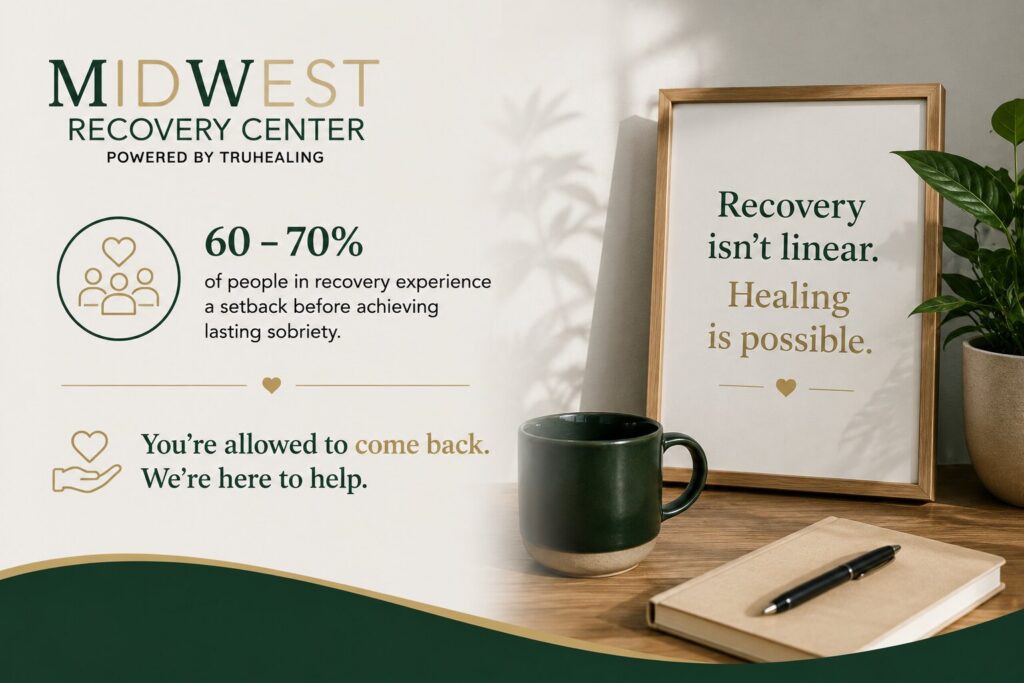
Recovery Is Not Linear—Even If Social Media Pretends It Is
A lot of people quietly believe everyone else in recovery is doing better than they are.
They see milestone posts, inspirational quotes, or success stories and assume their own messy process means they’re failing.
But real recovery often includes:
- Stops and starts
- Emotional shutdowns
- Relapses
- Periods of avoidance
- Fear of vulnerability
- Moments of wanting help and resisting it simultaneously
None of this makes recovery impossible.
One metaphor clinicians sometimes use is this: recovery is less like flipping a switch and more like learning how to walk after an injury. Some days feel steady. Other days feel frustrating and uneven. Progress can exist even when someone stumbles.
That doesn’t erase movement.
And leaving treatment once does not predict how the rest of your story ends.
You Don’t Need to “Start Over” Emotionally
Many people avoid re-entering because they dread repeating introductions or retelling painful details.
The good news is that returning to treatment usually isn’t about restarting from zero. It’s about reconnecting to support with new information about what made things difficult before.
A compassionate clinician isn’t looking for a performance of guilt.
They’re usually asking:
- What helped before?
- What became overwhelming?
- What support do you need now?
- What barriers got in the way?
- How can we make this feel more sustainable?
That conversation is very different from punishment.
People often assume treatment staff are angry when clients disappear. Most of the time, the actual feeling is concern.
Concern that someone isolated themselves. Concern that shame got louder. Concern that someone started believing they had to handle everything alone again.
The Middle of Recovery Can Feel Strangely Lonely
This part surprises people.
Early recovery is not always dramatic. Sometimes it’s quiet. Awkward. Emotionally flat. Sometimes people feel disconnected from themselves while trying to rebuild routines and relationships.
And if someone leaves treatment during that stage, isolation can grow quickly.
Without structure, days blur together. Small setbacks start feeling permanent. Shame becomes louder without supportive voices interrupting it.
That’s why reconnecting matters even before you feel fully motivated.
Support often comes before momentum — not after.
For people exploring care in locations or looking into treatment options near Toledo, Ohio, one of the most important things to remember is this:
You are allowed to come back before you’ve figured everything out.
How to Re-Enter Treatment Without Carrying All the Shame Alone
If you need practical steps, keep them simple.
Step 1: Contact someone directly
Text, call, or email. Don’t overthink wording.
Step 2: Be honest about what got difficult
Truth creates better support plans than pretending everything was fine.
Step 3: Ask questions instead of assuming
There may be more flexibility and understanding than you expect.
Step 4: Expect mixed emotions
Relief and embarrassment often show up together.
Step 5: Focus on reconnecting—not proving yourself
You do not need to audition for care.
That last part matters more than most people realize.
FAQ: Returning to Treatment After Leaving Midway
Can I go back to treatment after ghosting?
Yes. Many treatment centers regularly work with people who stopped attending and later decided to return. Re-entry is more common than most people realize.
Will people judge me for leaving treatment?
Most clinicians and group members understand that recovery can be difficult and nonlinear. Many people in treatment have experienced relapse, avoidance, or periods of disengagement themselves.
Do I have to explain everything that happened?
No. You can share as much as you feel comfortable sharing. Honest communication helps staff support you better, but you do not need to deliver a perfect explanation.
What if I started using again after leaving?
That does not mean you cannot return to treatment. In fact, many people seek support again after relapse or renewed substance use.
Will I have to start treatment completely over?
Not always. Treatment plans vary depending on your situation, previous progress, and current needs. Staff may help you transition back into care at an appropriate level.
What if I’m embarrassed to contact my old treatment center?
Embarrassment is extremely common after leaving treatment. Many people delay reaching out because they fear judgment. In reality, treatment professionals are often simply relieved to hear from someone again.
Can outpatient care still work if I struggled before?
Yes. Sometimes treatment needs to be adjusted rather than abandoned entirely. Different schedules, therapy approaches, or support systems can make a significant difference.
Is it normal to leave treatment because emotions got overwhelming?
Very normal. Recovery often surfaces emotions people spent years avoiding. Feeling emotionally flooded does not mean treatment failed or that you are incapable of healing.
You Are Still Allowed to Return
Leaving treatment midway does not erase your worth. It does not make you hopeless. And it does not mean recovery is no longer available to you.
Sometimes people step away because healing hurts before it starts helping. Sometimes shame gets louder than support for a while.
But silence does not have to become the ending of your story.
If you’re considering reconnecting with support, Midwest Recovery Center offers compassionate care for people navigating relapse, treatment burnout, and re-entry into recovery.
Call (888) 657-0858 or visit our intensive outpatient program services in Toledo, Ohio to learn more about our intensive outpatient program services in Toledo, Ohio.