
It’s Not About “Willpower” as Much as Feeling Safe Enough to Start

It’s Not About “Willpower” as Much as Feeling Safe Enough to Start

A lot of people begin searching for help quietly.

Late at night. During a lunch break. Sitting in a parking lot after promising themselves they’d stop “soon.” Sometimes the search starts after a scare. Sometimes it starts because life has slowly become smaller, more exhausting, and harder to manage.

And sometimes it starts with one difficult question:

Which kind of detox is actually safer?

If you’ve been researching medical detox program services, you may already feel overwhelmed by conflicting information. One website says detoxing at home is fine. Another makes everything sound terrifying. Meanwhile, you’re just trying to figure out what gives you the best chance of getting through withdrawal safely.

That confusion makes sense.

The truth is that opioid withdrawal affects everyone differently. Some people need around-the-clock medical support. Others may be able to detox safely with structured outpatient care and close monitoring. What matters most is choosing the level of support that matches your real situation — not the version of yourself you think you’re supposed to be.

Because recovery rarely starts with confidence. More often, it starts with honesty.

Why Opioid Detox Feels So Intimidating

Even people who genuinely want to stop using opioids often feel terrified of withdrawal.

Part of that fear comes from stories they’ve heard from friends or online. But a lot of it comes from lived experience. Many people have already tried to quit before. They remember the sweating, insomnia, nausea, anxiety, shaking, muscle pain, and crushing cravings that can make hours feel endless.

Withdrawal can feel like your body is panicking while your mind begs for relief.

That’s why conversations about inpatient vs outpatient detox matter. Not because one option is morally “better,” but because safety and support can change whether someone completes detox or returns to use just to stop the discomfort.

For some people, the biggest risk isn’t withdrawal itself. It’s what happens in the middle of it.

Why Detoxing Alone Can Become Dangerous

People sometimes minimize opioid withdrawal because it’s not always considered medically fatal the way alcohol or benzodiazepine withdrawal can be.

But “not always fatal” doesn’t mean harmless.

Withdrawal can lead to:

  • Severe dehydration from vomiting or diarrhea
  • Increased risk of relapse
  • Lowered tolerance after periods without opioids
  • Higher overdose risk if someone returns to previous doses
  • Intense depression, panic, or hopelessness
  • Dangerous mixing of substances to manage symptoms

A person in withdrawal is often exhausted, emotionally raw, and physically overwhelmed. Decision-making becomes harder. Cravings get louder. Isolation can make everything feel worse.

That’s why many people benefit from medical detox support, even if they originally believed they should handle it on their own.

Sometimes the safest choice is the one that removes as many barriers as possible between you and getting through the next few days.
Is Detox at Home Really Safer Than Treatment

What Inpatient Detox Actually Feels Like for Many People

People often imagine inpatient detox as cold, clinical, or frightening.

In reality, many people describe something very different.

Quiet. Structured. Relieving.

Not because withdrawal suddenly becomes easy, but because they’re no longer carrying it alone.

In a live-in detox setting, medical professionals can monitor symptoms, help manage discomfort, and respond quickly if complications arise. There’s also emotional relief in knowing someone is paying attention — especially during moments when cravings or anxiety spike.

For people with a longer history of opioid use, inpatient detox may provide a safer environment because it removes immediate access to substances during the hardest stage of withdrawal.

It can also help people who:

  • Have relapsed during previous quit attempts
  • Use fentanyl or multiple substances
  • Struggle with depression or anxiety alongside substance use
  • Lack stable support at home
  • Feel afraid they’ll leave treatment if symptoms become intense
  • Need medication-assisted detox support

There’s a common belief that needing more support means things are “really bad.”

That isn’t true.

Sometimes it simply means your nervous system has been under pressure for a long time and deserves care instead of punishment.

Why Some People Choose Outpatient Detox Instead

Not everyone needs inpatient care.

For some people, outpatient detox offers enough structure and medical oversight while allowing them to remain connected to daily responsibilities. Work obligations, parenting responsibilities, financial concerns, or personal comfort levels may all influence the decision.

In outpatient settings, people typically attend scheduled appointments, receive medical guidance, and may be prescribed medications to help manage withdrawal symptoms while recovering at home.

For the right person, this can work well.

But the safest outpatient experiences usually involve strong accountability and support systems.

Questions worth asking include:

  • Is someone available to help monitor me?
  • Can I avoid access to opioids at home?
  • Have I experienced severe cravings during previous attempts to stop?
  • Am I likely to isolate if symptoms get worse?
  • Do I have transportation and reliable follow-up care?

The goal isn’t to “tough it out.” The goal is to complete detox safely and continue moving forward.

The Emotional Side of Detox That People Don’t Talk About Enough

Most conversations about detox focus on physical symptoms.

But emotional symptoms can feel just as overwhelming.

Many people entering withdrawal experience shame, grief, panic, irritability, or emotional numbness. Some feel embarrassed they need help at all. Others worry detox means admitting they’ve “become an addict,” even if they still feel uncertain about labels.

This is especially true for people who are sober curious or questioning their relationship with opioids without fully identifying with traditional recovery language.

You do not have to fit a stereotype to deserve support.

A surprising number of people seeking detox still maintain jobs, relationships, routines, or outward stability. From the outside, their lives may look functional. Inside, they feel exhausted.

Like they’re constantly negotiating with themselves.

One of the hardest parts of opioid dependence is how small life can quietly become. Days start revolving around avoiding withdrawal, managing symptoms, or planning around use. Even moments that should feel meaningful become overshadowed by physical and emotional stress.

Recovery often begins the moment someone finally stops trying to prove they can suffer through it alone.

How Medical Detox Can Reduce the Risk of Relapse

Many people relapse during withdrawal not because they don’t care about recovery, but because withdrawal can become unbearable without support.

That distinction matters.

Medical detox programs may use medications, monitoring, hydration support, emotional care, and structured treatment planning to reduce distress and improve safety. The goal isn’t simply to “get substances out of your system.” It’s to stabilize your body enough to help you think clearly again.

When someone feels physically safer, they’re often more able to:

  • Continue treatment after detox
  • Participate in therapy
  • Explore long-term recovery options
  • Rebuild trust with loved ones
  • Begin addressing mental health concerns

Detox is not the whole recovery process. But it can become the doorway into one.

And sometimes the first doorway matters more than people realize.

What If You’re Still Not Sure Which Option Is Right?

You don’t need to have everything figured out before reaching out.

A good treatment center should help you evaluate your needs honestly instead of forcing you into one predetermined path. That includes asking questions about your health history, withdrawal experiences, mental health, living environment, and safety concerns.

The “right” level of care isn’t about toughness. It’s about giving yourself the highest chance of staying safe and continuing recovery after detox ends.

Sometimes people call treatment centers expecting pressure and instead feel something unexpected:

Relief.

Relief that someone understands. Relief that they don’t have to explain every detail perfectly. Relief that they can ask questions without being judged.

For people exploring support in Locations or looking into treatment options near Toledo, those conversations can make the entire process feel less frightening.

FAQ: Opioid Detox Safety and Treatment Options

Is inpatient detox safer than outpatient detox for opioids?

For many people with moderate to severe opioid dependence, inpatient detox can provide a higher level of safety because of 24/7 monitoring and reduced access to substances. However, outpatient detox may be appropriate for people with strong support systems, stable living environments, and lower medical risk.

Can opioid withdrawal be dangerous?

While opioid withdrawal is not always medically life-threatening, it can still become dangerous. Risks include dehydration, relapse, overdose after reduced tolerance, and severe emotional distress.

How long does opioid detox usually last?

Withdrawal timelines vary depending on the substance used, frequency of use, overall health, and whether fentanyl or other substances are involved. Many people experience the most intense symptoms during the first several days, though cravings and emotional symptoms may last longer.

Do detox programs use medication?

Many medical detox programs use medications to reduce withdrawal symptoms, improve comfort, and support safety during the detox process. Treatment plans vary based on individual needs and medical history.

Can I work while doing outpatient detox?

Some people continue working during outpatient detox, but it depends on the severity of symptoms and the type of work they do. Withdrawal can affect sleep, focus, mood, and physical comfort, so flexibility and support are important.

What happens after detox ends?

Detox is often the first step in recovery, not the entire process. Many people continue into therapy, outpatient treatment, peer support, or ongoing recovery planning after completing detox.

Will I be judged for needing detox?

No. Seeking help for opioid use is a medical and emotional health decision, not a moral failure. Treatment professionals work with people from all backgrounds, including people who never expected to need support themselves.

Is it okay to ask questions before committing to treatment?

Absolutely. Asking questions is part of making an informed decision. You deserve to understand your options and feel safe about the care you choose.

You Don’t Have to “Hit Bottom” to Deserve Help

A lot of people wait longer than they need to because they believe their situation isn’t serious enough yet.

But recovery is not reserved for people who’ve lost everything.

Sometimes it starts with a quiet realization that you’re tired of living this way.

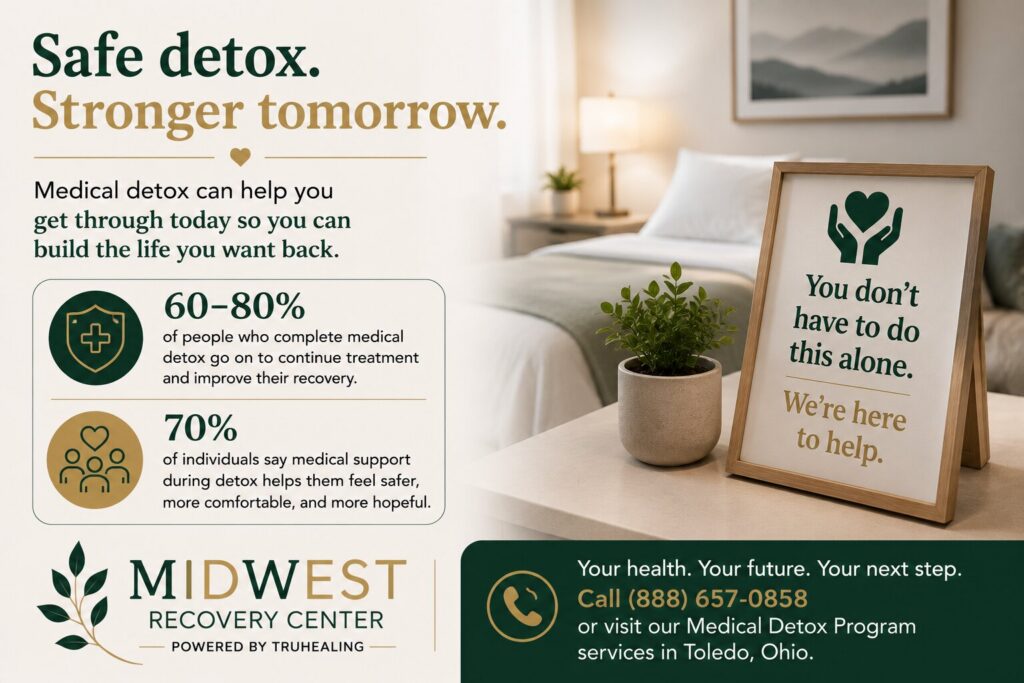
If you’re considering detox support in Ohio, Midwest Recovery Center offers compassionate care designed to help people feel safe, medically supported, and understood through the earliest stages of recovery.

Call (888) 657-0858 or visit our medical detox program services in Toledo, Ohio to learn more about our medical detox program services in Toledo, Ohio.
*The stories shared in this blog are meant to illustrate personal experiences and offer hope. Unless otherwise stated, any first-person narratives are fictional or blended accounts of others’ personal experiences. Everyone’s journey is unique, and this post does not replace medical advice or guarantee outcomes. Please speak with a licensed provider for help.

Level Of Care

PHP (Partial Hospitalization Program)
Daytime treatment with structure, therapy, and support—return home each night.

IOP (Intensive Outpatient Program)
Flexible therapy a few days a week to balance life and recovery.

OP (Outpatient Program)
Ongoing therapy and support to maintain progress.

MAT (Medication-Assisted Treatment)
Evidence-based care using medication and counseling to reduce cravings.

Ready to Start?
Call (833) 657-0858: to learn which program fits your recovery goals.

Who are you seeking help for? *

We’re here to listen and help you find the right path forward. Please tell us who needs care so we can match you with the best program and support.

💬 Your responses are 100% confidential and never shared outside our admissions team.

Recovery Shouldn’t Have to Wait — Begin Treatment Today.

At Ohio Treatment Center in Toledo, Ohio, we make it simple to take that first step toward healing. Our streamlined admissions process can often lead to same-day placement in treatment for MAT, PHP, IOP and more..

Call today for a free, confidential consultation with our caring admissions team — we’ll walk you through every step with compassion and clarity.

Call (833) 657-0858
Why call us?

Check Your Insurance Coverage in Minutes

We’ll handle the insurance details — so you can focus on getting better.

At Ohio Treatment Center, we work with most major private insurance providers to make treatment affordable and accessible. Complete our quick, confidential form below, and we’ll let you know if your plan is in-network — without contacting your insurance company.

Commonly accepted providers include:
Blue Cross Blue Shield (BCBS) • Aetna • Cigna • UnitedHealthcare • Humana • Anthem • Tricare

What Happens Next

  • Fill out the short form below
  • Our team reviews your benefits
  • We’ll contact you with your coverage details

Getting help shouldn’t be stressful. Let’s find out what your insurance can cover today.

Level Of Care

Detox
Begin recovery safely with 24/7 medical support. Our detox program helps you manage withdrawal comfortably and prepares you for the next step.

Residential Treatment
Continue healing in a supportive, structured setting with daily therapy, wellness activities, and round-the-clock care.

Aftercare
Before you leave, we’ll help you create a plan for ongoing support and lasting recovery.

Ready to Start?
Call (833) 657-0858: to learn which program fits your recovery goals.

Who are you seeking help for? *

We’re here to listen and help you find the right path forward. Please tell us who needs care so we can match you with the best program and support.

💬 Your responses are 100% confidential and never shared outside our admissions team.

Recovery Shouldn’t Have to Wait — Begin Treatment Today.

At Midwest Detox Center in Maumee, Ohio, we make it simple to take that first step toward healing. Our streamlined admissions process can often lead to same-day placement in treatment for medically supervised detox and residential treatment programs.

Call today for a free, confidential consultation with our caring admissions team — we’ll walk you through every step with compassion and clarity.

Call (833) 657-0858
Why call us?

Check Your Insurance Coverage in Minutes

We’ll handle the insurance details — so you can focus on getting better.

At Midwest Detox, we work with most major private insurance providers to make treatment affordable and accessible. Complete our quick, confidential form below, and we’ll let you know if your plan is in-network — without contacting your insurance company.

Commonly accepted providers include:
Blue Cross Blue Shield (BCBS) • Aetna • Cigna • UnitedHealthcare • Humana • Anthem • Tricare

What Happens Next

  • Fill out the short form below
  • Our team reviews your benefits
  • We’ll contact you with your coverage details

Getting help shouldn’t be stressful. Let’s find out what your insurance can cover today.

Level Of Care

Medical Detox
24/7 medically supervised detox to help you safely withdraw from drugs or alcohol while managing symptoms and preventing complications.

Inpatient Treatment
A structured, residential setting that provides continuous medical care, counseling, and therapeutic support to build a foundation for long-term recovery.

Residential Program
Comfortable, home-like housing where you can focus fully on healing with daily therapy, peer support, and holistic recovery services.

Ready to Start?
Call (833) 657-0858: to learn which program fits your recovery goals.

Who are you seeking help for? *

We’re here to listen and help you find the right path forward. Please tell us who needs care so we can match you with the best program and support.

💬 Your responses are 100% confidential and never shared outside our admissions team.

Recovery Shouldn’t Have to Wait — Begin Detox Today

At Ohio Detox Center in Maumee, Ohio, we make it simple to take that first step toward healing. Our streamlined admissions process can often lead to same-day placement in detox or inpatient treatment for substance use and co-occurring mental health conditions.

Call today for a free, confidential consultation with our caring admissions team — we’ll walk you through every step with compassion and clarity.

Call (833) 657-0858
Why call us?

Check Your Insurance Coverage in Minutes

We’ll handle the insurance details — so you can focus on getting better.

We’ll take care of the details — so you can focus on getting better.
At Ohio Detox Center, we work with Ohio Medicaid and most major insurance providers to make treatment affordable and accessible.

Here’s how it works:

  1. Fill out the short form below
  2. Our team reviews your benefits
  3. We’ll contact you with your coverage details

Getting help shouldn’t be stressful. Let’s find out what your insurance can cover today.

Levels of Care

Detox
We understand that taking the first step can feel overwhelming. Our detox program offers a compassionate, medically supported environment where you can rest, heal, and begin recovery safely. You’ll never go through it alone — our team is with you every step of the way.

IOP (Intensive Outpatient Program)
A flexible treatment option that lets you maintain work, school, or family responsibilities while attending therapy several days a week. IOP focuses on relapse prevention, coping skills, and long-term recovery through group and individual sessions.

Residential
Residential care gives you the time and space to focus fully on healing. Surrounded by supportive staff and peers, you’ll work through underlying causes of addiction, rebuild healthy routines, and rediscover confidence in your recovery journey.

MAT (Medication-Assisted Treatment)
Combining FDA-approved medications with counseling and behavioral therapy, MAT helps reduce cravings and withdrawal symptoms related to opioid or alcohol use. Each treatment plan is closely monitored to ensure comfort, safety, and lasting recovery.

Ready to Start?
Call (833) 657-0858: to learn which program fits your recovery goals.

Who are you seeking help for? *

We’re here to listen and help you find the right path forward. Please tell us who needs care so we can match you with the best program and support.

Myself

A loved one or family member

💬 Your responses are 100% confidential and never shared outside our admissions team.

Check Your Insurance Coverage in Minutes

We’ll handle the insurance details — so you can focus on getting better.

At Midwest Centers at Youngstown, we work with most major private insurance providers to make treatment affordable and accessible. Complete our quick, confidential form below, and we’ll let you know if your plan is in-network — without contacting your insurance company.

Commonly accepted providers include:
Blue Cross Blue Shield (BCBS) • Aetna • Cigna • UnitedHealthcare • Humana • Anthem • Tricare

What Happens Next

  • Fill out the short form below
  • Our team reviews your benefits
  • We’ll contact you with your coverage details

Getting help shouldn’t be stressful. Let’s find out what your insurance can cover today.

Recovery Shouldn’t Have to Wait — Begin Treatment Today.

At Midwest Centers at Youngstown in Ohio, we make it simple to take that first step toward healing. Our streamlined admissions process can often lead to same-day placement in treatment for substance use or co-occurring mental health disorders.

Call today for a free, confidential consultation with our caring admissions team — we’ll walk you through every step with compassion and clarity.

Level Of Care

Partial Hospitalization Program (PHP)
Our PHP offers a highly structured, supportive environment where you can focus on recovery during the day and return home at night. It’s an ideal step between inpatient and outpatient care, providing daily therapy, accountability, and a strong recovery routine.

Intensive Outpatient Program (IOP)
Our IOP gives you the flexibility to continue work, school, or family life while receiving evidence-based treatment several days a week. You’ll participate in group and individual therapy focused on relapse prevention, coping skills, and long-term healing.

Outpatient Program (OP)
For those transitioning from a higher level of care or seeking ongoing support, our outpatient program offers continued therapy at a pace that fits your lifestyle. It’s a supportive bridge that helps you maintain recovery and stay connected to care.

Medication-Assisted Treatment (MAT)
MAT combines FDA-approved medications with therapy and counseling to reduce cravings and support long-term recovery from opioid or alcohol addiction. Our team monitors each plan closely to ensure safety, comfort, and effectiveness.

Ready to Start?
Call (833) 657-0858: to learn which program fits your recovery goals.

Who are you seeking help for? *

We’re here to listen and help you find the right path forward. Please tell us who needs care so we can match you with the best program and support.

Myself

A loved one or family member

💬 Your responses are 100% confidential and never shared outside our admissions team.

Recovery Shouldn’t Have to Wait — Begin Treatment Today.

At Midwest Recovery Center in Toledo, Ohio, we make it simple to take that first step toward healing. Our streamlined admissions process can often lead to same-day placement in treatment for substance use or co-occurring mental health disorders.

Call today for a free, confidential consultation with our caring admissions team — we’ll walk you through every step with compassion and clarity.

Check Your Insurance Coverage in Minutes

We’ll handle the insurance details — so you can focus on getting better.

At Midwest Recovery Center, we work with most major private insurance providers to make treatment affordable and accessible. Complete our quick, confidential form below, and we’ll let you know if your plan is in-network — without contacting your insurance company.

Commonly accepted providers include:
Blue Cross Blue Shield (BCBS) • Aetna • Cigna • UnitedHealthcare • Humana • Anthem • Tricare

What Happens Next

  • Fill out the short form below
  • Our team reviews your benefits
  • We’ll contact you with your coverage details

Getting help shouldn’t be stressful. Let’s find out what your insurance can cover today.