
When your child starts changing in front of your eyes—becoming someone you hardly recognize—it’s one of the hardest things a parent can experience. Maybe they used to be outgoing and joyful, but now they’re irritable, distant, or always tired. Maybe they brush you off when you ask questions or get defensive when you bring up their drinking. Maybe you’ve found empty bottles, smelled alcohol on their breath, or noticed excuses that just don’t add up.
In these moments, it’s natural to feel torn between denial and panic. You may wonder if you’re overreacting, if it’s just a phase, or if you’ve done something wrong.
You haven’t failed. And you’re not alone.
At Midwest Recovery Center, we work with families in crisis every day—especially parents who are watching their young adult children slip into patterns they don’t know how to stop. If you’re trying to figure out whether alcohol addiction treatment is needed, this guide is here to help you understand the early red flags and take that first step with clarity and compassion.
Explore our alcohol addiction treatment options for young adults and families in Toledo, Ohio.
Why Early Red Flags Are Often Overlooked
It’s surprisingly easy to miss the signs of early addiction—especially with alcohol. That’s partly because alcohol use is so normalized, especially among teens and young adults. College parties, stress drinking, and social binge drinking can all mask more dangerous patterns. Parents are often told to “give it time” or reminded that “everyone experiments.”
But deep down, most parents know when something isn’t just a phase.
What makes this even harder is that early signs don’t always look dramatic. Sometimes they’re quiet, subtle shifts—mood swings, missed appointments, forgotten responsibilities. Other times they’re disguised as stress, burnout, or growing pains.
You’re not imagining it. And you don’t need a formal diagnosis to trust your gut.
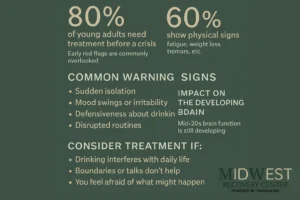
Common Emotional and Behavioral Warning Signs
One of the most telling indicators that alcohol is becoming a problem is behavioral change—especially if it happens quickly or without a clear explanation. Some warning signs to watch for include:
- Sudden isolation: Avoiding family dinners, staying in their room, or consistently pulling away from social activities they once enjoyed.
- Mood swings or irritability: Snapping at you over small things, unpredictable emotional reactions, or seeming emotionally shut down.
- Defensiveness about drinking: Getting angry or evasive when asked about alcohol, hiding bottles, or denying use despite evidence.
- Disrupted routines: Skipping class, calling off work, or missing obligations without clear reasons.
These changes might not seem alarming at first—but taken together, they often signal that alcohol is starting to interfere with how your child is functioning in daily life.
Physical Signs That Often Accompany Emotional Changes
While behavioral shifts are often the first signs parents notice, physical symptoms can also emerge as alcohol dependence deepens. These include:
- Frequent fatigue or sleeping during the day
- Unexplained weight loss or changes in appetite
- Glassy or bloodshot eyes
- Tremors or shaking hands
- Increased tolerance or signs of withdrawal (like sweating, irritability, or anxiety)
If your child is showing both physical and emotional signs, it’s time to start a conversation—even if they’re not ready to acknowledge a problem yet.
Understanding How Alcohol Affects the Developing Brain
For young adults, alcohol doesn’t just affect behavior—it alters brain chemistry. The parts of the brain that manage impulse control, decision-making, and emotional regulation are still developing into a person’s mid-20s. Regular alcohol use during this time can disrupt that growth.
This doesn’t mean your child is “damaged” or beyond help. But it does explain why you may be seeing such intense changes—and why early intervention matters.
Alcohol addiction treatment is not just about stopping the behavior. It’s about helping the brain and body heal from what’s been disrupted.
When Is Alcohol Addiction Treatment the Right Step?
There is no perfect moment when treatment suddenly becomes “the answer.” Often, parents wait until a crisis happens—an overdose, an arrest, a call from the ER—before seeking help.
But the truth is, treatment can (and should) start before rock bottom.
Consider seeking alcohol addiction treatment if:
- Your child’s alcohol use is interfering with their ability to function at school, work, or in relationships.
- You’ve tried setting boundaries or having conversations, and nothing seems to stick.
- You find yourself managing emergencies or constantly cleaning up emotional or financial messes.
- You’re feeling afraid of what might happen next if nothing changes.
Reaching out doesn’t mean committing your child to a facility. It means opening a door—to options, support, and conversations grounded in care.
What Alcohol Addiction Treatment Can Look Like
Modern treatment is not what it used to be. At Midwest Recovery Center, we offer programs that meet young adults where they are—emotionally, socially, and developmentally.
Our treatment options include:
- Outpatient programs that allow your child to live at home while attending therapy multiple times a week.
- Individual counseling focused on self-awareness, emotional regulation, and identifying underlying causes of substance use.
- Group therapy where young adults can connect with others their age, feel less alone, and build support networks.
- Family involvement that empowers you to participate in the healing process—without blame or shame.
Looking for alcohol addiction treatment in Maumee, Ohio? Or maybe you’re closer to Oregon or Perrysburg? Our team serves families across the Toledo region and beyond.
Talking to Your Child About Treatment Without Creating Distance
The way you talk about alcohol matters. If you’re worried about pushing your child away or triggering defensiveness, try this approach:
- Lead with care, not control:
“I love you. I’m not trying to control you. I’m just scared because I see you hurting.” - Avoid labels, focus on impact:
“I’m not calling you an addict. I’m just seeing how this is affecting your life.” - Use real observations, not judgment:
“You’ve missed three shifts at work, and your mood has been different. That’s not like you.” - Offer a next step, not an ultimatum:
“Would you be open to just talking to someone at Midwest Recovery? You don’t have to commit to anything.”
Sometimes that first conversation doesn’t go well. That’s okay. Keep the door open. Your child may need time—but your words will stay with them.
FAQ: Parents and Alcohol Addiction Treatment
What if my child refuses treatment?
You can’t force someone to want recovery. But you can set boundaries, protect your home environment, and continue offering options without giving up. Sometimes just knowing help is available makes a difference down the line.
Is outpatient treatment enough?
For many young adults, yes. Outpatient treatment offers structure and support while maintaining flexibility. We’ll help assess what level of care fits your child’s needs.
How do I protect my other children during this time?
It’s hard to balance one child’s crisis with the needs of the rest of your family. We offer parent support services and family therapy to help everyone feel seen, safe, and supported.
Will treatment fix everything?
No treatment is magic—but it is a starting point. It can give your child the tools, support, and structure they need to build a healthier life—if they’re willing to engage.
You Didn’t Cause This. But You Can Be Part of the Healing.
There’s a lie parents often believe: that they caused their child’s addiction. That they missed something. That it’s too late.
Here’s the truth: This is not your fault. And it’s not too late.
There’s help. There’s support. There’s a path forward—for your child and for you.
Call (888) 657-0858 to learn more about Alcohol Addiction Treatment at Midwest Recovery Center in Toledo, Ohio. Whether your child is ready or not, we’ll help you navigate what comes next—with compassion and clarity.