
You left before you meant to. Or maybe you didn’t mean to leave at all. You just stopped showing up, stopped checking in, stopped responding.
Ghosted your program? Same. You’re not the only one.
Maybe you told yourself it was temporary, that you’d go back when you were “really ready.” But now days or weeks—or months—have passed. And you’re still not okay.
So now there’s this wall. Not just the relapse or the drinking or the chaos—but the shame.
You might be wondering:
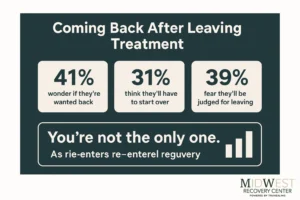
- “Will they even want me back?”
- “Do I have to start all over again?”
- “What if they think I’m just going to flake again?”
Here’s the truth: you can come back. You’re still allowed. And there’s no lecture waiting at the door.
This is a peer’s guide to re-entering a residential treatment program—without shame, without apology, and without having to be 100% ready.
Step 1: Know That You’re Not Alone
You’re not the only one who walked out. You’re not the only one who panicked halfway through, or ghosted your IOP, or disappeared after detox. It happens more than you think.
Sometimes treatment surfaces emotions we’re not ready to face. Sometimes outside life pulls us away—kids, jobs, crises. And sometimes, we just get overwhelmed and bolt.
Leaving doesn’t mean you’re broken or unworthy. It means you hit your edge—and that’s information, not failure.
Plenty of people come back. So can you.
Step 2: Reaching Out Doesn’t Have to Be Perfect
The idea of calling back your treatment center after leaving can feel unbearable. What do you even say?
Let’s make it simple. You don’t have to deliver a speech or explain every detail. Just say this:
“Hey… I left before I was ready. And I think I want to come back.”
That’s it.
At Midwest Recovery Center, you’ll be met with respect, not judgment. Our staff are trained for this moment. Many of them have lived it too. You’ll never be shamed for needing another round of care.
Step 3: Let Go of the “Start Over” Myth
This one’s big. You might be dreading the idea of going back because it feels like erasing everything you did before.
It’s not.
Re-entering residential treatment isn’t about starting from scratch. It’s about building on what you’ve already learned—even if you didn’t stay long last time. Even if you think you weren’t paying attention.
You still carry that work with you. And we’ll meet you where you are now—not where you were when you left.
Step 4: Be Honest About What Made You Leave
This is your reset moment—but not the kind that wipes the slate clean. This is the kind that says: What didn’t work for you last time? Let’s fix it.
You don’t need to be ashamed of the truth. Maybe:
- The group sessions felt overwhelming.
- You didn’t feel connected to your therapist.
- You were homesick or triggered.
- You started using again and couldn’t admit it.
Say the thing. This is your moment to reshape the experience so it fits you better.
We want it to work for you this time. But to do that, we need to know what wasn’t working before.
Step 5: Prepare for a Gentle Re-entry
Rejoining a residential treatment program doesn’t mean being thrown back into intensity. Your care team will work with you to ease back in.
You might spend the first few days:
- Stabilizing physically and emotionally
- Reconnecting with staff or peers
- Reviewing your treatment goals
- Building trust back on your timeline
We won’t rush your process. We’ll help pace it.
And if you’re local—maybe looking for residential treatment in Maumee, Ohio or Oregon, Ohio?—you can come back home to a program that understands your full story.
Step 6: Expect the Guilt, but Don’t Let It Lead
There’s probably a part of you that’s still carrying guilt. Maybe you feel like you let your family down. Or wasted someone’s time. Or proved all your doubts right.
Let’s name that, but not follow it.
Guilt might come with you. That’s okay. But it doesn’t get to steer the bus. Your job now isn’t to apologize forever—it’s to engage.
You can grieve what you missed and still be proud of coming back. You can feel messy and still belong.
Step 7: Focus on What You Need Right Now
You don’t have to have a 90-day plan. You don’t have to say, “This time I’ll get it right.”
All you have to do is ask: What do I need today?
- Do I need to sleep?
- Do I need someone to listen?
- Do I need help getting through cravings?
- Do I need to feel safe?
That’s where recovery begins again—not in declarations, but in tiny acts of returning to yourself.
FAQ: Coming Back After Leaving Treatment
Will I be judged for ghosting?
No. Midwest Recovery Center is designed for re-entry. We understand that treatment isn’t linear, and leaving doesn’t mean you’ve failed. You’ll be welcomed, not judged.
Do I have to do intake all over again?
Maybe—but it’ll be faster and easier than your first time. Since we already know you, we can pick up where we left off and adapt based on your current needs.
What if I’m still using?
That’s okay. Many people come back while actively drinking or using. We’ll help you detox safely and get stabilized before diving back into treatment.
Can I return even if I left on bad terms?
Yes. Unless you were discharged for safety reasons, most programs—including ours—leave the door open. And even if things were rough, we’re open to reconnection.
Will insurance cover another round?
In many cases, yes. Coverage varies, but our admissions team can help verify your benefits and walk you through your options with no pressure.
I’m afraid I’ll leave again. What if I can’t do it?
Recovery isn’t about never struggling again. It’s about building resilience—and building safety nets for when things get hard. That’s what we’re here for.
You’re Still Welcome. You’re Still Worth It.
Let’s be real: coming back takes guts. It takes humility. It takes trust you may not even feel yet.
But coming back also says something powerful:
“I’m not done yet.”
You didn’t blow your chance. You don’t have to earn your way back. You just have to show up—messy, scared, unsure—and let us hold the rest.
Call (888) 657-0858 or visit our residential treatment program page to reconnect with care in Toledo, Ohio. No questions too big. No shame too heavy. Just a real conversation, and the next right step.