

Sometimes you just stop showing up. You don’t mean to disappear. It starts with a skipped day. Then another. You tell yourself you’ll go back next week, but something gets in the way—life, fear, guilt. And suddenly, it’s been weeks or months since your last session.
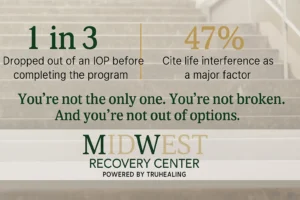
If you’ve ghosted your intensive outpatient program (IOP), you’re not the only one. You’re not broken. And you’re not out of options.
This blog is a step-by-step guide to help you return—not just to treatment, but to yourself. To rebuild trust in both directions: between you and your recovery team, and between you and the part of you that still wants healing.
Explore our Intensive Outpatient Program in Toledo, Ohio
Start by Being Honest About What Pulled You Away
Leaving IOP doesn’t mean you gave up. But something shifted.
Maybe it was emotional exhaustion. Maybe life got too chaotic. Maybe you hit a wall in therapy and didn’t know how to talk about it. Or maybe you relapsed and didn’t want to face the shame.
All of that is normal. Seriously. Recovery isn’t a straight line—it’s often a loop, a spiral, a series of stumbles followed by small steps forward.
If you’re ready to come back, the first thing to do is tell yourself the truth: Why did I leave? Not to shame yourself, but to start from reality.
You’re Not the Only One Who Left
Most people don’t talk about it, but IOP dropout is common.
Sometimes the schedule becomes too much. Other times the emotional vulnerability hits harder than expected. And let’s be honest—sometimes, the momentum just slips away.
You don’t have to earn your way back by explaining everything perfectly. You don’t need a dramatic apology.
Just know this: whether you’re in Toledo or looking for an intensive outpatient program in Perrysburg, Ohio, you’re not alone in this pattern—and there’s still a place for you in treatment.
Reach Out Without Overthinking It
You might think you need to write a long explanation. You don’t.
One message is enough. One call. One sentence.
You can say:
- “I’m thinking about coming back. Can we talk?”
- “I left before and I feel awkward, but I want help.”
- “Is it okay if I return to the program?”
That’s more than enough. At Midwest Recovery, we don’t need a speech. We just want to hear from you. And we’ll meet you with curiosity, not criticism.
Expect Relief, Not Reprimand
A lot of people avoid coming back because they expect to be scolded or shamed.
That’s not how we work. Our IOP teams understand relapse, dropout, avoidance, and ghosting—not just clinically, but compassionately.
Most of the time, what you’ll hear is: “We’re glad you reached out.”
Because we are. Always.
Rebuild Trust by Showing Up (Not Explaining Everything)
If you’ve been gone for a while, you might feel like you have to prove something. That you’re serious this time. That you “really mean it.”
But trust doesn’t rebuild through explanations. It rebuilds through presence.
One group attended. One check-in made. One time you stay when you want to run. That’s the work.
Your clinicians don’t need you to be perfect. They just need you to be present. Even quietly.
Let Yourself Start Over—Even If It’s Not From the Beginning
You don’t need to go back to day one. You’re not starting from scratch. Even if you left mid-way, you learned something. About your patterns. About your needs. About what helps or hinders your recovery.
Returning with that knowledge means you’re not the same person who started. And that’s good.
You might ask for a modified schedule. You might request a different group. You might want more individual therapy at first. That’s okay. We’ll meet you where you are.
How to Rebuild Trust With Yourself (Even If You Don’t Fully Believe Yet)
Maybe the harder part isn’t trusting your team—it’s trusting you.
You may hear thoughts like:
- “I always bail.”
- “I can’t stick to anything.”
- “What’s the point? I’ll just leave again.”
Those aren’t truths. They’re echoes of pain. To rebuild self-trust, you don’t need certainty—you just need a small willingness to keep trying.
Try this:
- Set a micro-goal (e.g., attend one full week).
- Keep a recovery notebook—no pressure, just thoughts.
- Celebrate small wins like showing up, even late.
- Let a support person know your fears—and ask them to stay close.
What to Say When You Come Back
You don’t need a script, but if it helps, here are some ideas:
“I ghosted last time because I was overwhelmed. I want to try again, but I’m nervous.”
“I don’t really know what I need, but I want support.”
“It took me a while to admit I want help again. Thanks for letting me come back.”
This level of honesty goes a long way. It builds connection. It opens space. And it models something powerful for others in the room, too.
You’re Still Welcome in Recovery
There is no “too late.” No maximum number of chances.
At Midwest Recovery Center, we work with people who leave, return, leave again, and find their way back one more time. And we don’t judge that.
We plan for it.
Whether you’re in Toledo or looking for an intensive outpatient program in Oregon, Ohio, the door is still open.
Real Questions From Real IOP Dropouts (And Our Honest Answers)
What if I left after a relapse? Will I be judged?
No. Relapse is a common part of the recovery journey. We address it clinically and compassionately—not with shame.
Do I have to explain why I left?
Only if you want to. Some clients want to talk through it, others don’t. Either way, we’ll help you focus on moving forward.
Is there a limit to how many times I can rejoin?
No. We’re here for you, whether it’s your first time returning or your fifth. Recovery isn’t linear—and our support isn’t conditional.
What if I feel ashamed to show my face again?
That’s okay. Shame often fades once you’re back in the room. You’ll likely be surprised at how normal it feels—and how many people relate.
Can I still come back if I ghosted without saying anything?
Absolutely. You don’t owe us an explanation. We’ll just be glad you came back.
Quick Tips for Returning to IOP With Self-Kindness
1. Don’t punish yourself with perfection.
Missing a few sessions doesn’t mean you need to “make up for it” by doing everything right. Just return.
2. Ask for what you need.
Maybe it’s a slower pace. A different therapist. A re-entry meeting. You’re allowed to ask.
3. Bring someone with you.
A peer, a friend, a sibling. Having someone nearby can ease first-day nerves.
4. Remind yourself why you came.
Not why you left—but why you came in the first place. That’s your anchor.
We Still Want to Hear From You
If you stepped away from IOP, the next step isn’t explaining—it’s reconnecting. At Midwest Recovery Center, we don’t judge the pause. We welcome the return.
Call (888) 657-0858 or visit our Intensive Outpatient Program page to see what coming back could look like. We serve individuals across Toledo, Maumee, Perrysburg, and Oregon, Ohio.
There’s still time. There’s still space. And yes, there’s still hope.