
I remember the exact feeling.
Not just what happened—but what came after.
That heavy, sinking thought:
“I just ruined everything.”
Ninety days.
Three full months of showing up, doing the work, building something real.
And then… one moment turned into another.
And suddenly it didn’t feel like progress anymore—it felt like failure.
If you’re in that space right now, or you’ve been there before, I want to talk to you like someone who’s lived it.
Not like you’re starting over.
Not like you lost everything.
Because you didn’t.
At one point, I found myself looking back at safe withdrawal support again—not as a reset button, but as a way to steady myself after things started slipping.
It Didn’t Fall Apart All at Once
That’s the part I wish I understood earlier.
There wasn’t a dramatic moment where everything collapsed.
No big decision.
No clear turning point.
It was slower than that.
Quieter.
It looked like:
- Skipping things that used to keep me grounded
- Letting certain thoughts pass without checking them
- Telling myself, “I’m fine now. I don’t need as much.”
Nothing about it felt urgent.
That’s what made it dangerous.
Because it didn’t feel like a problem—until it was.
The Confidence That Wasn’t Actually Confidence
There’s a kind of confidence that shows up after some time sober.
And it feels earned.
Like you’ve proved something to yourself.
Like you’ve moved past the hardest part.
But for me, it turned into something else.
Not real confidence—more like quiet overconfidence.
The kind that says:
- “I don’t need as much support anymore.”
- “I can handle this differently now.”
It didn’t feel reckless.
It felt reasonable.
And that’s exactly why I didn’t question it.
The First Slip Was Almost Invisible
It didn’t feel like a big deal.
That’s the truth.
No alarms went off.
No immediate consequences.
Just a moment I told myself didn’t matter.
And for a brief second… it didn’t.
That’s the trap.
Because when nothing bad happens right away, your brain starts to rewrite the story.
“See? You’re fine.”
But what I didn’t see yet was how quickly that moment would grow.
What Actually Changes After That First Moment
It’s not just what you do.
It’s how you start thinking.
The shift is subtle:
- Justifying instead of questioning
- Minimizing instead of being honest
- Avoiding instead of addressing
And slowly, the clarity you had during those 90 days starts to fade.
Not disappear.
Just… get quieter.
The Weight of Shame Is Heavier Than the Slip Itself
This is where things hit hardest.
Not the behavior.
The meaning you attach to it.
The voice that says:
- “You blew it.”
- “You’re back at the beginning.”
- “What was the point of any of that?”
That voice feels real.
It feels accurate.
But it’s not.
Because it ignores everything you built to get there in the first place.
You Didn’t Lose What You Built—Even If It Feels That Way
This is the part I wish someone had said to me clearly:
You don’t lose your progress because you slipped.
You still have:
- The awareness you built
- The patterns you learned
- The strength it took to get those 90 days
None of that disappears.
It’s still there.
It just feels buried under everything else right now.
Why Going Back for Support Feels So Hard
This part is complicated.
Because the hesitation isn’t about whether you need help.
It’s about what it means.
It feels like:
- Admitting failure
- Starting over
- Losing credibility with yourself
That’s what kept me stuck longer than I needed to be.
Not the relapse itself.
The story I told myself about it.
The Moment Things Started Shifting Again
It wasn’t dramatic.
It wasn’t a breakthrough.
It was a quiet moment where I stopped fighting the truth.
Where I said:
“Okay… I need support again.”
Not forever.
Not as a punishment.
Just as a next step.
That honesty didn’t fix everything overnight.
But it opened the door.
This Isn’t Starting Over—It’s Starting From Experience
This is where your perspective matters.
Because you can look at this as:
- Starting from zero
Or:
- Starting from experience
You know more now.
You’ve lived through the early stages.
You’ve seen what helps—and what slips.
That’s not a reset.
That’s a deeper starting point.
The Part That Actually Brings People Back
It’s not motivation.
It’s not pressure.
It’s willingness.
Willingness to:
- Be honest about what happened
- Ask for help again without hiding
- Let go of the idea that you have to “fix it alone”
That’s what shifts things.
Not perfection.
Not willpower.
Just willingness.
You’re Not the Only One Who’s Been Here
It might feel isolating.
Like everyone else is moving forward and you’re the one who messed up.
But that’s not reality.
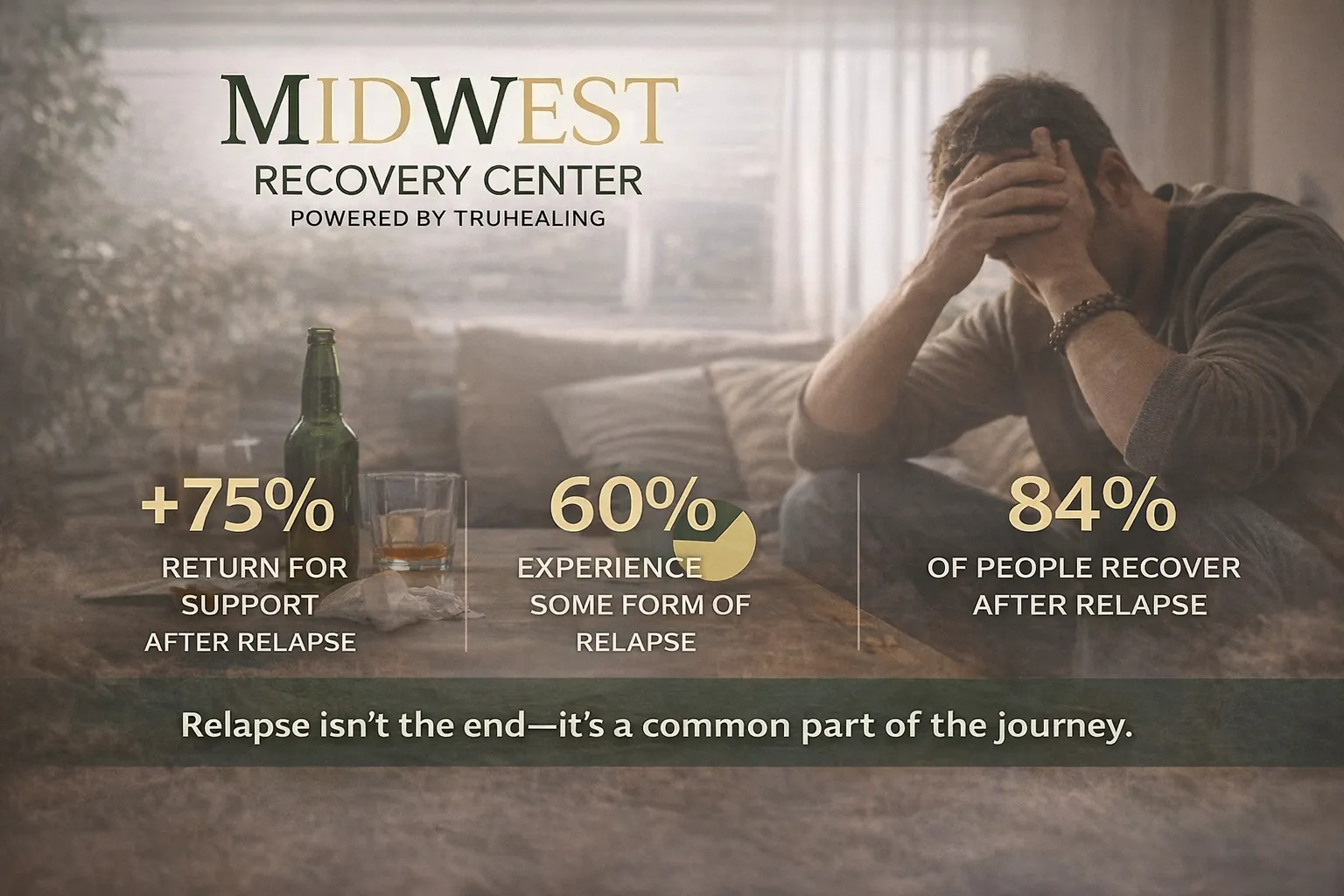
Relapse after progress is more common than people talk about.
Because it’s hard to admit.
But it doesn’t mean you’re different.
It means you’re in a part of the process that many people go through—and eventually move past.
For those navigating this in Toledo, Ohio, reconnecting with support during this stage often becomes the moment where recovery deepens, not disappears.
What You Do Next Matters More Than What Already Happened
You can’t undo what happened.
But you can decide what happens next.
And that decision doesn’t have to be big.
It can be small.
It can look like:
- Reaching out
- Asking one honest question
- Letting someone know where you actually are
That’s enough.
That’s where things begin to shift again.
You’re Allowed to Come Back Without Explaining Everything
This might be the part you need most.
You don’t have to justify yourself.
You don’t have to prove anything.
You don’t have to show up perfectly.
You can just come back.
With the truth.
With what happened.
With where you are right now.
For individuals looking for support near Maumee, Ohio, that return doesn’t come with judgment—it comes with understanding, because this path is rarely straight.
This Isn’t the End of Your Story
It might feel like it.
But it’s not.
It’s a chapter.
A hard one—but not a final one.
And what comes next doesn’t depend on being perfect.
It depends on being honest enough to take one step forward.
Frequently Asked Questions
Does relapse mean I failed?
No.
It means something in your support system, environment, or internal process needs attention. It’s information—not a final outcome.
Do I have to start completely over?
No.
You’re starting from experience, not from zero. Everything you learned still matters and still applies.
Why does the shame feel worse than the relapse itself?
Because of the meaning you attach to it.
The story your mind tells you often feels heavier than what actually happened.
How do I know if I need support again?
If things feel unstable, overwhelming, or harder to manage alone—that’s a strong signal.
You don’t need to wait for things to get worse.
What’s the first step I should take?
Something simple and honest.
Reach out. Ask a question. Tell someone where you are.
That’s enough to begin again.
You don’t have to carry this alone.
Call (888) 657-0858 to learn more about our Medical Detox Program in Ohio.
And just hear this clearly—you didn’t ruin everything. You’re still here. And that means you still have a way forward.