
If you’re sober curious, this probably isn’t the first time you’ve searched something like this.
Maybe you typed:
- “Do I need detox?”
- “Can I stop drinking safely?”
- “What happens if I just quit?”
And maybe you closed the tab.
Then opened it again a week later.
If you’ve already looked at our medically supervised withdrawal support, you might be hovering in that uncomfortable space between awareness and action.
You know something needs to change.
You’re just not sure how serious it is.
Let’s talk honestly about that.
“Is It Really That Bad — Or Am I Overthinking This?”
This is the most common question we hear.
You might still be working.
Still paying bills.
Still showing up socially.
From the outside, your life may look stable.
But here’s the quieter question:
What happens when you try to stop?
If you notice:
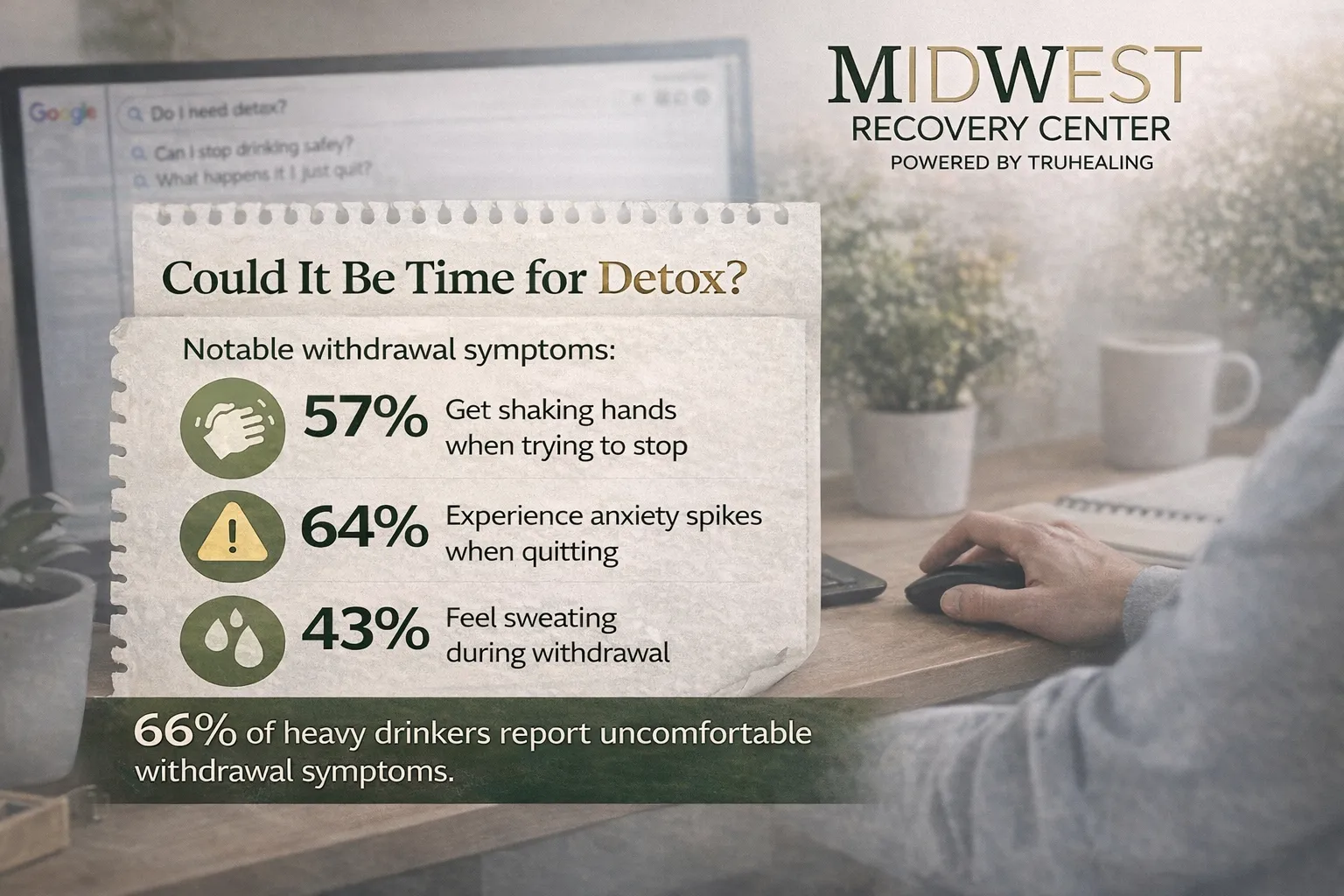
- Shaking hands
- Sweating
- Nausea
- Anxiety spikes
- Insomnia
- Racing heart
- Irritability that feels out of proportion
Your body may already be physically dependent.
You don’t have to fit a stereotype to need support.
A medical detox program isn’t about labeling you.
It’s about protecting your nervous system while you interrupt a pattern.
“Can I Just Detox at Home?”
Sometimes people can taper safely. Sometimes they cannot.
The risk isn’t about discipline. It’s about biology.
Alcohol and certain medications — especially benzodiazepines — can cause serious withdrawal symptoms. In some cases, seizures or dangerous complications can happen quickly and without much warning.
The problem with at-home detox is uncertainty.
You don’t know how your body will respond until it responds.
Medical supervision doesn’t mean you failed.
It means you’re being cautious with your health.
“What If It’s Miserable?”
This fear keeps many people stuck.
You might picture:
- Cold hospital rooms
- Being restrained
- Intense suffering
- No control
The reality is very different.
Detox today is structured around stabilization and symptom management. Medications are often used to reduce discomfort. Vital signs are monitored. Support is consistent.
Is it uncomfortable? Sometimes.
Is it survivable and managed with care? Yes.
And here’s the part people forget: withdrawal is temporary.
The cycle you’re in right now may not be.
“Will People Think I’m an Addict?”
That word carries weight.
Maybe you don’t identify with it. Maybe you’re sober curious, not convinced.
You don’t have to claim a lifelong identity to take care of your body.
We work with professionals, parents, retirees, students — people who never imagined they would consider withdrawal support.
You won’t be shamed here.
You won’t be reduced to a stereotype.
You’ll be treated as a person navigating a complicated relationship with substances.
“What Happens After Detox?”
This is important.
Detox is not the finish line.
It’s stabilization.
Once your body is safely through withdrawal, your mind becomes clearer. Your emotions become more predictable. You can make decisions from a regulated place instead of a reactive one.
Some individuals move into live-in care. Others choose structured outpatient support. Some focus on therapy and lifestyle change.
If you’re near Austintown, Ohio, or living in Maumee, Ohio, accessing structured care close to home can make continuing support feel more realistic and less overwhelming.
You don’t have to map out your entire future before you start.
You just have to take the first safe step.
“What If I’m Not Ready to Quit Forever?”
This is one of the most honest questions.
You may not be ready to say “never again.”
You might just be tired of:
- Feeling controlled by it
- Waking up anxious
- Counting drinks
- Planning around it
Detox doesn’t trap you into a lifetime commitment.
It gives you clarity.
And clarity allows real choice.
Right now, the substance may be making that choice for you.
“How Do I Know If It’s Dangerous for Me to Stop?”
There are some red flags that suggest medical supervision is strongly recommended:
- You’ve experienced withdrawal symptoms before
- You drink heavily or daily
- You use benzodiazepines regularly
- You’ve had seizures in the past
- You combine substances
If any of these apply, stopping abruptly without supervision could carry risks.
A confidential assessment can help determine the safest plan for you.
You don’t have to self-diagnose.
You just have to ask.
“What If I Wait?”
Waiting often feels easier.
You tell yourself:
“I’ll cut back next month.”
“After this stressful season.”
“After the holidays.”
But tolerance builds.
Withdrawal often becomes more intense over time.
Emotionally, the cycle tightens.
You may still be functioning. But the internal cost adds up.
Choosing structured withdrawal support now can prevent more serious consequences later.
That’s not dramatic.
That’s preventative.
The Part You Might Not Want to Admit
There may be a quiet voice in you that already knows.
It’s the voice that feels relieved reading this.
The voice that’s tired of negotiating every night.
The voice that wonders what mornings could feel like without anxiety.
You don’t have to be at rock bottom to deserve help.
You just have to recognize that your body and mind deserve stability.
A medical detox program provides a safe reset — not a label, not a punishment, not a life sentence.
Just stabilization.
If This Is the First Honest Thing You’ve Read in Weeks
Maybe you’ve been minimizing.
Maybe you’ve been comparing yourself to others.
Maybe you’ve been afraid to say it out loud.
You don’t have to call yourself anything today.
You don’t have to promise forever.
You just have to admit that something isn’t working.
If stopping on your own feels uncertain or physically uncomfortable, structured medical support exists to protect you.
And you deserve protection.
Call (888) 657-0858 to learn more about our medical detox program in Ohio.