Being Newly Diagnosed Is Scary — Here’s How a Residential Treatment Program Actually Supports You

Being Newly Diagnosed Is Scary — Here’s How a Residential Treatment Program Actually Supports You

There’s a moment—maybe it already happened—when a doctor says something that changes how you see yourself. Maybe it was depression. Bipolar. Anxiety so intense it’s not “just stress” anymore. The label feels heavy. Unfamiliar. Like it might stick.

And now someone’s recommending a residential treatment program? That might sound like too much, too fast.

We understand. At Midwest Recovery Center’s residential program, we meet you where you are—right in the space between fear and possibility. This blog is for you: the person trying to make sense of a new diagnosis, worried about what’s next, and unsure whether treatment will help or change who you are.

What “Being Newly Diagnosed” Really Feels Like

Getting a diagnosis isn’t just a sentence from a clinician—it’s a seismic shift in how you see yourself and your future. It can feel like:

  • A wave of relief (“So this isn’t all in my head…”)
  • A punch of fear (“Does this mean I’m broken?”)
  • Confusion (“What do I do next?”)
  • Dread (“Will I need medication forever?”)

Your brain might be racing with questions, worries, and what-ifs. You might be scared of what treatment means—especially if someone mentioned medication. That’s human. That’s normal. Fear doesn’t mean you’re weak—it means you care about yourself and you want this to be done “right.”

This is where a residential treatment program can help—not by overwhelming you with medical charts, but by offering a safe place to sit with these feelings and make sense of them.

A Residential Treatment Program Is a Space to Breathe — Not a Label

When you hear “residential treatment,” some people imagine something clinical or impersonal. That’s not what it is.

A residential treatment program is a structured, supportive environment where people can step away from the chaos of daily life and focus on healing. It’s not a punishment. It’s a pause—a chance to settle the nervous system and give your mind some room to come back into your body.

Here’s what that looks like in real life:

  • A calm, predictable daily rhythm
  • Mental health professionals who check in with you — not judge you
  • Time to rest without responsibility pressures
  • Therapeutic groups that help you feel less alone
  • A chance to talk openly about medication concerns

This kind of support isn’t “too much.” It’s targeted care — exactly what many people wish they had when they first heard that diagnosis.

You’re Not Being Sent Away — You’re Being Supported

If the idea of entering a program makes your stomach twist, that’s totally understandable. It can feel like you’re being “sent away” or that your situation must be really bad. But here’s the truth:

Choosing residential care doesn’t mean you’re beyond help. It means you’re choosing help.

It’s like stepping out of a storm into a shelter. Outside, the winds are unpredictable. Inside, there’s structure, warmth, and people who understand.

We’ve had people come through our doors who said things like:

“I was scared they’d make me take meds and I’d lose myself. I didn’t know what to expect. But I left feeling more like me than I had in years.”

That’s what we want for you — not conformity, not erasing who you are, but support that helps you stay connected to who you are while getting well.
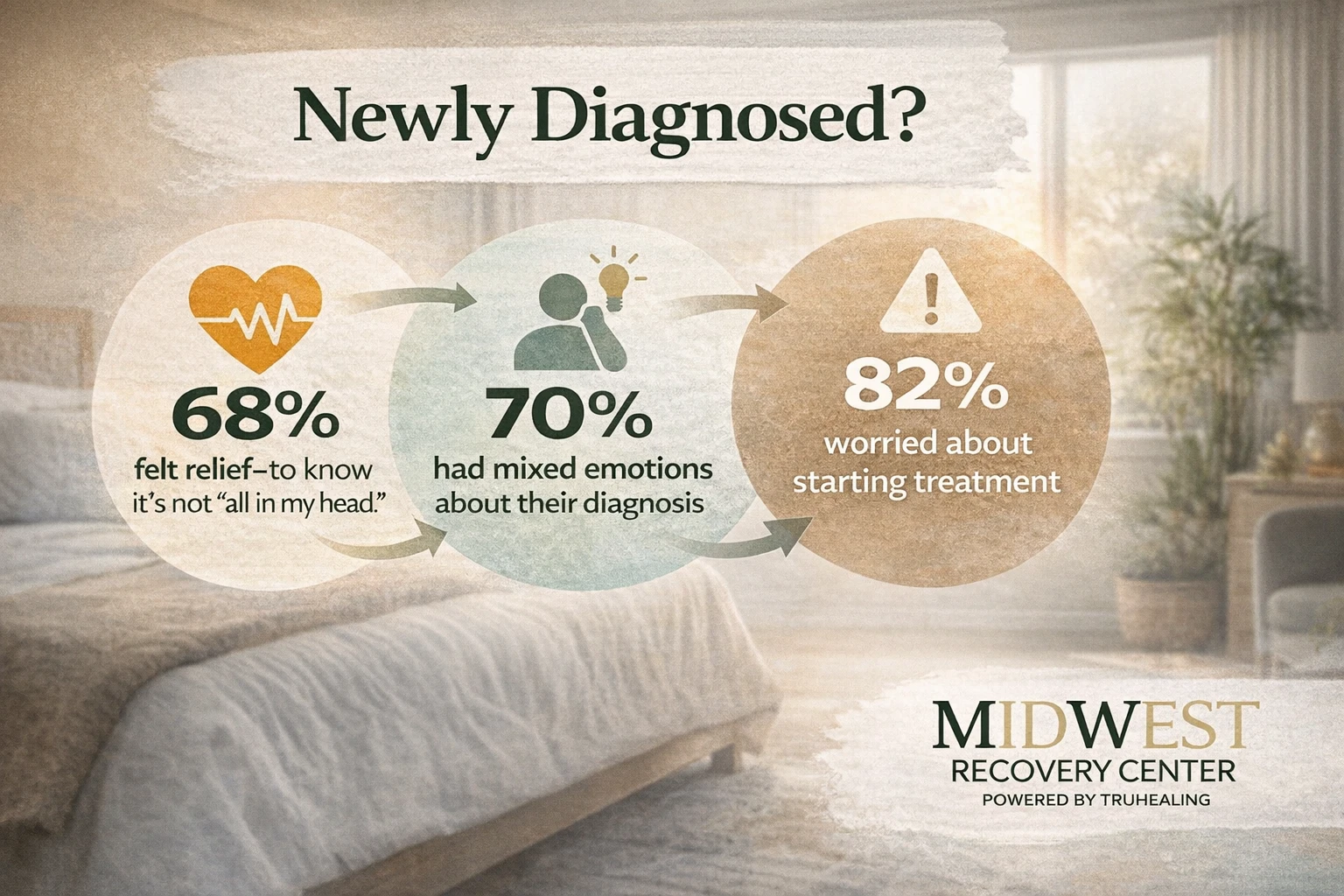
New Diagnosis Support

The Fear Around Medication: Real, Understandable, Addressed

One of the biggest fears people have after a diagnosis is taking medication. New diagnosis + suggestion of medication can create a perfect storm of fear:

  • What if it changes me?
  • What if I become “flat” or unlike myself?
  • What if I regret it?
  • What if it doesn’t work?

These are valid feelings. Your brain is trying to protect you. And medication isn’t forced on you in residential care.

Here’s how we approach it:

Medication Is a Conversation, Not a Command

We explain what each option does, what side effects to watch for, and how it might help you feel steadier or more grounded.

You Are Part of the Choice

We never make decisions about you without you. You are always consulted.

Your Experience Guides Adjustments

If something doesn’t feel right, we change it. If it helps, we talk about that too.

Some people find medication helpful. Some find it life-changing. Some decide to wait. None of these choices makes you “good” or “bad.” It just means you’re making the best decision you can with support.

Residential Treatment Helps You Understand Your Diagnosis — Not Just Manage It

A diagnosis can be confusing. It can make you feel like you’re suddenly playing a sport you never practiced before.

Residential treatment gives you time to learn the rules of your mind’s game:

  • What patterns trigger your distress
  • How your nervous system responds under stress
  • How emotions show up in your body
  • What coping skills actually work for you

And importantly, you don’t have to figure out all of this alone. You’re surrounded by clinicians whose job is to help you understand these things at a pace that feels safe.

You learn through:

  • One-on-one therapy
  • Group therapy
  • Skill-building sessions
  • Mindfulness practices
  • Daily reflection

It’s not about rubbing your wounds raw. It’s about learning the language of your inner world — so when life gets hard, you have tools, not just overwhelm.

Every Recovery Journey Is Different — And That’s Okay

Imagine if every person got the same prescription, the same therapy, the same schedule. It would be like trying to fit every flower into the same vase — it loses its shape, its beauty, and its individuality.

Recovery isn’t one-size-fits-all. Residential treatment recognizes that. It’s customized to you. Your story, your fears, your pacing, your needs.

Some people find breakthroughs quickly — a sudden shift that feels like a sunrise. Others take a slower path — careful steps that build steadiness. Both are valid. Both are healing.

In fact, healing often looks like:

  • Progress and pause
  • Forward movement and rest
  • Skepticism and then trust
  • Tears and laughter
  • Confusion and clarity

Healing isn’t linear. Residential care gives you a safe tapestry of experiences, not a rigid timeline.

You’re Not Alone — And Community Matters

One of the most powerful parts of residential treatment isn’t the clinical support — it’s the community.

When you’re newly diagnosed, it can feel like you’re the only one who truly gets it. You might feel isolated, like you’re the lone person walking through something no one else understands.

But in a residential program, you meet others who have similar fears, doubts, and hopes. You share space with people who:

  • Have been where you are
  • Are asking the same questions
  • Are facing their own uncertainties

You’re not in a waiting room filled with strangers. You’re in a room filled with people who might become some of your first companions on the path to understanding your mind.

And just seeing someone else wrestling with the same fears can be a quiet kind of relief — a reassurance that you’re not alone.

What Happens After Residential Treatment?

Maybe you’re wondering: “Okay, but what happens next?”

Residential care is a bridge, not a dead end. Your stay gives you time to:

  • Stabilize emotionally
  • Build coping tools
  • Understand treatment options
  • Try medications under supervision (if you choose)
  • Plan outpatient care
  • Connect with community supports

After residential care, you don’t wake up in a vacuum. You wake up with skills, support, and a plan — and often with people cheering for you.

A Real Example: From Fear to Understanding

One client we’ll never forget came to us deeply afraid of medication. They had been recently diagnosed and were convinced that meds would erase their personality. They arrived tense, skeptical, and guarded.

Over weeks of therapy, education, support, and open conversations with clinicians, they began to see medication not as a threat, but as a tool — just one piece of their recovery puzzle.

When they left the program, they said something simple and remarkable:

“I didn’t come here to change who I am. I came here to understand myself better. That’s what happened.”

That’s the heart of what we do — help you stay you while finding paths toward peace and stability.

Frequently Asked Questions

1. What exactly is a residential treatment program?
A residential treatment program is a live-in mental health care setting where individuals receive structured therapeutic support, daily routines, and clinical care tailored to their needs. It’s designed to help people stabilize, learn coping skills, and understand their diagnoses more deeply.

2. Do I have to take medication in a residential program?
No. Medications are discussed with you openly. You are always part of the decision-making process. Nothing is forced. The goal is informed choice, not compliance.

3. How long do people stay in residential care?
Length varies based on individual needs. Some stay a few weeks; others a bit longer. The focus is on readiness for a safe and supported transition back into daily life or outpatient care.

4. Will my insurance cover it?
Many plans offer coverage for residential treatment for mental health conditions. Our admissions team can help verify your benefits and explain options.

5. What makes residential care different from outpatient therapy?
Outpatient therapy means you live at home and visit for sessions. Residential care means you are immersed in a therapeutic environment throughout the day and night — a space where healing isn’t squeezed into spare hours, but prioritized as part of daily life.

6. Will I lose my job or responsibilities if I go into residential care?
Many people take medical leave, short-term hold, or work with employers on accommodations. Your care team can help you navigate these responsibilities.

Somewhere Safe to Begin

You’re reading this because something in you is searching — for clarity, for peace, for direction. Being newly diagnosed is scary. But it’s also the start of something important: a journey toward understanding and strength.

And you don’t have to walk that journey alone.

At times, healing feels like moving forward. At times, it feels like finally stopping long enough to catch your breath. In a residential program, you get both — care that sees all of you.

And if you’re still unsure, that’s okay too. Courage doesn’t always roar. Sometimes courage is the small voice at the end of the day saying, “I will try again tomorrow.”

We’ve seen that voice grow. We’ve watched people move from fear to confidence, from confusion to clarity, from survival to living.

We’re here for your next step — whenever you’re ready.
And if you want to explore residential care more, to ask questions without pressure, or to find a safe place to begin healing, we’re here.

One part of that journey is finding the right support — like the kind people have found in communities near Maumee, Ohio — and that’s exactly what our residential treatment program offers: grounded care, compassionate guidance, and a place to start again.

Call (888) 657-0858 to learn more about our residential treatment program in Toledo, Ohio.
*The stories shared in this blog are meant to illustrate personal experiences and offer hope. Unless otherwise stated, any first-person narratives are fictional or blended accounts of others’ personal experiences. Everyone’s journey is unique, and this post does not replace medical advice or guarantee outcomes. Please speak with a licensed provider for help.

Level Of Care

PHP (Partial Hospitalization Program)
Daytime treatment with structure, therapy, and support—return home each night.

IOP (Intensive Outpatient Program)
Flexible therapy a few days a week to balance life and recovery.

OP (Outpatient Program)
Ongoing therapy and support to maintain progress.

MAT (Medication-Assisted Treatment)
Evidence-based care using medication and counseling to reduce cravings.

Ready to Start?
Call (833) 657-0858: to learn which program fits your recovery goals.

Who are you seeking help for? *

We’re here to listen and help you find the right path forward. Please tell us who needs care so we can match you with the best program and support.

💬 Your responses are 100% confidential and never shared outside our admissions team.

Recovery Shouldn’t Have to Wait — Begin Treatment Today.

At Ohio Treatment Center in Toledo, Ohio, we make it simple to take that first step toward healing. Our streamlined admissions process can often lead to same-day placement in treatment for MAT, PHP, IOP and more..

Call today for a free, confidential consultation with our caring admissions team — we’ll walk you through every step with compassion and clarity.

Call (833) 657-0858
Why call us?

Check Your Insurance Coverage in Minutes

We’ll handle the insurance details — so you can focus on getting better.

At Ohio Treatment Center, we work with most major private insurance providers to make treatment affordable and accessible. Complete our quick, confidential form below, and we’ll let you know if your plan is in-network — without contacting your insurance company.

Commonly accepted providers include:
Blue Cross Blue Shield (BCBS) • Aetna • Cigna • UnitedHealthcare • Humana • Anthem • Tricare

What Happens Next

  • Fill out the short form below
  • Our team reviews your benefits
  • We’ll contact you with your coverage details

Getting help shouldn’t be stressful. Let’s find out what your insurance can cover today.

Level Of Care

Detox
Begin recovery safely with 24/7 medical support. Our detox program helps you manage withdrawal comfortably and prepares you for the next step.

Residential Treatment
Continue healing in a supportive, structured setting with daily therapy, wellness activities, and round-the-clock care.

Aftercare
Before you leave, we’ll help you create a plan for ongoing support and lasting recovery.

Ready to Start?
Call (833) 657-0858: to learn which program fits your recovery goals.

Who are you seeking help for? *

We’re here to listen and help you find the right path forward. Please tell us who needs care so we can match you with the best program and support.

💬 Your responses are 100% confidential and never shared outside our admissions team.

Recovery Shouldn’t Have to Wait — Begin Treatment Today.

At Midwest Detox Center in Maumee, Ohio, we make it simple to take that first step toward healing. Our streamlined admissions process can often lead to same-day placement in treatment for medically supervised detox and residential treatment programs.

Call today for a free, confidential consultation with our caring admissions team — we’ll walk you through every step with compassion and clarity.

Call (833) 657-0858
Why call us?

Check Your Insurance Coverage in Minutes

We’ll handle the insurance details — so you can focus on getting better.

At Midwest Detox, we work with most major private insurance providers to make treatment affordable and accessible. Complete our quick, confidential form below, and we’ll let you know if your plan is in-network — without contacting your insurance company.

Commonly accepted providers include:
Blue Cross Blue Shield (BCBS) • Aetna • Cigna • UnitedHealthcare • Humana • Anthem • Tricare

What Happens Next

  • Fill out the short form below
  • Our team reviews your benefits
  • We’ll contact you with your coverage details

Getting help shouldn’t be stressful. Let’s find out what your insurance can cover today.

Level Of Care

Medical Detox
24/7 medically supervised detox to help you safely withdraw from drugs or alcohol while managing symptoms and preventing complications.

Inpatient Treatment
A structured, residential setting that provides continuous medical care, counseling, and therapeutic support to build a foundation for long-term recovery.

Residential Program
Comfortable, home-like housing where you can focus fully on healing with daily therapy, peer support, and holistic recovery services.

Ready to Start?
Call (833) 657-0858: to learn which program fits your recovery goals.

Who are you seeking help for? *

We’re here to listen and help you find the right path forward. Please tell us who needs care so we can match you with the best program and support.

💬 Your responses are 100% confidential and never shared outside our admissions team.

Recovery Shouldn’t Have to Wait — Begin Detox Today

At Ohio Detox Center in Maumee, Ohio, we make it simple to take that first step toward healing. Our streamlined admissions process can often lead to same-day placement in detox or inpatient treatment for substance use and co-occurring mental health conditions.

Call today for a free, confidential consultation with our caring admissions team — we’ll walk you through every step with compassion and clarity.

Call (833) 657-0858
Why call us?

Check Your Insurance Coverage in Minutes

We’ll handle the insurance details — so you can focus on getting better.

We’ll take care of the details — so you can focus on getting better.
At Ohio Detox Center, we work with Ohio Medicaid and most major insurance providers to make treatment affordable and accessible.

Here’s how it works:

  1. Fill out the short form below
  2. Our team reviews your benefits
  3. We’ll contact you with your coverage details

Getting help shouldn’t be stressful. Let’s find out what your insurance can cover today.

Levels of Care

Detox
We understand that taking the first step can feel overwhelming. Our detox program offers a compassionate, medically supported environment where you can rest, heal, and begin recovery safely. You’ll never go through it alone — our team is with you every step of the way.

IOP (Intensive Outpatient Program)
A flexible treatment option that lets you maintain work, school, or family responsibilities while attending therapy several days a week. IOP focuses on relapse prevention, coping skills, and long-term recovery through group and individual sessions.

Residential
Residential care gives you the time and space to focus fully on healing. Surrounded by supportive staff and peers, you’ll work through underlying causes of addiction, rebuild healthy routines, and rediscover confidence in your recovery journey.

MAT (Medication-Assisted Treatment)
Combining FDA-approved medications with counseling and behavioral therapy, MAT helps reduce cravings and withdrawal symptoms related to opioid or alcohol use. Each treatment plan is closely monitored to ensure comfort, safety, and lasting recovery.

Ready to Start?
Call (833) 657-0858: to learn which program fits your recovery goals.

Who are you seeking help for? *

We’re here to listen and help you find the right path forward. Please tell us who needs care so we can match you with the best program and support.

Myself

A loved one or family member

💬 Your responses are 100% confidential and never shared outside our admissions team.

Check Your Insurance Coverage in Minutes

We’ll handle the insurance details — so you can focus on getting better.

At Midwest Centers at Youngstown, we work with most major private insurance providers to make treatment affordable and accessible. Complete our quick, confidential form below, and we’ll let you know if your plan is in-network — without contacting your insurance company.

Commonly accepted providers include:
Blue Cross Blue Shield (BCBS) • Aetna • Cigna • UnitedHealthcare • Humana • Anthem • Tricare

What Happens Next

  • Fill out the short form below
  • Our team reviews your benefits
  • We’ll contact you with your coverage details

Getting help shouldn’t be stressful. Let’s find out what your insurance can cover today.

Recovery Shouldn’t Have to Wait — Begin Treatment Today.

At Midwest Centers at Youngstown in Ohio, we make it simple to take that first step toward healing. Our streamlined admissions process can often lead to same-day placement in treatment for substance use or co-occurring mental health disorders.

Call today for a free, confidential consultation with our caring admissions team — we’ll walk you through every step with compassion and clarity.

Level Of Care

Partial Hospitalization Program (PHP)
Our PHP offers a highly structured, supportive environment where you can focus on recovery during the day and return home at night. It’s an ideal step between inpatient and outpatient care, providing daily therapy, accountability, and a strong recovery routine.

Intensive Outpatient Program (IOP)
Our IOP gives you the flexibility to continue work, school, or family life while receiving evidence-based treatment several days a week. You’ll participate in group and individual therapy focused on relapse prevention, coping skills, and long-term healing.

Outpatient Program (OP)
For those transitioning from a higher level of care or seeking ongoing support, our outpatient program offers continued therapy at a pace that fits your lifestyle. It’s a supportive bridge that helps you maintain recovery and stay connected to care.

Medication-Assisted Treatment (MAT)
MAT combines FDA-approved medications with therapy and counseling to reduce cravings and support long-term recovery from opioid or alcohol addiction. Our team monitors each plan closely to ensure safety, comfort, and effectiveness.

Ready to Start?
Call (833) 657-0858: to learn which program fits your recovery goals.

Who are you seeking help for? *

We’re here to listen and help you find the right path forward. Please tell us who needs care so we can match you with the best program and support.

Myself

A loved one or family member

💬 Your responses are 100% confidential and never shared outside our admissions team.

Recovery Shouldn’t Have to Wait — Begin Treatment Today.

At Midwest Recovery Center in Toledo, Ohio, we make it simple to take that first step toward healing. Our streamlined admissions process can often lead to same-day placement in treatment for substance use or co-occurring mental health disorders.

Call today for a free, confidential consultation with our caring admissions team — we’ll walk you through every step with compassion and clarity.

Check Your Insurance Coverage in Minutes

We’ll handle the insurance details — so you can focus on getting better.

At Midwest Recovery Center, we work with most major private insurance providers to make treatment affordable and accessible. Complete our quick, confidential form below, and we’ll let you know if your plan is in-network — without contacting your insurance company.

Commonly accepted providers include:
Blue Cross Blue Shield (BCBS) • Aetna • Cigna • UnitedHealthcare • Humana • Anthem • Tricare

What Happens Next

  • Fill out the short form below
  • Our team reviews your benefits
  • We’ll contact you with your coverage details

Getting help shouldn’t be stressful. Let’s find out what your insurance can cover today.