
There’s a quiet fear that sits behind a lot of hesitation around mental health treatment. It doesn’t sound like “I’m scared of getting help.” It sounds like:
- What if they flatten me?
- What if I lose the part of me that feels like…me?
- What if I can’t create anymore?
If those thoughts have come up for you while considering a residential treatment program, you’re not alone—and you’re not wrong to be protective of your identity.
You’ve likely built something important inside yourself to survive. Maybe it’s your creativity. Your edge. Your humor. Your spark. This blog is for the part of you that’s not scared to heal—but is scared to disappear in the process.
That “Edge” You’re Afraid to Lose? It’s Not a Disorder—It’s You
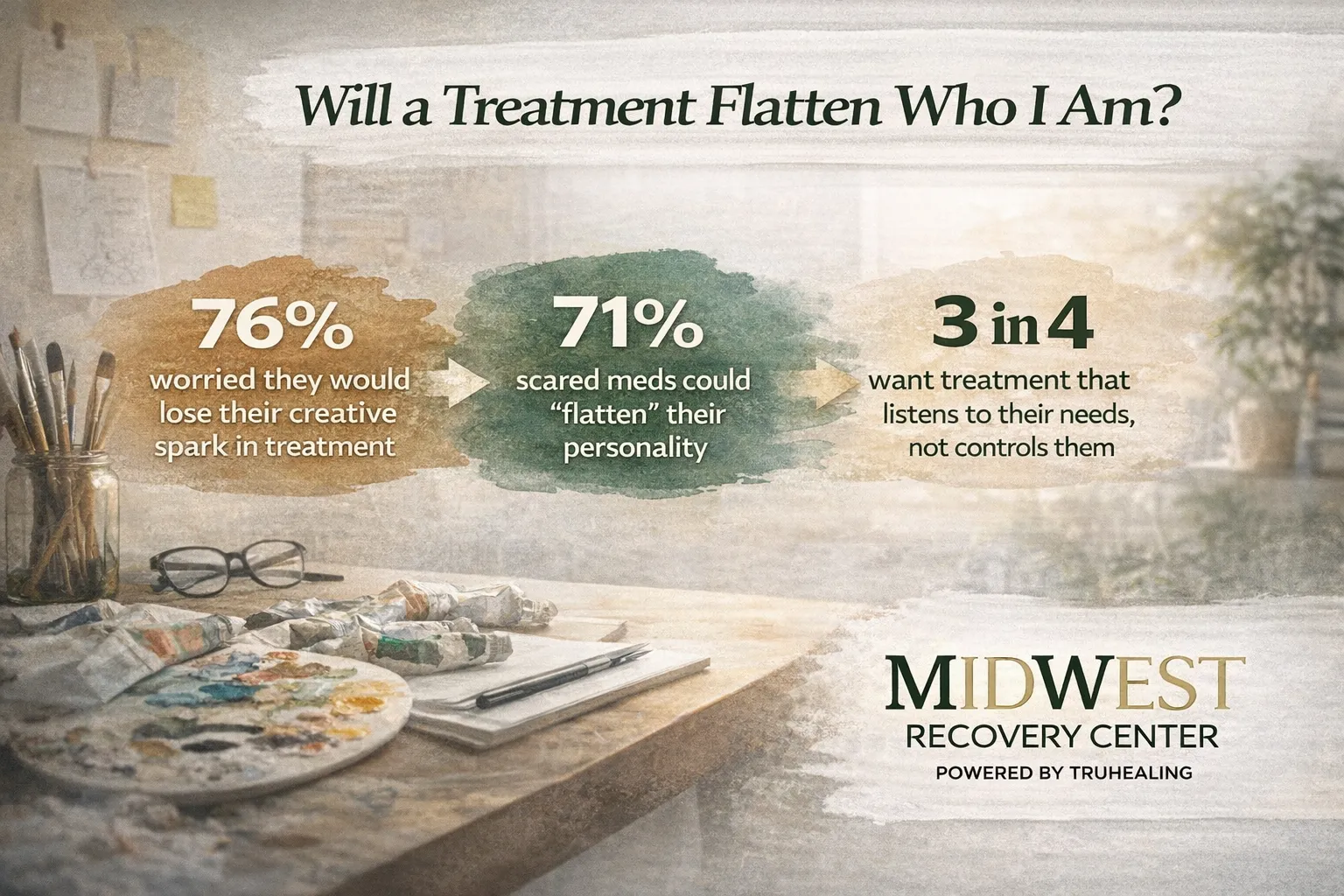
So many creative people worry that their anxiety, mania, or melancholy is the source of their magic. That if they get treatment—especially something structured like residential care—they’ll lose their drive, their passion, their weird little spark.
Here’s the truth: Your creativity isn’t made of pain—it’s made of you.
Mental health symptoms might have shaped how you see the world, but they are not the same thing as your insight, your voice, or your fire. A residential treatment program doesn’t take those away. It helps you stop burning alive just to stay bright.
Treatment Isn’t Erasure—It’s Restoration
Let’s reframe this.
Residential care isn’t a factory where everyone comes out bland and cured. It’s more like a greenhouse. A protected space where you get time, light, water, and skilled attention while you’re figuring out what you need to grow in your own direction.
We don’t clip your wings. We ask how you like to fly.
Therapists here don’t just hand you coping skills—they listen to how you’ve already been coping. They build around what matters to you, not what looks good on a chart.
Because real healing doesn’t sterilize. It strengthens.
Scared of Medication? That Makes Sense—and You’re in Control
This fear comes up a lot:
“If I go to residential treatment, will they force me to take meds that change me?”
The short answer? No. You’re not here to be controlled. You’re here to be cared for—with consent, clarity, and curiosity.
We understand why you’d hesitate. Especially if you’re afraid of becoming numb, flat, or robotic. Especially if your emotion has always been part of your expression—on the page, in the studio, onstage, in your daydreams.
Here’s what we actually do:
- We talk through options.
- We explain side effects.
- We adjust slowly and with your input.
- We prioritize how you feel in your body and mind.
This is not a one-size-fits-all process. You stay in the driver’s seat.
It’s Okay to Want to Stay a Little Wild
Some people feel like they don’t “belong” in treatment because they’re not falling apart. They’re functioning—but exhausted. High-performing but secretly unraveling. Brilliant and barely holding it together.
You don’t have to be in crisis to need care. You don’t have to trade your fire for stability. You can be both: vivid and well. Strange and supported. Deep and okay.
We welcome people like you—people who think in color, who feel in poetry, who’ve built lives out of grit and insight.
That’s why we’ve seen so many people thrive in places like Maumee, Ohio, where the right blend of structure and soul has helped people stay grounded and expressive.
What Actually Happens in Residential Treatment
It’s not boot camp. It’s not group therapy from sunrise to sunset. And it’s not about breaking you down to build you up.
Instead, you can expect:
- Structure that quiets the chaos
- Clinicians who care more about your why than your what
- Time and space to rest your nervous system
- Groups that explore identity, not just symptoms
- Safe exploration of medication (if you choose)
- Art, movement, and mindfulness that support emotional processing
It’s not about controlling you. It’s about partnering with you.
The People Who’ve Been Where You Are
If you’re feeling this blog hit close to home, here’s something you should know: we’ve seen people with your exact fear walk through our doors.
And we’ve watched them leave saying things like:
“I thought this would break me. But it gave me back pieces I didn’t know I’d lost.”
“I’m still me—just with less chaos.”
“I didn’t get ‘fixed.’ I got clearer.”
That’s what a good residential treatment program does. It doesn’t flatten you. It helps you carry the depth you’ve always had—without letting it crush you.
And for some, it even reignites their creativity.
Healing Can Be Part of the Art
If you’re an artist, a thinker, a builder-of-worlds, you know that your mind is a tool. When it’s sharp, it cuts beautifully. But when it’s raw and bleeding, it’s hard to hold.
Residential treatment can give you space to sharpen that tool—not by dulling your emotion, but by helping you channel it in ways that serve you instead of consume you.
And if you’re afraid that your best work is behind you? That’s grief talking, not truth. There’s a version of you still creating, still feeling, still alive—but steadier. Still wild. Just not hurting so much.
That version of you deserves a chance to speak, too.
You Don’t Have to Be Ready—You Just Have to Be Curious
If your heart says “yes” but your body says “I don’t know”—we hear you. You don’t have to be all in. You just have to be curious.
Residential care is not a commitment to change everything. It’s a space to explore whether things could feel even slightly better.
And that exploration is worth it.
For some, it starts by checking out treatment options in Youngstown, Ohio, where people are creating new chapters without losing the old ones that still matter.
Frequently Asked Questions
What if I don’t want to take medication?
That’s okay. Medications are discussed with you, not handed out as a rule. You get to be part of the conversation every step of the way.
Will I lose my creativity in treatment?
No. In fact, many people find that healing gives them more access to their creativity. Less mental clutter means more clarity and emotional range.
How long does a residential program last?
It varies based on what you need. Some stay for a few weeks, others longer. The focus isn’t on the clock—it’s on your stability and goals.
Is residential care only for people in crisis?
No. Many people enter care while still working, creating, and showing up for life—but they’re struggling quietly. You don’t have to fall apart to get support.
What if I’m not sure I belong in a place like this?
Then you’re exactly the kind of person who should ask questions. We welcome people with doubts, nuance, and mixed feelings. You won’t be judged.
Curious about what care could look like—without losing yourself in the process?
Call (888) 657-0858 to learn more about our residential treatment program in Toledo, Ohio.